
In-Home Dog Training in Scranton, PA
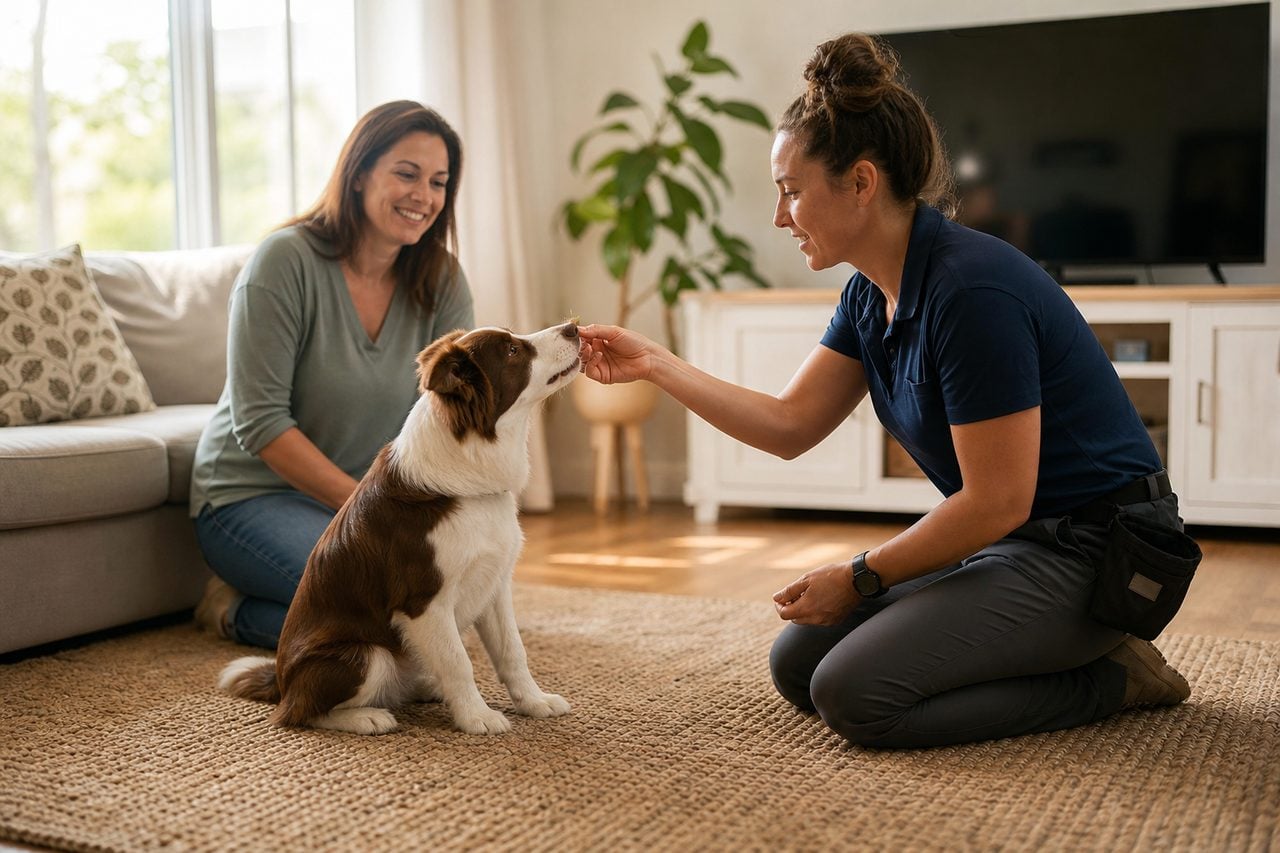
In-home dog training brings the lesson to where your dog actually lives — your kitchen, your front door, your fenced yard, the sidewalk outside your Scranton row home or your quarter-acre lot in the Back Mountain. Instead of loading the dog into the car for a class across town, a trainer comes to you and works with the dog in the exact environment where the problem behaviors happen. For many Northeastern Pennsylvania families, that difference is the whole point: the jumping, the door-dashing, the counter-surfing, and the leash pulling all show up at home, so home is where they are most efficiently fixed.
This model fits the geography of the region well. The Scranton–Wilkes-Barre metro is spread across two counties and a scatter of valley towns and mountain communities, from Carbondale at the north end of the Lackawanna Valley down through the Wyoming Valley to Hazleton in the south. Group classes are not always close, and a dog that is reactive, anxious, or simply young can struggle in a busy facility. A one-on-one session in the dog’s own space removes the travel and the chaos, letting the trainer focus entirely on your dog and your household’s specific goals.
Because in-home trainers travel a wide radius across the valleys and ridges, a little planning goes a long way. This guide covers what in-home training is good for, how sessions typically run, how the whole family gets pulled into the plan, what NEPA’s layout and weather mean for scheduling, how it compares to group class and board-and-train, and how to choose a reputable trainer. The recurring theme: the trainer coaches, but the household does the daily work — and that is precisely what makes in-home training stick. Whether you are house-training a new puppy in a Green Ridge apartment or trying to stop a strong adolescent dog from dragging you down an icy sidewalk in Kingston, meeting the dog on its home turf is often the fastest route to lasting change.
What In-Home Training Is Best For
In-home training shines whenever the problem is tied to a specific place or routine. Door manners are the classic example: a dog that bolts or barks the instant the doorbell rings can only be worked on realistically at your actual door, with your actual doorbell. The same goes for counter-surfing in your kitchen, resource guarding a favorite spot on the couch, house-training a puppy, settling in a crate in your bedroom, or walking politely down your own street. When the trainer sees the real setup — the layout, the traffic patterns, where the leash hangs, how the family moves through the space — the advice becomes concrete rather than generic.
It is also the right fit for dogs that do not do well in group settings. Reactive dogs, fearful rescues, and elderly or recovering dogs often can’t focus in a crowded class, and a busy facility can even set them back. Working at home, under threshold and free of distractions, lets these dogs learn. In-home training suits busy NEPA households too — families juggling shift work, kids, and the drive times that come with a spread-out region — because the session comes to them and folds into the daily routine instead of competing with it.
How a Typical Session Runs
Most in-home programs open with an assessment visit. The trainer talks through your goals, watches the dog in its normal environment, and identifies what is actually driving the behavior — which is often different from what the owner assumed. From there they build a plan and, crucially, teach you the mechanics: timing, marker words, reward placement, and how to set the environment up so the dog succeeds. A session usually blends demonstration with hands-on coaching, so you leave able to practice on your own.
Sessions typically run about an hour and are spaced a week or two apart to give the household time to practice between visits. That cadence matters: the trainer’s hour is the coaching, but the results come from the short daily reps you do afterward in your Dunmore kitchen or your Kingston backyard. Expect homework — a few minutes, several times a day — and expect the plan to adjust as the dog progresses. Good trainers give you written notes or a follow-up summary so nobody in the house is guessing. Pricing is usually structured per session or as a package of visits; ask for the range up front, since travel distance across the region can factor in.
Getting the Whole Household Involved
One of the underrated strengths of in-home training is that it puts the whole family in the room. Dogs generalize poorly — a cue the dog obeys for Mom may mean nothing when Dad or the kids ask — so consistency across everyone who lives with the dog is what turns a trick into a reliable habit. When the trainer coaches all the handlers together, everyone uses the same words, the same signals, and the same rules about the couch, the counter, and greetings at the door.
This is hard to replicate in a group class, where usually just one person attends and then has to relay everything secondhand. At home, the trainer can watch how a child holds the leash on your Green Ridge sidewalk, correct a partner’s reward timing at the kitchen counter, and settle the inevitable “but we’ve always let him do that” disagreements on the spot. Households with children get a bonus: kids learn safe, respectful handling in a controlled setting, which reduces the risk of accidental bites and builds a better bond. The plan only works if the whole house runs it the same way, and in-home training is built to make that happen.
Covering the Valleys: Travel and Scheduling
The Scranton–Wilkes-Barre metro is geographically stretched, and that shapes how in-home training works here. A single trainer might cover Scranton and the Mid-Valley one day and the Back Mountain or Mountain Top the next, so travel time is a real part of the equation. Many trainers set a service radius or group appointments by area to keep drive times manageable, and some add a modest travel fee for the farther reaches — the Abingtons to the north, Hazleton and rural Luzerne County to the south. When you call, it is worth asking whether your town is inside the standard radius.
Scheduling tends to be more flexible than a fixed class night, which helps families dealing with shift work at the region’s hospitals, warehouses, and services. Evenings and weekends fill up fast, so book ahead. If you live in one of the more remote communities out toward Lackawanna State Park or Frances Slocum State Park, ask about longer, less frequent sessions to reduce the number of trips, or whether the trainer supplements in-person visits with video check-ins between appointments. That hybrid approach keeps momentum without demanding a long drive every week.
In-Home vs. Group Class vs. Board-and-Train
Each format has a place, and the right choice depends on the dog and the goal. Group classes are excellent for socialization and for teaching a dog to work around distractions — other dogs, other people, novelty. They are usually the most affordable option and give a young, social dog valuable exposure. What they cannot do is address a problem that only appears at your front door or replicate your home environment. For place-specific behaviors, group class is the wrong lens.
Board-and-train, where the dog stays at a facility for a stretch of intensive work, can accelerate obedience for the right candidate, but it carries a well-known catch: the dog learns to perform for the trainer in the trainer’s environment, and the skills must then transfer back to your home and your handling — a step that is easy to fumble without follow-up. In-home training sits between these: it targets the real environment and trains the humans directly, which maximizes transfer, at the cost of the built-in distraction practice a class provides. Many NEPA owners get the best results by combining formats — in-home work to fix household-specific issues, plus a group class or field trips for real-world proofing.
Making It Work Through NEPA Winters
Northeastern Pennsylvania winters are long, cold, and snowy, and that is actually an argument in favor of in-home training. When ice coats the sidewalks and a group-class parking lot is a snowbank, driving a dog across the valley for lessons becomes a chore families skip — and skipped weeks stall progress. An in-home trainer comes to you, so the work continues through January and February when outdoor and facility-based options thin out. Much of foundational training — impulse control, settling, name recognition, door manners — happens indoors anyway.
Winter also creates its own training opportunities and headaches worth planning for. Wiping snowy paws, tolerating boots and coats, and settling through the stir-crazy energy of housebound days are all things an in-home trainer can build into the plan. On the enrichment side, indoor scent games and food puzzles burn mental energy when the yard is buried. Come spring and summer, the same trainer can help you proof those skills outdoors — on a walk through Kirby Park in Wilkes-Barre or a hike on the Lackawanna River Heritage Trail — so the dog learns to listen in the real world, not just the living room. Year-round continuity is one of in-home training’s quiet advantages in a region with real seasons.
Choosing a Reputable In-Home Trainer
Dog training is unregulated, so anyone can call themselves a trainer — which makes vetting essential. Look for someone who is transparent about their methods and leans on modern, reward-based techniques; ask directly what happens when the dog gets it right and what happens when it gets it wrong. Credentials from recognized bodies (for example CPDT-KA certification or membership in professional trainer associations) are a good signal, though experience and clear communication matter just as much. A trainer who guarantees a “cure” or a fixed timeline is overpromising; behavior work has too many variables for that.
Before booking, ask how sessions are structured, whether follow-up support is included, and how they handle the whole household. Because this is in-home work, also confirm the practical details: service area, travel fees, session length, and package pricing — request ranges rather than a single number, since distance across the region affects cost. It is reasonable to ask for references and to expect the trainer to want an assessment before committing to a plan. Trust your read of the first interaction: a good in-home trainer explains the why behind each step, coaches you patiently, and leaves your household confident to practice on its own. That teaching ability — not flashy demos — is what you are actually paying for.
Reviewed In-Home Dog Training Trainers in Scranton
These reviewed Scranton-area trainers from our directory handle in-home dog training. Each links to a full profile with specialties, certified credentials, reviews, and contact info:
- Leroy and Company Dog Training — 5.0★ (21 reviews)
- Highland Canine Training – Scranton — 4.9★ (13 reviews)
- Electric City Canines — 4.3★ (6 reviews)
See all Scranton in-home dog training trainers →
Frequently Asked Questions
What kinds of problems is in-home training best for?
It’s best for behaviors tied to a specific place or routine — door-dashing and doorbell barking, counter-surfing, house-training a puppy, crate settling, resource guarding a spot on the couch, and polite walking on your own street. Because the trainer sees your actual environment, the advice is concrete rather than generic. It’s also ideal for dogs that struggle in group settings, like reactive, fearful, or elderly dogs that can’t focus in a busy facility.
How is in-home training different from a group class?
A group class is great for socialization and teaching a dog to work around distractions, and it’s usually the most affordable option — but it happens in a facility, not your home, so it can’t directly address a problem that only appears at your front door. In-home training targets your real environment and coaches the whole household directly, which helps the skills stick. Many NEPA owners combine both: in-home work for household-specific issues plus a class for real-world proofing.
Do in-home trainers travel across the whole Scranton and Wilkes-Barre area?
Most cover a wide radius across the valleys, but the metro is geographically stretched across two counties, so travel time is a real factor. Many trainers set a service area, group appointments by region, or add a modest travel fee for the farther reaches like the Abingtons, Mountain Top, or Hazleton. When you call, ask whether your town is inside their standard radius and whether any travel fee applies.
How long does a session last and how often do they happen?
A typical session runs about an hour and sessions are usually spaced a week or two apart to give the household time to practice in between. The first visit is often an assessment. Expect homework — a few minutes of practice several times a day — because the trainer’s hour is the coaching, but the results come from your daily reps. If you live in a remote area, ask about longer, less frequent visits or video check-ins to cut down on trips.
Should the whole family take part in the training?
Yes — it’s one of the biggest advantages of in-home training. Dogs generalize poorly, so a cue that works for one person may mean nothing when someone else asks. When the trainer coaches everyone together, the whole household uses the same words, signals, and rules, which turns a behavior into a reliable habit. It also lets the trainer teach children safe, respectful handling in a controlled setting, which reduces the risk of accidental bites.
How do I choose a reputable in-home trainer?
Dog training is unregulated, so vet carefully. Look for transparency about methods and a reward-based approach — ask directly what they do when the dog gets it right and when it gets it wrong. Recognized credentials (such as CPDT-KA) and professional-association membership are good signals, alongside clear communication and experience. Be wary of anyone guaranteeing a cure or fixed timeline. Confirm the practical details too: service area, travel fees, session length, and package pricing as ranges rather than a single figure.
Related: read our complete in-home dog training guide or the full Scranton dog training overview.
Ready to find the right in-home dog training pro in Scranton?