
In-Home Dog Training in Lubbock, TX
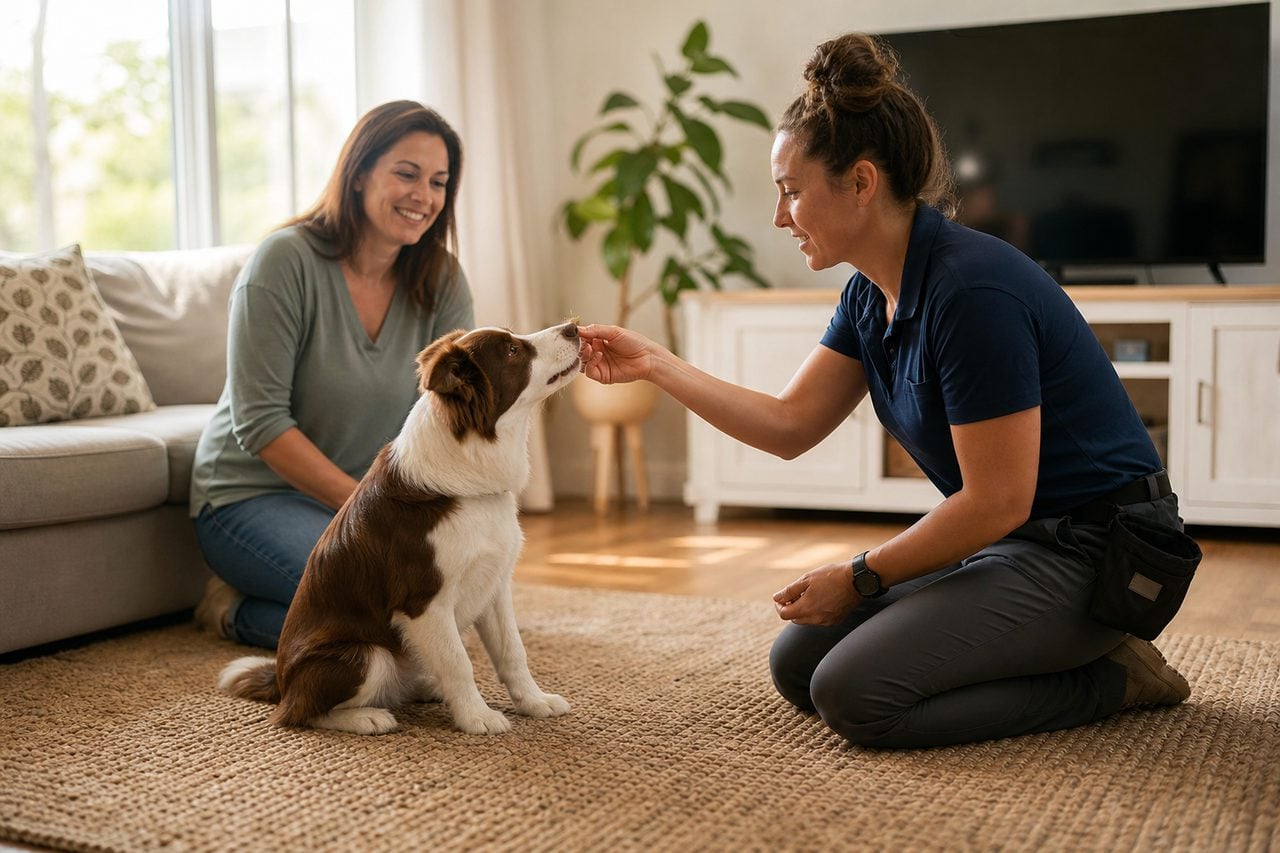
Some problems only show up at home: the dog that barrels through the front door, the puppy that chews the couch, the dog that barks at every truck on the street or guards the kitchen. Training at home lets a trainer see those problems where they happen and coach everyone in the household at once.
Three trainers serving Lubbock, Texas, offer in-home training. Two are based in the city and one works out of Meadow, southwest of town. This page explains how training at home works, who it suits best, how the three local options differ, how to prepare for the first visit, and what to expect over the weeks that follow.
How training at home works
In-home training is private instruction delivered where your dog lives. The trainer comes to your house, watches the dog in its normal surroundings and builds lessons around your actual routine: the doorway where it bolts, the yard where it digs, the hallway where it pulls toward the leash, the room where it greets guests.
Most programs follow a similar rhythm. A first visit covers history, goals and an assessment of the dog. Later visits introduce a skill, practice it with the owner holding the leash and set homework for the days between visits. As the dog improves, sessions often move outside the house, onto the sidewalk, into a park or a store, so the skills hold up in busier settings.
The defining feature is that the owner does much of the work. A trainer may spend an hour with your dog each visit, but the dog lives with you every other hour of the week. The best in-home trainers spend a large share of each session teaching people, not just dogs.
Who benefits most from in-home lessons
Training at home is not the only good option, but it fits some situations especially well.
- Home-based problems. Door dashing, jumping on visitors, house training, chewing, barking at the window and trouble around food or furniture are easiest to fix where they happen.
- New puppies. A trainer can help set up crates, potty routines and puppy-proofing in the actual house, before bad habits form.
- Fearful or reactive dogs. Dogs that struggle in a room full of other dogs often learn better in a quiet, familiar place first.
- Families with children or a baby on the way. Everyone in the household can attend, and the trainer can set rules that work for the whole family.
- Busy schedules. No drive across town and no fixed class slot, though you still need time to practice.
Where in-home lessons are weaker is in teaching a dog to work around other dogs. Many owners pair a few home visits with a group class, or with outings to parks and stores, once the basics are in place.
The three in-home options serving Lubbock
The local options differ in method and in how far the training reaches beyond the house.
- A balanced in-home trainer in Lubbock. This business works in the dog’s own environment and keeps owners present throughout, so they learn how to practice and reinforce each concept. Its approach teaches a dog what to do and which behaviors are not acceptable, with heavy emphasis on obedience around distractions. Programs are tiered, starting with a puppy program covering crate and potty training, biting, jumping, loose leash walking and socialization, then moving through heel, place, barking, reactivity and improper greetings to off-leash reliability and basic service-dog skills. It also works on aggression, bolting through doors and sound desensitization, and offers a free consultation and training session.
- A certified positive-reinforcement trainer in Lubbock. With over a decade of experience across many breeds, this trainer teaches the dog what to do and rewards its effort. Private lessons target leash pulling, jumping on guests and attention-seeking barking, and puppy lessons cover chewing, house training and nipping. A dedicated program prepares dogs for a new baby or toddler, and behavior work covers growling, dog-to-dog fighting, bites and fearful dogs, with muzzle training as a safety tool. The same trainer runs small group puppy classes once a week in Lubbock.
- A balanced program based in Meadow. Founded in 2021, this business focuses on teaching owners to communicate with their dogs, from basic manners to complex behavior issues. Its one-hour private lessons are fully customized and can meet at parks, stores or the owner’s home. It also runs a two-week board-and-train that uses e-collar work toward off-leash obedience, along with home-based boarding and grooming that comes to the client.
Two of the three describe balanced methods and one describes positive reinforcement. Ask each how they handle mistakes and what tools they would use with your dog before you choose.
Getting ready for the first visit
A little preparation makes the first session far more useful.
- Write down the problems. List the specific behaviors, when they happen and how often. Note anything that has gotten worse recently.
- Gather the history. Age, breed mix, where the dog came from, past training and any bites or close calls. Share all of it honestly.
- Have everyone present. Anyone who walks, feeds or plays with the dog should hear the same instructions. Mixed messages from different family members slow progress like almost nothing else.
- Leave the problem in place. Do not tidy away the shoes the puppy chews or keep the dog out of the room where it misbehaves. The trainer needs to see the real situation.
- Have your gear ready. The dog’s usual collar or harness, leash and favorite treats. The trainer may suggest changes.
If your dog has health issues or the behavior started suddenly, a vet visit beforehand is worth considering, since physical discomfort can drive behavior changes. Your vet is the right person to judge that.
Taking the skills beyond the front door
Home is where training starts, but most owners also want a dog that behaves on walks and in public. Once a skill is solid in the living room, move it to the yard, the sidewalk and then busier places. The Meadow program already holds lessons at parks and stores for exactly this reason.
Lubbock’s four city dog parks can serve as a later practice stage for friendly dogs. Canyon Run Dog Park inside Mackenzie Park and Hub City Unleashed inside Clapp Park both have separate large-dog and small-dog areas, double gates and dog water fountains. McAlister Dog Park off the Marsha Sharp Freeway frontage road adds an agility area, and Pioneer Dog Park inside Pioneer Park has separate fenced areas with shade trees. Practice a recall or a calm sit at the gate before going in, and leave if your dog cannot focus. For reactive dogs, ask your trainer before visiting any dog park.
Expect real progress to take several weeks of steady practice, with the trainer’s visits acting as checkpoints. A dog that improves at home and then slips when guests arrive or the routine changes is normal, and a good trainer will plan for those setbacks.
Reviewed In-Home Dog Training Trainers in Lubbock
These reviewed Lubbock-area trainers from our directory handle in-home dog training. Each links to a full profile with specialties, certified credentials, reviews, and contact info:
- The Family Dog Trainer — 5.0★ (34 reviews)
- Lubbock Elite Dog Training — 4.8★ (95 reviews)
- Lubbock Dog Training CO.
See all Lubbock in-home dog training trainers →
Frequently Asked Questions
How many in-home trainers serve Lubbock?
Three trainers serving the Lubbock area offer training at home. Two are based in Lubbock, one using a balanced approach and one using positive reinforcement, and the third is a balanced program based in Meadow whose lessons can meet at the owner’s home, parks or stores.
Is training at home better than a group class?
Neither is better for every dog. Training at home suits problems tied to the house, new puppies, fearful dogs and busy families, while group classes teach a dog to focus around other dogs. Many owners use both at different stages.
Do I need to be home for every session?
Yes, in most cases. The value of training at home comes from coaching the owner in the dog’s real environment, and one Lubbock in-home trainer keeps owners present throughout every session. Plan to take part and to practice between visits.
Can an in-home trainer help prepare my dog for a new baby?
One Lubbock trainer offers a dedicated program that prepares dogs for a new baby or toddler. Starting several months before the due date gives the dog time to adjust to new routines and spaces.
Can in-home trainers help with aggression?
Both Lubbock-based in-home trainers list aggression among the behaviors they address. For any dog with a bite history, describe it fully at the first contact and ask how the trainer keeps the household safe during sessions.
Related: read our complete in-home dog training guide or the full Lubbock dog training overview.
Ready to find the right in-home dog training pro in Lubbock?