
Puppy Socialization in Ann Arbor, MI
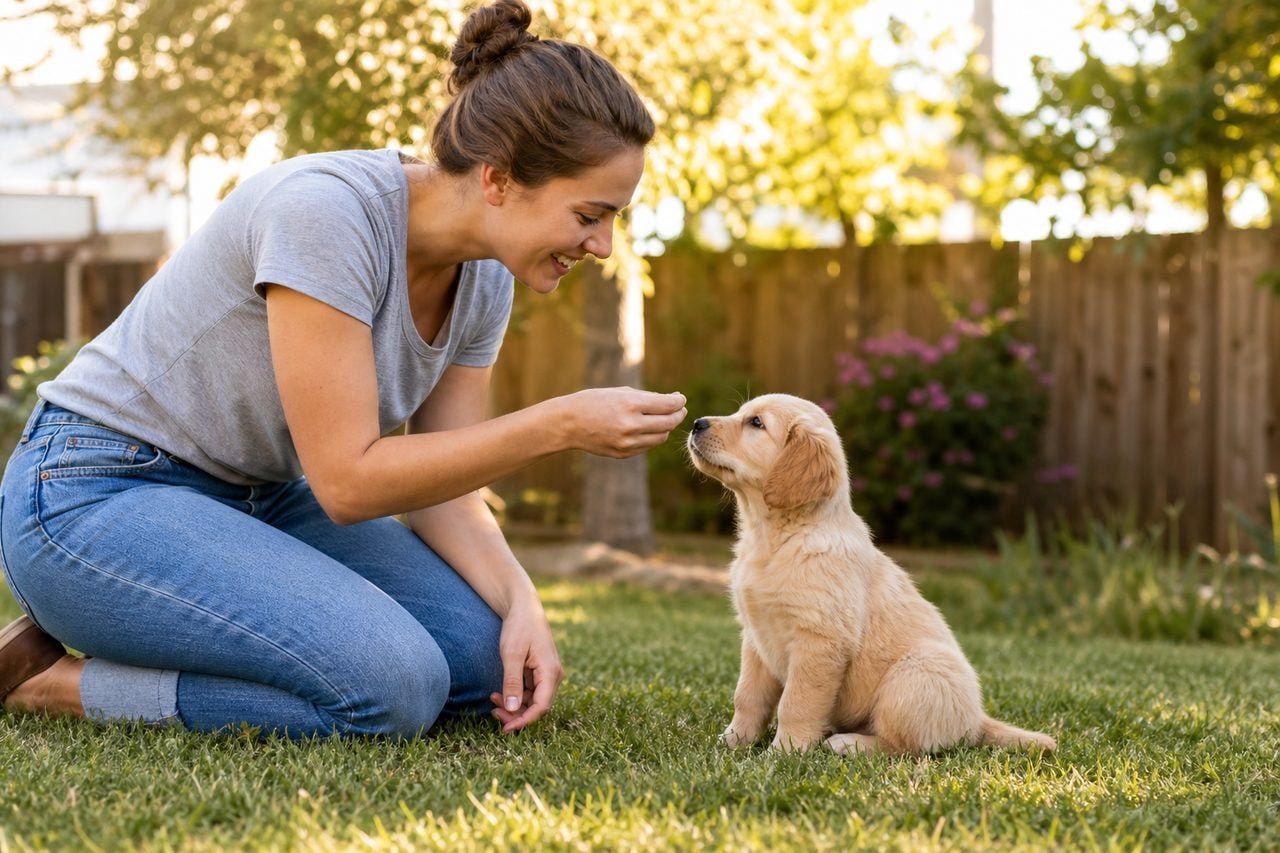
Socialization is the single most important thing you can do for your puppy in their first few months, and it is often misunderstood. It does not mean flooding your puppy with as many dogs and people as possible. It means giving your puppy positive, controlled experiences with the sights, sounds, surfaces, and situations they will encounter throughout life, so they grow into a confident, easygoing adult dog rather than a fearful or reactive one.
Ann Arbor is an ideal place to socialize a puppy. As a college town on the Huron River, it offers everything from quiet neighborhood streets to busy downtown sidewalks, farmers market crowds, riverside parks, and the wide-open space of nearby recreation areas. This guide explains what socialization really involves, why the timing matters so much, and how to build a practical plan using the people, places, and experiences already around you in Washtenaw County.
What Socialization Really Means
Many owners think socialization is just letting their puppy play with other dogs. That is one small piece of it. True socialization is the process of helping a puppy learn that the everyday world is safe and predictable. It covers people of all kinds, other animals, novel surfaces, household noises, traffic, vehicles, handling of their paws and ears, and countless other experiences that a confident adult dog needs to take in stride.
The goal is quality over quantity. A single calm, positive encounter with a friendly stranger teaches your puppy far more than a chaotic afternoon at a crowded event that leaves them overwhelmed. Every experience should end on a good note, ideally paired with treats, praise, or play, so your puppy builds a bank of positive associations rather than a collection of scary memories.
Socialization is also about teaching your puppy how to be calm and neutral, not just excited. A well-socialized dog can watch a jogger pass on the Gallup Park path without lunging, ignore a skateboard rolling by, and settle at your feet at a friend’s house. Neutrality is a skill, and it comes from repeated calm exposures where nothing bad happens and your puppy learns there is no need to react.
Done well, socialization is a form of insurance against the behavior problems that most often lead people to give up on their dogs: fear, anxiety, and reactivity. The time you invest in the first few months pays off across the dog’s entire life, making every vet visit, walk, houseguest, and road trip easier for years to come.
The Critical Window and Why Timing Matters
Puppies have a sensitive period for socialization that runs roughly from three weeks to sixteen weeks of age. During this window their brains are primed to accept new experiences as normal. Positive exposures during this time tend to stick for life, while a lack of exposure can leave lasting gaps that are much harder to fill later. This is why the first weeks in your home are so precious.
Most puppies come home around eight weeks, which leaves you a short but powerful window before that door begins to close. Every week counts. A puppy who meets a variety of friendly people, hears common household and neighborhood sounds, and experiences gentle handling before sixteen weeks is far more likely to shrug off novelty as an adult. A puppy kept isolated during this period may become wary of the very things that were never introduced.
The tricky part is that this window overlaps with the period before your puppy has finished its vaccine series. Some owners keep their puppy completely isolated out of disease fear and unintentionally cause behavioral problems that are, in the long run, a greater risk to the dog’s welfare. The veterinary behavior consensus is to socialize carefully rather than not at all.
The solution is smart exposure. Carry your puppy through busy areas so they can watch and listen without touching contaminated ground. Invite vaccinated, friendly adult dogs to meet your puppy in your home or yard. Choose clean indoor environments for early puppy classes. Talk with your veterinarian about the right balance for your specific puppy, but do not let the fear of germs cost your puppy the chance to become a confident adult.
Building a Socialization Checklist
A written checklist turns socialization from a vague good intention into a concrete plan. The idea is to expose your puppy to a broad range of categories, a little at a time, and to keep every experience positive. Aim for variety rather than repetition, and always let your puppy set the pace.
Start with people. Introduce your puppy to men, women, and gently supervised children, people wearing hats, sunglasses, hoods, and backpacks, people using canes or wheelchairs, and people of different heights and voices. Ann Arbor’s mix of students, families, and professionals makes it easy to expose your puppy to many kinds of people during a single calm downtown stroll or an afternoon watching the world go by outside a coffee shop.
Next, cover sounds and surfaces. Let your puppy walk on grass, gravel, pavement, metal grates, wood decks, and slippery floors. Expose them to household noises like the vacuum, doorbell, and kitchen clatter, plus outdoor sounds like traffic, buses, and construction. You can find recordings of thunderstorms and fireworks to play quietly during meals so your puppy learns those sounds are no big deal well before the real thing arrives.
Finally, include handling and everyday events. Practice touching your puppy’s paws, ears, mouth, and tail so grooming and vet visits are stress-free later. Take short car rides that end somewhere pleasant, not just at the vet. Introduce novel objects like umbrellas and rolling suitcases. Check off each category as you go, and revisit anything that made your puppy nervous, at a lower intensity, until it becomes boring in the best possible way.
Great Places to Socialize in Ann Arbor
Ann Arbor offers an unusually rich menu of socialization settings for a town its size, thanks to its walkable core and the parks along the Huron River. The trick is to match the location’s intensity to your puppy’s current confidence, starting easy and working up. You want your puppy interested and engaged, never frozen or frantic.
For low-key early outings, quiet residential neighborhoods are perfect. A puppy can watch a few people and cars go by from a comfortable distance, sniff around, and take in new sights without being overwhelmed. Once your puppy is cleared and gaining confidence, the paved paths at Gallup Park along the river provide a steady stream of joggers, cyclists, and other dogs passing at a manageable distance, which is ideal for teaching calm neutrality.
As your puppy matures, step up to busier environments. The downtown sidewalks near campus, the area around the farmers market, and outdoor cafe seating expose your puppy to crowds, noise, and constant motion. These are advanced settings, so keep sessions short and bring high-value treats. Nichols Arboretum offers a middle ground with a natural setting and moderate foot traffic when you want something between quiet streets and full downtown bustle.
For space and confidence-building, the larger recreation areas outside town, such as Hudson Mills Metropark and the Pinckney and Waterloo Recreation Areas out toward the lake country, give an older puppy room to explore new terrain and encounter wildlife smells, other hikers, and open trails. Remember that a busy dog park is not socialization; the uncontrolled play there can overwhelm or frighten a young puppy, so favor structured settings and controlled introductions instead.
Reading Your Puppy's Body Language
Successful socialization depends on reading your puppy honestly. A puppy who is enjoying an experience looks loose and curious, with a relaxed body, a wagging tail, and a willingness to explore and take treats. A puppy who is stressed tells you in ways that are easy to miss if you are not watching for them.
Signs of stress or fear include a tucked tail, flattened ears, lip licking, yawning when not tired, freezing in place, trying to retreat or hide behind your legs, and refusing food that they would normally love. When you see these signals, the answer is not to push your puppy forward or force the encounter. Doing so can turn mild worry into a lasting fear. Instead, calmly create more distance until your puppy relaxes.
Give your puppy the freedom to say no. If a stranger reaches down and your puppy backs away, let them. Ask people to let your puppy approach on their own terms rather than looming over them. This sense of control is exactly what builds confidence: your puppy learns that new things are optional and that you will not put them in a situation they cannot handle.
Aim to always end on a positive note. If an outing is getting to be too much, calmly leave before your puppy tips into panic. It is far better to do three short, successful outings than one long one that overwhelms your puppy. Over time, as good experiences accumulate, you will see your puppy grow bolder, recover faster from surprises, and approach the world with the easy confidence that is the whole point of socialization.
Common Socialization Mistakes to Avoid
Even well-meaning owners make socialization mistakes that can backfire. The most common is doing too much too fast. Flooding a young puppy with intense experiences, like a loud festival or a chaotic dog park, in the hope of toughening them up usually produces the opposite result. Overwhelm creates fear, and fear is far harder to undo than to prevent.
Another frequent mistake is relying only on the dog park for socialization. Off-leash dog parks are unpredictable, mix dogs of every temperament, and often feature rough play that can frighten a puppy or teach bad habits. A single bad experience with a pushy adult dog can create lasting reactivity. Controlled introductions with known, friendly, vaccinated dogs are far safer and more productive during the socialization window.
Waiting too long is a quieter but serious error. Some owners plan to start socializing once vaccinations are fully complete, which can mean waiting until the critical window has largely closed. By then the easiest learning period has passed. As covered earlier, the safer path is careful early exposure, in clean environments and controlled situations, rather than isolation followed by a late start.
Finally, do not forget to keep socialization going after the puppy stage. The critical window is when foundations are laid, but confidence needs maintenance. Continue exposing your growing dog to new people, places, and experiences through their first year and beyond. A dog that stops meeting novelty can slowly become less tolerant of it. Ann Arbor’s variety of parks, trails, and walkable districts makes ongoing socialization an easy part of everyday life.
Reviewed Puppy Socialization Trainers in Ann Arbor
These reviewed Ann Arbor-area trainers from our directory handle puppy socialization. Each links to a full profile with specialties, certified credentials, reviews, and contact info:
- The Dog Wizard Ann Arbor — 5.0★ (152 reviews)
- Countrytime K9 — 5.0★ (37 reviews)
- Chelsea Animal Recreation Center — 5.0★ (5 reviews)
- Attaboy Dog Training — 4.8★ (62 reviews)
- Ann Arbor Dog Training Club — 4.7★ (145 reviews)
- Szegi Haus K9 Solutions — 4.7★ (75 reviews)
- Longsnouts [Dog Training] — 3.4★ (14 reviews)
- KB Canine Campus — 5.0★ (4 reviews)
- Northfield Dog Training — 4.8★ (97 reviews)
- The Learning Dog Behavior & Enrichment Services — 4.8★ (17 reviews)
See all Ann Arbor puppy socialization trainers →
Frequently Asked Questions
What age is the socialization window for puppies?
The sensitive period for socialization runs roughly from three weeks to sixteen weeks of age, with the most valuable time being the weeks after your puppy comes home around eight weeks. During this window, positive experiences tend to stick for life. After about sixteen weeks the window begins to close, and new experiences become harder to accept, which is why early, careful exposure matters so much.
Can I socialize my puppy before all vaccinations are done?
Yes, with sensible precautions. Because the socialization window overlaps with the pre-vaccination period, veterinary behavior guidance favors careful early socialization over isolation. Carry your puppy through busy areas, invite friendly vaccinated dogs to your home or yard, and use clean indoor puppy classes. Avoid high-risk spots like dog parks until your vet clears your puppy, and discuss the right balance for your specific dog.
Is the dog park a good place to socialize my puppy?
Generally no, not for a young puppy. Off-leash dog parks are unpredictable and mix dogs of every temperament, and rough play or a pushy adult dog can frighten a puppy and create lasting reactivity. Controlled introductions with known, friendly, vaccinated dogs are far safer during the socialization window. Structured settings like well-run puppy classes and calm walks are much better options.
Where are good places to socialize a puppy in Ann Arbor?
Start in quiet residential neighborhoods, then progress to the paved paths at Gallup Park along the Huron River for calm exposure to passing joggers and dogs. Nichols Arboretum offers a moderate middle ground, and downtown sidewalks near campus and the farmers market area are advanced settings for an older, confident puppy. Larger spaces like Hudson Mills Metropark suit a maturing puppy ready for new terrain.
How do I know if my puppy is stressed during socialization?
Watch body language closely. Signs of stress include a tucked tail, flattened ears, lip licking, yawning when not tired, freezing, trying to hide behind you, and refusing treats they normally love. If you see these, add distance and let your puppy relax rather than forcing the encounter. A relaxed, curious puppy that takes treats and explores is enjoying the experience; a frozen or frantic one needs an easier setup.
Does socialization stop once my puppy grows up?
No. The critical window is when the foundations are laid, but confidence needs ongoing maintenance. Continue exposing your dog to new people, places, and situations through their first year and beyond, or they may slowly become less tolerant of novelty. Ann Arbor’s mix of parks, trails, and walkable districts makes it easy to keep socialization a natural part of everyday life well past puppyhood.
Related: read our complete puppy socialization guide or the full Ann Arbor dog training overview.
Ready to find the right puppy socialization pro in Ann Arbor?