
Dog Boot Camp in Kalamazoo, MI
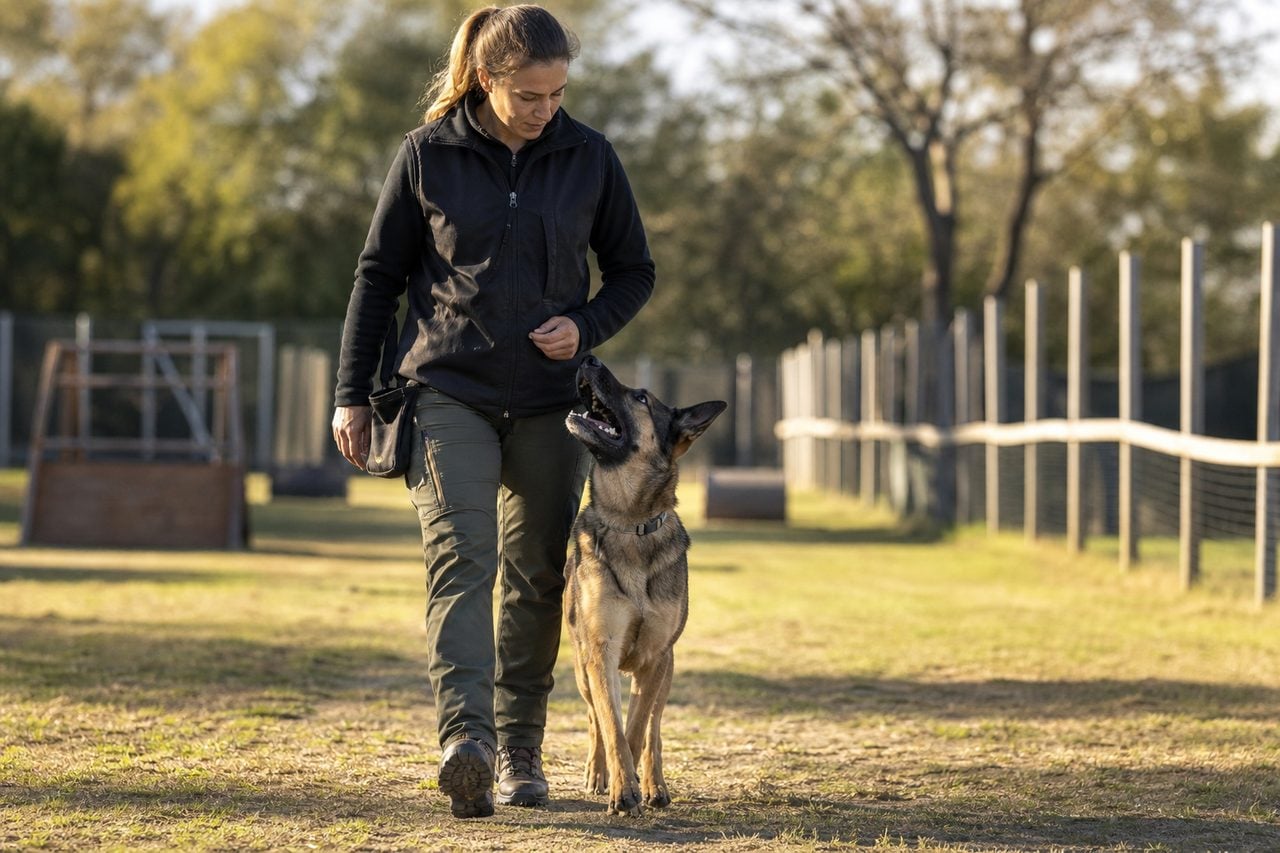
“Dog boot camp” — often called board-and-train — is one of the most misunderstood options in dog training. The idea is appealing: your dog goes to stay with a trainer for one to several weeks of intensive work, and comes home with new skills already installed. For busy Kalamazoo families juggling work, kids, and a dog with real behavior challenges, that hands-off promise can be hard to resist. But board-and-train is also the program where the gap between good and poor providers is widest, and where the wrong choice can do real harm.
This guide explains honestly what a board-and-train program can and cannot deliver, how to tell a humane, effective program from a risky one, and how to make sure the results actually stick once your dog is back home near Gull Lake, Comstock, or downtown Kalamazoo. Board-and-train options are less common across the metro than group classes, so you may need to compare a handful of providers carefully rather than pick the nearest one.
The advice here is vendor-neutral. Use it to ask sharp questions and to recognize the practices that separate a trustworthy program from a costly disappointment.
What Board-and-Train Actually Is
In a board-and-train — the format most people mean by “boot camp” — your dog lives with a trainer or at a training facility for a set period, commonly two to four weeks, while the trainer works with them daily. During that time the dog receives concentrated, consistent instruction that would take a busy owner much longer to deliver at home. At the end, the trainer transfers the skills back to you through handover sessions.
The genuine advantages are real. A skilled trainer working every day, in a controlled environment, with consistent timing and criteria, can build reliable behaviors faster than most owners can. For households where nobody has time for daily structured practice, or where a specific behavior needs focused work, that intensity is valuable. Board-and-train can jump-start:
- Foundation obedience — reliable sit, down, place, and recall.
- Leash manners for a dog that drags its owner down the Kalamazoo River Valley Trail.
- Impulse-control skills like waiting at doors and settling on cue.
- Confidence-building for dogs that need structured exposure.
What board-and-train is not is a magic reset button. The word “boot camp” evokes breaking a dog down and rebuilding it, and any program that actually operates that way should raise alarm. Behavior is not installed permanently in three weeks; it is taught, and then it must be maintained. Understanding that distinction is the difference between a program that helps and one that disappoints.
It also helps to understand what your money is actually buying. The cost of a board-and-train reflects room and board, daily one-on-one professional time, and the trainer’s expertise — which is why it typically costs more than a group class covering similar skills. That premium can be well worth it when a family genuinely lacks the time to do daily structured practice, or when a dog needs concentrated foundation work in a controlled setting away from the distractions and established habits of home. But it is worth being honest with yourself: you are paying for a head start and expert coaching, not for a permanent transformation that requires nothing further from you. The households that feel their board-and-train was worth every dollar are, almost without exception, the ones who did the maintenance work afterward.
The Honest Limits of Boot Camp
Before you commit, be clear-eyed about what an away program cannot do. The most important limitation is this: dogs do not automatically generalize behavior from one environment to another. A dog that performs beautifully at the trainer’s facility may act like a beginner when it comes home to a different house, different people, different distractions on a Portage street. This is not the trainer failing — it is how canine learning works. It is also exactly why the handover to you matters more than the weeks the dog spent away.
Other honest limits worth understanding:
- Deep-rooted fear and anxiety often are not good fits for an intensive away program. A frightened dog may shut down in a new environment, and separation from its family can add stress rather than resolve it.
- Aggression cases require careful, individualized behavior work and clear safety protocols — not a one-size boot-camp curriculum. These deserve a specialist, and results depend heavily on ongoing management at home.
- The owner is still the variable. If the household goes back to old habits, the dog drifts back too. No away program overrides daily life.
A reputable provider will tell you these things up front. If a program promises to “fix” any dog of any issue in a fixed number of weeks with a guarantee, treat that as a warning sign, not a selling point. Honest trainers describe realistic outcomes and are candid when board-and-train is not the right tool for your particular dog.
Red Flags: How to Spot a Program to Avoid
Because your dog will be out of your sight for weeks, vetting a board-and-train provider is more important than for any other kind of training. You are trusting them with your dog’s welfare around the clock. Walk away from programs showing these warning signs:
- No transparency. If you cannot tour the facility where your dog will live and train, or the trainer resists showing you the kennels and work areas, that is a serious problem.
- No updates. A good program sends regular photos or videos of your dog’s progress. Silence for two weeks is not acceptable.
- Vague or evasive methods. A trustworthy trainer will explain exactly how they teach and how they handle mistakes. Buzzwords, secrecy, or “trust the process” without specifics are red flags.
- Heavy reliance on pain or fear. Tools and techniques that work by hurting or intimidating a dog can suppress behavior quickly but often create fallout — fear, avoidance, or aggression that surfaces later. Fast results built on fear are not a bargain.
- Guarantees. No ethical trainer can guarantee behavior, because living creatures and home environments vary. Guarantees signal marketing over honesty.
Positive signs, by contrast, include a clean and safe facility, clear humane methods, regular communication, realistic expectations, and a structured plan to transfer skills to you. Ask how many dogs are in their care at once, who supervises overnight, and what a typical day looks like. The willingness to answer plainly tells you a great deal.
The Part That Makes or Breaks It: The Handover
If you remember one thing from this guide, make it this: the transfer sessions — where the trainer teaches you to handle your newly trained dog — are the most important part of any board-and-train. A dog that learned wonderful skills at a facility will lose them within weeks if the owner does not know how to cue, reward, and maintain those behaviors at home. The weeks your dog spent away are only as valuable as the handover that follows.
A quality program builds this in deliberately. Expect:
- Multiple hands-on lessons where you practice the commands with your dog under the trainer’s guidance, ideally including a session in your own home or neighborhood.
- Written or video reference material so you can review the cues and mechanics later.
- A clear maintenance plan describing how much daily practice keeps the skills sharp.
- Follow-up support — a check-in call, a follow-up session, or access to ask questions in the weeks after your dog comes home.
When you bring your dog home to Richland or Vicksburg or the WMU area, plan to practice in your real environment right away. Start in low-distraction settings and rebuild reliability in the places you actually live — the kitchen, the backyard, the walk to the corner — because that is where generalization has to happen. Budget time for this in the first weeks. The families who treat handover as seriously as the boot camp itself are the ones who keep the results.
Alternatives Worth Considering First
Board-and-train is not the only path, and for many Kalamazoo dogs it is not the best first step. Because intensive away programs are a bigger commitment of money and trust — and less common locally than other formats — it is worth honestly asking whether a different approach would serve your dog as well or better.
Consider these alternatives:
- Private in-home training teaches you and your dog together in the environment where problems actually occur. You learn the skills firsthand, which sidesteps the generalization gap entirely. For house manners, door-dashing, and everyday obedience, this is often the more durable choice.
- Group classes build obedience and socialization over several weeks at a lower cost, with the benefit of practicing around real distractions and other dogs.
- Day-training — where a trainer works with your dog during the day but it comes home each night — offers some of the intensity of board-and-train while keeping your dog in its home environment and involving you in regular handovers.
Board-and-train makes the most sense when a household genuinely cannot commit to daily practice for a period, when a dog needs concentrated foundation work fast, or when a specific issue benefits from a controlled environment. Even then, the best outcomes come from pairing the away program with strong owner follow-through. If you are unsure, a single consultation with a qualified trainer can help you decide whether boot camp, day-training, or a class is the right fit for your dog and your life around the metro.
It is also worth matching the format to the specific problem. Some issues respond far better to owner involvement than to an away program. Separation-related distress, for instance, is fundamentally about the dog’s relationship with being left by you, so a protocol you carry out at home usually beats sending the dog elsewhere. Fearfulness and anxiety often worsen with the stress of a new environment and separation from family. On the other hand, straightforward foundation obedience and impulse control — the skills a busy household simply has not had time to build — are exactly where the concentrated daily work of a board-and-train can shine. Being honest about which category your dog’s issue falls into is one of the most useful things you can do before spending money on any program.
Making Your Choice in the Kalamazoo Area
Intensive board-and-train programs are thinner on the ground around Kalamazoo than group classes and private lessons, so families sometimes look across the broader region to find a program that fits. That is fine — but distance adds its own considerations. If your dog will board somewhere farther afield, weigh how a facility far from Comstock or Plainwell affects your ability to tour it, visit, and attend in-person handover sessions afterward. Proximity matters most for the transfer phase, when you need to practice with the trainer.
As you compare providers, keep a short checklist in hand:
- Can you tour the facility and meet the person who will actually work with your dog?
- Are the methods humane, clearly explained, and reward-based?
- Will you receive regular updates while your dog is in their care?
- Is the handover substantial — multiple sessions, a maintenance plan, and follow-up?
- Are the promised outcomes realistic, with no guarantees or “fix any dog” claims?
The directory below lists board-and-train and intensive-training providers serving the Kalamazoo area. Take your time, ask the hard questions, and remember that the goal is a well-mannered dog living happily in your home — not a perfect performance at a facility you will never visit again. A trainer who welcomes your questions and sets honest expectations is worth more than one who promises the moon.
Preparing Your Dog and Your Home for Success
If you decide a board-and-train is right for your dog, a little preparation on both ends improves the outcome and reduces stress. Before your dog leaves, gather the health and history the program will need and set clear, written goals with the trainer so everyone is aligned on what “success” means. A program aimed at three specific behaviors — say, reliable recall, loose-leash walking, and settling on a mat — is far more achievable than a vague request to “fix everything.”
A sensible pre-boot-camp checklist:
- Confirm vaccinations and any health requirements well ahead of the start date.
- Write down the two or three behaviors that matter most to your household so the plan stays focused.
- Ask what to send along — a familiar bed, a favorite chew, or the food your dog already eats to avoid stomach upset from a sudden diet change.
- Agree on how and how often you will receive updates, and when the handover sessions will happen.
Just as important is preparing the home your dog returns to. The environment that produced the original problems is still there, so plan changes before your dog comes back. If the issue was door-dashing, decide on a management routine at the entryway. If it was jumping on guests, brief everyone in the household on the new expectations so the dog gets consistent responses from all of you. Consistency across every family member is the hidden variable that determines whether trained behavior holds — a dog that is asked to sit for its dinner by one person and allowed to jump by another quickly learns that the rules are negotiable.
Finally, plan the first two weeks home as an active practice period, not a return to autopilot. Schedule short daily sessions in your real environment — the kitchen in Comstock, the sidewalk in Plainwell, the backyard by Gull Lake — and gradually reintroduce the distractions of normal life. Treating homecoming as the beginning of the maintenance phase, rather than the end of the project, is what turns an expensive few weeks into a lasting change.
Dog Boot Camp in Kalamazoo: Local Options & Nearest Specialists
A few Kalamazoo-area trainers can help with milder dog boot camp needs:
- Michigander Kennels — 4.8★ (53 reviews)
- Gillette Kennels — 4.7★ (168 reviews)
Nearest dog boot camp specialists — Grand Rapids
For complex cases, some families travel to the larger pool of specialists in the Grand Rapids area for an assessment or a board-and-train stay. Top-reviewed options:
- Kingseed Kennels & Dog Training — 5.0★ (140 reviews)
- Red Sky Dog Training, LLC — 5.0★ (22 reviews)
- Ganderwood LLC — 5.0★ (1 review)
- West Michigan K9 — 4.9★ (337 reviews)
- Lakeshore K9 Training — 4.9★ (70 reviews)
- Pine Hill Kennel & Dog Training — 4.9★ (51 reviews)
- Kona’s K9 Retreat — 4.9★ (38 reviews)
- House of Paws Dog Training — 4.6★ (9 reviews)
See all Grand Rapids dog boot camp trainers →
Frequently Asked Questions
What is a dog boot camp or board-and-train?
It is a program where your dog stays with a trainer or at a training facility for a set period — commonly two to four weeks — receiving intensive daily instruction. At the end, the trainer transfers the learned skills back to you through handover sessions. It can jump-start foundation obedience and manners faster than most busy owners can at home, but it is not a permanent one-time fix; the behaviors must be maintained afterward.
Does board-and-train really work?
It can work well for the right dog and the right goals, especially foundation obedience and impulse control. But results depend heavily on the handover and your follow-through at home, because dogs do not automatically transfer behavior from the facility to your house. Deep-rooted fear, anxiety, and aggression are often poor fits for an intensive away program. Choose a humane, transparent provider and treat the transfer sessions as seriously as the boot camp itself.
What are the warning signs of a bad boot camp?
Major red flags include refusing to let you tour the facility, going silent with no updates while your dog is there, vague or secretive methods, heavy reliance on pain or fear-based tools, and guarantees that they can fix any dog. Fast results built on intimidation often create fear or aggression that surfaces later. Look instead for transparency, humane reward-based methods, regular communication, and realistic expectations.
Why is the handover so important?
Because a dog that learned skills at a facility will lose them if you do not know how to cue, reward, and maintain those behaviors at home. The transfer sessions, where the trainer teaches you to handle your dog, are the most valuable part of the whole program. Look for multiple hands-on lessons, ideally one in your own environment, reference material, a maintenance plan, and follow-up support.
Are there alternatives to boot camp?
Yes. Private in-home training teaches you and your dog together where problems actually happen, which avoids the generalization gap. Group classes build obedience and socialization over several weeks at lower cost. Day-training keeps your dog home each night while a trainer works with it during the day. For many dogs, one of these is a more durable first step than an intensive away program.
Should I look outside Kalamazoo for a board-and-train program?
Intensive board-and-train programs are less common around Kalamazoo than group classes, so some families compare providers across the wider region. That is reasonable, but remember that distance affects your ability to tour the facility, visit, and attend in-person handover sessions — which matter most for making the results stick. Weigh proximity for the transfer phase, not just the boarding weeks.
Related: read our complete dog boot camp guide or the full Kalamazoo dog training overview.
Ready to find the right dog boot camp pro in Kalamazoo?