
Dog Boot Camp in Muskegon, MI
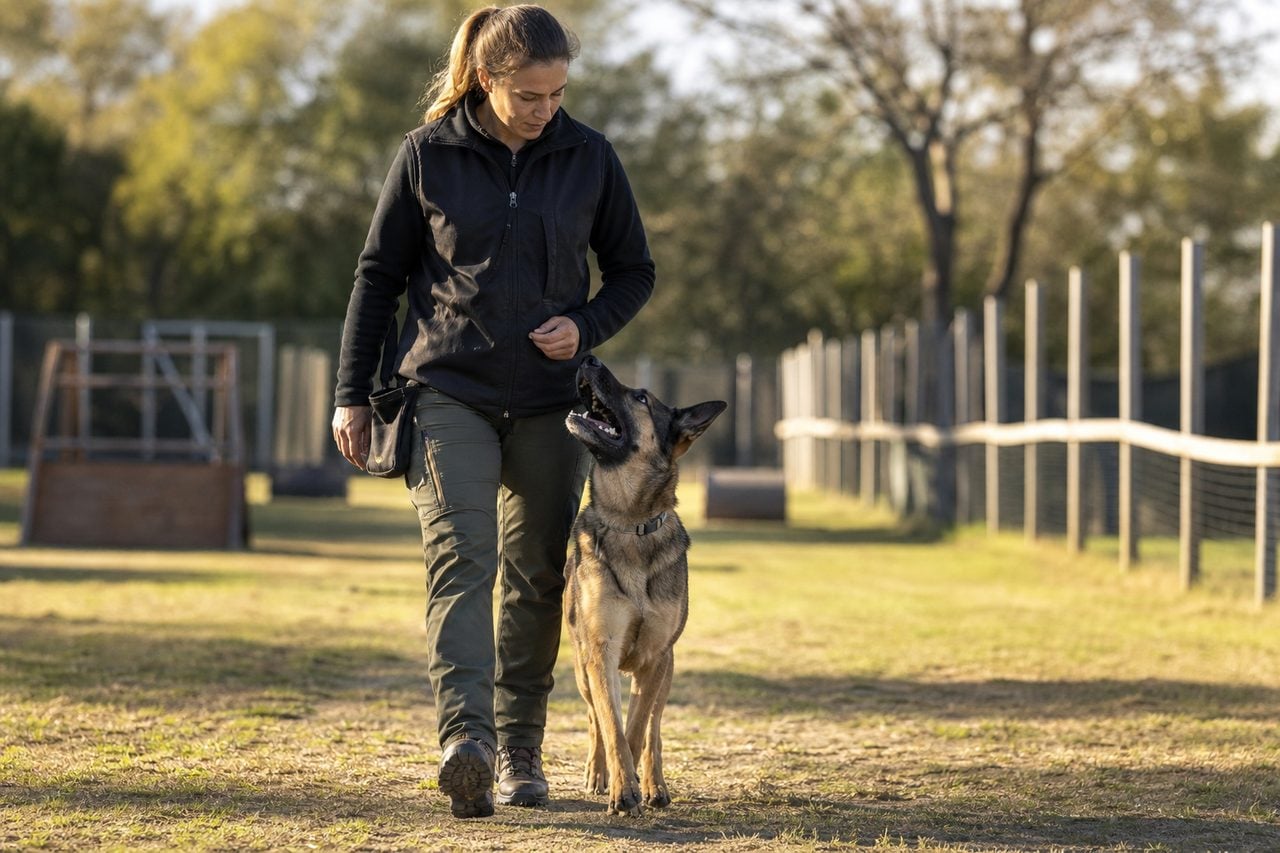
Dog boot camp, sometimes called board-and-train, is an intensive training model where your dog stays with a trainer for a set period, typically one to several weeks, while receiving daily, structured instruction. For busy Muskegon families or dogs with stubborn habits, the appeal is obvious: hand off the heavy lifting to a professional and get back a dog with a solid foundation of skills. Done well, it can jump-start training that might otherwise take much longer at home.
It is worth being upfront that dedicated board-and-train programs are a thinner slice of the local market along the lakeshore than everyday obedience classes are. Some Muskegon-area families end up traveling toward the wider region, including Grand Rapids, to find a program that fits a specific need. That said, there are options closer to home, and this guide will help you understand how boot camp works, when it makes sense, and how to choose a program that actually serves your dog rather than just your calendar.
Boot camp is not magic, and it is not a fit for every dog or every problem. The most important thing to understand from the start is that a good program trains you as much as it trains your dog. The skills only last if the handoff back home is done carefully, so the sections below give equal weight to what happens during the stay and what happens after your dog returns to Muskegon.
What Dog Boot Camp Actually Is
In a board-and-train program, your dog lives with the trainer, either at a dedicated facility or in the trainer’s home, for the duration of the program. Instead of one class a week, the dog gets daily training sessions woven into a consistent routine, along with structured rest, socialization, and practice in real environments. The concentrated repetition and controlled setting are what allow rapid progress on foundational skills, since the dog is not slipping back into old habits between weekly lessons.
Programs vary widely. Some focus on basic obedience and manners, teaching a dog to walk politely on leash, come when called, and settle calmly at home. Others target specific issues such as leash reactivity or poor impulse control. Length varies too, commonly ranging from about two weeks for a manners tune-up to several weeks for more involved behavior work, with the right duration depending on the dog and the goals rather than a fixed formula.
The defining feature of every legitimate program is the transfer process at the end. A dog that performs beautifully for the trainer but ignores its owner at home has not really been trained; the skills simply have not been handed over. That is why reputable programs include owner lessons, written guidance, and often follow-up support to make sure the results survive the drive back to Muskegon. When you evaluate any program, that transfer piece is the part to scrutinize most closely, because it is where value is either delivered or lost.
When Boot Camp Makes Sense, and When It Does Not
Boot camp shines in specific situations. It can be a strong choice when an owner genuinely lacks the time to run consistent daily sessions, when a dog needs a concentrated reset on foundational skills, or when progress at home has stalled despite real effort. The immersive structure removes the inconsistency that derails so much home training, and consistency is often the missing ingredient rather than any special technique.
It is a weaker choice in other cases. Deeply rooted fear and anxiety, for example, often need the dog to learn in its own home environment with its own family, because the behavior is tied to specific triggers and relationships. Sending such a dog away can produce skills that do not generalize back home, and the underlying emotional issue may remain untouched. Separation anxiety is a good example, since it is fundamentally about the dog’s relationship with being alone at home, which a facility cannot fully replicate.
Similarly, if the core problem is really about the household routine or how the family interacts with the dog, boot camp alone will not fix what returns unchanged. The dog comes home to the same patterns that created the issue, and old behavior tends to resurface unless the humans change too.
- Good fit: busy owners, foundational manners, stalled progress, a concentrated jump-start on obedience.
- Questionable fit: complex fear or anxiety rooted in the home, separation anxiety, aggression that needs a careful long-term plan, or problems driven by household habits.
- Either way: plan for the transfer home and ongoing maintenance, because that is where results are won or lost.
If you are unsure whether your dog’s situation suits boot camp, an honest trainer will tell you. Some issues are better served by private in-home training or ongoing behavior work, and a good professional would rather point you to the right approach than take a placement that will not succeed. Being told that boot camp is not the answer for your dog is a sign of integrity, not a lost opportunity.
What Happens During a Board-and-Train Stay
A well-run program follows a predictable daily rhythm. Dogs typically get several short training sessions spread through the day, plenty of structured rest, controlled socialization, and practice in gradually more distracting environments. The mix of work and rest matters; dogs, like people, learn better when new skills are consolidated with downtime rather than drilled to exhaustion. A program that runs dogs ragged all day is not necessarily doing more good.
Early in the stay, the trainer builds rapport and establishes the basics in a low-distraction setting. As the dog gains fluency, sessions move into more realistic environments so the skills hold up around the distractions of daily life. For a lakeshore dog, that might mean practicing calm behavior around foot traffic, other dogs, and the general activity of a busy area rather than only in a quiet training room, since a skill that only works in a controlled space is not much use on a real walk through town.
Good facilities are clean, safe, and transparent. Many share regular updates so you can see your dog’s progress, which also gives you an early read on how the trainer communicates and whether their methods sit right with you. Be cautious of any program that discourages questions or refuses to let you understand what your dog is experiencing day to day; you are entitled to know how your dog is being handled while it is in someone else’s care.
Throughout the stay, the trainer should be documenting the exact cues, rewards, and routines used, so you can replicate them precisely once your dog comes home. That documentation is a core part of what you are paying for, because it is the bridge between the trainer’s results and yours. Ask up front what you will receive in writing and how detailed it will be.
The Transfer Home: Where Results Are Won or Lost
The single biggest predictor of long-term success is what happens after your dog returns. Dogs do not automatically generalize what they learned with a trainer to a new person in a new place. Without a deliberate handoff, the polished skills fade within weeks as old patterns creep back in, and owners are left wondering why the expensive program did not stick.
That is why the transfer process deserves as much attention as the boot camp itself. A quality program includes hands-on lessons where you learn to give the cues, deliver the rewards, and enforce the routines exactly as the trainer did. You should leave knowing precisely how to maintain each skill, what to do when your dog tests the boundaries, and how to keep practicing in real life. Practicing under the trainer’s eye before you go home lets them correct your timing and mechanics, which matters more than most owners expect.
- Insist on owner training sessions, not just a demonstration of your dog performing.
- Get written instructions covering cues, rewards, and daily structure.
- Ask about follow-up support, whether by phone, email, or in-person tune-ups.
- Plan to keep up daily practice at home for weeks after the program ends.
- Expect a short adjustment period as your dog settles back into home life.
Think of boot camp as a strong head start rather than a finished product. The trainer builds the foundation; you keep the house standing. Families who commit to the maintenance routine get lasting results, while those who expect a permanently finished dog are usually disappointed. This is true no matter how good the program was, and it is the single most important expectation to set before you enroll. A realistic mindset here is what separates the families who are thrilled a year later from those who feel let down.
Evaluating Programs and What to Ask
Because you will not be present during much of the training, choosing a boot camp requires more due diligence than picking a weekly class. You are trusting someone with your dog’s care and its emotional wellbeing around the clock, so ask direct questions and expect clear answers. A few pointed conversations will tell you a great deal about whether a program is right.
- What training methods do you use, and how do you handle mistakes or non-compliance?
- Where and how are the dogs housed, and can I see the facility or setup?
- What does a typical day look like, including rest, socialization, and session length?
- How do you handle the transfer to me, and what follow-up is included?
- What happens if my dog does not respond well, or shows stress during the stay?
- How will you keep me updated while my dog is with you?
- What are your health, vaccination, and safety requirements?
Pay attention to how a trainer answers. Transparency, patience, and a willingness to explain their reasoning are good signs. Reluctance to let you see the space, vague answers about methods, or pressure to commit quickly are all reasons to keep looking. Guarantees of a permanently fixed dog should raise a flag too, since responsible trainers know that outcomes depend heavily on follow-through at home.
It also helps to think about the methods themselves. Programs that lean on humane, reward-based approaches tend to produce dogs that are both well-behaved and confident, whereas heavy reliance on intimidation can suppress behavior while leaving stress underneath. If a trainer cannot or will not explain what happens when your dog gets something wrong, that is important information. A dog that comes home quieter but more shut down is not the same as a dog that comes home genuinely trained, so ask enough questions to understand which one you are likely to get.
Finally, consider references and track record. Ask whether the trainer has worked with dogs like yours, whether in breed, temperament, or the specific issue you are trying to address, and if possible speak with a past client about their experience and, just as importantly, how the results held up months later. A program that produces a great two-week outcome that unravels by fall is not the value it appears to be. Take your time, visit if you can, and trust your read on whether the environment feels safe and calm before you leave your dog there.
Finding a Boot Camp on the Lakeshore and Beyond
As noted, dedicated board-and-train programs are less common along the immediate Muskegon lakeshore than standard obedience training is. You will find some options serving Muskegon, Norton Shores, and the harbor towns of Grand Haven, Spring Lake, and Ferrysburg, and it is worth checking programs that cover the inland communities around Twin Lake, Fruitport, Nunica, and Coopersville as well. For a specialized need, some families expand their search into the broader West Michigan region, including Grand Rapids, where a wider pool of programs may include one that fits.
When comparing options, weigh proximity against fit. A slightly longer drive to a program whose methods and communication you trust is usually a better choice than a closer program you feel uneasy about. Because your dog will be away from home, the quality and transparency of the trainer matter even more than convenience, and the drive is a one-time cost while the training results last for years.
It is also reasonable to consider alternatives before committing to a full board-and-train. For some dogs and some goals, a series of private in-home sessions delivers similar results while keeping the dog in its own environment and keeping you involved throughout. A good trainer can help you decide whether the intensive model is truly the best route for your situation or whether another format would serve you better.
Use the listings in this directory to see which trainers in the area offer board-and-train or intensive programs, then contact a few to ask the questions above. A short conversation reveals a great deal about how a trainer thinks and whether their approach suits your dog. The right program is one that is honest about what boot camp can and cannot do, and that treats the transfer home as a central part of the service rather than an afterthought.
Dog Boot Camp in Muskegon: Local Options & Nearest Specialists
A few Muskegon-area trainers can help with milder dog boot camp needs:
- Lakeshore K9 Training — 4.9★ (70 reviews)
- Dog Star Ranch — 4.7★ (249 reviews)
Nearest dog boot camp specialists — Grand Rapids
For complex cases, some families travel to the larger pool of specialists in the Grand Rapids area for an assessment or a board-and-train stay. Top-reviewed options:
- Kingseed Kennels & Dog Training — 5.0★ (140 reviews)
- Red Sky Dog Training, LLC — 5.0★ (22 reviews)
- Ganderwood LLC — 5.0★ (1 review)
- West Michigan K9 — 4.9★ (337 reviews)
- Pine Hill Kennel & Dog Training — 4.9★ (51 reviews)
- Kona’s K9 Retreat — 4.9★ (38 reviews)
- House of Paws Dog Training — 4.6★ (9 reviews)
See all Grand Rapids dog boot camp trainers →
Frequently Asked Questions
What is a dog boot camp or board-and-train program?
It is an intensive training model in which your dog stays with a trainer, either at a facility or in the trainer’s home, for a set period ranging from about two weeks to several weeks. During the stay the dog receives daily structured training, rest, and socialization, which allows faster progress on foundational skills than a once-a-week class. A reputable program ends with a transfer process that teaches you to maintain the skills at home, which is the part that determines whether the results last.
Does boot camp permanently fix behavior problems?
No responsible trainer will promise a permanent fix. Boot camp gives your dog a strong foundation, but the results only last if you continue the routines at home after the stay. Dogs do not automatically generalize skills to a new handler and environment, so the transfer lessons and ongoing daily practice are essential. Treat boot camp as a head start you maintain, not a finished product, and be skeptical of any guarantee of permanent results regardless of how good the program sounds.
Is boot camp a good choice for a fearful or anxious dog?
Often it is not the best first choice. Fear and anxiety are frequently tied to specific triggers and to the dog’s relationship with its family and home environment, so a dog may learn skills with a trainer that do not carry back home. Separation anxiety in particular is about being alone at home, which a facility cannot fully recreate. Many anxious dogs do better with in-home training or a longer-term behavior plan involving the whole family. An honest trainer will tell you if a different approach fits better.
How long does a dog boot camp program last?
It varies by program and by what your dog needs. A manners or obedience tune-up commonly runs around two weeks, while more involved behavior work may take several weeks. Longer is not automatically better; what matters more is the quality of daily training, the trainer’s methods, and how thoroughly they hand the skills back to you. Ask each program how they set the length, how they measure whether a dog is ready to go home, and what the schedule looks like day to day.
What should I ask before enrolling my dog?
Ask about training methods and how the trainer handles mistakes, how and where dogs are housed, what a typical day looks like, and how they manage the transfer of skills back to you. Also ask about follow-up support, how they will keep you updated during the stay, what their health and safety requirements are, and what happens if your dog shows stress or does not respond well. Clear, patient answers and a willingness to show you the setup are good signs; vagueness or pressure to commit quickly are not.
Are there dog boot camps near Muskegon?
There are some options serving Muskegon, Norton Shores, and the surrounding harbor and inland communities, though dedicated board-and-train programs are less common locally than standard obedience classes. Because of that, some families broaden their search into the wider West Michigan region, including Grand Rapids, to find a program that fits a specific need. Use this directory to compare local options first, and weigh proximity against how well each trainer’s methods and communication suit your dog.
Related: read our complete dog boot camp guide or the full Muskegon dog training overview.
Ready to find the right dog boot camp pro in Muskegon?