
Off-Leash Dog Training in Jackson, MI
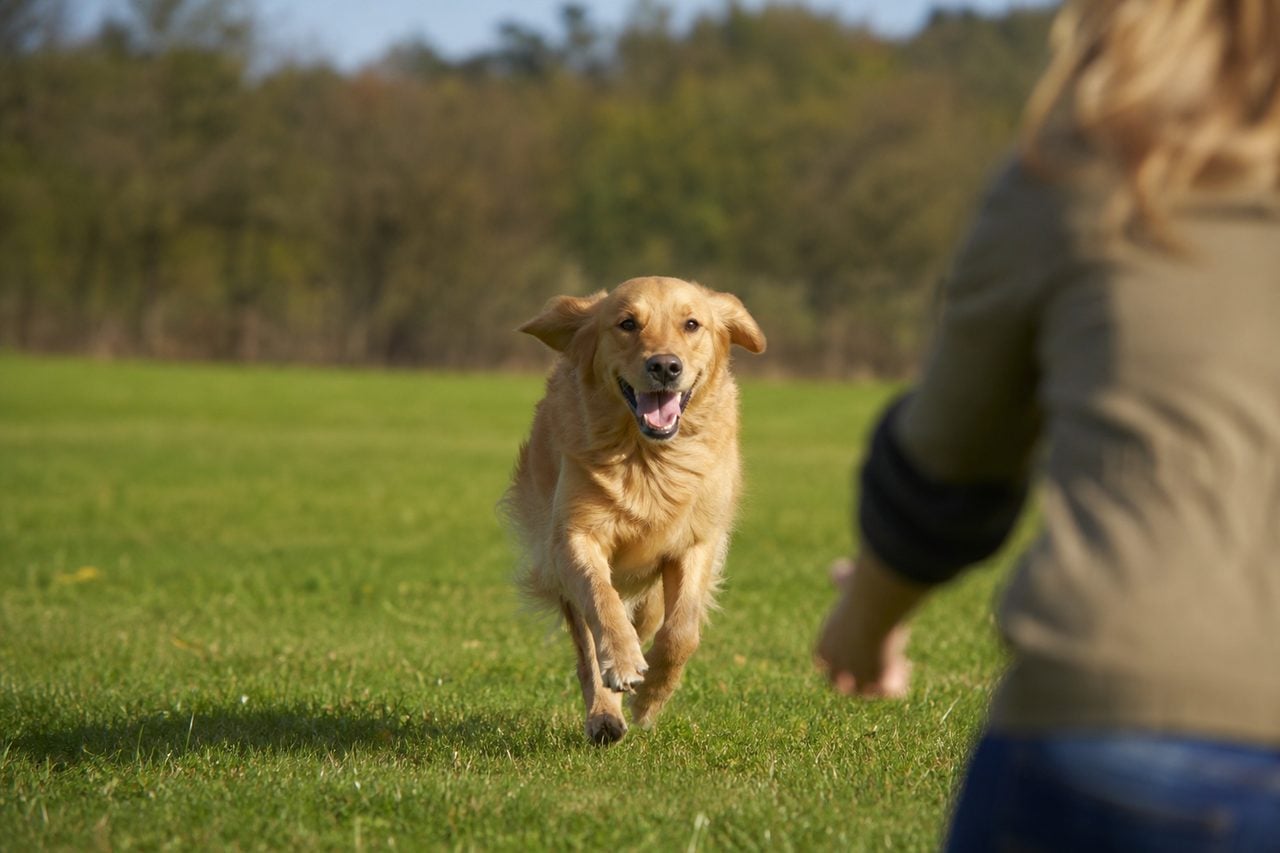
The dream of many dog owners in the Jackson area is a dog that can be trusted off leash — trotting along a quiet stretch of the Falling Waters Trail, coming back instantly when called, and enjoying real freedom safely. Reliable off-leash behavior is achievable for a lot of dogs, but it is earned through a great deal of foundation work, not switched on with a single tool or a weekend class.
- What Reliable Recall Really Means
- Foundation First: What Comes Before Off-Leash Work
- Building a Recall Step by Step
- When E-Collar Work Is and Is Not Appropriate
- Practicing Safely on Quiet Local Trails
- Leash Rules Are Local, Not Statewide
- Safety, Realistic Expectations, and When to Get Help
- Reviewed trainers
- FAQ
At the heart of off-leash freedom is one skill above all others: a reliable recall, the ability to come back to you promptly and happily even when there are distractions. Everything else builds on that. This guide explains how to build a genuine recall from the ground up, where an e-collar does and does not belong in the process, and how to practice safely on the quieter trails and open spaces around Jackson, Spring Arbor, Napoleon, and the Irish Hills.
A note on the law up front, because it matters: Michigan does not have a single statewide leash statute the way some people assume. Leash requirements are set by local ordinances that vary across the Jackson area and by specific parks and trails. Off-leash freedom is only appropriate where local rules allow it, so always check the rules for the exact place you plan to be. This article describes training, not a green light to let a dog off leash anywhere.
What Reliable Recall Really Means
People often say their dog knows come, but a recall that works in the living room is very different from one that holds up when a squirrel bolts across the trail. A truly reliable recall means the dog turns and comes to you quickly and willingly across a wide range of situations, including in the presence of strong distractions, and does so because coming back has always been worth its while.
The gap between a casual recall and a reliable one is enormous, and it is the reason off-leash freedom takes so long to earn. A reliable recall has a few defining qualities:
- It is fast. The dog turns and comes without hesitation, not eventually, on its own schedule.
- It is generalized. It works in the yard, in the park, near other dogs, and around wildlife, not just in one familiar setting.
- It holds up under distraction. The hard test is whether the dog can leave something exciting to come to you.
- It is joyful, not fearful. The dog comes because good things happen when it does, not because it is afraid of what happens if it does not.
Building that quality of recall is the real project of off-leash training. Until a dog demonstrates it consistently on a long line, it is not ready for genuine off-leash freedom in an unfenced area — no matter how well it behaves at home.
Foundation First: What Comes Before Off-Leash Work
Off-leash reliability is the last step in a long chain, not the first. Trying to skip the foundation is the most common reason dogs run off, ignore recalls, and end up in dangerous situations near roads. The groundwork protects the dog and sets realistic expectations for the owner.
The foundation includes several building blocks:
- A strong relationship and engagement. A dog that checks in with you naturally and finds you rewarding is far more likely to want to stay close. This is built through play, training games, and being the source of good things.
- Reward history for coming to you. Long before any freedom, coming when called should have been paired with excellent food, play, and praise hundreds of times so the behavior is deeply ingrained.
- Long-line work. A fifteen-to-thirty-foot long line attached to a harness lets a dog experience distance and distraction while you retain a physical safety net. This stage often lasts weeks or months and is where most of the real proofing happens.
- Impulse control basics. Skills like waiting, leaving a distraction, and settling teach the self-control that off-leash freedom demands.
The long line deserves special emphasis. It bridges the gap between on-leash control and true off-leash freedom, allowing you to practice recalls at increasing distances and around real distractions without risking the dog bolting. A dog should be reliably recalling on a long line across many environments before you ever consider dropping it. Rushing this stage is how dogs get lost or hurt.
A practical note on long lines: attach them to a well-fitted harness rather than a collar, since a dog hitting the end of a thirty-foot line on its neck can be jarring or even injurious. Wear gloves to avoid rope burn, keep the line from tangling around your legs or the dog’s, and let it drag loosely so the dog experiences freedom rather than constant tension. The point of the long line is not to reel the dog in like a fish; it is a safety backup while the dog learns to choose you on its own.
Building a Recall Step by Step
A solid recall is built gradually, layering difficulty only after the dog succeeds at the current level. The progression below is a general framework; the exact pace depends on your individual dog.
- Start indoors with no distractions. Say your recall cue in an easy setting, and reward generously every single time the dog comes. Make coming to you the best thing that happens all day.
- Add mild distractions at home and in the yard. Practice with a toy nearby, then with family moving around, always keeping success high.
- Move to a fenced or enclosed area. A securely fenced yard or an enclosed space lets the dog experience more space while staying safe.
- Introduce the long line in new places. Take the recall to quiet, low-distraction outdoor spots, then gradually to busier ones, using the long line as your safety net.
- Proof against real distractions. Practice recalls when the dog notices another dog at a distance, a jogger, or wildlife, always on the long line, rewarding heavily for choosing you.
A few principles run through all of it. Keep the recall cue positive and never poison it by calling the dog to you for something unpleasant like a bath, nail trim, or the end of fun. Pay generously — the reward for coming back should genuinely compete with whatever the dog left behind. And never call your dog if you are not reasonably confident it will come or you cannot make it happen, because every ignored recall weakens the cue. Set the dog up to succeed, and the recall grows stronger with every repetition.
When E-Collar Work Is and Is Not Appropriate
Electronic collars, also called remote or e-collars, come up frequently in off-leash conversations, and they are one of the most misunderstood tools in dog training. An honest, responsible view is that an e-collar is an advanced tool that is never a shortcut, never a substitute for foundation training, and not appropriate for every dog or every owner.
The most important principle is foundation-first. An e-collar cannot install a recall the dog does not already understand. Proper modern e-collar work begins only after the dog has a solid, well-rewarded recall on a long line, and the collar is introduced at very low levels as a form of communication layered onto behaviors the dog already knows — not as a way to punish a dog into compliance. Used badly, at high levels or on a dog that does not understand what is being asked, an e-collar causes fear, confusion, and fallout that can be very hard to undo.
There are dogs for which e-collar work is clearly not appropriate:
- Fearful or anxious dogs, for whom added pressure tends to worsen the underlying emotional problem.
- Aggressive dogs, where the risk of increasing arousal and fallout is serious and the priority should be a behavior plan with professional and veterinary involvement.
- Dogs without a solid foundation, who need the groundwork first, not a tool layered on top of gaps.
Because the potential for harm is real, e-collar training is an area where professional guidance genuinely matters. If you are considering it, work with an experienced, reputable trainer who uses low-level, reward-based e-collar methods and who will honestly tell you whether it is even suitable for your dog. This is not a tool to buy online and figure out alone. For many owners and many dogs, a thoroughly proofed long-line recall achieves the goal without an e-collar at all.
Practicing Safely on Quiet Local Trails
Once a dog has a genuinely reliable recall on a long line, careful practice in real environments is how it gets proofed further. The Jackson area has open spaces and trails that suit this work when used responsibly and legally.
The paved Falling Waters Trail running west toward Concord, the open areas around Ella Sharp Park, and the quieter natural spaces out toward Napoleon and the Irish Hills all offer room and long sightlines. When practicing, keep these safety principles front and center:
- Confirm the local rules first. Leash requirements vary by ordinance and by specific park or trail across the Jackson area. Only practice off leash, or on a long line, where it is actually permitted, and default to a long line if you are unsure.
- Choose quiet times and low-traffic spots. Fewer people, dogs, and cyclists means fewer surprises and a safer setting for a dog that is still learning.
- Stay far from roads. A recall failure near a road can be fatal. Practice well away from traffic and never off leash near a busy road.
- Keep the long line on longer than you think you need to. The transition from long line to fully off leash should be gradual, in secure settings, and only after many successful sessions.
- Respect other trail users and wildlife. A friendly dog is still a nuisance to someone who does not want to be approached, and chasing wildlife is both dangerous and often against the rules.
Seasons matter in this part of Michigan too. Snowy and icy months change footing and sightlines, and busy summer weekends fill the trails with families, cyclists, and other dogs, so the same path can be an easy classroom on a quiet winter morning and a poor choice on a warm Saturday afternoon. Plan sessions around when a given spot is actually calm rather than assuming it is always suitable. Carrying water in warmer months and keeping sessions short in extreme cold are simple welfare habits that also keep the dog in the right frame of mind to learn.
Practicing thoughtfully in these settings builds the kind of proofed, real-world reliability that a backyard alone cannot. It also keeps you within the bounds of local rules and considerate of the community that shares these spaces.
Leash Rules Are Local, Not Statewide
This point is important enough to stand on its own, because a common misconception leads people astray. Michigan does not have a single, blanket statewide leash law that governs every dog in every situation. Instead, control-of-dog requirements are handled through local ordinances, and they differ across the Jackson area from one jurisdiction to the next, along with the specific rules of individual parks, county lands, and trails.
What this means for you as an owner:
- Check the ordinance where you live and where you walk. The rules in the City of Jackson, in a township, and in a county park may not be the same.
- Read posted signage at parks and trails. Many public spaces post their own leash requirements, and those govern behavior on site.
- Assume a leash is required unless clearly told otherwise. When in doubt, keep the dog leashed or on a long line. That protects your dog, other people, and wildlife, and keeps you on the right side of local rules.
- Remember that even where off leash is allowed, you are responsible for your dog. Voice control and a reliable recall are what make off-leash freedom safe and courteous, and liability for a dog’s behavior remains with the owner.
Off-leash training builds the skills; local rules determine where those skills may be used. Respecting both is part of being a responsible owner in Jackson County. When you are unsure of the rules for a specific spot, the safe and simple default is to keep the dog on leash or on a long line.
Safety, Realistic Expectations, and When to Get Help
Off-leash reliability is a wonderful goal, and it is worth being honest about what it takes and what it does not guarantee. Even a well-trained dog is still a dog, and no recall is one hundred percent proof against every possible temptation. Responsible off-leash owners keep that humility, choose their settings carefully, and never gamble with a dog’s safety near roads or in unfamiliar, uncontrolled areas.
Set expectations by breed and individual temperament as well. Some dogs, particularly certain scent hounds and high-prey-drive breeds, are wired to follow their noses or chase, and for them a truly reliable off-leash recall may be very difficult or unwise to rely on. There is no shame in deciding a particular dog is a long-line dog for life; a fifteen-foot line still allows a lot of freedom while keeping everyone safe.
Professional help is worth seeking when:
- Your recall stalls despite consistent foundation work.
- You are considering e-collar work and want to do it correctly and safely, or find out whether it suits your dog at all.
- Your dog shows fear, anxiety, or any aggression, in which case e-collar pressure is inappropriate and a different, gentler behavior plan is needed.
- You simply want expert coaching to build reliability faster and avoid common mistakes.
Skilled trainers experienced in recall and off-leash work exist in the Jackson area, and for specialized needs — particularly proper low-level e-collar coaching or cases complicated by fear or aggression — the larger pool of trainers and behavior professionals to the east in Ann Arbor and the Detroit metro, about forty minutes down I-94 and beyond, is a reasonable place to look. Building genuine off-leash freedom is a long, rewarding project best done patiently, legally, and with the right guidance.
Off-Leash Dog Training in Jackson: Local Options & Nearest Specialists
Right now there are no listed Jackson trainers focused specifically on off-leash dog training. Many general Jackson dog trainers can help you get started, and the nearest specialists for this focus are below.
Nearest off-leash dog training specialists — Ann Arbor
For complex cases, some families travel to the larger pool of specialists in the Ann Arbor area for an assessment or a board-and-train stay. Top-reviewed options:
See all Ann Arbor off-leash dog training trainers →
Frequently Asked Questions
Is there a statewide leash law in Michigan?
No single statewide leash statute governs every dog in every situation the way many people assume. Control-of-dog requirements are set through local ordinances that vary across the Jackson area, along with the specific rules of individual parks, county lands, and trails. Always check the ordinance where you live and walk, read posted signage, and default to keeping your dog leashed or on a long line when you are unsure of the rules for a spot.
How long does it take to train a reliable off-leash recall?
There is no fixed timeline, and honest answers run in months rather than weeks for a genuinely proofed recall. The work moves through indoor practice, yard work, and an extended long-line phase across many environments and distractions before a dog is ready for true off-leash freedom in an unfenced area. Rushing the foundation is the most common reason dogs run off, so the pace should follow the dog’s consistent success, not a calendar.
Do I need an e-collar for off-leash training?
Many dogs and owners reach reliable off-leash behavior with a thoroughly proofed long-line recall and never use an e-collar at all. An e-collar is an advanced tool, never a shortcut, and it cannot install a recall the dog does not already understand. If used, it belongs only after a solid reward-based foundation and is introduced at very low levels with professional guidance. It is not something to buy online and figure out alone.
Is an e-collar appropriate for a fearful or aggressive dog?
No. Adding e-collar pressure to a fearful or anxious dog tends to worsen the underlying emotional problem, and using one on an aggressive dog risks increasing arousal and causing serious fallout. Those dogs need a different, gentler behavior plan, and aggression cases in particular call for professional and veterinary involvement rather than a training tool layered on top of the problem.
Where can I safely practice off-leash or long-line recall near Jackson?
Open spaces with long sightlines used at quiet times work best, such as the paved Falling Waters Trail toward Concord, the open areas around Ella Sharp Park, and quieter natural spaces toward Napoleon and the Irish Hills. First confirm the local rules for the exact spot, default to a long line when unsure, stay well away from roads, choose low-traffic times, and be considerate of other trail users and wildlife.
Why does my dog come when called at home but ignore me at the park?
Because a recall that works at home has not yet been generalized and proofed against distractions. Coming when called in a quiet living room is a very different skill from leaving an exciting smell or another dog at a park. The fix is patient long-line work that gradually adds distance and distractions while heavily rewarding the dog for choosing you, so the recall becomes reliable across many environments rather than just the easy one.
Related: read our complete off-leash dog training guide or the full Jackson dog training overview.
Ready to find the right off-leash dog training pro in Jackson?