
Board & Train in Harrisburg, PA
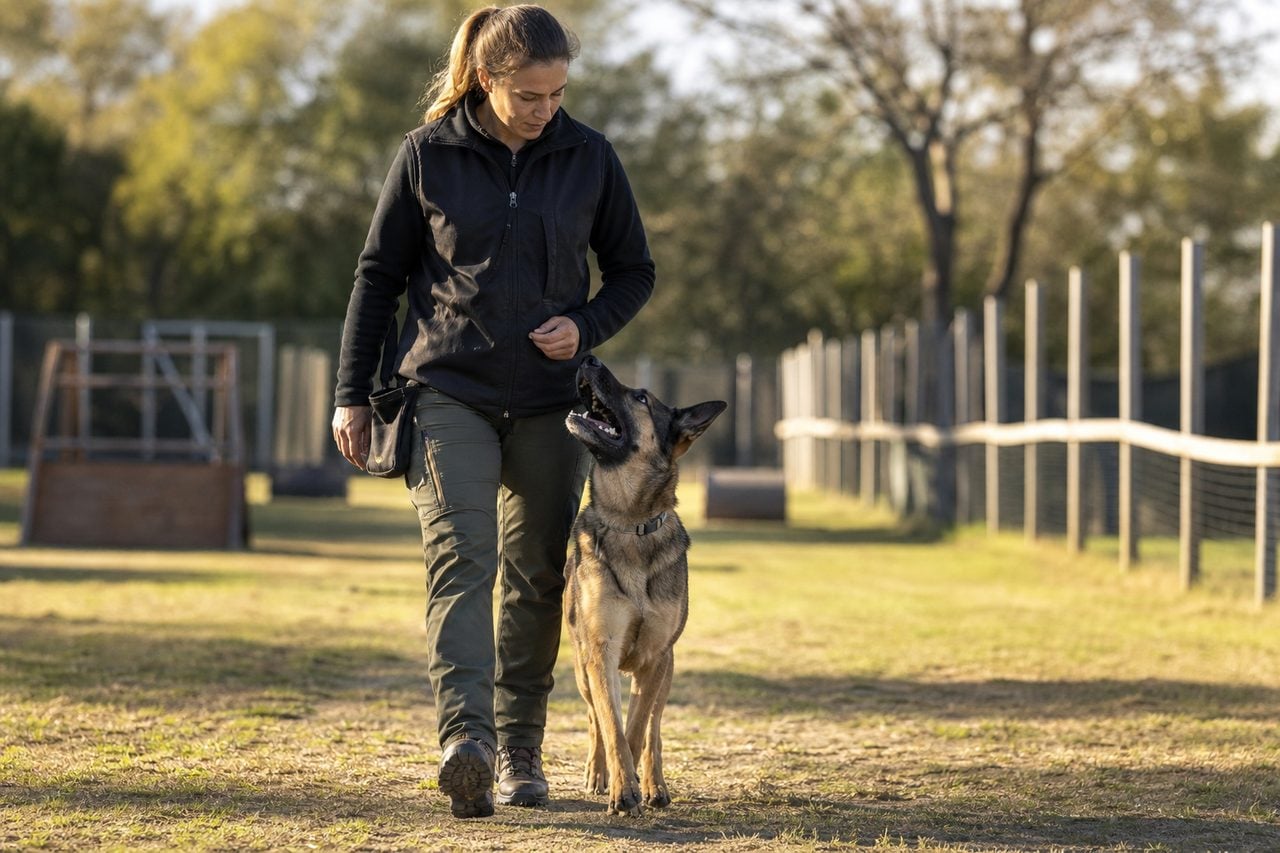
Board & train is a residential training option where your dog lives with a professional trainer for a set stretch of time — often two to four weeks — while learning obedience, manners, and impulse control around the clock. For busy households across the Harrisburg region, from the neighborhoods near Riverfront Park to the growing developments along the Hershey corridor, it can be an appealing way to compress weeks of practice into a structured, immersive program. The trainer handles the daily repetition, the proofing in different environments, and the consistency that is so hard to maintain when you are juggling work, school runs, and a Pennsylvania winter that keeps everyone indoors.
Because your dog actually stays overnight at the trainer’s facility or home, board & train is fundamentally different from a daytime program. The dog experiences a full routine — feeding, crate rest, training sessions, decompression, and exposure to new sights and sounds — under the supervision of someone who reads canine body language for a living. That continuity is the whole point: habits form faster when the environment reinforces them every hour rather than only during a weekly class. Around Dauphin, Cumberland, and Perry counties, owners often turn to this format when a dog needs more than a once-a-week lesson can deliver, or when a major life change is on the horizon.
This guide explains how board & train works in and around Pennsylvania’s capital, what realistic outcomes look like, how the all-important transfer back to you is handled, and the questions to ask before you hand over the leash. GetDogSchool maintains a directory of programs across the West Shore, the Cumberland Valley, and the eastern fringe toward Elizabethtown, so you can compare local options with clear expectations rather than marketing promises.
How Board And Train Actually Works
In a board & train program, your dog moves into the trainer’s facility or home for the duration of the package. The day is built around short, frequent training sessions interspersed with rest, enrichment, and supervised free time. A reputable trainer does not drill a dog for hours; they work in focused blocks and let the dog consolidate what it has learned. The residential setting means the trainer can also address behaviors that only show up in everyday life — door-dashing, counter-surfing, leash reactivity on a walk — because the dog is living a real routine, not just attending a lesson.
Most Harrisburg-area programs run two, three, or four weeks, with the length matched to the goals. A young dog learning foundational obedience needs less time than one unlearning entrenched habits. Throughout the stay, the trainer should send you regular updates — photos, short videos, written notes — so you can see progress and understand the methods being used. When the program ends, the work is only half done: the handoff to you, covered later in this guide, determines whether the results stick once your dog is back home near the Capital Area Greenbelt or out on a trail at Wildwood Park.
Who Benefits Most In The Harrisburg Area
Board & train tends to suit households where time, not commitment, is the limiting factor. Two-career families on the West Shore, parents shuttling kids between Mechanicsburg and Camp Hill activities, and commuters heading into the city each morning often struggle to deliver the daily consistency that training requires. Handing that consistency to a professional for a few weeks can jump-start a foundation you then maintain.
It also fits specific situations: a new rescue that needs structure before integrating into a busy home, an adolescent dog whose energy has outpaced its manners, or a family preparing for a baby, a move, or a long stretch of winter when outdoor practice is limited. Dogs from the rural north in Perry County that have had little exposure to traffic, sidewalks, and crowds can benefit from the controlled socialization a good program provides. That said, board & train is not a fix for every problem, and it is not a substitute for the relationship-building that happens at home. A trustworthy trainer will tell you honestly whether your goals are a good match for a residential format or whether private lessons would serve you better.
What Results Are Realistic
A well-run board & train can produce a dog that reliably responds to core cues — sit, down, stay, place, recall, and loose-leash walking — in the trainer’s environment, with meaningful progress on the specific behaviors you flagged. What it cannot do is guarantee a finished dog that behaves identically the moment it returns home. Behavior is contextual: a dog that holds a rock-solid stay at a quiet facility in the Cumberland Valley may need help generalizing that skill to a busy sidewalk in downtown Harrisburg or a crowded Hershey-area park.
Set expectations around progress, not perfection. Reputable trainers describe outcomes in terms of skills taught and habits started, then explain the maintenance you must provide. Be cautious of any program that promises a permanently fixed dog or a specific behavioral guarantee — living creatures do not come with warranties, and ongoing reinforcement from you is always part of the equation. The dogs that hold their training are the ones whose owners keep practicing through the seasons, from summer evenings on the greenbelt to icy January mornings.
The Transfer Back To You Matters Most
The single biggest predictor of lasting success is the quality of the handoff at the end of the program. Your dog has learned to respond to the trainer; now it needs to respond to you, in your home, with your timing and your cues. A serious board & train always includes go-home sessions — sometimes called transfer lessons or turnover training — where you learn to give the commands, reward correctly, and read your dog the way the trainer does.
Ask exactly how this is structured before you enroll. Good programs offer one or more in-person coaching sessions, written instructions, video demonstrations, and a window of follow-up support after your dog comes home to the West Shore, Carlisle, or Elizabethtown. Without this, even excellent in-facility results can fade within weeks as old habits creep back. Treat the transfer as the most important part of the package, not an afterthought, and choose a trainer who clearly agrees. The best ones consider their job unfinished until you can confidently maintain the work yourself.
Choosing A Local Board And Train Program
Start by visiting the facility in person whenever possible. You want to see clean, secure, climate-controlled kennels — important during both humid Pennsylvania summers and snowy winters — along with safe exercise areas and evidence that dogs get adequate rest and enrichment, not just training drills. Ask how many dogs are in residence at once and how much individual attention each receives.
Inquire about the trainer’s methods and philosophy, and make sure you are comfortable with the tools and techniques used. Ask for clear descriptions of how they handle setbacks, what a typical day looks like, and how they communicate with owners during the stay. Confirm vaccination requirements, emergency veterinary arrangements, and what happens if your dog gets sick. Across the Harrisburg region — from Hummelstown and Palmyra to Middletown and out toward the Perry County line — programs vary widely, so compare several. The GetDogSchool directory lets you line up local options side by side and ask consistent questions before committing your dog to anyone’s care for several weeks.
Costs And Time Commitment
Board & train is typically the most expensive training format because it bundles overnight boarding, daily professional training, and go-home coaching into one package. Prices in the Harrisburg area generally scale with program length and the complexity of the goals, with multi-week residential packages costing considerably more than weekly group classes or a handful of private lessons. Because pricing varies so much by trainer and by what is included, ask for an itemized breakdown rather than relying on a single headline number.
Clarify what the fee covers: how many training hours per day, how many transfer sessions, what food and supplies you provide versus what is included, and whether any follow-up support is part of the package or billed separately. Factor in the time you will invest after pickup — the daily practice that keeps the training alive once your dog is back home near the Susquehanna. Budgeting realistically for both the upfront cost and the ongoing maintenance helps you decide whether a residential program is the right investment for your household and your dog.
Preparing Your Dog And Your Home
A little preparation makes the transition smoother on both ends. Before drop-off, make sure your dog is current on the vaccinations the program requires, and gather any medications, a familiar item or two, and your dog’s regular food to avoid stomach upset from a sudden diet change. Share an honest history with the trainer — including any bite history, fears, or medical conditions — so they can keep your dog safe and tailor the work appropriately.
While your dog is away, prepare your home to support the new habits. Decide where the dog’s place and crate will live, agree as a household on the cues and rules everyone will use, and clear out the clutter or triggers that previously caused trouble. Consistency among family members is essential; if one person allows counter-surfing while another forbids it, the training erodes fast. When your dog returns to your home in the Cumberland Valley or along the Hershey corridor, a calm, structured, predictable environment is what lets the program’s results take root and last through every Pennsylvania season.
Reviewed Board & Train Trainers in Harrisburg
These reviewed Harrisburg-area trainers from our directory handle board & train. Each links to a full profile with specialties, certified credentials, reviews, and contact info:
- Carolyn Hart Dog Training — 5.0★ (63 reviews)
- Cold Creek Dog Training- Hummelstown – Harrisburg — 5.0★ (34 reviews)
- Arcona Prep — 5.0★ (32 reviews)
- Bark Boot Camp — 5.0★ (22 reviews)
- Hard Nose K9 Services LLC — 5.0★ (20 reviews)
- Anchors Dog Training Academy — 5.0★ (11 reviews)
- Magnus K9 — 5.0★ (11 reviews)
- Cold Creek Dog Training- Carlisle, PA — 5.0★ (7 reviews)
- Keystone K9 — 5.0★ (3 reviews)
- Playful Pups Retreat — 4.9★ (407 reviews)
See all Harrisburg board & train trainers →
Frequently Asked Questions
How long does a typical board and train program last?
Most residential programs in the Harrisburg area run two to four weeks, with the length matched to your goals. A young dog learning foundational obedience usually needs less time than one unlearning deeply ingrained habits. Ask each trainer how they decide on program length and what they expect to accomplish in the time proposed.
Will my dog behave the same way at home as at the facility?
Not automatically. Dogs learn in context, so skills practiced at a quiet facility in the Cumberland Valley need to be generalized to your home, your sidewalks, and busy spots like a Hershey-area park. That is why the go-home transfer sessions and your ongoing practice are so important — they bridge the gap between the trainer’s environment and yours.
What is the difference between board and train and a day program?
Board & train is residential: your dog lives at the trainer’s facility around the clock for the duration of the program. A day program, sometimes called a boot camp, sends your dog home each evening. The residential format lets the trainer shape a full daily routine — feeding, rest, and training — while a day program keeps your dog sleeping at home throughout.
Can board and train fix aggression or serious behavior problems?
Serious behavior issues such as aggression require an in-person assessment first, and no responsible trainer guarantees a cure. Some programs can address certain behaviors in a residential setting, but management and ongoing handling by you are always part of the plan. Be wary of any program that promises to permanently eliminate aggression through a few weeks of boarding.
How will I know my dog is being treated well during the stay?
Reputable Harrisburg-area programs send regular updates — photos, short videos, and written notes — throughout the stay and welcome a facility visit before you enroll. Look for clean, climate-controlled kennels, adequate rest and enrichment, clear emergency veterinary arrangements, and a trainer who communicates openly about methods and progress.
How much does board and train cost in the Harrisburg region?
It is typically the most expensive training format because it bundles overnight boarding, daily training, and go-home coaching. Prices vary widely by program length, goals, and what is included, so ask for an itemized breakdown rather than a single headline figure. Confirm what the fee covers — training hours, transfer sessions, food, and any follow-up support.
Related: read our complete board & train guide or the full Harrisburg dog training overview.
Ready to find the right board & train pro in Harrisburg?