
Board & Train in Youngstown, OH
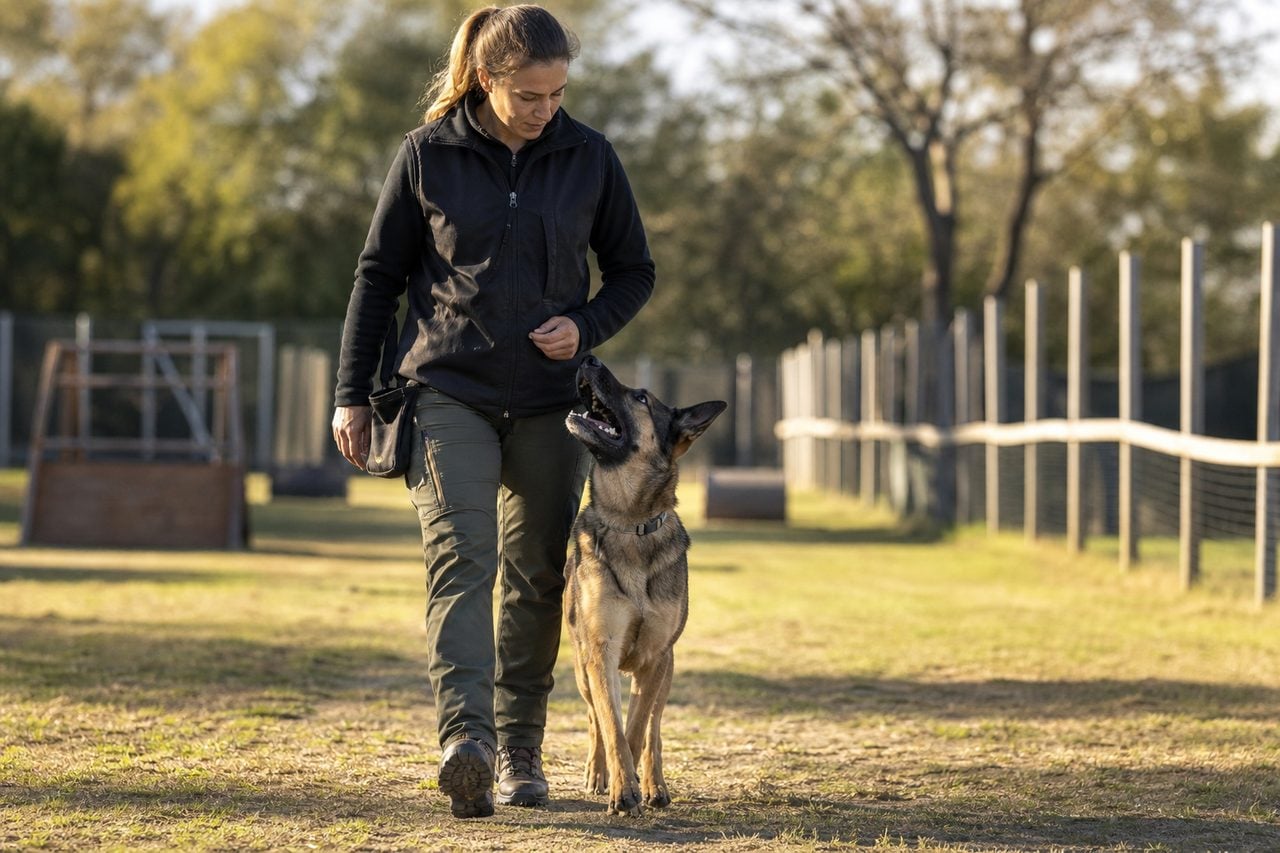
Board-and-train is the option Youngstown owners reach for when life is too busy for nightly homework, when a dog has dug into habits that resist the once-a-week class, or when a family simply wants a trained dog handed back to them rather than a training project to manage. The idea is straightforward on paper: your dog lives with a professional trainer for a stretch of days or weeks, the trainer puts in the daily repetitions while you are at work or away, and at the end you get a structured handoff so you can keep the results going at home. Here in the Mahoning Valley, where plenty of households juggle long commutes toward Cleveland or Pittsburgh and shift schedules that make a fixed class night impossible, that appeal is real.
- What Board-and-Train Actually Is in the Steel Valley
- The Handoff Is the Whole Ballgame
- Who Board-and-Train Is Right For, and Who Should Skip It
- Vetting a Youngstown Board-and-Train Program
- What Board-and-Train Costs Around Youngstown
- Making the Results Last Through a Northeast Ohio Year
- Reviewed trainers
- FAQ
But board-and-train is also the most misunderstood and most variable product in the entire dog-training world. The phrase covers everything from a calm, reward-based program on a quiet Canfield property to a high-pressure operation that leans on harsh corrections and sends home a dog that looks obedient and is actually shut down. Two programs with identical price tags and nearly identical websites can produce wildly different dogs, because what happens during those weeks out of your sight is almost entirely up to the trainer’s philosophy and skill. That is why doing your homework before you ever hand over the leash matters more for board-and-train than for any other format.
This guide is written specifically for owners across Youngstown and the wider Steel Valley, from the southern suburbs of Boardman, Poland, and Canfield to the mill towns of Struthers, Campbell, and Girard, and out toward Warren and Niles in Trumbull County. We reference local trainers generically rather than steering you to any one business, because the right board-and-train fit depends on your dog, your goals, and the specific facility. Use this as your roadmap, then use the directory to find the people who fit it.
What Board-and-Train Actually Is in the Steel Valley
At its core, board-and-train means your dog boards at a trainer’s facility or home and receives daily training during the stay. The dog sleeps there, eats there, and works there. Programs in and around Youngstown typically run anywhere from one week to four or more weeks, with two to three weeks being the most common length for general obedience and manners. Shorter stays tend to target one or two specific goals, while longer stays attempt a fuller transformation of behavior and reliability.
The daily structure varies, but a well-run program builds the dog’s day around short, frequent training blocks rather than a few long grueling sessions. A typical day might include several focused obedience sessions, structured rest in a crate or kennel, controlled exposure to distractions, walks that double as leash-manners practice, and downtime that teaches the dog to settle. The best programs treat the rest and the structure as part of the training, not just storage between lessons, because a dog that learns to be calm in a crate and to relax on a place cot is learning something just as valuable as sit and down.
The Mahoning Valley has a practical advantage worth naming: room. Board-and-train requires kennel space, secure outdoor areas, and ideally varied environments to proof behavior in. That kind of space is far easier to find on rural townships around Canfield and out toward the Trumbull County countryside than it is in a dense city neighborhood. As a result, several area programs operate on semi-rural properties where a dog can train on grass, gravel, and quiet roads, then take field trips into busier settings like a Boardman shopping plaza or downtown Youngstown to generalize the skills. When you tour a facility, the quality of the kennels, the security of the fencing, and the cleanliness of the space tell you a great deal about how your dog will actually live during the stay.
One thing board-and-train is not: a magic reset button. The dog still goes home to the same people, the same yard, and the same routines that shaped its behavior in the first place. Which brings us to the single most important part of the entire arrangement, the part too many owners overlook until it is too late.
The Handoff Is the Whole Ballgame
If you remember one thing from this guide, make it this: the value of board-and-train lives or dies on the handoff. A trainer can build a beautifully responsive dog over three weeks, but if that dog comes home to an owner who does not know how to give the cues, reward correctly, enforce the same rules, or read the dog’s signals, the results unravel fast. Within weeks the dog drifts back toward old habits, and the owner concludes that board-and-train does not work, when in reality the transfer of skills never happened.
A serious program treats the handoff as a core deliverable, not an afterthought. That means one or more in-person transfer sessions where you, not the trainer, put the dog through its paces under coaching. It means written instructions covering the exact cue words, hand signals, reward markers, and rules the dog has learned, so your household stays consistent. It means follow-up support after the dog comes home, whether that is a series of included private sessions, phone or video check-ins, or a go-home period where the trainer is reachable for questions. Ask any prospective program to spell out exactly what the handoff includes before you commit, and be wary of any operation that wants to drop the dog back at your door with a quick demo and a wave.
The handoff also has to involve the whole household. A dog that listens beautifully to the trainer and to the one family member who attended the transfer session, but ignores the teenager and the spouse who never learned the cues, is only partly trained from the family’s point of view. The most successful Youngstown families treat the go-home period as their own training, blocking out real practice time in the first few weeks, keeping the rules identical across every person in the home, and resisting the urge to relax standards because the dog seems to already know everything. The trainer transformed the dog; your consistency is what keeps the transformation.
Plan the timing of the handoff around your own life, too. Picking up your dog the day before a chaotic work week or a holiday full of visitors sets everyone up to fail. Ideally you bring the dog home when you have a few quieter days to reestablish routines, practice the new cues in your own kitchen and yard, and let the dog settle into its real environment with you reinforcing the behaviors from day one.
Who Board-and-Train Is Right For, and Who Should Skip It
Board-and-train is not the default best choice for every dog, and an honest trainer will tell you so. It shines for specific situations and is overkill or even counterproductive for others. Knowing which camp you fall into saves money and disappointment.
It tends to be a strong fit for genuinely time-strapped owners who travel for work, run businesses, or work the kind of rotating shifts common in the Valley that make a fixed weekly class impossible. It helps families dealing with stubborn, well-rooted problems like persistent leash pulling, poor recall, door-dashing, or jumping that have not budged with casual effort. It can be valuable when an owner lacks the confidence or physical ability to do the early heavy lifting themselves, and a professional putting in the foundational reps gets the dog to a baseline the owner can then maintain. It is also useful when multiple goals need to be addressed at once and the owner simply does not have the bandwidth to manage a long DIY program.
It is usually the wrong call in a few situations. For a normal, friendly dog that just needs basic manners, a group class plus daily home practice delivers the same result for a fraction of the price, and it builds the owner’s handling skills in the bargain. For deep fear, anxiety, or aggression rooted in emotion rather than obedience, board-and-train can actually backfire, because removing the dog from its home and placing it in a strange environment with strangers can heighten stress; those cases usually call for a different, slower, management-focused approach and sometimes a veterinary behaviorist. And for owners who are unwilling or unable to do the handoff work afterward, board-and-train is largely wasted money, because the results will not hold.
A useful gut check: board-and-train buys you a trained dog faster, but it does not buy you out of being part of the picture. If you are looking for a way to never have to train at all, you will be disappointed regardless of how good the program is. If you are looking to skip the hardest, most repetitive early phase and step in to maintain a dog that already has a foundation, it can be exactly the right tool.
Vetting a Youngstown Board-and-Train Program
Because your dog will live out of your sight for weeks, vetting matters more here than for any walk-in class. The good news is that a handful of questions and one in-person tour will separate the careful professionals from the operations you should walk away from.
Insist on touring the facility before you book, and be skeptical of anyone who refuses or only offers a virtual look. When you visit, look at where the dogs sleep, how clean the kennels are, how secure the fencing and gates are, and how the dogs already in the program look and act. Do they seem relaxed and engaged, or shut down and avoidant? Ask how many dogs are in the program at once and how many staff are present, because a single trainer juggling a dozen boarding dogs cannot give yours real daily attention.
Ask directly about methods, and listen for specifics. A trainer who can clearly explain how they teach a behavior, what they do when a dog gets it right, and what they do when a dog gets it wrong is showing you their philosophy. Reward-based programs that build behaviors through motivation and clear communication tend to produce confident dogs. Be cautious with programs that lean heavily on harsh corrections, shock, or intimidation; a dog can be made to look obedient through fear while actually becoming more anxious or more likely to bite under pressure, and you may not see that until weeks after the dog is home. Here are the questions worth asking every program:
- What does a typical training day look like, including how much active training versus rest the dog gets?
- What exactly does the handoff include in transfer sessions, written materials, and follow-up support?
- How do you handle a dog that struggles or refuses, and what tools do you use?
- How many dogs are in the program at a time, and what is the staff-to-dog ratio?
- What happens if my dog gets sick or injured, and what is your vet protocol during the stay?
- Can I see or get updates during the stay, such as photos, videos, or a mid-program check-in?
Finally, ask for references from past clients and actually call one or two. A program proud of its work will happily connect you with families whose dogs went through it. Beware guarantees of perfect results; behavior is never fully guaranteed because dogs are living animals, and a promise that sounds too clean usually is.
What Board-and-Train Costs Around Youngstown
Youngstown and the broader Mahoning Valley sit at or just below the national average for dog training, and board-and-train is the most expensive format precisely because the trainer is doing the work, housing your dog, feeding it, and pouring daily hours into it. Expect a meaningful spread depending on location and program length, with the southern suburbs of Boardman, Poland, and Canfield generally pricing higher than the mill towns of Struthers, Campbell, and Girard, and rural Trumbull County operations sometimes landing in between because they have lower overhead but more space.
These are realistic ranges to plan around, not quotes, and actual pricing varies widely by trainer, program length, what is included, and the dog’s needs:
- Two-week programs: commonly run in the range of roughly 1,500 to 3,000 dollars, typically covering boarding, daily training, and at least one transfer session.
- Three-week programs: often fall in the range of roughly 2,500 to 4,500 dollars, the most common length for general obedience and manners.
- Four-week or longer programs: can run from roughly 3,500 dollars into the five-thousand-plus range for intensive or specialized work.
- Shorter, single-goal stays: a one-week tune-up or focused program may run several hundred to around 1,500 dollars depending on the goal.
When you compare these numbers, look hard at what is bundled in. A program that costs more but includes multiple transfer sessions, written homework, and weeks of follow-up support is frequently a better value than a cheaper program that hands the dog back with a single demo. Ask whether follow-up sessions are included or billed separately, because the post-program support is where the results actually stick. Watch the seasonal angle too: kennel space and trainer availability tighten around holidays and summer travel season, so booking ahead matters if your timing is fixed. And remember the comparison point that many owners forget: for a typical dog that just needs manners, a group class plus home practice costs a fraction of board-and-train and builds your own skills, so reserve the residential investment for the situations that genuinely warrant it.
Making the Results Last Through a Northeast Ohio Year
Bringing a trained dog home is the beginning of your job, not the end of it, and the Steel Valley’s calendar shapes how you keep the results alive. The single biggest predictor of whether board-and-train sticks is whether the owner maintains the behaviors in the first month back, when old environmental triggers are strongest and the new habits are still fragile. Block out real practice time in those first weeks, run short sessions daily rather than long ones occasionally, and use the exact cues and rules the trainer taught so the dog is never confused about what works.
Proof the behaviors in the places you actually live, not just the kitchen. A dog that sits reliably in your Poland living room may fall apart in a busy Boardman parking lot or on a crowded path at Mill Creek MetroParks, because dogs do not generalize well between environments. Deliberately practice the same cues in progressively more distracting settings: the backyard, then a quiet street, then a parking lot, then a walk along Lake Newport or near Lanterman’s Mill on a busy weekend. Each new location is a small training session that cements reliability.
The northeast Ohio winter deserves a specific plan, because it quietly erodes more board-and-train results than anything else. When the yard is frozen and the wind off the lake makes long walks miserable, owners cut sessions short or skip them entirely, and the dog’s polish dulls over a long gray season. Build indoor maintenance into your winter: practice place, stay, and recall down a hallway, work obedience in the garage, and keep mental engagement up with structured indoor games so the dog does not coast for months. Then when spring opens up the MetroParks and Mosquito Lake State Park again, your dog steps back into the bigger world already sharp rather than rusty.
Finally, do not treat a single follow-up call to the trainer as failure. The best outcomes come from owners who use the included support, ask questions early when they notice a behavior slipping, and bring the dog back for a tune-up session if needed rather than letting a small regression snowball. A short refresher months after the program is normal and smart. The dog the trainer built is yours to maintain, and a little consistent effort across the seasons protects an investment that was never cheap to begin with.
Reviewed Board & Train Trainers in Youngstown
These reviewed Youngstown-area trainers from our directory handle board & train. Each links to a full profile with specialties, verified credentials, reviews, and contact info:
- Camelot Canine — 5.0★ (128 reviews)
- Ugly Dogge Bullies LLC — 5.0★ (22 reviews)
- McCrae9 Dog Training — 5.0★ (13 reviews)
- Das Muller German Shepherds — 5.0★ (8 reviews)
- Figleys Kennel Service LLC — 5.0★ (6 reviews)
- Sit Happens Dog Training — 5.0★ (6 reviews)
- Timber Tails Co. — 5.0★ (5 reviews)
- B.O.N.E.S., a dog training company — 5.0★ (3 reviews)
See all Youngstown board & train trainers →
Frequently Asked Questions
How long does a typical board-and-train program last in the Youngstown area?
Most general-obedience programs in the Mahoning Valley run two to three weeks, with three weeks being common for fuller manners and reliability work. Shorter one-week stays usually target a single goal like leash manners or recall, while four-week-plus programs aim at intensive or specialized results. Length should match the dog’s needs and the goals, not a one-size-fits-all package, so ask any program why it recommends the length it does.
Will my dog forget everything when it comes home?
Not if the handoff is done well and you maintain the behaviors. Dogs do drift back toward old habits when they return to the same environment that shaped them, which is exactly why the transfer sessions, written instructions, and your own daily practice in the first month matter so much. A program that skimps on the handoff is the most common reason results fade. Treat the go-home period as your training, keep the rules consistent across the whole household, and the behaviors hold.
Is board-and-train safe and humane?
It can be, but it depends entirely on the program. A calm, reward-based facility with clean kennels, secure fencing, a reasonable dog-to-staff ratio, and a clear methods explanation is generally safe and humane. Be cautious with operations that rely on harsh corrections or intimidation, refuse facility tours, or guarantee perfect results. Tour in person, ask how they handle a dog that struggles, ask about their vet protocol, and call references before handing over your dog.
How much should I budget for board-and-train near Youngstown?
Plan for roughly 1,500 to 3,000 dollars for a two-week program and roughly 2,500 to 4,500 dollars for three weeks, with longer or specialized programs running higher. The southern suburbs like Boardman, Poland, and Canfield tend to price above the mill towns. These are planning ranges, not quotes. Always confirm what is included, especially transfer sessions and follow-up support, since the post-program help is where the results actually stick.
Is board-and-train the right choice for an aggressive or very fearful dog?
Often not as a first step. Aggression and deep fear are usually rooted in emotion rather than missing obedience, and removing a stressed dog from home into a strange environment can heighten anxiety rather than help. These cases typically call for a slower, management-focused approach and frequently a veterinary behaviorist evaluation. If a program promises to cure aggression through a residential stay, be skeptical and get a professional behavior assessment first.
Could a group class get me the same results for less money?
For a normal, friendly dog that just needs basic manners, very likely yes. A multi-week group class plus daily home practice delivers solid obedience for a fraction of board-and-train’s cost and builds your own handling skills along the way. Board-and-train earns its higher price when you are genuinely time-strapped, dealing with well-rooted problems, or lacking the confidence to do the foundational reps yourself. Match the format to your real situation rather than assuming the most expensive option is the best one.
Related: read our complete board & train guide or the full Youngstown dog training overview.
Ready to find the right board & train pro in Youngstown?