
Dog Boot Camp in Akron, OH
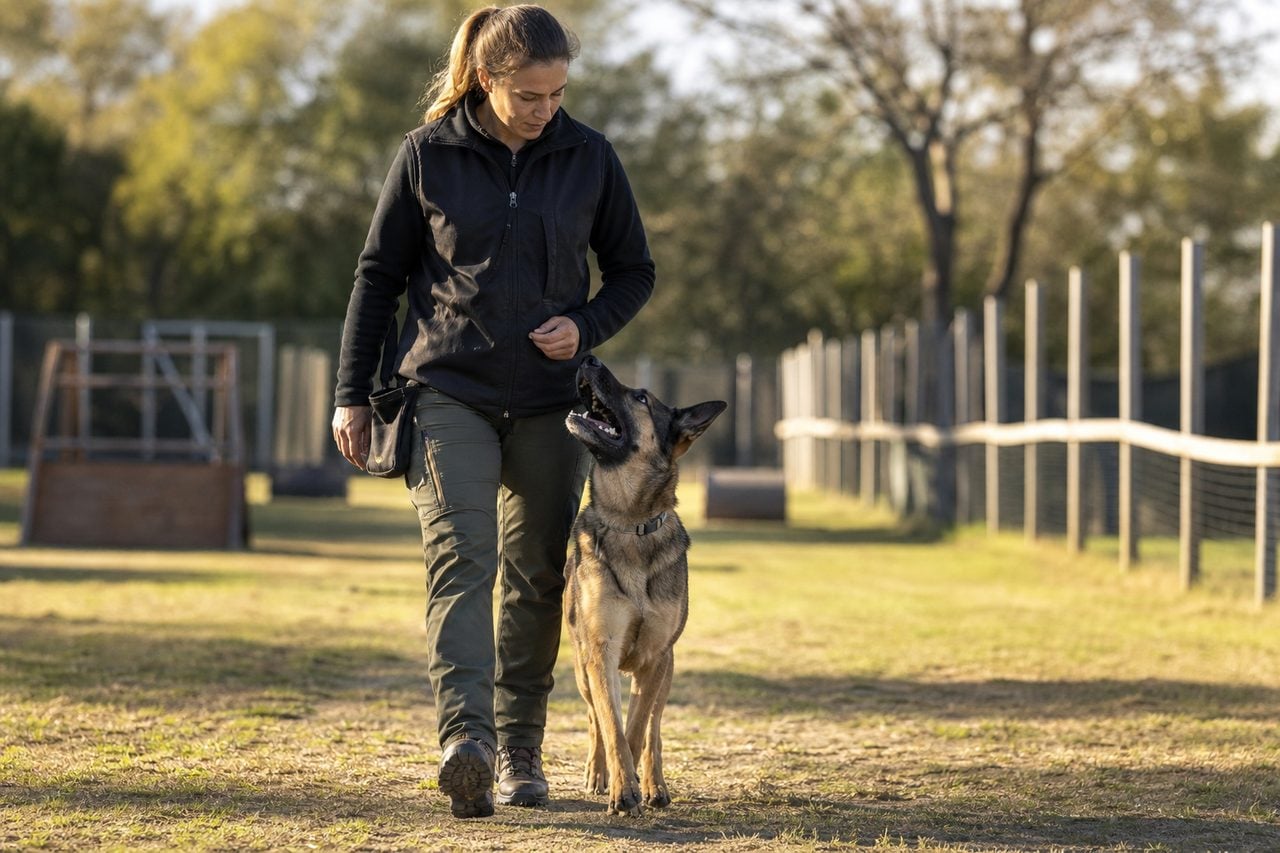
“Dog boot camp” is one of those phrases that sounds intense and a little intimidating, but for a lot of Akron families it is actually the most practical path to a well-behaved dog. The name borrows from military basic training for a reason: it is a short, structured, high-intensity block of work designed to take a dog from chaotic to controlled in a compressed timeframe. Where a typical group class spreads six lessons across six weeks, a boot camp packs concentrated, professional training into days or a couple of weeks, with a clear curriculum and measurable goals at every step.
For Rubber City households juggling work, kids, and the general crunch of life in Summit County, that compression is the appeal. You are not signing up for months of slow weekly drips; you are committing to a focused sprint that builds a real foundation fast. The trade-off, and it is a big one, is that boot camp is not a hands-off solution. The most effective programs treat the owner as a co-student, sending you home with homework and expecting you to keep the standard going. Done right, it is a partnership that front-loads the heavy lifting onto a pro while keeping you in the driver’s seat.
This guide explains what an Akron dog boot camp really involves, how it differs from a residential board-and-train, what the daily structure looks like, what it costs locally, and how to pick a program that delivers lasting results rather than a quick performance that fades. No specific business is named or endorsed here; the verified local trainers are listed separately. The aim is to help you choose well.
What "dog boot camp" actually means
A dog boot camp is an intensive, structured training program built around a defined curriculum and a short timeframe. The core idea is concentration: rather than one lesson a week, the dog gets focused, professional training in frequent, high-quality sessions over a compressed period. That density is what produces fast, visible progress.
It helps to understand the format as a spectrum rather than one fixed thing. Many Akron-area boot camps run as a day-camp model: your dog comes in for intensive daytime training, several focused sessions across the day, and goes home with you each evening. Others run as multi-week curricula with a mix of trainer-led sessions and owner coaching. What unites them is the emphasis on a structured curriculum, clear milestones, and an expectation that the owner is actively learning alongside the dog. The phrase signals intensity and structure, not a specific facility type.
The curriculum is the heart of the product. A serious boot camp does not improvise. It moves through a planned sequence: engagement and attention first, then foundational obedience like sit, down, place, and a reliable recall, then duration and distance, then the genuinely hard part, which is proofing those skills against real-world distraction. Each phase has a goal you can see and measure. If a provider cannot describe the curriculum and what your dog should be able to do at each stage, the “boot camp” label is just marketing.
One more defining trait: boot camp leans hard on the owner. The military metaphor cuts both ways. Yes, it is disciplined and intense, but the goal is to graduate a team, you and your dog, not just a trained dog. The best programs build owner coaching directly into the structure and send you home with daily homework. That owner involvement is the feature that makes the results last.
How boot camp differs from board-and-train
These two formats get blurred constantly, and the confusion costs people money, so it is worth drawing the line clearly. Both are intensive. The difference is structure, involvement, and where the dog sleeps.
Board-and-train is residential. Your dog lives at the trainer’s facility for the duration, typically two to four weeks, and you are largely hands-off until the handoff at the end. You trade involvement and cost for convenience: someone else does the daily labor, overnight care included.
Boot camp is curriculum-and-camp. The framing is the structured program and the owner’s active role. In the common day-camp version, the dog trains intensively during the day and comes home each night, which keeps you involved throughout and keeps the dog in your household rhythm. Even in multi-week boot camps, owner coaching and homework are baked in from the start rather than saved for a final transfer session.
The practical implications matter. Boot camp usually costs less than a residential board-and-train because you are not paying for overnight boarding and round-the-clock care. It keeps you more involved, which tends to make the training stick because you are practicing the new skills in your own home from day one. The trade-off is that it demands more of you: you have to show up to the coaching, do the homework, and hold the line at home. Board-and-train asks less of you during the program but more at the handoff, and it costs more.
Choosing between them comes down to honest self-assessment. If you are motivated, want to stay involved, and can do daily homework, a boot camp gives you a trained dog and the skills to keep it that way, often at a friendlier price. If your schedule genuinely cannot absorb the daily commitment and you would rather a pro carry the load, a residential board-and-train may fit better despite the higher cost. Neither is “better” in the abstract; the right choice is the one that matches your life and follow-through.
Inside a typical day and week
Knowing the rhythm of a boot camp helps you judge whether a provider runs a real program or just a busy daycare with a fancy name. While details vary, a well-run Akron boot camp follows a recognizable structure.
- Arrival and warm-up: The day usually opens with settling and a brief engagement session to get the dog focused and motivated before real work begins.
- Focused training blocks: Dogs cannot concentrate for hours on end, so good programs use short, frequent sessions, often several blocks of ten to twenty minutes, spread across the day. Each block targets specific skills from the curriculum.
- Structured rest and enrichment: Between blocks, the dog rests, decompresses, and gets enrichment. This is not idle time; rest is when learning consolidates, and a dog trained to exhaustion learns poorly.
- Distraction and real-world practice: As the week progresses, sessions move from the calm of the training space into harder contexts: around other dogs, in busier areas, and eventually on outings, perhaps a walk through Cuyahoga Valley National Park or a stop at a Stow-area park, so behaviors generalize beyond the facility.
- Owner coaching and handoff prep: Strong programs schedule sessions where you learn to handle your dog, and they send you home each day or each week with specific homework to practice.
Across a multi-week boot camp, the arc mirrors the curriculum: week one builds engagement and foundational obedience, the middle stretch adds reliability, duration, and distance, and the final stretch is about proofing skills against distraction and transferring control to you. By graduation the goal is a dog that responds not just in the quiet of the training room but in the messier real world, and an owner who knows how to keep it there.
Watch for the rest-and-enrichment balance when you tour. A program that claims to train dogs eight hours straight is either exaggerating or burning the dogs out. The hallmark of a thoughtful boot camp is short, sharp, frequent sessions surrounded by structured downtime, plus a deliberate progression toward harder distractions over time.
Your homework: why owner involvement makes or breaks it
Here is the truth that separates lasting results from a quick disappointment: a dog boot camp graduates a team, not a robot. The dog can learn impeccable obedience at camp, but if you go back to the old habits at home, the behavior erodes within weeks. The owner’s role is not optional; it is the mechanism that makes the whole investment pay off.
This is actually a strength of the boot-camp format compared to fully residential programs. Because you stay involved throughout, you are practicing the new skills in your own home, with your own dog, from early on. You learn the commands, the timing, the reward and correction system, and the daily routine alongside the dog rather than receiving a fully trained dog you have never handled. By graduation, the dog has the skills and you have the handling ability to maintain them.
Expect real homework. Good Akron programs send you home with a clear practice plan: which commands to drill, how long and how often (usually short daily sessions), and how to enforce the same standards the trainer used. They typically provide written materials documenting the commands, words, and hand signals, plus the routine to keep up. Many give you video of your dog working so you have a reference. The point of all of it is consistency, because dogs read inconsistency instantly and will test any gap between camp rules and home rules.
Plan your life around the first few weeks after graduation. That window is when the new behaviors either cement into habit or slowly unravel. Keep the rules identical to camp, practice daily even when the dog “already knows it,” and use whatever follow-up support the program offers, whether a check-in, a refresher session, or text access to the trainer. Treat graduation as the start of the maintenance phase, not the finish line, and the boot camp delivers what you paid for.
Choosing the right boot camp in Akron
Not all programs that call themselves boot camps are equal, and the label alone tells you little. Use this checklist to separate a structured, professional program from a glorified daycare.
- Ask to see the curriculum. A real boot camp can tell you exactly what your dog will work on, in what sequence, and what the goals are at each stage. Vagueness here is the biggest red flag.
- Confirm owner coaching is included. Because your involvement makes the results last, the program should build in sessions that teach you to handle your dog, plus homework and written materials. A program that trains the dog and ignores you is set up to fail.
- Understand the format. Is it a day camp where the dog comes home nightly, or a multi-week structure? Make sure it fits your schedule and what your dog needs.
- Visit in person. Tour the space where dogs train and rest. It should be clean, secure, and calm, with a sensible balance of training and downtime. Ask how many dogs are in a session and the trainer-to-dog ratio.
- Discuss methods openly. Have the trainer explain how they train and how they handle mistakes, in plain language. You want an approach you are comfortable with and a trainer who can describe a clear, humane system.
- Set realistic expectations. A good provider is honest about what a short program can and cannot achieve, and will not promise to erase deep behavioral problems in a few days.
- Check reviews and references. Look for patterns over time and ask to speak with past clients. Consistency in feedback tells you more than any single review.
The throughline is structure plus involvement. A boot camp worth your money has a real curriculum, treats you as a co-student, runs a clean and humane operation, and is honest about outcomes. When you call providers from your verified Akron list, lead with these questions; the quality of the answers will sort the serious programs from the rest quickly.
Costs and realistic outcomes in the Akron market
Boot camp pricing in Northeast Ohio varies with format, length, and intensity, but here are realistic ranges to anchor your expectations. These are estimates to budget around, not quotes.
- Day-camp boot camp (dog home nightly): often priced per week or as a package, commonly in the range of a few hundred dollars per week, with multi-week packages landing in the low-to-mid four figures depending on length and what is included.
- Multi-week intensive boot camp: typically lands somewhere between a full group-class series and a residential board-and-train, often in the rough range of 1,000 to 3,000 dollars depending on duration, goals, and the amount of owner coaching included.
Because boot camp usually skips overnight boarding, it tends to come in below a comparable residential board-and-train, which is part of its appeal for budget-conscious families. Geography matters within the region too: Northeast Ohio overall sits at or just below the national average for training, and Akron’s south side typically prices below the more affluent northern suburbs like Hudson, Bath, and Fairlawn. If you are price-sensitive, it is worth getting quotes from providers across different parts of Summit County and the surrounding towns, from Cuyahoga Falls, Stow, and Tallmadge up north to Barberton, Norton, and Green to the south, and even out toward Medina, Wadsworth, or Kent.
On outcomes, set expectations honestly. A well-run boot camp can produce a dramatic, visible improvement in manners and obedience in a short window: a dog that reliably sits, downs, settles on a place, walks politely, and comes when called. What it does not do is permanently inoculate the dog against your habits. The lasting result depends on you maintaining the work, which is why the owner-coaching and homework piece is the real value driver, not just the days the dog spends at camp.
When comparing quotes, look past the headline number to what is included: the curriculum, the owner-coaching sessions, written materials, video, and any follow-up support or refresher policy. A slightly pricier program with strong owner coaching and follow-up is usually the better investment than a cheaper one that trains the dog and sends it home with no plan for you. Confirm deposit and cancellation terms up front, and weigh the cost against the alternative of letting a problem drag on for months. For the right motivated owner, the concentrated boot-camp sprint is an efficient way to get a solid foundation fast.
Reviewed Dog Boot Camp Trainers in Akron
These reviewed Akron-area trainers from our directory handle dog boot camp. Each links to a full profile with specialties, verified credentials, reviews, and contact info:
- Atlas Canine — 5.0★ (49 reviews)
- Zero To Hero Dog Training — 5.0★ (49 reviews)
- Hakuna Dogtata — 5.0★ (8 reviews)
- Paige’s Pups — 5.0★ (6 reviews)
- Ace Dog Training — 5.0★ (6 reviews)
- Woofin Good Time LLC — 5.0★ (1 reviews)
- Supreme Class K9 — 5.0★ (1 reviews)
- American Caniner Akron Dog Training Services — 4.9★ (152 reviews)
- The Dog Wizard Medina — 4.9★ (100 reviews)
- American Caniner Stow Dog Training & Behavioral Modification — 4.9★ (17 reviews)
See all Akron dog boot camp trainers →
Frequently Asked Questions
What is the difference between a dog boot camp and board-and-train?
Board-and-train is residential: your dog lives at the trainer’s facility for the program and you are mostly hands-off until the handoff. A boot camp emphasizes a structured curriculum and active owner involvement, and in the common day-camp version the dog comes home each night. Boot camp usually costs less and keeps you more involved; board-and-train costs more and asks less of you during the program.
How long does a dog boot camp last?
It depends on the format. Day-camp boot camps can run for a week or several weeks of intensive daytime sessions, while multi-week intensives typically span two to four weeks. The right length depends on your goals and your dog. Regardless of length, the training continues at home afterward as you maintain the skills.
Do I have to do training homework, or does the camp handle everything?
You will have homework, and that is by design. A boot camp aims to graduate a team, you and your dog. The program teaches you to handle your dog and sends you home with a daily practice plan and written materials. The behaviors stick only if you maintain the same standards at home, so owner involvement is the feature that makes the investment pay off.
What does a dog boot camp cost in the Akron area?
Day-camp formats are often priced per week or in packages, frequently a few hundred dollars per week with multi-week packages in the low-to-mid four figures. Multi-week intensives commonly fall in the rough range of 1,000 to 3,000 dollars. These are estimates. Northeast Ohio sits at or just below the national average, and Akron’s south side generally prices below the northern suburbs.
Will the results actually last after boot camp?
They last if you maintain them. A good boot camp produces fast, visible improvement and, just as importantly, teaches you to keep it going. The first few weeks after graduation are when behaviors cement or erode, so keep the rules consistent, practice daily, and use any follow-up support the program offers. The dog’s skills plus your handling are what create lasting results.
How do I tell a real boot camp from a glorified daycare?
Ask to see the curriculum and the milestones at each stage; a real program can describe both. Confirm owner coaching, homework, and written materials are included. Tour the facility to check it is clean, secure, and balances training with rest, and ask the trainer-to-dog ratio. Have them explain their methods plainly and be realistic about outcomes. Vague answers are the warning sign.
Related: read our complete dog boot camp guide or the full Akron dog training overview.
Ready to find the right dog boot camp pro in Akron?