
Dog Boot Camp in Altoona, PA
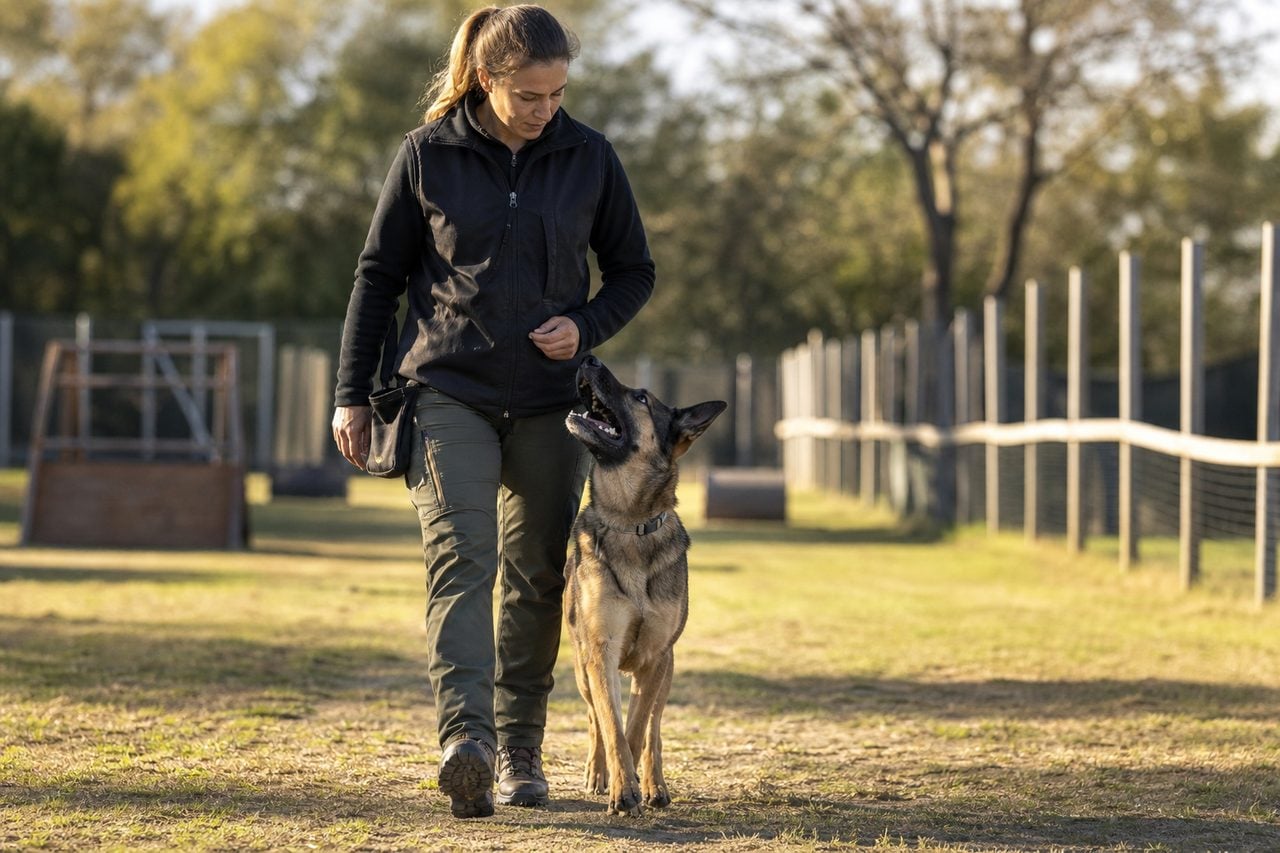
A dog boot camp is an intensive, concentrated training program — the whole idea is to compress a lot of structured work into a short, focused stretch rather than spreading a class out across many weeks. For owners around Altoona, Logan Township, Hollidaysburg, and the surrounding Blair County towns, the pitch lands hardest when a dog’s manners have genuinely gotten out of hand and a slow, once-a-week class feels far too slow for the chaos happening in the living room right now. The promise of a boot camp is momentum: rapid, visible change in a short window.
- What A Dog Boot Camp Actually Is
- Day Boot Camp Versus Residential Board-And-Train
- What Results Are Realistic From A Short Intensive
- Choosing A Boot Camp Around Altoona
- Getting Your Dog Ready For A Boot Camp
- Keeping The Gains After The Program Ends
- Is A Boot Camp The Right Choice For Your Dog
- Reviewed trainers
- FAQ
The term gets used loosely, though, and that looseness causes real confusion when you start shopping. Some people mean a residential program where the dog stays overnight for weeks at a time; others mean a day program where the dog comes in for long, intensive daytime sessions and returns home every night. In this guide, boot camp leans toward that day-program sense — drop-off, intensive work, home at night — while acknowledging that the residential version overlaps heavily with board-and-train. The distinction matters a great deal because it changes the cost, the logistics, and which dogs are actually a good fit for the format.
Altoona is a railroad town of about 43,000 in the Logan Valley, sitting beneath the Allegheny Front, and it is a meaningfully smaller market than Harrisburg or Pittsburgh roughly an hour and a half away in either direction. Some local trainers here do run boot-camp-style intensives, and several are worth your time. But the widest selection of dedicated programs and formally credentialed behavior specialists concentrates in the bigger metros. This guide from the GetDogSchool Editorial Team walks through what a boot camp really is, how the day and residential versions differ, what results are genuinely realistic, how to pick a program near Altoona, and how to make the gains last — all without overpromising what a short intensive can actually do for your dog.
What A Dog Boot Camp Actually Is
At its core, a boot camp is training delivered in a compressed, high-frequency format. Instead of one class a week stretched across eight weeks, the dog works multiple focused sessions a day over a much shorter span — sometimes a single intensive stretch, sometimes daily drop-offs across a couple of weeks. The underlying logic is that concentrated repetition, run by a professional who reads the dog well and adjusts on the fly, can build reliable habits faster than a spread-out schedule where the dog largely forgets the last lesson before the next one arrives.
The curriculum varies from trainer to trainer, but it usually centers on the everyday problems that push owners to seek help in the first place: pulling hard on the leash, jumping on guests at the door, ignoring recall the moment something interesting appears, poor impulse control around food or open doors, and a general inability to just settle. A good day boot camp near Altoona pairs those intensive sessions with clear instruction for you, the owner, so the manners actually hold up when the dog is back home along Logan Boulevard or out walking the Lower Trail on a Saturday. The compression is the headline selling point, but the transfer to you and your household is what makes it worth the money. Without that handoff built in, a boot camp is just a busy, expensive few weeks that quietly fade back to baseline.
Day Boot Camp Versus Residential Board-And-Train
The single biggest fork in the road is whether the dog sleeps at home or at the facility. In a day boot camp, you drop the dog off in the morning, it works through intensive sessions during the day, and it comes home again each evening to its own bed. In a residential board-and-train, the dog lives at the trainer’s facility for the entire program, start to finish. Both approaches are intensive by design; it is the living arrangement that changes the day-to-day experience, the total price, and the kind of dog each one suits best.
Day programs keep the dog in its familiar Altoona home each night, which many owners strongly prefer for anxious or nervous dogs, and which lets you reinforce the day’s lessons every single evening while they are fresh. They also tend to cost noticeably less than residential, simply because you are not paying for around-the-clock boarding. The trade-off is the daily commute and the fact that the dog is not immersed twenty-four hours a day. Residential immersion can genuinely help when the home environment itself feeds the problem, or when daily drop-offs are just impractical from a town like Tyrone, Bellwood, or Martinsburg. Weigh your dog’s temperament, your realistic driving distance, and whether nights at home help or actively hurt the specific behavior you are targeting. For many routine cases across Blair County, the day format is simply the simpler, more affordable, and perfectly effective fit.
What Results Are Realistic From A Short Intensive
Be clear-eyed and unsentimental about outcomes before you pay a deposit. A well-run boot camp can make real, visible, encouraging progress on common manners — a dog that walks noticeably better on leash, holds a place command, settles more readily on cue, and responds to recall reliably in low-distraction settings. What a short intensive simply cannot do is permanently install perfect behavior that never needs any upkeep again. Training is a skill the dog maintains through ongoing practice, and the environment back home keeps shaping and testing it every single day after the program wraps.
The biggest risk with boot camps is not the training itself but the expectation surrounding it — the hope that a compressed program is a one-and-done fix you can pay for once and forget. It is not, and any honest trainer will tell you so. Behaviors learned in a focused block need real reinforcement afterward, or they erode, especially the harder ones like reliable recall around the squirrels, joggers, and loose dogs of a busy Logan Valley park on a summer evening. Treat the boot camp as a strong head start that you then actively maintain, not a finished product handed back to you complete. And recognize the limits of the format itself: a two-week intensive is genuinely well suited to obedience and manners, but it is not the right tool for deep-seated fear or aggression, which need a different, assessment-first approach rather than simply more drilling.
Choosing A Boot Camp Around Altoona
Because Blair County is a smaller market, you will likely have a handful of options to consider rather than a long list to sort through, so vet each one carefully and do not settle on the first name you find. Ask the trainer to describe their methods in plain, everyday language — you want humane, reward-based techniques you can understand and continue yourself at home, not vague claims, mysterious proprietary systems, or heavy reliance on aversive tools. Ask directly about their experience with dogs like yours and exactly how a typical day is structured: how much of it is active, hands-on training versus rest, and where the dog spends the downtime.
Request references from past clients and, if it is a physical facility rather than a mobile service, ask to see it in person. Clarify precisely what the program includes: how many days, how much owner instruction, and what follow-up support comes bundled in. Pin down the full cost and any policy for reassessment if progress plainly stalls partway through. A reputable Altoona-area trainer will welcome all of these questions and happily let you observe. Be genuinely wary of anyone who guarantees results, pressures you to sign fast before you have thought it through, or cannot explain their approach when asked. If your case turns out to be specialized and the local options do not fit it, it is entirely reasonable to look toward Harrisburg or Pittsburgh — but for standard manners work, a good local intensive usually does the job well without the extra drive.
Getting Your Dog Ready For A Boot Camp
A bit of preparation smooths the whole experience and helps you get more value from every session you are paying for. Make sure your dog’s vaccinations are fully current — most programs require proof of them, and it protects every dog involved, particularly in day programs where dogs share space and equipment. If the program feeds the dogs during the day, ask whether you should bring your own food to avoid an abrupt diet change and the stomach upset that so often follows. Give the trainer an honest, thorough rundown of your dog’s history: its fears, any past bites or close calls, medical issues, and what training you have already tried and how it went. Complete information keeps the handlers safe and lets them tailor the work to the dog in front of them.
Set the dog up physically for success, too. A dog that arrives already pleasantly worn out from a walk around the neighborhood or a good romp in the yard will very often focus better than one arriving bursting with pent-up energy and nowhere to put it. Think ahead about the basic gear the program asks you to bring — usually a plain flat collar and a standard leash — and avoid springing brand-new equipment on the dog at the exact same time as a brand-new environment and routine. The smoother and calmer the arrival, the sooner the real training work can actually begin, and the more you ultimately get out of each intensive session on the schedule.
Keeping The Gains After The Program Ends
The work does not stop when the boot camp does — in many meaningful ways, that is exactly when your part of it truly begins. The single biggest predictor of whether the results actually last is what you do in the weeks that follow pickup day. Attend every owner-instruction session the program offers, take notes while you are there, and practice the cues yourself until they feel natural, so the behavior transfers cleanly from the trainer to you. A dog that performs beautifully for a seasoned professional but ignores its own family entirely has not been set up to succeed at home, no matter how impressive the demo looked.
Build short, consistent practice into ordinary daily life rather than treating it as a separate chore: a few minutes of recall in the yard, some place work during dinner, deliberate loose-leash walking on the way out to the mailbox. Keep the entire household on the same cues and the same rules, so the dog is never getting contradictory signals in a Logan Township kitchen from one person to the next. Expect some testing and pushback as the dog resettles into its old home routines, and hold the structure steady and calm right through it. If a specific behavior slips noticeably, most trainers include or offer some follow-up support — use it early rather than letting the problem quietly re-entrench itself. Consistency, not raw intensity, is what turns a two-week head start into a genuine, lasting change you can live with.
Is A Boot Camp The Right Choice For Your Dog
A boot camp fits some dogs and owners very well and others poorly, so match it honestly to your own situation before you commit. It tends to work well when you have a healthy, trainable dog whose main issues are ordinary manners and obedience, a schedule that makes a slow weekly class genuinely impractical, and a real commitment to maintaining the results afterward. The compressed format is a genuine advantage for owners who need faster traction than a spread-out class can provide, and who will actually do the follow-through at home.
It is a weaker choice if you are quietly hoping to hand off the problem entirely, since the dog always returns to your handling and your household, or if the real underlying issue is fear, anxiety, or aggression rather than plain obedience. Those emotional cases are simply not solved by more drilling; they need an assessment-first, behavior-focused path and sometimes a veterinary check first, and the nearest veterinary behaviorists sit in the Harrisburg and Pittsburgh markets about ninety minutes away. For the common Altoona case — the energetic adolescent that pulls, jumps, and treats recall as optional — a well-chosen local boot camp with strong follow-up support can be an efficient, effective, and reasonably priced option. The GetDogSchool Editorial Team’s goal is to help you match the format to the actual dog in front of you, not to sell you a program you do not need or push you out of town for a problem the Logan Valley can handle.
Dog Boot Camp in Altoona: Local Options & Nearest Specialists
A few Altoona-area trainers can help with milder dog boot camp needs:
- Triple Tree Kennels — 5.0★ (1 reviews)
- Altoona Area Kennel Association — 1.0★ (1 reviews)
Nearest dog boot camp specialists — Harrisburg
For complex cases, the closest metro with dedicated dog boot camp trainers is Harrisburg (an easy drive for an assessment or a board-and-train stay). Top-reviewed options:
- Carolyn Hart Dog Training — 5.0★ (63 reviews)
- Cold Creek Dog Training- Hummelstown – Harrisburg — 5.0★ (34 reviews)
- Arcona Prep — 5.0★ (32 reviews)
- Bark Boot Camp — 5.0★ (22 reviews)
- Hard Nose K9 Services LLC — 5.0★ (20 reviews)
- Anchors Dog Training Academy — 5.0★ (11 reviews)
- Magnus K9 — 5.0★ (11 reviews)
- Cold Creek Dog Training- Carlisle, PA — 5.0★ (7 reviews)
See all Harrisburg dog boot camp trainers →
Frequently Asked Questions
How long does a dog boot camp usually run?
It varies with the format. A day boot camp might run intensive daily sessions across one to three weeks with the dog going home each night, while a residential version can span several weeks straight. Length matters far less than the quality of the daily work and the owner instruction that transfers the behavior to you. Ask any Altoona-area program to explain why they recommend a particular schedule for your specific dog, rather than accepting a fixed package on faith.
Is a boot camp the same as board-and-train?
They overlap but are not identical. Board-and-train is specifically residential — the dog lives at the facility the whole time. A boot camp can be residential or a day program where the dog comes in for intensive sessions and goes home at night. The day version costs less and keeps anxious dogs sleeping in their own homes; the residential version immerses the dog around the clock. Clarify which format a given program actually means before you commit any money.
Can a two-week boot camp fix my dog permanently?
No single intensive permanently installs behavior with zero upkeep. A good boot camp makes real progress on manners and obedience, but the dog maintains those skills through ongoing practice at home afterward. Treat the program as a strong head start that you then reinforce, not a one-and-done cure you pay for once. Behaviors learned in a compressed block will erode without follow-through, especially harder ones like reliable recall around real-world distractions.
Are there boot camp programs in the Altoona area?
Some local trainers in Blair County run boot-camp-style intensives, but Altoona is a smaller market than Harrisburg or Pittsburgh, so expect a handful of options rather than a long list. For routine manners and obedience, a solid local program usually handles the job well and saves you the drive. For specialized or difficult cases, the larger metros about ninety minutes away hold more dedicated programs and formally credentialed behavior specialists.
Will a boot camp work for an aggressive or very anxious dog?
A manners-focused boot camp is not the right tool for aggression or deep anxiety, which are emotional problems rather than obedience gaps. Those cases need an assessment-first, behavior-focused approach and often a veterinary check to rule out pain or a medical cause. Be cautious of any program that guarantees a fix. For serious behavior cases, ask about a referral toward veterinary behavior resources in Harrisburg or Pittsburgh, where the deepest expertise is concentrated.
What do I need to do after the boot camp ends?
Your follow-through is the biggest factor in whether the results last at all. Attend the owner-instruction sessions, practice the cues yourself until they feel natural, and build short daily reps into home life so the behavior transfers from the trainer to you. Keep the whole household on consistent rules, expect some testing as the dog resettles, and use any follow-up support early if a behavior slips. Consistency after the program matters more than the intensity during it.
Related: read our complete dog boot camp guide or the full Altoona dog training overview.
Ready to find the right dog boot camp pro in Altoona?