
Dog Boot Camp in Ann Arbor, MI
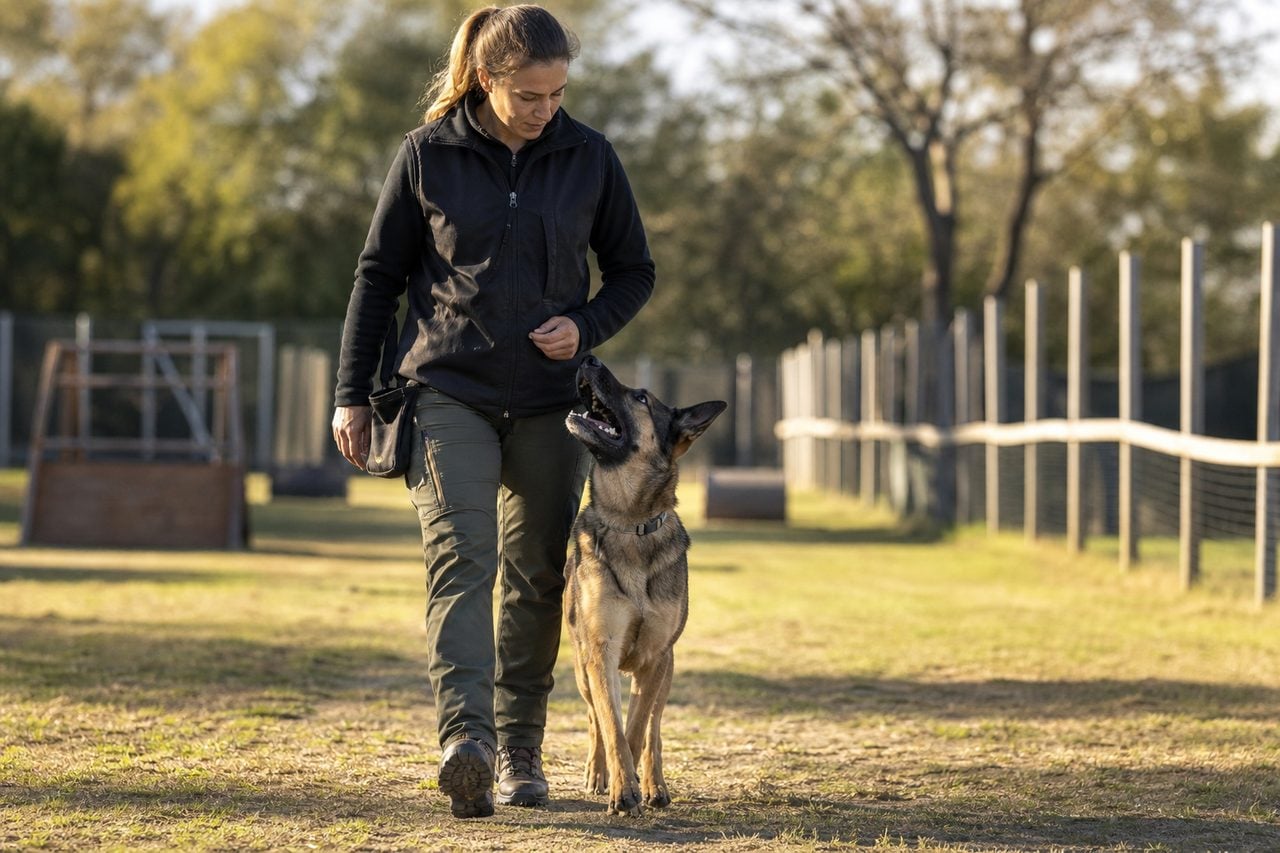
Dog boot camp — often called board-and-train — is one of the most talked-about ways to get fast, structured results with a dog in Ann Arbor. Instead of taking your dog to a weekly class or working through lessons yourself, you hand the day-to-day training over to a professional for a set number of weeks. The dog lives and learns in a training environment, works multiple short sessions every day, and comes home with a foundation of skills that you then maintain. For busy Washtenaw County families — University of Michigan staff, students juggling classes, commuters heading toward Detroit each morning — the appeal is obvious: real progress without carving hours out of every evening.
But boot camp is also the most misunderstood training format. It is not a magic reset button, it is not right for every dog, and the quality of the experience varies enormously depending on who is doing the work and how they do it. This guide walks through what dog boot camp actually is, when it makes sense for an Ann Arbor dog, how to vet a program, and what your role looks like once your dog comes home.
What Dog Boot Camp Actually Means
Boot camp is a residential training model. Your dog stays with a trainer — either in a dedicated facility or in the trainer’s home — for a continuous stretch of time, commonly two to four weeks, though some programs run shorter or longer depending on goals. During that stay the trainer works your dog through structured sessions several times a day, layering in obedience, manners, and behavior work while the dog is fresh and in a controlled setting.
The core advantage is consistency and repetition. A dog that gets ten to fifteen focused mini-sessions across a day, every day, under someone who reads canine body language fluently, tends to move through the early learning curve faster than a dog worked once a day by a distracted owner. The trainer can also expose the dog to controlled distractions on a schedule — something hard to replicate at home when life keeps interrupting.
What boot camp is not: it is not a personality transplant, and it is not a way to skip your own involvement. Dogs are contextual learners. Skills built in a trainer’s environment have to be transferred back to your home, your yard, and your walks along the Huron River. That transfer is where the real work happens, and it is why the handoff at the end of a program matters as much as the training itself.
When Boot Camp Is The Right Call In Ann Arbor
Boot camp tends to shine in a few specific situations. The first is the time-crunched household. If you are working long hours, commuting the roughly 45 minutes to and from Detroit, or in the middle of a demanding semester at U-M, you may simply not have the bandwidth to run consistent daily sessions during the critical early weeks. A board-and-train can carry the heavy lifting while your schedule is at its worst.
The second is the dog that needs intensive, concentrated exposure — for example a young, high-energy dog that has never learned to settle, or a dog whose leash manners are so unmanageable that ordinary walks have become a battle. Concentrated daily reps in a controlled setting can break those patterns faster than scattered practice.
The third is the owner who learns better by watching a finished result and then being coached into it, rather than building from scratch. A good program sends the dog home with clear skills and then teaches you to run them.
Boot camp is a poorer fit in a few cases. Dogs with serious fear or aggression rooted in anxiety often need a slower, relationship-based approach where the owner is present throughout — removing such a dog from its family and placing it in a novel environment can add stress rather than resolve it. Very young puppies in prime socialization windows usually benefit more from owner-guided socialization than from a residential stay. And any owner who wants to deeply understand the how and why of training may prefer private lessons where they are hands-on from day one.
How To Vet A Board-And-Train Program
Because your dog will be out of your sight for weeks, vetting matters more here than in any other format. Start with methods. Ask the trainer to describe, in plain language, exactly how they teach a new behavior and exactly what they do when a dog gets something wrong. You want specifics, not slogans. Trainers who lean on reward-based, low-stress methods and can clearly explain how they build reliability tend to produce dogs that come home confident rather than shut down.
Ask where your dog actually lives during the stay. Is it a home environment, a kennel, a mix? How many hours a day is the dog crated versus worked versus resting? How many dogs are enrolled at once, and how much one-on-one time does each get? A program running many dogs with one handler cannot give the individual attention the model promises.
Ask about updates. Reputable programs send regular photos or short videos so you can see progress and confirm your dog is happy. Ask what happens if your dog gets sick or injured — where is the nearest vet, and who makes the call. Ask specifically how the handoff works: how many follow-up sessions are included, and whether they will come to your home or a park like Gallup Park to help transfer the skills into your real environment.
Finally, ask to speak with recent clients or to see the trainer work a dog in person. Any professional confident in their program will welcome this. Vague answers, pressure to book immediately, or refusal to let you observe are all reasons to keep looking.
What Your Dog Learns During A Stay
Most boot camp programs are built around a foundation of everyday obedience and manners rather than exotic tricks. Expect work on reliable recall (coming when called), loose-leash walking so pulling stops dominating your walks, a solid sit and down, a place or settle command that gives the dog an off-switch indoors, and impulse control around doors, food, and greetings. Many programs also address specific problem behaviors you flag up front — jumping on guests, counter-surfing, bolting through gates, or reactivity toward other dogs on the leash.
The best programs proof these skills against distraction. A sit that only works in a quiet room is nearly useless; a sit that holds while a jogger passes on the Nichols Arboretum trails or while another dog walks by at Hudson Mills Metropark is the goal. Ask your trainer how they build that reliability and whether they take dogs into progressively busier real-world settings during the stay.
Set expectations realistically. A two- to four-week stay builds a strong foundation and can dramatically change day-to-day life, but it does not make training permanent on its own. Skills fade without maintenance, and dogs test boundaries when they return to the environment where old habits formed. The program gives you a trained dog and a starting point; keeping the dog trained is an ongoing job that belongs to you.
The Handoff — Where Boot Camp Succeeds Or Fails
The single biggest predictor of whether a board-and-train pays off long term is the quality of the handoff. When your dog comes home, you are inheriting a dog that responds to a specific set of cues, delivered in a specific way, with specific timing. If you do not learn to deliver those cues the same way, the dog quickly gets confused and the trained behaviors erode.
A strong program builds in one or more turnover sessions where the trainer teaches you the exact commands, hand signals, marker words, and reward timing they used. You practice running the skills yourself, under the trainer’s eye, until you can reproduce the results. Ideally at least one of these sessions happens in your own home and neighborhood, because the dog needs to generalize its new behavior to your kitchen, your front door, and your usual walking routes — not just the trainer’s setup.
Expect homework. Most programs give you a maintenance plan: short daily practice sessions, rules for the first few weeks to prevent backsliding, and structured reintroductions to the situations that used to trigger problems. Follow it closely. The dogs that hold onto their boot camp gains are the ones whose owners treat the first month home as the real graduation, not a finish line.
Boot Camp Versus Other Training Options
Boot camp is one tool among several, and it is worth understanding where it sits. Group classes are the most economical and add real-world distraction and socialization, but they move at the pace of the group and give you limited individual attention. They suit friendly dogs learning basic manners and owners who enjoy being hands-on every step.
Private lessons — with a trainer coming to your home or meeting you at a park — put you in the driver’s seat from the start. You learn every skill directly, which builds your own handling ability and tends to produce durable results, but progress depends on how consistently you practice between sessions. This format shines for behavior-specific issues and for owners who want to understand the craft.
In-home training keeps everything in your dog’s actual environment, which helps with problems that only appear at home. Boot camp trades that context for intensity and speed, then relies on the handoff to bridge back.
Many Ann Arbor owners end up combining formats: a board-and-train to establish a foundation fast, followed by a group class to maintain skills and add socialization, or private follow-ups to fine-tune. There is no single right answer — the best choice depends on your dog’s temperament, your goals, your schedule, and your budget. Ann Arbor’s training scene is deep enough that you can find quality options in every format without leaving the area.
Dog Boot Camp in Ann Arbor: Local Options & Nearest Specialists
A few Ann Arbor-area trainers can help with milder dog boot camp needs:
- The Dog Wizard Ann Arbor — 5.0★ (152 reviews)
- Szegi Haus K9 Solutions — 4.7★ (75 reviews)
Nearest dog boot camp specialists — Detroit
For complex cases, the closest metro with dedicated dog boot camp trainers is Detroit (an easy drive for an assessment or a board-and-train stay). Top-reviewed options:
- From The Heart Dog Training — 5.0★ (82 reviews)
- Smart Dog Obedience — 5.0★ (54 reviews)
- My Sidekick Dog Training — 5.0★ (50 reviews)
- K9 AdvantEDGE Dog Training — 5.0★ (40 reviews)
- Connected Canine Academy — 5.0★ (16 reviews)
- Iron Clad K9 Training — 5.0★ (13 reviews)
- Tip Top K9 Sterling Heights Dog Training — 5.0★ (7 reviews)
- Sit Means Sit Dog Training Detroit — 4.9★ (688 reviews)
See all Detroit dog boot camp trainers →
Frequently Asked Questions
How long does dog boot camp usually last?
Most residential board-and-train programs run somewhere between two and four weeks, though some offer shorter intensives and others extend longer for complex goals. The right length depends on your dog’s starting point and what you want to accomplish. A dog learning basic manners needs less time than one working through entrenched leash reactivity. Ask any program to explain why they recommend a particular duration for your specific dog rather than quoting a one-size-fits-all number.
Will my dog forget everything when it comes home?
Not if the handoff is done well and you keep up maintenance. Dogs are contextual learners, so skills built in a trainer’s environment need to be transferred to your home through follow-up sessions and consistent practice. The programs that produce lasting results include turnover sessions that teach you the exact cues and timing, ideally in your own home. Treat the first month back as active practice, not a finish line, and the training holds.
Is boot camp safe for my dog?
It can be, but safety depends entirely on the program. A reputable trainer uses low-stress, reward-based methods, keeps dogs in clean and comfortable conditions, sends regular updates, and has a clear plan for veterinary care if a dog gets sick or hurt. Ask exactly how your dog will live during the stay, how many dogs are enrolled at once, and how much individual attention each receives. Refusal to let you observe or vague answers about methods are red flags.
What kinds of problems does boot camp work best for?
Boot camp tends to work well for foundational obedience and manners — recall, loose-leash walking, settling on cue, impulse control — and for concentrated work on high-energy or unmanageable behavior. It is a weaker fit for serious fear or anxiety-based aggression, which often needs the owner present throughout, and for very young puppies in their prime socialization window, who usually benefit more from owner-guided socialization at home.
How much of the work is still mine after boot camp?
A significant amount. Boot camp does the intensive early lifting and sends home a dog with real skills, but keeping those skills sharp is an ongoing job. Expect a maintenance plan with short daily practice sessions, rules for the first few weeks to prevent backsliding, and structured reintroductions to old trigger situations. Owners who follow the plan closely keep their gains; owners who treat boot camp as a hands-off fix usually watch progress fade.
Can I visit my dog during the program?
Policies vary. Some trainers allow scheduled visits, while others prefer a no-visit window early on so the dog can settle and focus without the disruption of seeing you and then being left again. Neither approach is automatically wrong, but a good program will explain its reasoning and, at minimum, keep you connected with regular photos or short video updates so you can see progress and confirm your dog is comfortable throughout the stay.
Related: read our complete dog boot camp guide or the full Ann Arbor dog training overview.
Ready to find the right dog boot camp pro in Ann Arbor?