
Dog Boot Camp in Jackson, MI
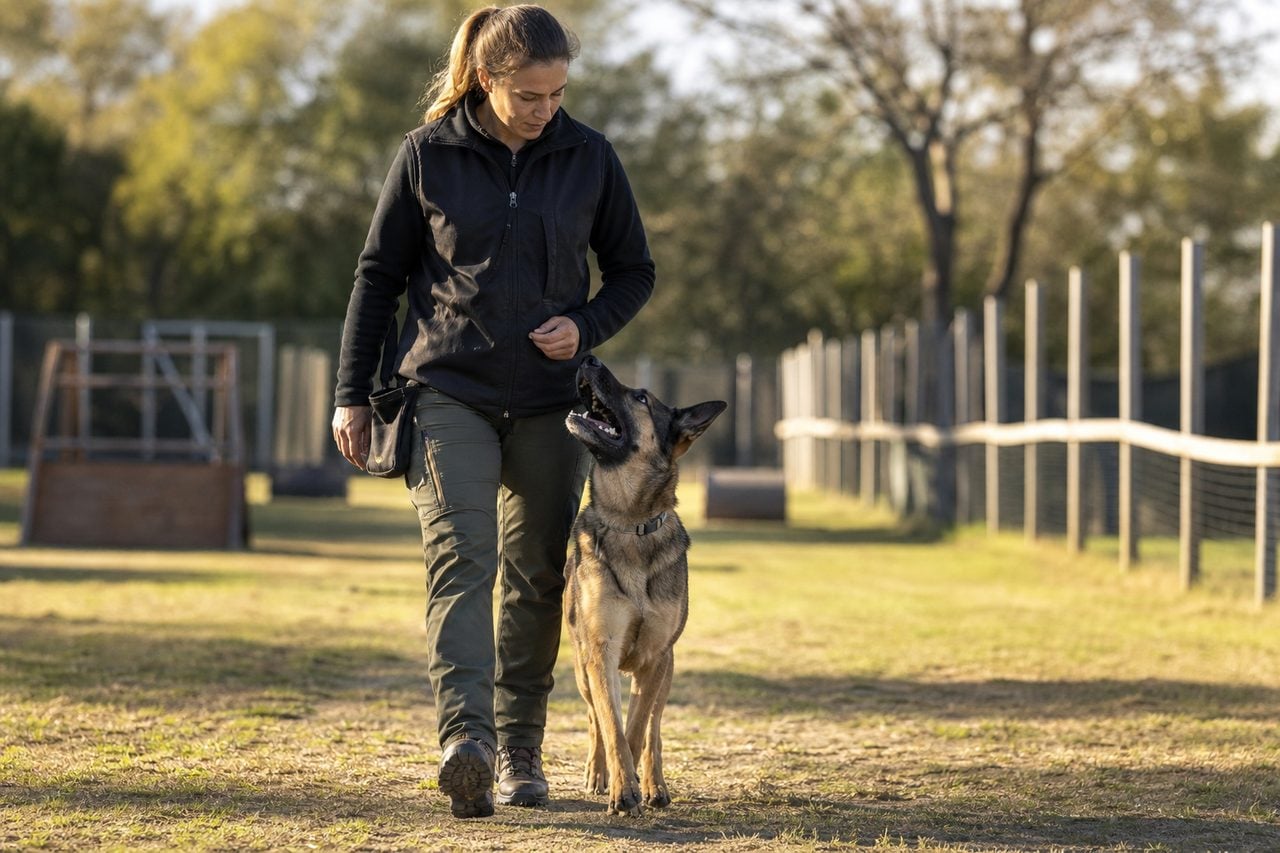
Dog boot camp is a phrase owners reach for when a dog’s manners have gotten out of hand and a weekly class no longer feels like enough. The term usually describes an intensive obedience program, either residential or run as a compressed series of frequent sessions, aimed at rapidly installing reliable behavior. For a busy household in Jackson County, the promise is appealing: front-load the hard work, get a dog that listens, and skip the months of slow-drip practice.
- What people mean by dog boot camp
- Who benefits most from an intensive program
- The difference between obedience and behavior
- Red flags and green flags when choosing
- What a strong intensive program looks like day to day
- Making the results last at home
- Costs, timelines, and realistic expectations
- Reviewed trainers
- FAQ
The reality is more nuanced and more useful to understand before you spend the money. Intensive obedience can genuinely accelerate results, but the word boot camp carries a range of meanings, from carefully structured skill-building to harsh, corrections-heavy drilling. The label alone tells you almost nothing about what will happen to your dog. This guide unpacks what boot camp style programs actually involve, who they suit, how to tell a good one from a bad one, and how to make the results stick on your own streets and trails around Jackson, Spring Arbor, Napoleon, and the Irish Hills.
Local supply for true intensive programs is limited in the immediate Jackson area, so part of an honest plan is knowing that some owners travel east toward the larger Ann Arbor and Detroit pool for certain options. The aim of this article is to help you choose well, whether the right program sits down the road or a short drive down I-94.
What people mean by dog boot camp
Boot camp is a marketing term more than a defined method. In practice it refers to intensive obedience training delivered over a compressed timeframe. Some boot camps are residential, meaning the dog lives at the facility and trains daily, which overlaps heavily with board and train. Others are day-program style, where you drop the dog off for full training days and bring it home at night. Still others are structured as owner-and-dog intensives, with frequent private lessons packed into a few weeks.
What unites them is intensity and pace. Rather than one class a week for two months, boot camp compresses many sessions into a short window to build momentum and reliability quickly. The logic is sound: frequent, consistent repetition in a controlled setting can move a dog faster than sporadic practice.
The catch is that intensity is neutral. It can mean many short, upbeat, well-planned sessions that build a confident, willing dog, or it can mean long, pressured drilling that produces a compliant but stressed animal. The word boot camp evokes military rigor, and some programs lean into that image with a heavy hand. Others use the term simply because owners search for it, while running humane, modern, reward-based work underneath. The name on the door tells you what the marketing department chose, not what happens to your dog at nine in the morning.
Because the label is unreliable, you cannot judge a program by its name. You have to look past the marketing and ask exactly what a training day involves, what methods are used, and how the dogs come out the other side. That scrutiny is the theme of this guide.
Who benefits most from an intensive program
Intensive obedience suits particular situations well. The clearest fit is the owner who wants a solid obedience foundation fast and is willing to pay to compress the timeline. If you have a young, healthy dog that is bright but unruly, and you simply do not have the bandwidth for months of gradual classes, a focused program can install the core skills quickly and give you a strong platform to maintain.
Adolescent dogs are common and appropriate candidates. The teenage phase, roughly the second half of the first year into the second year, is when many dogs start ignoring cues, pulling hard, and testing limits. A concentrated obedience block during this window can interrupt bad habits before they harden and give you tools to steer the dog through a difficult developmental stage.
Owners with specific reliability goals also do well. If you want a dependable recall so you can enjoy off-leash-capable time on trails, a rock-solid stay so the dog settles when guests arrive, or clean leash manners for walking busy areas, these are concrete obedience targets that intensive training addresses efficiently.
Households juggling long commutes toward Ann Arbor or Lansing, shift work, or a new baby often fall into this camp. They are not neglectful owners; they are stretched ones, and the daily consistency that ordinary training demands is genuinely hard to produce right now. For them, paying to compress the foundational phase into a professional’s hands can be the difference between a dog that gets trained and one that never quite does. The honest test is whether you will have the bandwidth to maintain the results afterward, because even the best intensive fades without follow-through.
Boot camp is a poorer fit for dogs whose main issue is fear, panic, or aggression. Those are behavior problems, not obedience gaps, and drilling more sit and heel does not resolve the underlying emotion. Pushing a fearful or reactive dog through a rigid, high-pressure program can make things worse. If your dog’s core problem is how it feels rather than what it knows, an obedience boot camp is the wrong tool, and a behavior-focused professional is the right starting point.
The difference between obedience and behavior
One distinction saves owners more grief than any other: obedience and behavior are not the same thing, and boot camps mostly sell obedience. Obedience is a set of trained responses, sit, down, stay, come, heel, place. Behavior is the emotional and instinctive layer underneath, why a dog lunges at other dogs, freezes at the vet, guards the couch, or shreds the house when left alone.
A dog can have flawless obedience and serious behavior problems at the same time. Teaching a fearful dog to hold a down-stay does not make it less afraid; it just gives it a job to do while still frightened. Sometimes that job helps, but the fear is still there and can surface elsewhere. Treating a behavior problem as an obedience deficiency is one of the most common and costly mistakes owners make.
This matters when you evaluate a boot camp. If a program promises to fix aggression, anxiety, or reactivity purely through intensive obedience drilling, be skeptical. A responsible trainer will assess whether your dog’s issue is really an obedience gap or an emotional problem wearing an obedience costume, and will tell you honestly if you need a different kind of help.
For genuinely obedience-based goals, a boot camp can be excellent. For behavior cases, the intensive-obedience frame is a poor match, and you are better served by a professional who works on emotion and learning history rather than repetition of cues. Knowing which category your dog falls into is the first decision, and it should drive everything after it.
Red flags and green flags when choosing
Because boot camp is an unregulated label, your judgment does the heavy lifting. A few signals reliably separate strong programs from ones to avoid.
Green flags include a willingness to let you visit and observe, clear explanations of methods and tools, calm and engaged dogs on-site, honest talk about what intensive training can and cannot do, and a real plan for teaching you to maintain the results. Trainers who invest in owner education understand that the dog lives with you, not them, and that lasting change depends on your handling.
Red flags include guarantees of a permanent fix, secrecy about what happens during training, refusal to let you see the kennel or training area, one-size-fits-all programs that do not adapt to the individual dog, and a reliance on intimidation. A dog that is quiet and compliant but hunched, lip-licking, and avoiding eye contact is not a success story; it is a stressed animal that has learned to shut down.
Ask what happens on a hard day, when a dog refuses or panics. The answer reveals the program’s real character. You want to hear about adjusting the plan, lowering difficulty, and building the dog up, not about forcing the dog through pressure until it complies.
Because the strongest intensive programs are not thick on the ground right around Jackson, be prepared to look toward the Ann Arbor and Detroit corridor to find one whose approach you trust. The extra drive is a small price for handing your dog to someone whose methods you have actually seen and understood.
What a strong intensive program looks like day to day
A well-run intensive is built from many short, successful sessions rather than a few long, grinding ones. Dogs learn best in brief bursts with rest in between, so a good day mixes focused training with decompression, play, sniffing, and sleep. If a program describes hours of continuous drilling, that is a warning sign, not a selling point.
Expect a deliberate progression. Early sessions build the behavior in a quiet setting where the dog can succeed. As the dog gets reliable, the trainer adds difficulty on purpose: more distance, longer duration, and distractions layered in a controlled order. This proofing is what makes a cue hold up outside the training yard, on a real sidewalk with real temptations.
Look for enrichment and welfare woven through the day. Dogs that are mentally and physically satisfied learn faster and stress less. Time to rest, appropriate exercise, and calm handling are not luxuries; they are part of what makes the training work.
Communication is another marker. Regular updates through photos, short videos, or notes let you see the methods and track progress. They also let you spot early if the approach is not what you agreed to. A program confident in its work is happy to show it.
Pay attention, too, to how the program handles differences between dogs. A soft, sensitive dog and a pushy, high-drive one should not be run through the identical script. Good trainers read the individual animal and adjust pace, reward, and pressure accordingly. If a program describes exactly the same routine for every dog regardless of temperament, that rigidity tends to produce compliance in the confident dogs and shutdown in the sensitive ones. Ask directly how they tailor the work, and listen for a thoughtful, dog-specific answer rather than a canned pitch.
Finally, a strong intensive plans for the handoff from the start. The trainer should schedule time to teach you the cues, the timing, and the standard, and should give you a clear go-home plan. The dog’s performance on the trainer’s field is only meaningful if it transfers to your life in Jackson.
Making the results last at home
The hardest part of any intensive program happens after it ends. A dog comes home fluent and reliable, then slowly drifts as home routines fail to reinforce what it learned. The training did not fail; the maintenance did. Avoiding that drift is entirely within your control.
Start by protecting the structure the dog just learned. Keep clear rules, consistent cues, and short daily practice. Five focused minutes a few times a day beats one long weekend session. Fold training into ordinary life: ask for a sit before meals, a wait at doors, a settle while you eat.
Generalize deliberately. A dog that heels perfectly at the trainer’s still has to learn that heel means the same thing on your street, in a parking lot, and near other dogs. Practice in progressively harder settings around Jackson, starting quiet and building up. A calm stretch of the Falling Waters Trail, an early-morning loop near Cascades Falls, or a session at Ella Sharp Park gives you graduated difficulty close to home.
Get the whole household on the same page. If one person enforces the rules and another does not, the dog learns that cues are negotiable. Agree on the words, the standard, and the consequences before problems arise.
Keep the leash on and expectations honest in public. Across the Jackson area, local ordinances govern leashing and dog control, so treat every outing as both exercise and rehearsal. If reliability starts slipping, book a follow-up lesson early. A quick tune-up while a habit is still forming is far cheaper than rebuilding it after it re-entrenches.
Costs, timelines, and realistic expectations
Intensive programs cost more than group classes because you are paying for concentrated professional time, and residential versions add housing and daily care. Rather than compare headline prices alone, weigh what is included: how much active training the dog gets each day, whether owner coaching is built in, and what follow-up support carries you afterward. A cheaper program with no handoff can cost more in the long run than a pricier one that sets you up to succeed.
On timeline, be realistic. A well-run intensive can produce a genuinely more reliable, better-mannered dog in a matter of weeks, which is a real and worthwhile result. What it cannot do is permanently erase deep-seated behavior problems or remove the need for your ongoing involvement. The dog you get back is a strong foundation, not a finished, self-maintaining product.
Set expectations around partnership. The program compresses the difficult early learning into a focused block; you maintain and extend it in daily life. Measured that way, an intensive is not a way to avoid the work of owning a dog. It is a way to make the work that remains far more manageable, starting from a much higher baseline.
One more expectation worth setting is that an intensive is a beginning, not an ending. The best outcomes come from owners who treat the program as the launch of a longer relationship with structure, folding short daily practice into ordinary life and returning for the occasional tune-up as the dog matures. Owners who frame it as a one-and-done purchase, expecting the dog to stay finished on its own, are the ones most often disappointed. The dogs that hold their training are the ones whose owners kept up the habit. Budgeting a little time each week indefinitely is a more honest plan than budgeting a large sum once and hoping the result is permanent.
Because dedicated intensive programs are limited close to Jackson, factor a possible drive into your decision. If the best fit for your dog and your comfort with methods sits toward Ann Arbor or Detroit, roughly forty minutes east on I-94, that one-time travel is minor against weeks of daily professional work and years of living with the results. Choose on method, welfare, and follow-up first, and let location come second.
Dog Boot Camp in Jackson: Local Options & Nearest Specialists
A few Jackson-area trainers can help with milder dog boot camp needs:
- Divinity K9 — 4.9★ (136 reviews)
Nearest dog boot camp specialists — Ann Arbor
For complex cases, some families travel to the larger pool of specialists in the Ann Arbor area for an assessment or a board-and-train stay. Top-reviewed options:
- The Dog Wizard Ann Arbor — 5.0★ (152 reviews)
- Szegi Haus K9 Solutions — 4.7★ (75 reviews)
See all Ann Arbor dog boot camp trainers →
Frequently Asked Questions
Is a dog boot camp the same as board and train?
They overlap but are not identical. Board and train specifically means the dog lives at the facility during the program. Boot camp is a broader marketing term for intensive obedience, which might be residential, a full-day drop-off program, or a compressed series of private lessons. Because both labels describe format rather than method, the important questions are the same: what happens during a training day, what tools are used, and how you are taught to maintain the results.
Can a boot camp fix my dog's aggression or anxiety?
Usually not, because those are behavior problems rather than obedience gaps, and intensive obedience drilling does not change how a dog feels. A fearful or reactive dog can learn to hold a stay while still being afraid or reactive underneath. Be cautious of any program guaranteeing to fix aggression or anxiety. For those cases, a behavior-focused professional is the right starting point, and some Jackson owners travel toward Ann Arbor or Detroit for that level of help.
How fast will I see results from an intensive program?
A well-run intensive can noticeably improve manners and reliability within a few weeks, which is much faster than sporadic weekly classes. However, the results are a strong foundation, not a permanent, self-maintaining outcome. What you do in the weeks after the program largely determines whether the gains hold, so plan on short daily practice and gradual real-world proofing once your dog is home.
What are the warning signs of a bad boot camp?
Watch for guarantees of a permanent fix, secrecy about what happens during training, refusal to let you observe, one-size-fits-all programs that do not adapt to the dog, and reliance on intimidation. Dogs that are compliant but visibly stressed, hunched, lip-licking, avoiding eye contact, are a red flag rather than a success. A trustworthy program lets you watch, explains its methods plainly, and shows you calm, engaged dogs.
My dog is an unruly adolescent. Is that a good candidate?
Often yes. The adolescent phase is when many dogs start ignoring cues, pulling, and testing limits, and a concentrated obedience block during that window can interrupt bad habits before they set. The key is that the program teaches you to maintain the structure afterward, since adolescence is an ongoing stage. An intensive that installs skills but skips owner coaching tends to fade once the dog is back in an unstructured routine.
Do I need to travel from Jackson for a good program?
Possibly. Dedicated intensive programs are relatively limited in the immediate Jackson area, so options close to home may be thin. Many owners look east along I-94 toward the larger Ann Arbor and Detroit pool, roughly forty minutes away, to find a facility whose methods and welfare standards they trust. Choose the program based on approach and follow-up support first, and treat a one-time drive as a reasonable trade for the right fit.
Related: read our complete dog boot camp guide or the full Jackson dog training overview.
Ready to find the right dog boot camp pro in Jackson?