
Dog Boot Camp in Middletown, OH
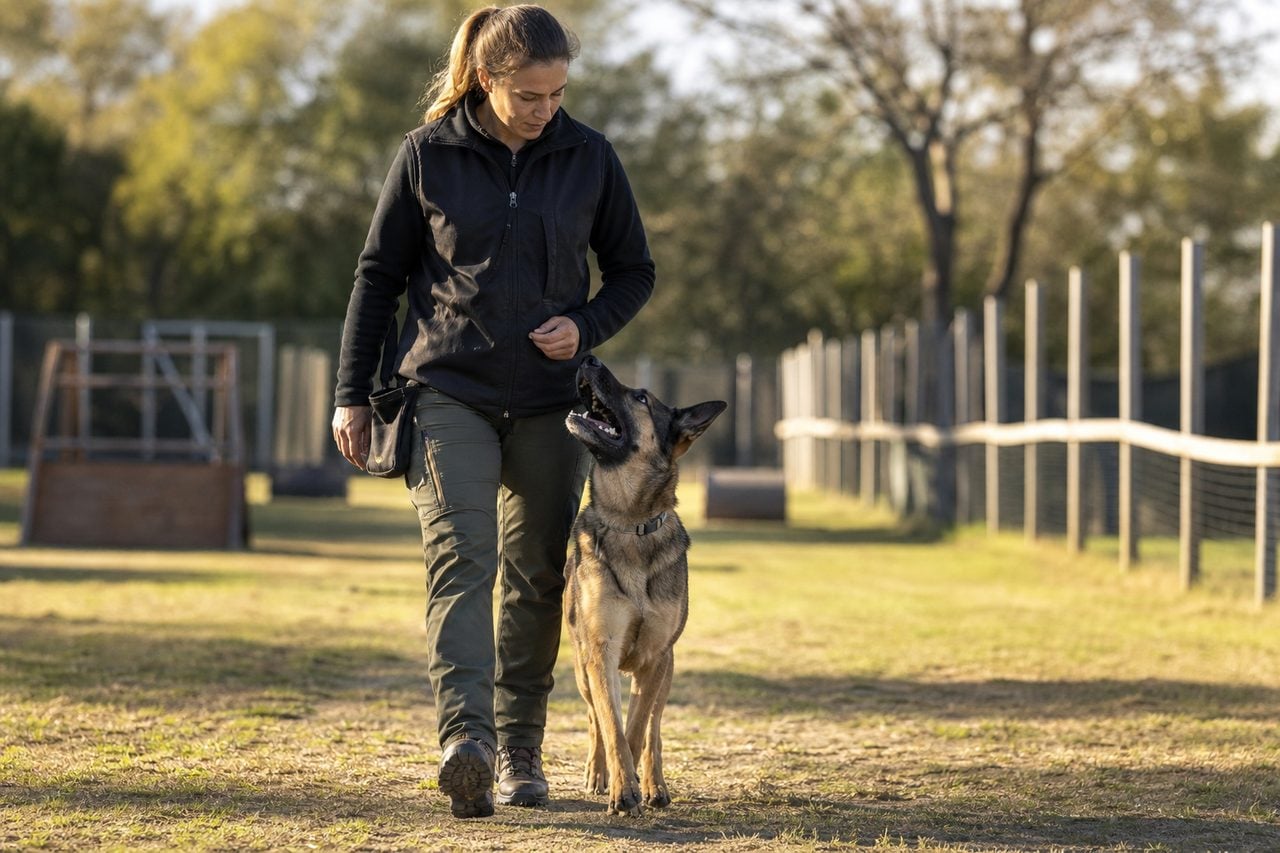
If you’ve searched for “dog boot camp” in the Middletown area, you’ve probably noticed the term gets used a little loosely. Some trainers use it interchangeably with board-and-train; others use it to mean something more specific — an intensive, results-focused immersion program designed to move the needle fast on a dog that needs serious work. This guide leans into that second meaning, because that’s usually what owners are actually looking for when they reach the boot-camp stage: not just “some training,” but a concentrated push to fix real problems on a real timeline.
- What makes a program a "boot camp" rather than just training
- How a boot camp differs from a standard board-and-train
- Realistic timelines — and why the fast results aren't magic
- Who an intensive program is right for
- What to look for in a Middletown-area boot camp
- Locking in the results around Middletown
- Reviewed trainers
- FAQ
Middletown’s location helps here. Sitting on the Great Miami River in Butler County, halfway up I-75 between Cincinnati and Dayton, the city puts a wide range of trainers within a reasonable drive — from Monroe and Trenton to Franklin, Springboro, and Lebanon. That gives you room to find a program that actually specializes in the kind of intensive work a boot camp implies, rather than settling for whoever’s closest. Below, we’ll break down what makes a program genuinely intensive, the realistic timelines, who it’s right for, and how to set it up so the results stick.
What makes a program a "boot camp" rather than just training
The boot-camp label is about intensity and focus, not just duration. A regular weekly class might give a dog one structured hour every seven days. A boot camp flips that ratio entirely: the dog trains every day, often in multiple sessions, in a deliberately structured environment, with a single concentrated goal — turn a problem dog into a manageable one in the shortest honest timeframe.
A few things tend to define the genuinely intensive version:
- Daily, repeated reps. Frequency is the engine. Dogs learn through consistent repetition with clear feedback, and a boot camp delivers far more of it per week than any other format.
- Controlled escalation of difficulty. Skills aren’t just taught once — they’re proofed against distraction, distance, and duration until they hold up in the real world, not just in a quiet training room.
- A targeted problem set. The strongest boot camps go in with a clear objective: stop the pulling, end the door-darting, build a reliable recall, calm the over-arousal. The whole program orients around that outcome.
- An aggressive but honest timeline. “Aggressive” meaning fast; “honest” meaning no magic-bullet promises. Real behavior change has a floor that no amount of intensity can break.
If a program markets itself as a boot camp but runs like a relaxed weekly class with boarding attached, it’s mislabeled. The whole point is concentration of effort.
How a boot camp differs from a standard board-and-train
There’s real overlap — many boot camps are a form of board-and-train, where the dog lives on-site — but the framing and the goal differ enough to matter when you’re choosing.
A standard board-and-train is often pitched around building a broad foundation: a balanced, well-mannered dog across a range of everyday situations. A boot camp is usually pitched around results on a specific problem, fast. Think of board-and-train as “raise the dog’s overall baseline” and boot camp as “solve this issue, hard and quick.”
In practice that means a boot camp tends to be more drilling-intensive within its window, more sharply focused on one or two target behaviors, and marketed to owners who are at the end of their rope with a particular problem rather than owners starting from scratch with a blank-slate puppy. The intensity can also be higher per day — more sessions, more proofing, more deliberate exposure to the exact triggers the dog struggles with.
None of this makes one inherently better. It makes them suited to different situations. If your dog has a single serious issue dragging down everything else, the boot-camp framing fits. If you want a broad, gentle foundation, a standard program or group classes may serve you better.
Realistic timelines — and why the fast results aren't magic
The honest answer to “how fast can a boot camp fix my dog?” is: faster than you could on your own, but not instantly, and not permanently without your follow-through.
Most intensive programs run somewhere in the two-to-four-week range. Within that window, you can realistically expect dramatic, visible improvement — a dog that was pulling like a freight train walking on a loose leash, a door-darter waiting calmly, a non-responsive dog actually checking in with its handler. That progress is real, and it’s why boot camps exist.
What’s happening isn’t magic; it’s volume and timing. The trainer is compressing weeks or months of consistent reps into a short stretch, and crucially, every rep is well-timed by someone who reads the dog accurately. The same number of sloppy, inconsistent reps spread out over months — which is what most owners actually manage — produces far weaker results. Intensity plus precision is the whole trick.
But here’s the catch that separates realistic expectations from disappointment: the dog leaves the program with the skills, not with a guarantee they’ll persist. Behavior is maintained by ongoing reinforcement. A dog that returns to an environment with no follow-through will drift back toward old patterns. The boot camp buys you a huge head start; keeping it is on you. Any trainer who promises a permanent fix with zero owner effort is overselling.
Who an intensive program is right for
Boot camps earn their cost in specific situations. They’re a strong fit when:
- The problem is serious and entrenched. A behavior that’s been rehearsed for months or years — severe pulling, reactivity, compulsive jumping, escaping — often responds far better to concentrated daily work than to once-a-week chipping away.
- You’ve already tried the slow route. Many owners reach boot camp after group classes or DIY efforts stalled. The intensive format breaks the plateau.
- The dog needs more skill than you can deliver. Some behaviors require precise timing and confident handling that take years to develop. Outsourcing the heavy lifting to a pro, then learning the upkeep, is a legitimate strategy.
- There’s a deadline. A move, a new baby, a household change — sometimes you genuinely need progress on a calendar, and the intensive format delivers it.
It’s a poor fit for fearful or severely anxious dogs who may find an unfamiliar facility stressful enough to set them back, for owners who want the bonding of training their own dog, and for mild issues where a $200 group class would do the job a $3,000 boot camp would. Be honest about which bucket you’re in — a good trainer will tell you if a cheaper option fits better.
What to look for in a Middletown-area boot camp
Because the term “boot camp” isn’t regulated and can mean almost anything, your job is to look past the label and evaluate the substance. With trainers spread across Butler and Warren counties, you can afford to be selective.
Pin down the actual daily structure. Ask how many training sessions per day, how long, and what a typical day looks like. “Intensive” should mean something concrete. If the answer is vague, the intensity probably is too.
Demand a clear target and method. A good boot camp can tell you exactly what they’ll focus on for your dog and roughly how they’ll get there, in plain language. Watch out for anyone who promises a guaranteed outcome on an unrealistically short clock — that’s a marketing claim, not a training plan.
Tour the facility. See where the dog trains, sleeps, and exercises. It should be clean, secure, and humane. The intensity should come from smart programming, not from a dog crated alone for twenty-three hours a day.
Confirm the handoff and follow-up. This is where boot camps live or die. There must be a real plan to transfer the skills to you, with hands-on coaching, and ideally some follow-up support afterward. The dog learning the behavior is only half the deliverable; you learning to maintain it is the other half.
Check that the trainer specializes in your issue. A boot camp built around basic obedience is different from one experienced with reactivity or aggression. Match the program to the actual problem.
Locking in the results around Middletown
The first month home is where you cash in the head start the boot camp gave you — or quietly squander it. Treat it as the second half of the program, not the end of it.
Keep practicing the exact cues, markers, and rewards your trainer used. Consistency of language is huge; a dog that learned one set of signals at the facility shouldn’t come home to a different vocabulary. Run short, frequent sessions rather than occasional marathons, and build the difficulty back up in steps the way the trainer did — quiet first, distractions later.
Middletown gives you good staging grounds for that progression. Smith Park, a large local green space with a walking loop that ties into the Great Miami River Trail system, is a sensible place to rehearse focus and leash work with manageable distraction before you graduate to busier settings. Sunset Park is another nearby option for structured practice. As the dog stays reliable, push into more stimulating environments — that controlled escalation is exactly what made the boot camp work, so keep applying it.
If a target behavior starts slipping, don’t wait for it to fully unravel. Reach back out to the trainer; many intensive programs include or offer follow-up support precisely because this period is so important. Done right, a boot camp doesn’t just hand you a transformed dog — it hands you a dog plus the road map to keep it that way.
Reviewed Dog Boot Camp Trainers in Middletown
These reviewed Middletown-area trainers from our directory handle dog boot camp. Each links to a full profile with specialties, verified credentials, reviews, and contact info:
- Sit Means Sit Cincinnati — 4.8★ (156 reviews)
- A Leg Up K9 — 4.8★ (126 reviews)
- Homeland K-9 Dog Training Academy — 4.7★ (34 reviews)
See all Middletown dog boot camp trainers →
Frequently Asked Questions
Is a dog boot camp the same thing as board-and-train?
They overlap heavily, and many boot camps are technically a form of board-and-train where the dog lives on-site. The difference is framing and goal. Board-and-train usually aims at a broad, balanced foundation, while a boot camp is pitched around fast, focused results on a specific serious problem. If your dog has one entrenched issue, the boot-camp framing fits; if you want a gentle all-around foundation, a standard program may suit you better.
How fast will I see results from an intensive program?
Most intensive programs run two to four weeks, and within that window you can expect dramatic, visible improvement on the target behavior. The speed comes from volume and precise timing, not magic. The dog leaves with the skills, but keeping them requires your ongoing reinforcement at home. Any program promising a permanent fix with zero owner effort is overselling.
How much does a dog boot camp cost around Middletown?
Because boot camps are typically an intensive form of board-and-train, they fall in the same southwest Ohio range of roughly $1,500 to $6,000, depending on length, the trainer’s experience, the facility, and how specialized the goals are. Compare quotes carefully and confirm the daily structure and owner-handoff coaching are included, since those drive the real value.
Is a boot camp too harsh for my dog?
The intensity in a good program comes from smart, frequent training and controlled difficulty, not from harsh handling or excessive confinement. Ask any program to explain their methods in plain language and tour the facility so you can see how the dogs are housed and exercised. Intensive should mean well-structured, not stressful. Fearful or severely anxious dogs, however, may not be good candidates, since an unfamiliar facility can set them back.
My dog only has a mild issue. Is a boot camp overkill?
Quite possibly. Boot camps earn their cost on serious, entrenched problems or when slower methods have already stalled. For a mild issue, a local group class (typically $150 to $300 per course) or a few private sessions ($100 to $175 each) will often get you there for a fraction of the price. A reputable trainer will tell you honestly if a cheaper option fits your situation.
What should I do to keep the results after the program ends?
Treat the first month home as the second half of the program. Practice the exact cues, markers, and rewards the trainer used, in short frequent sessions, and rebuild difficulty in steps, quiet settings first. Local spots like Smith Park, which connects to the Great Miami River Trail, are good places to rehearse with manageable distraction. If a behavior slips, contact the trainer early rather than letting it unravel.
Related: read our complete dog boot camp guide or the full Middletown dog training overview.
Ready to find the right dog boot camp pro in Middletown?