
Dog Boot Camp in New Albany, IN
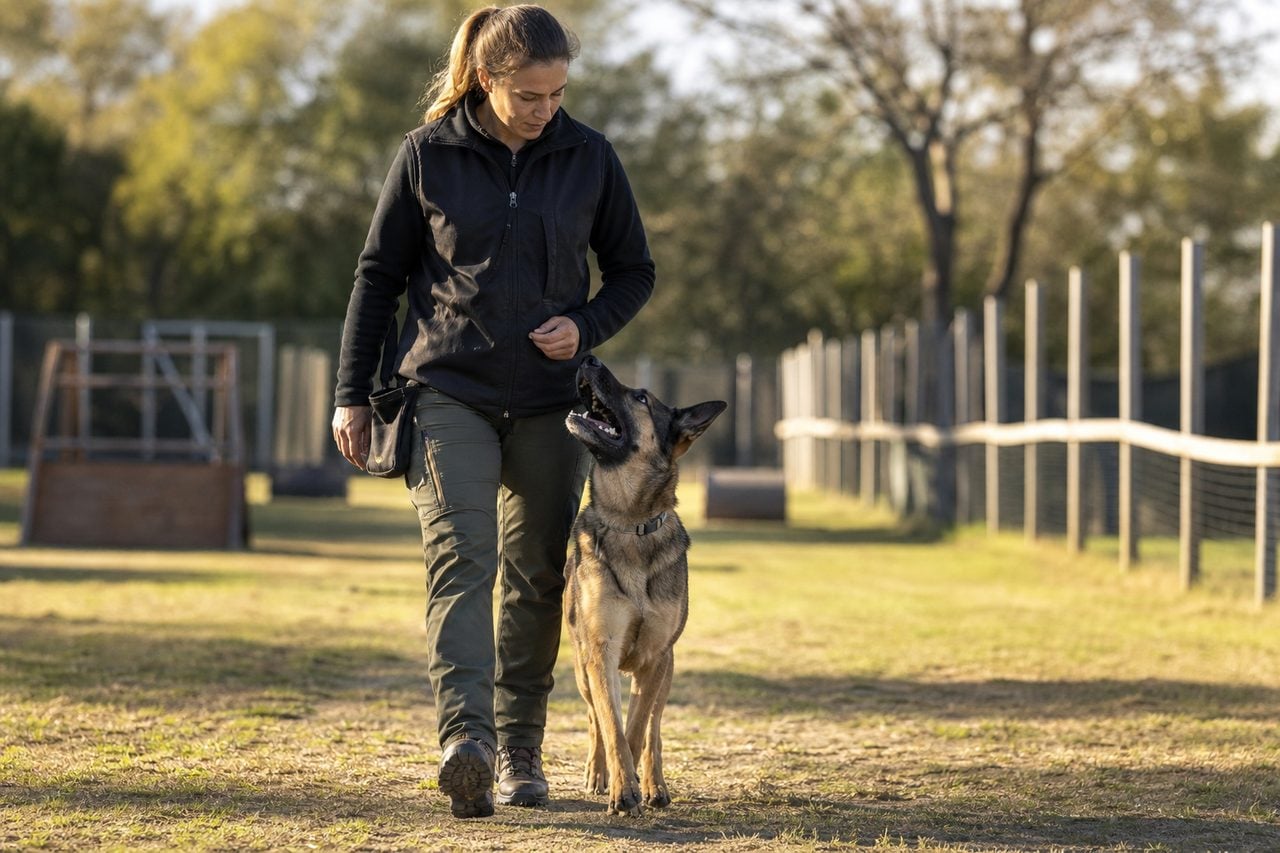
Dog boot camp is shorthand for intensive obedience training compressed into a short, focused window. The term borrows from military basics for a reason: the idea is concentrated daily work that builds discipline and reliable responses faster than a once-a-week class ever could. Across the New Albany area — from Jeffersonville and Clarksville to Sellersburg, Georgetown, and the Floyds Knobs hills — families reach for boot camp when a dog’s behavior has outpaced their ability to keep up.
- Boot Camp vs. Board-and-Train: What Is the Difference?
- What Obedience Boot Camp Actually Teaches
- Day Boot Camps vs. Residential Boot Camps
- Is Your Dog a Good Candidate?
- Training Methods and Tools You Will Encounter
- Keeping the Results After Boot Camp Ends
- Choosing a Boot Camp Provider in Kentuckiana
- Reviewed trainers
- FAQ
Boot camp and board-and-train overlap heavily, and many trainers use the terms almost interchangeably. The practical difference is emphasis: boot camp usually stresses speed, structure, and obedience drilling, whether the dog stays overnight or attends an intensive day program. What both share is the promise of rapid progress, and the same catch — the results only last if the owner carries them home.
This guide breaks down what boot camp really covers, who benefits, how day and residential formats compare in the Kentuckiana region, the methods and tools you will encounter, and how to keep the gains once the intensive stretch ends.
Boot Camp vs. Board-and-Train: What Is the Difference?
The honest answer is that the line is blurry and marketing-driven. Both formats concentrate training into a short period for faster results, and both rely on a professional working the dog far more often than a typical owner can. When people say boot camp, they usually mean an intensive obedience push; when they say board-and-train, they usually mean the dog also boards overnight. But plenty of trainers offer a residential boot camp that is both at once.
Rather than fixate on the label, focus on the substance:
- What skills will the dog reliably have at the end?
- How intensive is the daily schedule — how many sessions, how long, and how varied?
- Does the dog stay overnight, or come home each evening?
- How is the training transferred to you when it is over?
A program called boot camp that skips the handoff is no better than a board-and-train that does the same. The name tells you almost nothing; the curriculum, the methods, and the transfer plan tell you everything. Judge the offering on those, not on which buzzword the trainer prefers.
One reason the boot camp label persists is that it captures something real about intensity. A dog worked in five or six short sessions a day, seven days a week, simply gets more repetitions in two weeks than a weekly-class dog gets in months. That volume is the actual engine of fast results, whatever the program is called. But intensity cuts both ways: a dog can also be over-drilled, stressed, or pushed past its learning threshold if a program values quantity over quality. The best intensive programs balance frequent work with rest, play, and decompression, because a tired, over-faced dog stops absorbing new information. When you evaluate a boot camp in the New Albany area, ask not only how many sessions per day but also how the dog’s downtime and mental recovery are handled — that balance separates a thoughtful program from a pressure cooker.
What Obedience Boot Camp Actually Teaches
Most boot camps build a core obedience toolkit designed to make daily life with a dog calm and manageable. While the exact list varies, expect the foundations that turn a chaotic dog into a livable one.
Typical commands and skills include:
- Sit and down on a single cue, held until released.
- Place — go to a bed or mat and stay there, which is one of the most useful commands for a busy household with visitors or mealtimes.
- Recall — coming when called, first on leash, then on a long line, building toward reliability around distractions.
- Loose-leash walking or a formal heel, so walks along the Ohio River Greenway stop being a tug-of-war.
- Stay and duration — holding a position while the handler moves away or while life happens nearby.
- Impulse control — not bolting through doors, not jumping on guests, not lunging at food or other dogs.
Beyond specific commands, a good boot camp installs a mindset: the dog learns to look to its handler for guidance, to settle when there is nothing to do, and to accept that calm behavior earns good things. That underlying calm is often more valuable than any single trick, because it generalizes to situations the trainer never specifically drilled.
It is worth being realistic about what these commands do and do not solve. Reliable obedience makes a dog manageable and safe, and it prevents a huge share of everyday friction — the dog that holds a place command is not begging at the table or bolting out the front door. What obedience does not do is rewrite a dog’s underlying emotions. A dog that lunges at other dogs out of fear may learn to heel beautifully and still feel afraid, which means the reactivity can resurface under enough pressure. Good boot camps are honest about this line: they deliver excellent obedience and a calmer default state, and they tell you plainly when an underlying emotional problem needs separate behavior work rather than more drilling. Knowing what you are actually buying keeps your expectations grounded and your money well spent.
Day Boot Camps vs. Residential Boot Camps
In the Kentuckiana region you will find two broad structures, and the right one depends on your dog and your household.
Residential (overnight) boot camp
The dog lives at the facility for the program’s duration. This maximizes immersion — the dog is in a training-focused environment around the clock, which suits dogs with deeply ingrained habits or households that cannot provide structure at home during the learning phase. The trade-off is separation from the family and, for some dogs, the stress of kennel living. Dogs with severe separation distress may struggle with this format.
Day boot camp (day training)
The dog attends intensive sessions during the day and returns home each night. This keeps the dog in its normal home environment, which can ease stress and make the eventual transfer smoother, since the dog is already practicing being calm at home. It also lets the owner see progress daily. The trade-offs are the daily drop-off and pickup commute — manageable within the compact New Albany, Jeffersonville, and Clarksville corridor — and slightly less immersion than a residential program.
Neither format is inherently superior. A confident, adaptable dog often does great in a residential program; an anxious dog or a family that wants to stay closely involved may prefer day training. Ask each trainer which they recommend for your specific dog and why, and be wary of anyone who pushes one model for every case regardless of the animal in front of them.
Logistics deserve a mention too, because the Kentuckiana geography makes day training genuinely practical for many families. The New Albany, Clarksville, and Jeffersonville corridor is compact, and even outlying communities like Sellersburg, Georgetown, or Floyds Knobs are a short drive from the core. That proximity means a daily drop-off is realistic in a way it might not be in a rural area, which opens up day boot camp as a serious option rather than a theoretical one. If you value staying closely involved and watching progress unfold, and your schedule allows the commute, day training lets you get much of the intensity of a residential program while keeping your dog home each night — a combination many owners find reassuring, particularly with a first dog or a sensitive one.
Is Your Dog a Good Candidate?
Boot camp shines for certain dogs and certain problems, and is a poor match for others. Being honest about which category your dog falls into saves money and frustration.
Strong candidates include:
- Adolescent dogs in the boundary-testing phase who need structure and consistency more than anything.
- Energetic, under-stimulated dogs whose bad habits stem from boredom and lack of direction.
- Dogs with nuisance behaviors — pulling, jumping, door-dashing, ignoring recall — that make daily life stressful.
- Physically strong dogs whose owners struggle to manage them safely until basic control is in place.
Poor or complicated candidates include very young puppies, who generally need gentle socialization and home bonding during their critical developmental window rather than intensive drilling, and dogs whose problem is genuine fear or aggression rather than lack of obedience. A dog that lunges out of fear does not need more obedience — it needs its underlying emotional state addressed, which is behavior work, not boot camp. A responsible trainer will tell you if your dog needs a behavior specialist instead, and may recommend a veterinary check to rule out pain or medical causes before any intensive program begins.
Age and life stage shape the decision as much as the specific problem. The adolescent months are often the sweet spot for boot camp: the dog is old enough to focus and physically capable, yet still highly malleable and forming the habits it will carry for life. An older dog with entrenched patterns can absolutely still learn — the notion that old dogs cannot is a myth — but it may take longer to reshape habits practiced for years, and expectations should account for that. A frank conversation with the trainer about your dog’s age, history, and temperament will reveal whether an intensive program is the right tool now or whether a different approach, such as private lessons or a behavior consult, would serve the dog better. The willingness to have that honest conversation, rather than simply booking whoever answers first, is itself a sign you are approaching the decision well.
Training Methods and Tools You Will Encounter
Trainers in the New Albany area, as everywhere, land on a spectrum of methods. Understanding the landscape helps you choose a trainer whose approach you are comfortable with and can carry on at home.
Positive-reinforcement (reward-based) training centers on rewarding wanted behavior with food, toys, and praise, and managing the environment to prevent unwanted behavior. It is gentle, widely recommended for puppies and fearful dogs, and builds strong engagement.
Balanced training combines rewards with corrections, and may involve tools such as slip leads, prong collars, or remote (e-)collars used at low levels for communication rather than punishment. Skilled balanced trainers argue this gives them a way to enforce reliability around serious distractions; the crucial variables are the skill and timing of the handler and whether tools are introduced humanely.
Whatever the method, ask the trainer to explain it in plain language and to demonstrate any tool they intend to use on your dog. Watch how the dogs in their care behave — a well-run program produces dogs that are attentive and willing, not shut down and fearful. Ask how they teach you to use any tool correctly, because a tool used badly by an untrained owner does more harm than good. If a trainer cannot or will not explain why they do what they do, keep looking.
Rather than treating the positive-versus-balanced debate as a tribal choice, focus on the qualities that matter regardless of philosophy: clear communication to the dog, impeccable timing, fair and consistent rules, and a dog that finishes the program confident and engaged rather than shut down. Skilled trainers across the spectrum produce happy, reliable dogs, and unskilled trainers across it produce confused or stressed ones — the practitioner matters more than the label. What should give you pause is any trainer who cannot articulate a plan for gradually reducing reliance on food or tools over time, because the endpoint of good training is a dog that responds because it understands and trusts you, not one permanently dependent on a lure or a correction. Ask how the dog will behave once the treats and equipment fade into the background; a thoughtful answer tells you a great deal.
Keeping the Results After Boot Camp Ends
The hard truth of any intensive program is that the dog comes home to the environment that shaped its behavior in the first place. Results last only when the owner maintains the structure the trainer built. Treat the end of boot camp as the start of your job, not the end of it.
To lock in the gains:
- Attend every go-home lesson and practice until the dog responds to you as well as it does to the trainer.
- Keep the same cues and rules across everyone in the household, so the dog is not getting mixed messages.
- Practice daily in short sessions — a few minutes of obedience woven into normal routines beats a long weekly drill.
- Raise difficulty gradually, taking the dog to progressively busier places once it is solid at home.
- Reward good behavior long after the program ends; obedience that never pays off eventually erodes.
Southern Indiana gives you a natural training ladder. Start in the backyard and quiet streets, move up to Sam Peden Community Park and the Ohio River Greenway, then progress to busier settings like Falls of the Ohio State Park in Clarksville or Charlestown State Park as the dog proves it can hold obedience under real distraction. Follow the local ordinances that apply across the New Albany area — Indiana has no statewide leash law, so leashing rules are set locally and by each park. A dog that keeps practicing stays sharp; the boot camp gets you the foundation, and consistency keeps it standing.
Set yourself a simple maintenance rhythm for the first month home, when relapse risk is highest. A few minutes of obedience woven into daily life, one slightly more challenging outing each week, and a quick mental note of anything that is slipping will keep the dog on track. If you notice a command fading, address it immediately with a short refresher rather than letting it erode; behaviors are far easier to touch up than to rebuild. Many owners also find it motivating to give the trained dog a job — structured walks, a canine sport, scent games, or simply practicing manners on trips into town — because a dog with an outlet for its energy and mind is a dog far less likely to reinvent the bad habits the boot camp resolved.
Choosing a Boot Camp Provider in Kentuckiana
Because boot camp concentrates so much into a short time and often involves handing your dog over, choosing carefully matters. The best providers are transparent about methods, welcome scrutiny, and set realistic expectations.
Before enrolling, do the following:
- Meet the trainer in person and, for residential programs, tour the facility where dogs actually live and train.
- Ask for a written outline of what the program covers and what your dog will reliably know at the end.
- Confirm the handoff plan — how many go-home lessons, and what follow-up support is available in the critical first weeks home.
- Ask about experience with dogs like yours, whether by breed, age, or problem behavior.
- Request references or video of finished dogs, ideally with before-and-after footage.
- Read the contract for health policies, what happens if your dog gets sick, and any guarantee or support terms.
Trust your read of how the trainer talks about dogs. Someone who describes their work in terms of building trust, clear communication, and realistic timelines is a safer bet than someone promising to fix everything fast with no effort from you. A dog is a living, thinking animal, and the trainers worth hiring talk about them that way.
Finally, weigh fit alongside credentials. The trainer you choose will shape how your dog experiences a formative stretch of its life, and you will be learning their methods and staying in touch through the crucial weeks afterward. You want someone whose communication is clear, who answers questions patiently, and whose approach you genuinely believe you can carry on at home. A brilliant trainer whose methods you cannot replicate helps you less than a very good one whose system clicks for you. Take the time to talk to more than one provider in the New Albany area, compare not just price and program length but how each makes you feel about handing over your dog, and trust that a little patience up front leads to a partnership that keeps paying off long after the program ends.
Reviewed Dog Boot Camp Trainers in New Albany
These reviewed New Albany-area trainers from our directory handle dog boot camp. Each links to a full profile with specialties, certified credentials, reviews, and contact info:
- Always Faithful Dog & Puppy Training Louisville KY — 4.9★ (40 reviews)
- Duffy’s Dog Training Center — 4.6★ (252 reviews)
- SeerK9
See all New Albany dog boot camp trainers →
Frequently Asked Questions
Is dog boot camp the same as board-and-train?
They overlap heavily and are often used interchangeably. Boot camp usually emphasizes intensive obedience drilling, while board-and-train emphasizes the dog staying overnight — but many programs are both. Focus on the curriculum, methods, and how the training is transferred to you rather than on the label.
How quickly will I see results from boot camp?
Because the dog is worked intensively every day, obedience foundations often come together within one to a few weeks. Reliability around real-world distractions takes longer and depends on proofing during the program and consistent practice afterward. Be skeptical of promises that a weekend cures long-standing habits.
Should I choose a day program or an overnight program?
Overnight programs maximize immersion and suit deeply ingrained habits or homes that cannot provide structure during the learning phase. Day programs keep the dog in its normal home environment, which can ease stress and smooth the transfer. Anxious dogs and closely involved owners often prefer day training. Ask the trainer which fits your specific dog.
Will boot camp fix aggression or fear?
Usually not on its own. Aggression and fear are emotional states, not obedience gaps, and adding more commands rarely resolves them. Those cases call for a behavior specialist and often a veterinary check to rule out pain or medical causes first. A responsible trainer will refer you rather than take the case regardless.
What tools do boot camp trainers use?
It depends on the trainer’s approach. Reward-based trainers rely on food, toys, praise, and environmental management. Balanced trainers may add tools such as slip leads, prong collars, or remote collars used for communication. Ask any trainer to explain and demonstrate their methods and to teach you to use any tool correctly.
Do results last after my dog comes home?
They last when you maintain the structure. The dog returns to the environment that shaped its behavior, so attending go-home lessons, keeping consistent cues across the household, and practicing daily in gradually harder settings are what make the gains stick. The program builds the foundation; your consistency keeps it.
Related: read our complete dog boot camp guide or the full New Albany dog training overview.
Ready to find the right dog boot camp pro in New Albany?