
Dog Boot Camp in Traverse City, MI
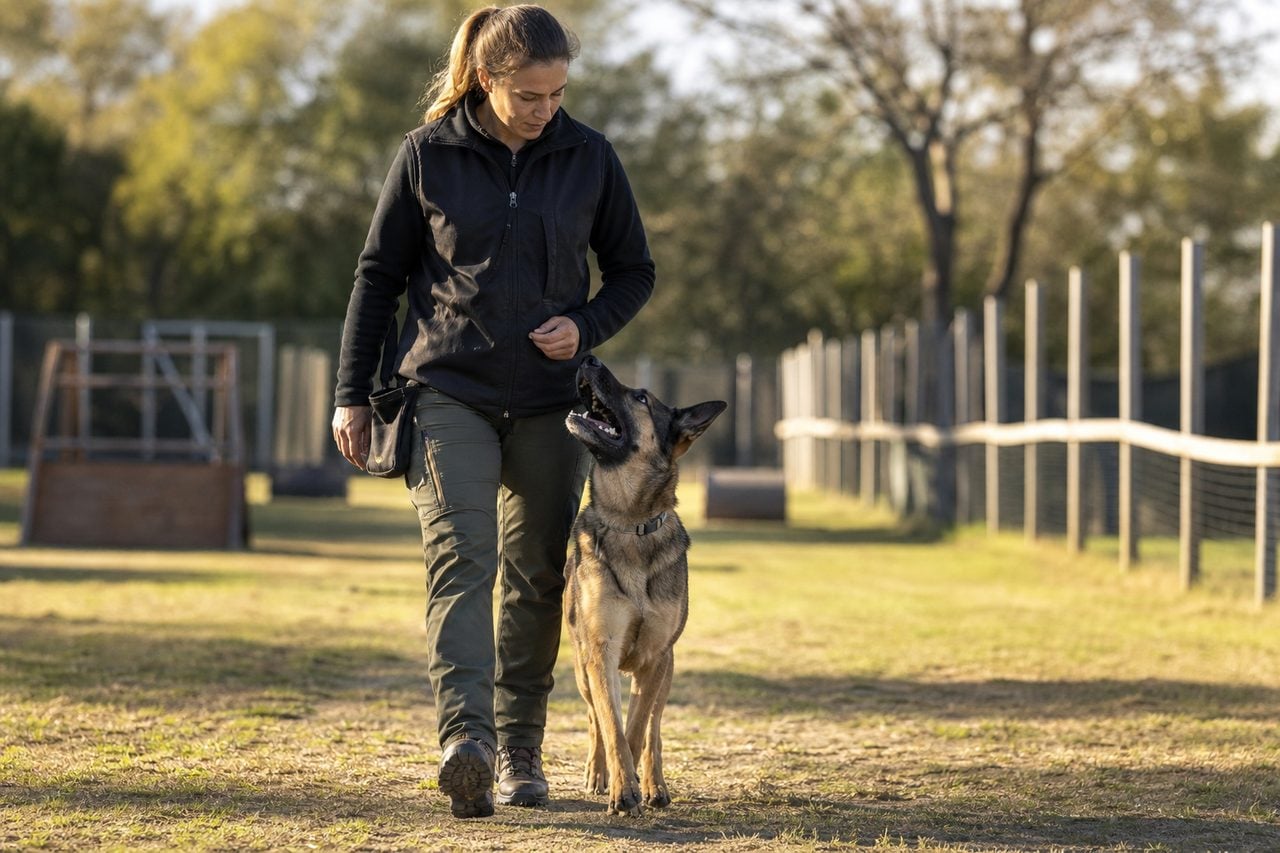
Dog boot camp — often called board-and-train — is an intensive option where your dog lives with a trainer for a set period, typically one to several weeks, working on obedience and behavior daily before coming home with a foundation already in place. For busy Traverse City households juggling the demands of a resort-town summer, or for dogs with stubborn issues that daily life keeps reinforcing, the appeal is obvious: hand the dog over, get back a trained dog.
The reality is more nuanced, and worth understanding before you commit. Board-and-train can be genuinely effective, but results depend heavily on the quality of the program, the methods used, and — critically — how well the skills are transferred back to you and your home. A dog trained in a facility does not automatically behave the same way in your living room in Acme or on a crowded trail along Grand Traverse Bay.
This guide explains what dog boot camp actually involves, when it is and isn’t the right choice, what to look for in a program, and how to make the investment pay off. Because intensive board-and-train options are somewhat thinner on the ground in a smaller northern metro like Traverse City, we also cover what it means to travel for the right program, including to the larger training market in Grand Rapids.
What Dog Boot Camp Actually Is
Dog boot camp is shorthand for a board-and-train program: your dog stays at a trainer’s facility or home for an agreed period while the trainer works with them daily. Instead of one weekly class where you do most of the teaching, a professional handles the day-to-day training in a controlled environment, often achieving in a couple of weeks what might take months of casual practice.
Programs vary widely in structure and intensity. A typical board-and-train might run two to four weeks and cover:
- Foundation obedience — sit, down, stay, place, come, and loose-leash walking
- Impulse control and calm settling around distractions
- House manners such as not jumping, not counter-surfing, and waiting at doors
- Targeted work on specific issues like leash pulling or door-dashing
The defining feature is intensity and consistency. A skilled trainer working with a dog multiple times a day, every day, in a distraction-managed setting can build reliable habits quickly. For certain dogs and certain goals, that concentrated approach produces faster results than a once-a-week class stretched over a season.
Consistency is also where most home training quietly breaks down. Even motivated owners struggle to train the same way every single day amid work, family, and the seasonal demands of a resort town — one person allows the dog on the couch, another doesn’t; the recall is practiced on good days and skipped on busy ones. A professional removes that variability for the duration of the program, and a dog that experiences clear, unwavering rules for two or three weeks often internalizes them far faster than a dog getting mixed signals at home. That, more than any single technique, is the real mechanism behind a well-run boot camp’s results.
It is important to understand what boot camp is not. It is not a magic reset button, and it is not a substitute for your own involvement. The best programs treat the boarding phase as the first half of the process; the second half is teaching you to maintain and build on what the dog learned. Any program that hands the dog back with no meaningful owner coaching is setting you both up to backslide.
When Boot Camp Makes Sense — and When It Doesn't
Board-and-train is a tool, not a universal solution. It fits some situations well and is a poor match for others.
It can make sense when:
- Your schedule genuinely does not allow the daily consistency that training requires — a common reality for families running businesses through the intense Traverse City tourist season.
- Your dog has developed entrenched habits that daily life keeps reinforcing, and you need someone to break the pattern in a controlled setting.
- You want a strong, reliable foundation built quickly, which you can then maintain.
- You are physically unable to do the initial hands-on training yourself.
It is usually not the right first choice when:
- The core issue is fear, anxiety, or aggression rooted in emotion. Removing a fearful dog from home and placing them in an unfamiliar facility can add stress, and these cases are better served by a behavior-focused approach where the dog stays in its own environment. (See our guidance on dog behaviorists for these situations.)
- You are hoping to avoid learning the training yourself. The dog will look to you at home, and if you cannot maintain the skills, they fade.
- Your puppy is very young and in the socialization window — that period is better spent on positive exposure and owner-guided foundation work than in a boarding setting.
Be honest about your goals. Boot camp excels at building obedience and manners efficiently. It is a weaker fit for deep emotional or behavioral problems, which need a different, slower approach. Matching the tool to the problem is the difference between a program that transforms your daily life and one that disappoints.
Evaluating a Board-and-Train Program
Because your dog will be living away from you and out of your sight, the standards for choosing a board-and-train program should be higher than for a weekly class. You are trusting someone with your dog’s welfare around the clock, so due diligence matters.
Key questions to ask any prospective program:
- What training methods do you use? Favor programs built on reward-based, humane methods. Be cautious of heavy reliance on aversive tools or intimidation, and ask specifically how they handle a dog that makes a mistake or gets stressed.
- Where and how are the dogs housed? Ask to see the facility. Look for clean, safe, appropriately sized spaces, adequate rest, exercise, and enrichment — not dogs kenneled for most of the day.
- How many dogs are in the program at once, and what is the trainer-to-dog ratio? Real one-on-one training time is what you are paying for.
- How will you keep me updated? Regular progress reports, photos, or videos are a sign of a transparent, confident program.
- What does the handoff look like? This is the most important question. Strong programs include multiple owner-coaching sessions, written guidance, and often follow-up support. Ask exactly how the skills will be transferred to you.
- What happens if the results don’t hold? Understand the follow-up and support policy before you commit.
Ask to observe a session if possible, and pay attention to how the dogs respond to the trainer — a well-run program produces dogs that are engaged and willing, not shut down or fearful. Trust your read of the environment. If a facility is reluctant to let you see where your dog will stay, treat that as a serious warning sign.
Making the Skills Stick at Home
The single biggest reason board-and-train disappoints is a weak transfer of skills back to the owner and the home environment. A dog can perform beautifully at the trainer’s facility and then seem to forget everything within days of coming home. This is not the dog being difficult — it is a normal feature of how dogs learn.
Dogs do not automatically generalize. A behavior learned in one place, with one person, using specific cues, does not transfer to a new place and new person without deliberate practice. Your dog learned to settle on a mat at the trainer’s; now they have to learn that the same rules apply in your kitchen, at your door, and on the TART Trail with cyclists whizzing past. That relearning is your job, and it is why owner coaching is essential.
To protect your investment:
- Attend every handoff session and take notes. Learn the exact cues, hand signals, and reward timing the trainer used, so you are consistent from day one.
- Practice daily in short sessions for the first several weeks home. Consistency in the transition period is what locks the habits in.
- Practice in many locations. Start in low-distraction settings — your living room, your yard — then gradually add difficulty: the neighborhood, a quiet trail, eventually a busier spot downtown or near the bay.
- Keep the whole household on the same page. Everyone should use the same cues and enforce the same rules, or the dog gets mixed messages.
- Use follow-up support. If your program offers check-ins or refresher sessions, use them, especially if you hit a snag.
Think of boot camp as an accelerated foundation, not a finished product. The trainer builds the frame; you finish the house. Owners who commit to the maintenance phase get lasting results; those who treat the handoff as the finish line rarely do.
Traveling for the Right Program
Traverse City is a wonderful place to live, but it is a smaller northern metro, and intensive board-and-train programs are less common here than obedience classes or private lessons. Depending on what your dog needs and the methods you prefer, you may find that the right program is not around the corner. That is worth planning for rather than settling for a poor local fit.
Some families in the Grand Traverse region choose to travel for board-and-train, and the larger training market in Grand Rapids, a few hours south, offers a wider selection of specialized programs. Because your dog stays with the trainer for the duration, a longer drive is a one-time logistical cost rather than a weekly commute — you make the trip to drop off and to pick up, with handoff coaching at the end. For an intensive program, that trade-off is often reasonable.
If you are weighing a program farther afield, consider:
- The handoff and follow-up. Distance makes in-person refresher sessions harder, so confirm how the trainer will support you remotely and whether the initial handoff coaching is thorough enough to carry you.
- Whether travel is truly necessary. For straightforward obedience and manners, a strong local trainer — even one working through private lessons rather than a full boot camp — may serve you just as well without the drive. Explore local options fully first.
- Your dog’s stress with the trip and new environment. A confident, adaptable dog handles this easily; a sensitive dog may find the whole experience harder.
The point is not that you must travel — many Traverse City dogs do very well with local training — but that you should choose the program on quality and fit, not just proximity. A directory listing makes it easy to compare what is available locally against what a program elsewhere in the region offers, so you can make that call with clear eyes.
Alternatives to Consider Before Committing
Before you commit to the cost and separation of a board-and-train program, it is worth confirming that boot camp is genuinely the best route for your situation. For many Traverse City dogs and owners, a less intensive option delivers the same result with more owner involvement — which, as we’ve seen, is exactly what makes training last.
Consider these alternatives:
- Private in-home lessons. A trainer coming to your home in Interlochen, Elk Rapids, or on the Leelanau Peninsula works with both you and your dog in the environment where you actually live. Progress may be a bit slower than boot camp, but the skills are built with you from the start, so transfer is rarely an issue. This is often the best value for straightforward obedience and manners.
- Day training. The trainer works with your dog during the day, then coaches you regularly, so your dog comes home each evening. You get much of the efficiency of professional handling without the full separation of a residential program.
- Group obedience classes. For dogs without urgent issues, a good group class builds skills, adds real-world distraction practice, and costs less. It requires your consistent participation, which many owners find is exactly what they and the dog needed.
- Behavior-focused help. If the real problem is fear, anxiety, or aggression, an intensive obedience boot camp is the wrong tool entirely. A qualified behavior professional working with your dog in its own environment is the appropriate path.
None of this means boot camp is a bad choice — for the right dog, the right goals, and the right household, it can be transformative. But the most common regret owners express is choosing an intensive program for a problem that a more collaborative approach would have solved better. Match the tool to the job, be honest about your own capacity to maintain the training, and you will make a confident decision either way.
Finding a Board-and-Train Program Near Traverse City
If you have weighed the options and decided a board-and-train program fits your dog and your life, the next step is finding a reputable one. In the Grand Traverse region, that means looking carefully at both local trainers and, where warranted, well-regarded programs in the wider region.
As you compare programs, keep the fundamentals front of mind:
- Humane, reward-based methods and transparency about how dogs are handled and housed.
- A strong handoff process with real owner coaching, written guidance, and follow-up support — the feature that most determines whether results last.
- Willingness to show you the facility and to answer detailed questions about ratios, daily schedules, and enrichment.
- A clear match between the program’s strengths and your actual goals — obedience and manners rather than deep behavioral rehabilitation.
Use the trainer listings in this directory to see which programs serve Traverse City and the surrounding counties, and which offer residential board-and-train versus private or day-training alternatives. Reach out to a few, ask the questions outlined above, and visit before you commit. Whether you choose an intensive local program, travel to a specialized option in the wider region, or decide that private lessons at home are the better fit, the goal is the same: a well-mannered dog you can enjoy across every season northern Michigan has to offer.
Dog Boot Camp in Traverse City: Local Options & Nearest Specialists
A few Traverse City-area trainers can help with milder dog boot camp needs:
- Sit Means Sit Dog Training — 5.0★ (1 review)
- Great Lakes K9 Solutions, LLC
Nearest dog boot camp specialists — Grand Rapids
For complex cases, some families travel to the larger pool of specialists in the Grand Rapids area for an assessment or a board-and-train stay. Top-reviewed options:
- Kingseed Kennels & Dog Training — 5.0★ (140 reviews)
- Red Sky Dog Training, LLC — 5.0★ (22 reviews)
- Ganderwood LLC — 5.0★ (1 review)
- West Michigan K9 — 4.9★ (337 reviews)
- Pine Hill Kennel & Dog Training — 4.9★ (51 reviews)
- Kona’s K9 Retreat — 4.9★ (38 reviews)
- House of Paws Dog Training — 4.6★ (9 reviews)
See all Grand Rapids dog boot camp trainers →
Frequently Asked Questions
What exactly is dog boot camp or board-and-train?
It is an intensive program where your dog lives with a trainer for a set period, usually one to several weeks, working on obedience and manners daily before coming home. Instead of you doing most of the teaching in weekly classes, a professional handles the day-to-day training in a controlled environment, then coaches you on maintaining the skills at home.
Will my dog remember the training after coming home?
Only if the skills are transferred properly. Dogs do not automatically generalize what they learn in one place to a new environment, so the handoff coaching where you learn the exact cues and timing is essential. Owners who attend every handoff session and practice daily for the first few weeks get lasting results; those who treat pickup as the finish line usually see backsliding.
Is boot camp a good choice for a fearful or aggressive dog?
Usually not as a first choice. Fear, anxiety, and aggression are emotional issues, and removing the dog from home into an unfamiliar facility can add stress. These cases are better served by a behavior-focused professional working with the dog in its own environment. Boot camp is best suited to building obedience and manners, not resolving deep behavioral problems.
Are there many board-and-train programs in Traverse City?
Intensive residential programs are somewhat thinner in a smaller northern metro like Traverse City than weekly classes or private lessons. Some families explore the wider region, including the larger training market in Grand Rapids, for specialized programs. Because the dog stays for the duration, a longer drive is a one-time trip rather than a weekly commute, though you should still explore strong local options first.
How do I evaluate whether a board-and-train facility is reputable?
Ask about training methods and favor humane, reward-based approaches. Insist on seeing where dogs are housed, ask about the trainer-to-dog ratio and daily schedule, and require regular progress updates. Most importantly, confirm the handoff includes real owner coaching and follow-up support. Reluctance to show you the facility is a serious warning sign.
Is there a cheaper or less intensive alternative to boot camp?
Yes. Private in-home lessons, day training, and group obedience classes all build skills with more owner involvement, which is exactly what makes training last. For straightforward obedience and manners, these often deliver the same result as boot camp at lower cost. Boot camp makes the most sense when your schedule truly prevents daily consistency or your dog needs an entrenched habit broken quickly.
Related: read our complete dog boot camp guide or the full Traverse City dog training overview.
Ready to find the right dog boot camp pro in Traverse City?