
Dog Boot Camp in Youngstown, OH
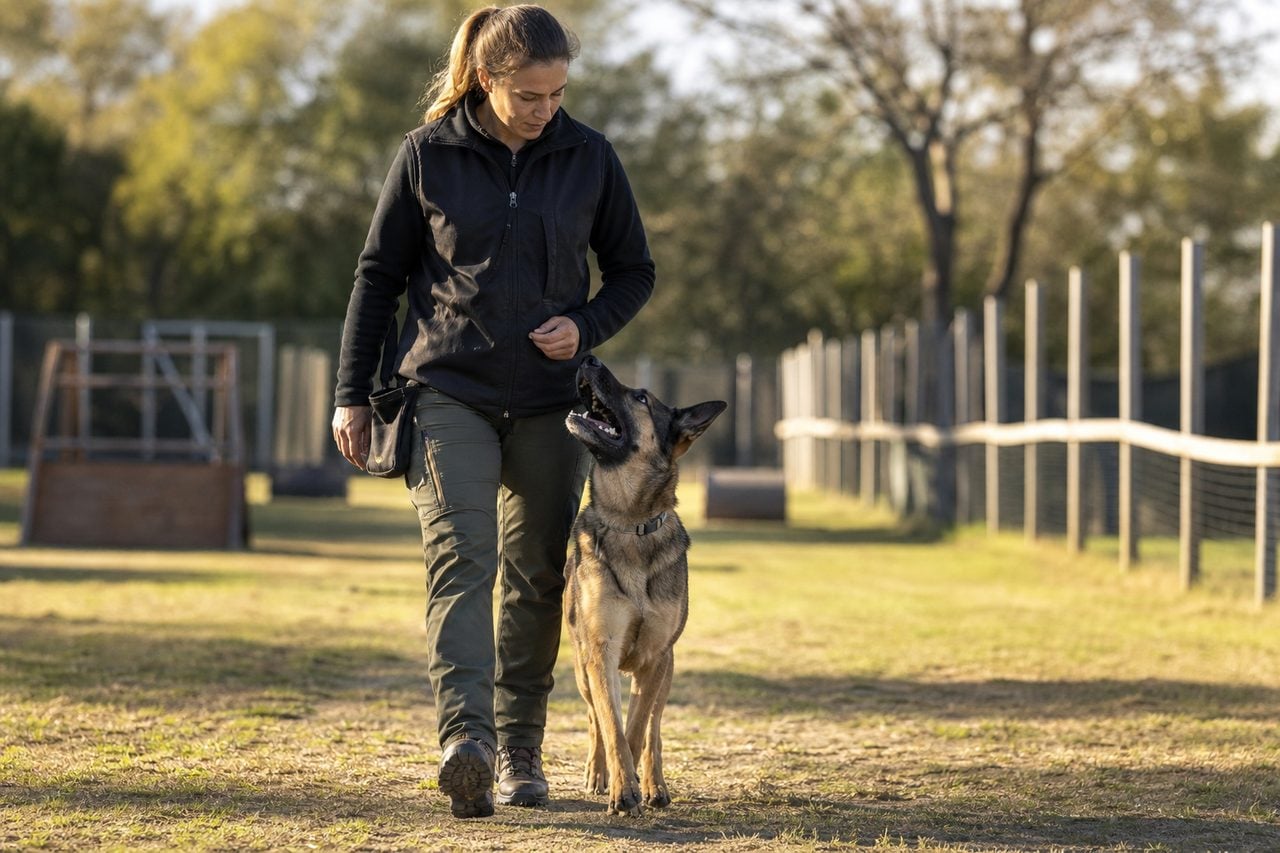
When Youngstown owners search for a dog boot camp, they are usually picturing the same outcome: an intensive, structured program that takes a dog from chaotic to controlled in a compressed window of time. The phrase carries a no-nonsense, get-it-done energy that resonates in a region built on hard work, and that is exactly the appeal. A boot camp promises momentum, a curriculum, and visible progress fast, rather than the slow drip of one casual class a week stretched across a season.
- Boot Camp Versus Board-and-Train: The Difference That Matters
- What a Day-Camp Boot Camp Looks Like in the Valley
- Who Thrives in a Boot Camp, and Who Does Not
- Evaluating a Youngstown Boot Camp's Curriculum and Methods
- What a Dog Boot Camp Costs Around Youngstown
- Keeping the Gains Through a Steel Valley Winter
- Reviewed trainers
- FAQ
Here is the distinction that trips up a lot of owners, and it matters before you spend a dollar. A dog boot camp and a board-and-train are not the same thing, even though the words get used interchangeably. A board-and-train sends your dog away to live with a trainer who does the work while you are absent, and you get the dog back at the end. A dog boot camp keeps you in the loop the whole way: it is an intensive, curriculum-driven program, often run as a daily or near-daily day-camp where the dog goes home each night, and crucially it comes with owner homework between sessions. In a boot camp, you are not handing off the job; you are doing an accelerated version of it alongside a professional, with structure and accountability built in.
That difference changes who each format is right for, what it costs, and how the results hold up. This guide walks through what a dog boot camp actually involves in the Mahoning Valley, how the day-camp model works across neighborhoods from Boardman and Canfield to Austintown and the Trumbull County towns of Warren and Niles, what to look for in a curriculum, what it costs, and how to keep the gains going through a long Steel Valley winter. We reference local trainers generically rather than steering you to any one business, because the right boot camp depends on your dog and your goals. Use this as your roadmap, then use the directory to find your fit.
Boot Camp Versus Board-and-Train: The Difference That Matters
Owners use these two terms as if they are synonyms, and the resulting confusion costs real money and produces mismatched expectations. Getting the distinction straight is the most useful thing you can do before you start calling around the Valley.
A board-and-train is residential. Your dog lives at the trainer’s facility for a stretch of days or weeks, the trainer does the daily training while you are away, and at the end there is a handoff where the trainer transfers the skills to you. The defining feature is your absence during the work; you outsource the heavy lifting and step in at the end. It is the better fit when you are time-strapped, traveling, or simply want the foundational reps done for you.
A dog boot camp, in the way most owners mean it and the way this guide uses it, is an intensive curriculum that keeps you involved throughout. The common model is a day-camp: the dog attends for full or half days, often several days a week over a few weeks, and goes home each night. The trainer works the dog during the day, but the program is explicitly built around a structured curriculum and owner homework, so you are practicing the same skills at home in the evenings and reinforcing what the dog learned that day. The defining feature is the combination of intensity, a clear progression of skills, and your active participation. You learn the mechanics as the dog learns the behaviors.
Why does this distinction matter so much in practice? Because the format determines where the responsibility for results lives. With board-and-train, the trainer carries the early load and the risk is a weak handoff. With a boot camp, you carry part of the load the whole way, which means the results tend to transfer more naturally to home life, but it also means a boot camp only works if you actually do the homework. If you are too busy to practice in the evenings, a day-camp boot camp may not be the right tool, and a residential program might serve you better. If you want to build your own handling skills and keep the dog home each night, the boot camp model is hard to beat. Many Youngstown families find the day-camp boot camp the sweet spot precisely because the dog never leaves home overnight and the owner is built into the process from day one.
What a Day-Camp Boot Camp Looks Like in the Valley
A well-run dog boot camp is organized around a curriculum, and that structure is what separates it from simply dropping your dog at daycare. From the first day there should be a clear progression: the program assesses your dog, sets specific goals, and then moves through skills in a deliberate order, building each new behavior on the foundation of the last.
A typical day-camp day blends focused training blocks with structured rest and controlled socialization. The dog might start with obedience drills, move into leash-manners work, get structured downtime in a crate or on a place cot to learn to settle, practice impulse-control exercises around distractions, and finish with proofing in a more stimulating environment. The rest is intentional; a dog that learns to be calm and to switch off is learning a skill as important as any cue. Over a few weeks, the curriculum layers complexity: a sit that starts in a quiet room gets practiced amid noise, then around other dogs, then in a busier outdoor setting.
The Mahoning Valley’s geography gives boot camps useful proving grounds. A program might drill foundations on a quiet Canfield or rural-township property where space is easy to find, then take field trips to generalize the skills in real-world chaos: a busy Boardman shopping plaza, a walk through downtown Youngstown, or the paths around Mill Creek MetroParks where other dogs, joggers, and wildlife test a dog’s focus. This deliberate change of scenery is the whole point of proofing, because dogs do not automatically transfer a behavior from one place to another. A boot camp that only ever works the dog in one quiet room is not preparing it for your actual life.
The owner homework is the connective tissue. A good boot camp sends you home each evening with specific practice assignments, the exact cue words and hand signals used that day, and clear instructions on what to reward and what to ignore. You run short sessions at home, reinforce the day’s lessons, and report back on what is working. This nightly loop is why the day-camp model transfers so well: the dog is learning at camp and at home simultaneously, with you as the constant. By the end, you are not receiving a trained dog you do not know how to operate; you have been operating it all along.
Who Thrives in a Boot Camp, and Who Does Not
The intensity that makes boot camps effective also makes them the wrong choice for certain dogs and owners. Matching the format to the situation is what determines whether the money is well spent.
Boot camps tend to work beautifully for energetic, social, otherwise-healthy dogs that need structure, manners, and an outlet for their drive. Adolescent dogs in that frustrating six-month-to-two-year stretch, when energy is high and impulse control is low, often respond especially well to the intensity and routine. Dogs with garden-variety problems, pulling on leash, jumping, ignoring recall, general unruliness, thrive on the concentrated repetition a boot camp provides. And the format suits owners who are willing and able to do the evening homework, who want to build their own handling skills, and who like the accountability of a structured program with measurable milestones.
The format is a poor fit in a few cases. A dog with serious fear, anxiety, or aggression rooted in emotion is usually not a good boot-camp candidate, because the high-stimulation environment of a day-camp full of other dogs and activity can overwhelm a fragile dog and make things worse; those cases call for a slower, individualized, management-focused approach and often a veterinary behaviorist. A dog with physical limitations or health issues may not tolerate the intensity. And an owner who genuinely cannot commit to the evening homework will not get the boot camp’s full value, because the home reinforcement is half the program; for that owner, a residential board-and-train that front-loads the work may make more sense despite the higher cost.
There is also a temperament question worth raising honestly with a prospective trainer. Some dogs are simply not comfortable in a busy group-camp setting, even if they are not aggressive or fearful in a clinical sense; they just find the environment stressful. A good trainer will assess your dog before enrolling it and tell you if a one-on-one private program would serve it better. Be wary of any operation that takes every dog regardless of fit, because the assessment itself is a sign of professionalism. The right boot camp earns its results by matching the program to the dog, not by funneling every dog through the same pipeline.
Evaluating a Youngstown Boot Camp's Curriculum and Methods
Because a boot camp lives or dies on its curriculum and methods, a little scrutiny up front saves a lot of regret. The strongest signal of a quality program is that it can articulate exactly what it does, in what order, and why.
Ask to see the curriculum. A serious boot camp can tell you what skills it covers, how it progresses from foundations to proofing, and what milestones mark the way. Vagueness is a warning sign; if a program cannot describe what week two looks like differently from week one, it may not have a real plan. Ask how they assess your dog before enrolling, how they group dogs by temperament and energy, and how they adjust the curriculum for a dog that moves faster or slower than average.
Probe the methods directly and listen for specifics. A trainer who can clearly explain how they teach a behavior, what they do when the dog succeeds, and what they do when the dog fails is showing you their philosophy. Reward-based programs that build behaviors through motivation and clear communication tend to produce confident, willing dogs. Be cautious with programs that lean heavily on harsh corrections, shock collars, or intimidation as primary tools; a dog can be drilled into looking compliant while becoming more stressed, and the fallout often shows up weeks later. Here are the questions worth asking every boot camp:
- What does the curriculum cover, and how does it progress week to week?
- How do you assess my dog before enrolling, and how do you handle a poor fit?
- What does the owner homework involve, and how much nightly practice do you expect?
- What training methods and tools do you use, and what do you do when a dog struggles?
- How many dogs are in a session, and what is the staff-to-dog ratio?
- How do you proof behaviors in real environments, and do field trips happen?
Tour the facility and watch a session if you can. Look at how the dogs already enrolled behave and look, whether the space is clean and secure, and whether the staff seem to be reading the dogs rather than just managing them. Ask for references and call one or two. And be skeptical of guarantees of perfect results in a fixed number of days, because behavior is never fully guaranteed and a clean promise usually oversells. The program that gives you specifics, assesses your dog honestly, and builds you into the process is the one most likely to deliver.
What a Dog Boot Camp Costs Around Youngstown
The Mahoning Valley sits at or just below the national average for dog training, and boot camps land between the price of a basic group class and the price of a full residential board-and-train, because they pack in intensity and trainer hours without the cost of overnight boarding. The day-camp structure, where the dog goes home each night, generally keeps the price below an equivalent-length residential program. As elsewhere in the region, the southern suburbs of Boardman, Poland, and Canfield tend to price above the mill towns of Struthers, Campbell, and Girard, with Austintown and the Trumbull County towns of Warren and Niles often falling in the middle.
These are realistic planning ranges, not quotes, and pricing varies by program length, intensity, what is included, and the dog’s needs:
- Multi-week day-camp boot camps: commonly run in the range of roughly 1,000 to 2,500 dollars for a two-to-four-week program, depending on how many days per week and how many hours per day.
- Shorter or part-time boot camps: a one-to-two-week or half-day program may run several hundred to around 1,200 dollars.
- Per-day day-training rates: some programs price by the day, often in the range of roughly 50 to 100 dollars per day, which can be mixed and matched to a schedule.
- Included follow-up: better programs bundle transfer coaching and post-program check-ins, which adds value even when it adds to the headline price.
When comparing prices, weigh what is bundled in rather than the sticker number alone. A boot camp that includes structured owner homework, clear written materials, real proofing in varied environments, and follow-up support is usually a better value than a cheaper program that is essentially supervised daycare with a training label. Ask whether follow-up sessions are included or billed separately. And keep the comparison honest: for a dog that only needs basic manners and an owner with time to practice, a standard multi-week group class costs far less and may be all you need, while a boot camp earns its premium when you want concentrated progress fast and are ready to do your half of the work.
Keeping the Gains Through a Steel Valley Winter
A boot camp gives you momentum, and the trick is not to lose it once the program ends and the northeast Ohio weather turns. The dogs that hold their boot-camp polish are the ones whose owners keep the structure alive at home, especially through the long, cold, low-daylight months that quietly erode training across the Valley.
In the first weeks after camp, keep the homework habit going even though the formal program is over. Run short daily sessions, use the exact cues and rules the program taught, and resist the urge to relax standards because the dog already seems to know everything. The behaviors are still consolidating, and consistency in this window is what turns a fresh skill into a permanent habit. Because you did the homework throughout the boot camp, you already have the routine; the job now is simply not to let it lapse.
Winter is the real test. When the yard is frozen and the wind makes long walks unpleasant, owners skip sessions and the dog coasts for months, arriving at spring noticeably rustier than it left camp. Build a deliberate winter maintenance plan: practice place, stay, and recall down a hallway, run obedience in the garage, and keep your dog mentally engaged with structured indoor games and short focused drills. A few minutes of structured work a day through the cold season preserves far more than you would expect, and it gives a high-energy dog a needed outlet when outdoor exercise is limited.
When the weather opens up, use the Valley’s outdoor spaces to proof and sharpen what camp built. Take the dog through Mill Creek MetroParks past Lake Newport and Lanterman’s Mill, walk the busier downtown Youngstown sidewalks, or head out to Mosquito Lake State Park where new sights and smells test focus. Each outing is a real-world rep that cements the behaviors in the environments you actually use. And if you notice a skill slipping or a new problem cropping up, circle back to the trainer for a tune-up rather than letting it snowball; a short refresher months later is normal and smart. The boot camp gave you a head start and the handling skills to keep it. The seasons will test your consistency, and that consistency is what protects the investment.
Reviewed Dog Boot Camp Trainers in Youngstown
These reviewed Youngstown-area trainers from our directory handle dog boot camp. Each links to a full profile with specialties, verified credentials, reviews, and contact info:
- Camelot Canine — 5.0★ (128 reviews)
- Ugly Dogge Bullies LLC — 5.0★ (22 reviews)
- McCrae9 Dog Training — 5.0★ (13 reviews)
- Das Muller German Shepherds — 5.0★ (8 reviews)
- Figleys Kennel Service LLC — 5.0★ (6 reviews)
- Sit Happens Dog Training — 5.0★ (6 reviews)
- Timber Tails Co. — 5.0★ (5 reviews)
See all Youngstown dog boot camp trainers →
Frequently Asked Questions
What is the difference between a dog boot camp and a board-and-train?
A board-and-train is residential: your dog lives with the trainer for days or weeks, the trainer does the work while you are away, and you get the dog back with a handoff. A dog boot camp is an intensive, curriculum-driven program that keeps you involved, usually as a day-camp where the dog goes home each night and you do owner homework in the evenings. The boot camp builds your handling skills throughout, while board-and-train front-loads the work and transfers it to you at the end.
How long does a dog boot camp last?
Most day-camp boot camps run two to four weeks, with the dog attending several days a week for full or half days. Shorter one-to-two-week intensives exist for focused goals, and some programs price by the day so you can build a custom schedule. The right length depends on your dog’s starting point and your goals, so ask a prospective program how it sets length and what milestones mark the progression.
Do I really have to do homework if I send my dog to boot camp?
Yes, and that is the whole point of the format. A boot camp’s results transfer to home life precisely because you reinforce each day’s lessons in the evenings using the same cues and rules. Skipping the homework undercuts the program and wastes much of its value. If you genuinely cannot commit to nightly practice, a residential board-and-train that front-loads the work may suit you better despite the higher cost.
Is a boot camp safe for a shy or anxious dog?
Often not. The high-stimulation environment of a day-camp full of other dogs and activity can overwhelm a fearful or anxious dog and make things worse. Dogs with serious fear, anxiety, or aggression rooted in emotion usually need a slower, individualized, management-focused approach and frequently a veterinary behaviorist. A good program will assess your dog before enrolling and tell you honestly if a private program or a different approach would serve it better.
What does a dog boot camp cost near Youngstown?
Plan for roughly 1,000 to 2,500 dollars for a two-to-four-week day-camp program, with shorter programs running less and per-day rates often in the 50 to 100 dollar range. Boot camps generally cost less than an equivalent residential board-and-train because the dog goes home each night. The southern suburbs like Boardman and Canfield tend to price above the mill towns. These are planning ranges, not quotes, so confirm what is included, especially homework materials and follow-up.
Would a regular group class work just as well?
For a dog that only needs basic manners and an owner with time to practice weekly, a standard multi-week group class costs far less and may be all you need. A boot camp earns its higher price when you want concentrated, fast progress, when you are dealing with an energetic adolescent or well-rooted habits, and when you are ready to do the daily homework. Match the format to your goals and your schedule rather than assuming the more intensive option is automatically better.
Related: read our complete dog boot camp guide or the full Youngstown dog training overview.
Ready to find the right dog boot camp pro in Youngstown?