
Dog Training Prices in Bloomington, IN
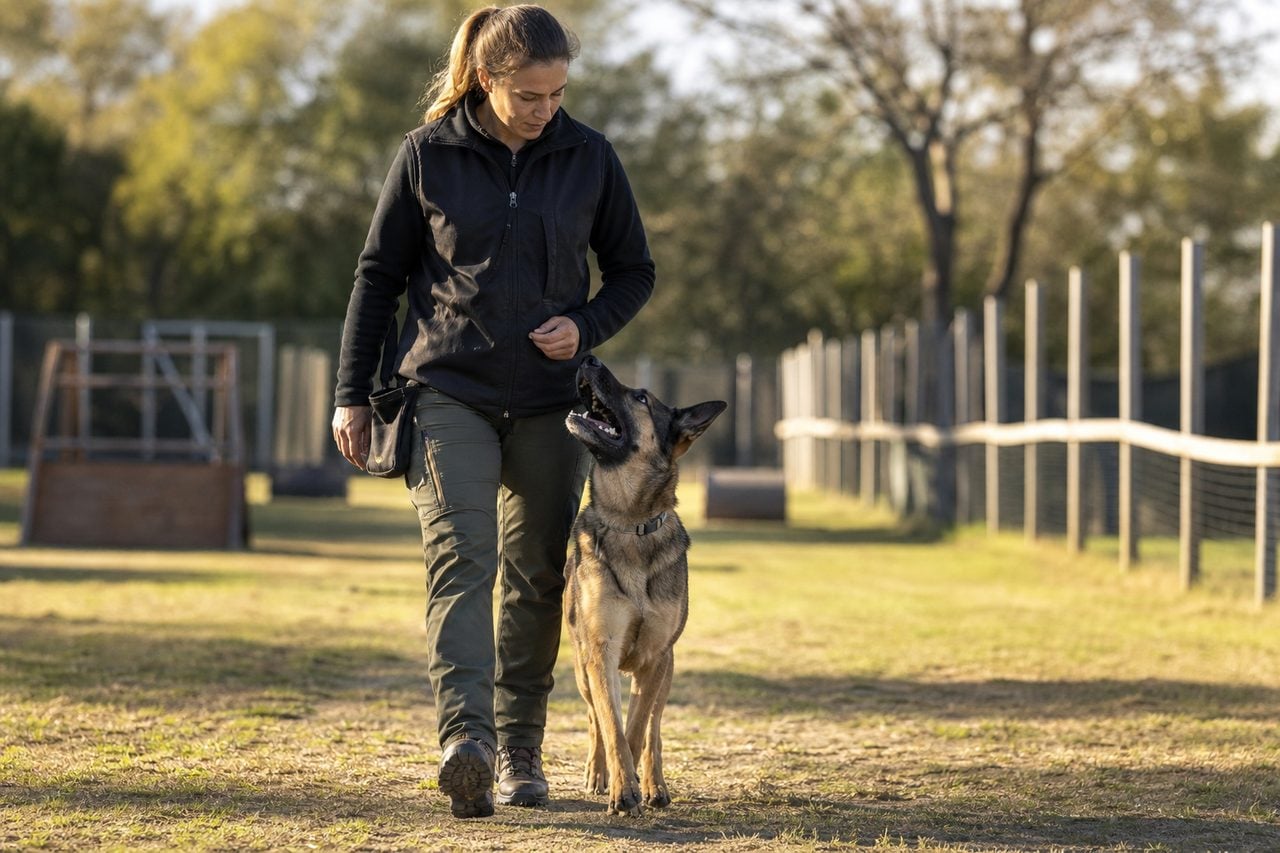
Cost is one of the first questions on any dog owner’s mind, and for good reason — training is an investment, and the range of options and prices can be bewildering. In the Bloomington area, owners can choose among group classes, private sessions, board-and-train programs, puppy courses, and specialized behavior work, each occupying a different place on the price spectrum. Understanding what drives those prices, and what each format actually delivers, helps owners spend wisely rather than simply cheaply or expensively.
This guide breaks down the typical cost structures for dog training across the region, from the most economical group classes to intensive residential programs, and explains the factors that move prices up or down. All figures here are general ranges meant to set expectations, not quotes — actual prices vary considerably by trainer, program, and the specific needs of the dog, so every owner should confirm current pricing directly with any trainer before booking. The goal is to help owners understand value, ask the right questions, and choose the option that fits both their budget and their dog.
What Drives the Cost of Dog Training
Before looking at specific formats, it helps to understand why prices vary so much. Several factors shape what any given program costs, and knowing them makes a quoted price easier to evaluate.
- Format and intensity. A one-hour group class shared among several dogs costs far less per session than one-on-one private time or an intensive residential program where the trainer works with the dog all day.
- Trainer experience and credentials. A highly experienced trainer, or one with specialized behavioral qualifications, generally commands higher rates than a newer generalist.
- Session length and program duration. Longer sessions and multi-week packages cost more in total, though packages often reduce the per-session price.
- The dog’s needs. Basic manners cost less than resolving a complex behavior issue, which requires more expertise and time.
- Location and travel. In-home private training that requires a trainer to drive out to Spencer, Nashville, Bedford, or the Greene County towns may carry a travel component that a class at a fixed location does not.
It also helps to think about value rather than price alone. The cheapest option is not a bargain if it does not solve the problem, and the most expensive is not automatically the best. The right question is which format delivers the results a particular dog and household need at a price that is sustainable — because training works through ongoing practice, and an owner who overspends up front may not be able to follow through.
One more structural factor is worth understanding: how trainers package and bill their services. Some sell single sessions, some sell fixed multi-week courses, and some sell bundles that combine an initial assessment with a set of follow-ups. Package pricing almost always lowers the effective per-session rate compared with booking one at a time, which rewards owners who commit to a full program up front — but it also means paying more at once. A few trainers offer tiered packages at different price points, where the difference is the number of sessions or the amount of between-session support rather than the quality of the training itself. Reading exactly what each tier includes, rather than anchoring on the total, is how an owner avoids paying for support they will not use or, conversely, buying too small a package to reach the goal.
Group Class Pricing
Group classes are typically the most economical form of professional training, which is a large part of their appeal. Because the cost of the instructor’s time is spread across several dogs and owners, the per-session price is low relative to private work. Group classes are usually sold as multi-week packages — a course of several sessions rather than a single drop-in — and priced accordingly.
These courses generally fall into the more affordable end of the training spectrum, making them a sensible starting point for owners of friendly, reasonably confident dogs who want to cover the basics. Puppy classes, beginner obedience, and intermediate obedience are commonly offered in this format. The package price typically covers a set number of weekly sessions, sometimes with printed materials or access to guidance between classes.
When comparing group-class prices, look beyond the headline number to what is included: how many sessions, how long each one is, how many dogs per instructor, and whether any follow-up or materials come with it. A slightly higher-priced course with smaller class sizes and more individual attention can be better value than a cheaper one packed with too many dogs. As always, these are general expectations rather than fixed prices, and current rates should be confirmed with each provider, since they vary by trainer and by the specific course.
Group classes carry a hidden benefit that improves their value beyond the low price: the socialization and distraction training that happen simply by being in a room with other dogs and owners. That exposure is something an owner would otherwise have to arrange separately, and for a young or under-socialized dog it can be as valuable as the formal curriculum. When weighing a group course against private sessions purely on cost, it is fair to count this built-in benefit on the group side of the ledger. For owners on a tight budget — students and young households among them — a group course often represents the most complete package of skills, socialization, and owner coaching available for the money, which is why it is so frequently the recommended starting point.
Private and In-Home Training Pricing
Private training costs more per session than group classes because the owner is paying for the trainer’s undivided attention. This is usually priced either per session or as a package of several sessions, with packages typically offering a lower effective rate than booking one at a time. In-home private training — where the trainer comes to the dog’s own environment — may cost more than sessions at a trainer’s own location, particularly when travel to outlying parts of the region is involved.
The higher price buys real advantages for the right situation: a program tailored to the specific dog, training in the environment where problems actually occur, flexible scheduling, and faster progress on a targeted issue. For a fearful dog that finds a group class overwhelming, a household with an unusual schedule, or a specific behavior that needs individual attention, private training can be well worth the premium.
The number of sessions needed varies widely with the goal. A couple of private sessions may be enough to fix a specific problem or to teach an owner good mechanics before continuing on their own, while more comprehensive goals take a longer package. When weighing private training, ask how many sessions the trainer anticipates, what each session includes, whether there is a travel charge for in-home visits, and what support is available between sessions. These figures are general ranges that shift by trainer and by the complexity of the dog’s needs, so confirm the specifics before committing.
Board-and-Train and Intensive Program Pricing
Board-and-train programs, in which a dog lives with a trainer for a period of intensive daily work, sit at the top of the price range by a wide margin. This is unsurprising: the cost reflects not only the training itself but the dog’s boarding, feeding, and around-the-clock care for the duration, which commonly runs from a couple of weeks to a month or more. These programs represent a substantial investment.
The appeal is convenience and intensity — the daily training is done by a professional rather than the owner, and progress can be rapid while the dog is in the program. But the high price makes the caveats especially important to weigh. Because a dog learns to respond to the trainer in the trainer’s environment, the value of a board-and-train depends heavily on how well the program transfers those skills back to the owner. A quality program includes owner-transfer sessions and follow-up support; without them, an owner can pay a premium and still see gains fade at home.
Owners considering this route should look closely at what the total price includes: the length of stay, the amount of owner instruction and follow-up, the training methods used, and the conditions in which the dog will live. Given the cost, it is reasonable to ask to see the facility and to understand exactly how results will be handed over. For many households, a combination of group and private training with committed home practice reaches the same destination for considerably less, so board-and-train is best chosen when its particular intensity and convenience genuinely fit the situation. As with every format, these are general expectations, and exact pricing must be confirmed directly.
Puppy, Specialty, and Behavior Program Costs
Beyond the standard formats, several specialized programs occupy their own places on the price spectrum. Puppy-specific classes — focused on early socialization and foundation skills — are usually offered as affordable multi-week group packages, comparable to beginner obedience, and represent some of the best value in training because of how much the early window shapes a dog for life.
Specialty training tends to cost more. Programs targeting a particular goal — preparation for good-canine-citizen style evaluations, foundations for dog sports, or advanced off-leash work — require more specialized instruction and often more sessions. Their pricing reflects that added expertise and time.
Behavior modification for serious issues such as aggression, severe anxiety, or significant reactivity typically sits at the higher end. This work demands considerable expertise, careful individualized programs, and often a longer commitment, and it may involve a trainer with behavioral credentials or, in some cases, a veterinary behaviorist whose fees differ from those of a general trainer. While the cost is higher, addressing a serious behavior problem properly is far less expensive in the long run than living with it or attempting cheap fixes that do not work — and in some cases it is essential for safety. Owners facing these challenges should seek a qualified professional and confirm the scope and cost of the program before starting.
One caution applies specifically to serious behavior problems: they are the area where bargain-hunting most often backfires. A cheap generic class or an inexpensive quick-fix approach applied to genuine aggression or severe anxiety can not only fail but make the problem worse, which then costs more time and money to undo — and can carry real safety consequences. For these cases, the relevant comparison is not one trainer’s price against another’s but the cost of proper professional help against the far greater cost, financial and otherwise, of an unresolved or worsened problem. This is the one situation where paying for genuine expertise from the outset is almost always the economical choice, and where an owner should be most willing to look past the price tag to the qualifications behind it.
Getting Value and Avoiding Common Mistakes
Spending well on training is about matching the format to the need and following through, not about finding the lowest number. A few principles help owners get real value for their money.
First, match the investment to the goal. A friendly puppy needing basic manners does not require an expensive residential program — a puppy class and consistent home practice will serve it well. Conversely, a dog with a genuine behavior problem is poorly served by the cheapest generic class, and money spent there is often wasted. Diagnosing the actual need before choosing a format prevents both overspending and underspending.
Second, remember that the training itself is only part of the equation. The results come from what the owner does between and after sessions, which costs nothing but time and consistency. A modestly priced class followed by diligent daily practice routinely outperforms an expensive program followed by neglect. The best return on any training dollar comes from the owner’s follow-through.
Third, be wary of prices that seem too good to be true and of programs that promise guaranteed or overnight results — training is a process, and no reputable professional guarantees a specific outcome on a fixed timeline. At the same time, a high price is not proof of quality. Ask about methods, credentials, and what is included, and prioritize reward-based approaches and transparent practices regardless of where a program sits on the price scale.
Finally, factor in the ongoing nature of training. Beyond the initial program, occasional refresher classes, continued practice, and the normal costs of dog ownership all add up over a dog’s life. Budgeting for training as part of the long-term commitment of owning a dog — rather than a one-time expense — leads to better decisions and a better-behaved companion. And because every figure in this guide is a general range that varies by trainer and program, the single most important step remains simple: confirm current pricing and exactly what it includes with any trainer before booking.
Budgeting for Training in the Bloomington Context
Training costs land differently depending on a household’s situation, and the mix of owners across the Bloomington area means budgets vary widely. A graduate student on a stipend near campus, a young family in Ellettsville, and an established household out toward Nashville or Bedford will each weigh the same options against different means — and each can find a sensible path.
For budget-conscious owners, group classes offer the most training value per dollar, and pairing an affordable beginner course with disciplined home practice on the region’s many free walking spots — the B-Line Trail, Griffy Lake, Cascades Park, Leonard Springs, and the state parks at Brown County and McCormick’s Creek — stretches a modest budget a long way. The parks and trails cost nothing to use for practice, turning everyday walks into training sessions once the classroom mechanics are learned. Students should also account for how the academic calendar affects both their schedule and their finances when timing a course.
Owners with more to spend, or with a dog whose needs justify it, may reasonably invest in private sessions or a specialized program, and the value there lies in the tailored attention and faster progress on specific goals. Whatever the budget, the smartest approach is the same: define the goal, choose the format that fits it, confirm the actual price and what it includes with the trainer, and commit to the ongoing practice that makes any training investment pay off. A clear-eyed match of need, format, and budget — rather than a reflexive reach for the cheapest or the priciest option — is what produces a well-trained dog without wasted money.
Reviewed Dog Trainers in Bloomington
These reviewed Bloomington-area trainers from our directory can walk you through pricing for their programs. Each links to a full profile with specialties, certified credentials, reviews, and contact info:
- Jolly Dogs — 5.0★ (45 reviews)
- Applied Canine Behaviors, LLC — 5.0★ (37 reviews)
- Hackers Creek Kennel — 5.0★ (21 reviews)
- 11:6 Canine — 5.0★ (14 reviews)
- Woodard’s K9+ Academy and Services — 5.0★ (10 reviews)
- Hoosier Pup — 5.0★ (7 reviews)
- Bloomington Canine Services — 5.0★ (7 reviews)
- The Fine Canine, Bloomington — 5.0★ (3 reviews)
- Hoosier Pup LLC — 5.0★ (2 reviews)
- Havenquest Kennels — 5.0★ (2 reviews)
See all Bloomington dog training prices trainers →
Frequently Asked Questions
How much does dog training typically cost in the Bloomington area?
Costs span a wide range depending on format. Group classes are generally the most economical and are usually sold as multi-week packages; private and in-home sessions cost more per session because of the individual attention; and board-and-train programs sit at the top of the range because they include boarding and intensive daily care. All of these are general expectations rather than quotes, and prices vary considerably by trainer and program, so confirm current pricing directly before booking.
Why is private training so much more expensive than a group class?
Private training costs more because the owner is paying for the trainer’s undivided attention rather than sharing the session with several dogs, and in-home visits may add a travel component for outlying areas. The higher price buys a tailored program, training in the environment where problems occur, and flexible scheduling. For a fearful dog, an unusual schedule, or a specific issue, that premium is often worthwhile; for basic manners on a friendly dog, a group class usually delivers better value.
Is an expensive board-and-train program worth the cost?
It can be for owners short on time or facing a difficult problem, but it is the priciest format by a wide margin and its value depends on how well the program transfers skills back to you. Because the dog learns to respond to the trainer in the trainer’s environment, a worthwhile program must include owner-transfer sessions and follow-up. Many households reach the same results more affordably through group or private training plus committed home practice, so weigh the convenience against the cost carefully.
What is the most affordable way to train my dog well?
Group classes offer the most training value per dollar, and pairing an affordable beginner or puppy course with consistent home practice stretches a modest budget furthest. The Bloomington area’s free walking spots — the B-Line Trail, Griffy Lake, Cascades Park, and the nearby state parks — make excellent no-cost practice grounds once you have learned the mechanics in class. The results come mostly from your follow-through, which costs only time and consistency.
Does a higher price mean better training?
Not necessarily. A high price is not proof of quality, and the cheapest option is not a bargain if it fails to solve the problem. Value comes from matching the format to your dog’s actual need and from reward-based, transparent methods — not from the number on the invoice. Ask about methods, credentials, and what is included at any price point, and be especially wary of programs promising guaranteed or overnight results.
Are there extra costs beyond the training program itself?
Often, yes. Beyond the initial course, many owners invest in occasional refresher classes and ongoing practice as a dog matures, and in-home private training may include a travel charge for outlying parts of the region. It helps to budget for training as part of the long-term commitment of dog ownership rather than a one-time expense. Since every figure varies by trainer and program, always confirm exactly what a price includes before booking.
Related: read our complete dog training prices guide or the full Bloomington dog training overview.
Ready to find the right dog training prices pro in Bloomington?