
Dog Training Prices in New Albany, IN
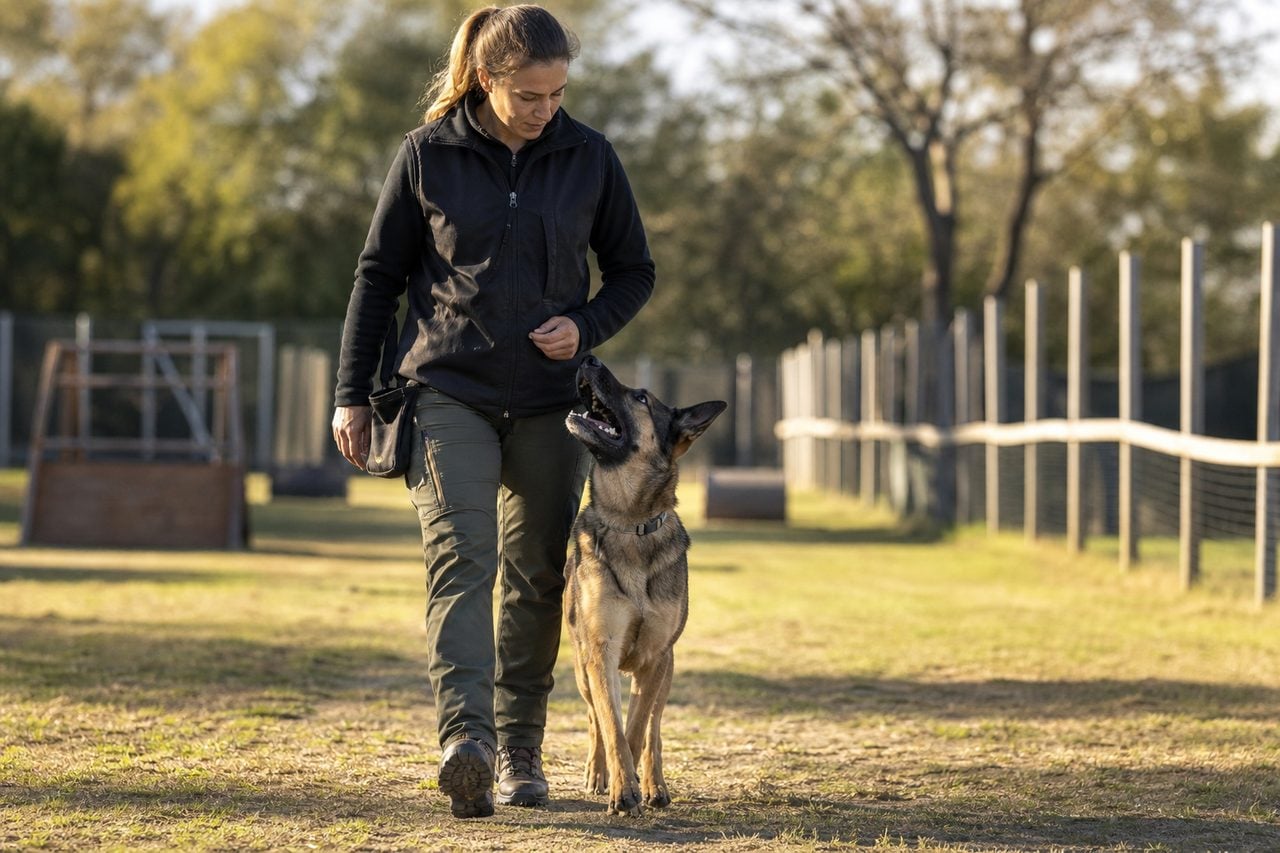
Understanding what dog training costs is one of the first practical questions owners in the New Albany area ask, and it is a fair one. Prices vary widely depending on the type of training, the trainer’s experience, the format, and the specific needs of the dog. Because New Albany sits within the Louisville metro on the Indiana side of the Ohio River, local pricing tends to reflect metro-area norms, which generally run a bit higher than rates in more rural parts of southern Indiana. Knowing the typical ranges — and what drives them — helps owners budget realistically and spot good value.
- What Drives Dog Training Prices
- Group Class Pricing
- Private Training and In-Home Session Pricing
- Board-and-Train and Intensive Program Pricing
- Regional Cost Context: The Louisville-Metro Factor
- Budgeting, Add-On Costs, and Lower-Cost Options
- Getting Value: What to Look for Beyond Price
- Reviewed trainers
- FAQ
It is important to frame any pricing discussion carefully. The figures that follow are general ranges commonly seen for different training formats, not quotes from any particular business, and actual prices change over time and differ from trainer to trainer. Every owner should confirm current pricing directly with providers before booking. The goal here is to explain how training is priced and what factors move the numbers, so families can have informed conversations rather than be surprised.
This guide breaks down the main training formats and their typical cost ranges, explains what influences pricing in the Kentuckiana market, and offers guidance on evaluating value rather than chasing the lowest number. Cheapest is rarely the right measure; the better question is what a given program delivers for its cost and whether it fits the dog and household.
What Drives Dog Training Prices
Before looking at specific ranges, it helps to understand the factors that determine what training costs. The format is the biggest driver — a large group class spreads a trainer’s time across many dogs and costs far less per session than one-on-one private instruction. Intensive formats like board-and-train, where a dog lives with the trainer, carry the highest prices because they bundle instruction, daily care, and boarding into one package.
The trainer’s experience, credentials, and specialization also move the price. A trainer with advanced certifications, years of experience, or expertise in a difficult area like aggression or reactivity typically charges more than a generalist teaching basic manners. That premium often reflects genuine skill that can resolve issues faster or handle cases a less-experienced trainer cannot, so a higher rate is not automatically a worse deal.
Location matters, and this is where the New Albany area’s character shows up in the numbers. As part of the Louisville metro, the region tends to see pricing above what a rural southern Indiana town might charge, simply because operating costs and market rates are higher in and around a metro. Owners comparing quotes should keep this context in mind rather than expecting rock-bottom rural pricing.
Finally, the dog itself affects cost. A young puppy needing basic foundation work is a different project than an adult dog with an established behavior problem, and programs addressing serious issues generally require more sessions and specialized expertise. The number of sessions, the length of the program, and any included materials or follow-up support all factor into the total. Understanding these drivers makes it far easier to interpret why two quotes might differ substantially.
One more factor is worth naming: demand and timing. Training providers, like many services, can be busier at certain times of year, and popular classes near a metro can fill quickly, which occasionally nudges owners toward pricier private options simply because a group class is not available when they need it. Planning ahead — enrolling a puppy before the ideal window closes, or booking a class a few weeks out — can preserve access to the more affordable formats rather than forcing a costlier fallback.
Group Class Pricing
Group classes are typically the most affordable structured training option and a common starting point for many owners. These classes usually run as a package of several weekly sessions covering basic obedience and manners, and they are priced per program rather than per individual session. In a metro-adjacent market like New Albany, group obedience packages commonly fall in a moderate range that many families find accessible, though the exact figure depends on the trainer, the number of sessions, and the level of the class.
Puppy classes, which combine early socialization with foundation training, are usually priced similarly to basic group obedience and represent strong value given how much developmental benefit a puppy gains during its critical early window. More advanced group classes — intermediate obedience, canine good citizen preparation, or specialty courses like scent work or agility foundations — may cost somewhat more, reflecting the additional skill involved and often smaller group sizes.
The appeal of group classes goes beyond price. They deliver something private training cannot easily replicate: controlled exposure to other dogs and people, which is essential for teaching a dog to respond amid distraction. For owners on a budget, a group class often provides the best return per dollar, since the shared setting reduces per-owner cost while adding a socialization benefit built into the format.
When comparing group class prices, look at what the package includes — the number of sessions, class size, the trainer’s methods, and any supporting materials or make-up policies. A slightly higher-priced class with small groups and an experienced, reward-based instructor may deliver considerably more value than a cheaper class packed with too many dogs for real attention. As always, confirm the current price and what it covers directly with the provider before enrolling.
Private Training and In-Home Session Pricing
Private training is priced per session or in packages of sessions, and it costs more per hour than group classes because the owner gets the trainer’s undivided attention. In the New Albany and greater Louisville-metro area, individual private sessions generally command an hourly rate that reflects the metro market, and many trainers offer multi-session packages that lower the effective per-session cost while committing to a fuller program.
In-home training — where the trainer comes to the dog’s own environment — is a common private format and may carry a slight premium for travel, particularly for households farther out toward areas like Corydon, Sellersburg, or the more rural edges of Floyd, Clark, and Harrison counties. The advantage is that training happens exactly where the behavior problems occur, which can make it more efficient for issues tied to the home environment, such as door-dashing, guarding, or reactivity to passersby.
Private training tends to be the right investment when a dog has specific challenges that a group class cannot address, when an owner’s schedule does not fit fixed class times, or when a family wants a plan built entirely around their situation. Because it is tailored and intensive, it can resolve a targeted issue in fewer total sessions than a general class, which partly offsets the higher hourly rate.
Owners considering private training should ask how many sessions a trainer estimates for their specific goals, what happens between sessions, and whether follow-up support is included. A clear plan with defined milestones is a sign of a professional operation. As with every format, the ranges here are general and change over time, so confirming current rates and package details directly with the trainer is essential before committing.
Board-and-Train and Intensive Program Pricing
Board-and-train programs sit at the highest end of the pricing spectrum because they bundle several things into one cost: intensive daily training, boarding, feeding, and full-time care of the dog for the length of the stay. These programs typically run for a set number of days or weeks, and the total price reflects that the dog lives with the trainer and receives concentrated work every day. In a metro market like the New Albany and Louisville area, board-and-train is a significant investment.
The appeal is convenience and speed. For busy owners who cannot commit to daily home practice during the initial training push, having a professional do the intensive foundation work can be attractive. A well-run board-and-train can establish behaviors relatively quickly because of the concentrated, consistent effort a skilled trainer applies throughout the stay.
The critical caveat, and the thing owners should scrutinize before paying a premium, is the transfer of training back to the family. A dog must ultimately respond to its owners, not only to the trainer, so any board-and-train worth its price includes substantial handoff coaching — sessions where the owner learns to maintain and reinforce what the dog was taught. Without that transfer, expensive gains can erode within weeks of the dog coming home.
Owners evaluating board-and-train should also ask directly about methods and daily routine, since the dog will be out of sight during the program. Reward-based approaches, clear communication about how the dog spends its days, and a strong owner-education component are marks of a reputable operation. Given the cost, this is a format where doing thorough homework on the specific provider matters most, and where confirming exactly what the total price includes — and what it does not — is especially important.
Regional Cost Context: The Louisville-Metro Factor
One local nuance shapes nearly every price an owner in the New Albany area will encounter: the region is part of the Louisville metro, even though it sits on the Indiana side of the Ohio River. That metro context generally pushes training rates above what a truly rural southern Indiana community — think the smaller towns out toward Palmyra, Henryville, or Borden — might charge. Higher operating costs and stronger market demand in and around a metro tend to lift prices across the board.
This cuts both ways for owners. The metro setting means more trainers, more class options, and more specialization to choose from, including providers across the river in Louisville proper. That breadth can actually help with value, because competition and choice let owners find a program that fits their budget and needs rather than taking whatever a single local option offers. It is genuinely worth comparing providers on both sides of the river.
Owners who live toward the rural edges of Floyd, Clark, Harrison, or Scott counties — nearer Corydon, Charlestown, or Scottsburg — may find slightly different pricing and should also factor in travel, since a trainer’s in-home travel fee or the owner’s drive time to a class can add real cost. Weighing a nearby option against a somewhat cheaper but more distant one is a practical part of the decision.
The broader point is that price should always be read in context. A rate that looks high compared to a rural benchmark may be entirely normal for the metro market, and a rate that looks like a bargain deserves a second look at what is actually included. Owners who understand the regional context can interpret quotes sensibly rather than anchoring to numbers from a very different market.
Budgeting, Add-On Costs, and Lower-Cost Options
The price of a training program is not the only cost of getting a well-behaved dog, and budgeting for the full picture prevents surprises. Beyond the class or session fees, owners typically spend on equipment — a properly fitted collar or harness, a standard leash and often a long line for recall work, a crate, and a steady supply of training treats. None of these is expensive individually, but together they add a modest amount to the first few months, and it is reasonable to factor them in when planning.
Timing and structure can also affect what an owner ultimately spends. Multi-session packages often lower the effective per-session cost compared with paying one session at a time, so an owner confident in a trainer may save by committing to a package. Conversely, starting with a single private session to assess fit before buying a large package can prevent spending on a program that turns out to be a poor match. There is no universally right choice; it depends on how certain the owner is about the trainer and the dog’s needs.
Owners on a tighter budget have legitimate lower-cost paths that still deliver real value. A well-run group class remains the most economical structured option and is genuinely effective for a socially stable dog needing manners. Diligent home practice using reputable, reward-based methods can carry much of the basic-obedience load, with professional help reserved for specific sticking points. Some communities also offer periodic low-cost training events or workshops through animal-welfare organizations, and it is worth asking around locally in the New Albany and greater Louisville area about such options, while confirming details directly with whoever runs them.
Finally, it helps to view training as an investment that reduces other costs down the line. A dog that walks politely, comes when called, and behaves around people and other dogs is less likely to cause the property damage, escapes, conflicts, or safety incidents that carry their own price tags. Spending sensibly on good training early — matched to the dog and delivered with sound methods — tends to be far cheaper than managing the consequences of an untrained dog for years. Framed that way, the question is less about finding the lowest number and more about spending where it does the most good.
A sensible way to close the decision is to gather two or three quotes from providers whose methods you have vetted, compare exactly what each includes rather than just the headline price, and confirm that the figures are current, since published ranges drift over time. With that groundwork, an owner in the New Albany area can choose a program that genuinely fits the dog, the household, and the budget — and can do so with confidence rather than guesswork.
Getting Value: What to Look for Beyond Price
The lowest price is rarely the best measure of a training program, and treating it that way can cost more in the long run — through poor results, wasted sessions, or, in the worst cases, methods that damage a dog’s confidence. The better approach is to evaluate value: what a program delivers relative to its cost, and how well it fits the specific dog and household. A modestly more expensive program that actually solves the problem is cheaper than a bargain one that does not.
Methodology is the first thing to weigh. Reward-based, positive-reinforcement training is widely supported and tends to build reliable behavior and a confident dog, so a trainer’s approach matters more than a few dollars of difference. Experience and specialization justify higher rates when the dog has a real challenge; a certified professional who resolves a reactivity issue in several focused sessions can be a far better value than repeated cheap classes that never address the core problem.
What is included in the price also affects value. Ask about the number of sessions, group size, follow-up support, make-up policies, and any materials provided. Two quotes at similar prices can represent very different amounts of actual help. A program with strong owner education — teaching the family to maintain results — delivers lasting value, since the point of training is a well-behaved dog long after the sessions end.
Finally, match the format to the goal honestly. A social, generally well-behaved dog needing manners is well served by an affordable group class, while a dog with a serious behavior problem likely needs private or specialized help despite the higher cost. Getting quotes from a few providers, asking clear questions about methods and inclusions, and confirming current prices directly — because published ranges shift over time — lets an owner in the New Albany area make a confident, well-grounded decision rather than one driven by price alone.
Reviewed Dog Trainers in New Albany
These reviewed New Albany-area trainers from our directory can walk you through pricing for their programs. Each links to a full profile with specialties, certified credentials, reviews, and contact info:
- Rovan Dogs LLC — 5.0★ (7 reviews)
- K9K Solutions — 5.0★ (5 reviews)
- K9K Solutions, LLC — 5.0★ (4 reviews)
- Dedicated Training to K-9 Success — 5.0★ (2 reviews)
- The K9 Coach LLC. — 5.0★ (1 review)
- Always Faithful Dog & Puppy Training Louisville KY — 4.9★ (40 reviews)
- Hunter’s Dog Training — 4.8★ (22 reviews)
- Flying Feet Agility LLC — 4.7★ (39 reviews)
- Duffy’s Dog Training Center — 4.6★ (252 reviews)
- Feeders Pet Supply Obedience & Training
See all New Albany dog training prices trainers →
Frequently Asked Questions
How much does dog training cost in the New Albany area?
It depends heavily on format. Group classes are the most affordable, private and in-home sessions cost more per hour, and board-and-train programs are the most expensive because they bundle boarding and daily care. Because New Albany is part of the Louisville metro, rates tend to run a bit higher than in rural southern Indiana. These are general ranges only — always confirm current pricing directly with the trainer before booking.
Why is private training more expensive than group classes?
Private training gives you the trainer’s undivided attention and a plan tailored to your specific dog and situation, so it costs more per hour than a group class where the trainer’s time is shared among many dogs. In-home private sessions may add a small travel premium. The trade-off is efficiency for targeted issues, since private work can resolve a specific problem in fewer total sessions.
Are board-and-train programs worth the higher cost?
They can be, for owners who cannot commit to intensive daily home practice, since a skilled trainer does the concentrated foundation work. The key is that the program must include strong owner-handoff coaching, because the dog has to respond to you, not just the trainer. Without that transfer, results can fade. Given the premium price, scrutinize the provider’s methods and what the cost includes carefully.
Is training cheaper in rural southern Indiana than near New Albany?
Often somewhat, yes. Rates in and around the Louisville metro, which includes New Albany, tend to run higher than in more rural areas out toward towns like Palmyra, Henryville, or Corydon, due to higher operating costs and demand. However, the metro offers more trainers and options, including across the river in Louisville, and factoring in travel time or fees is important when comparing a distant cheaper option to a nearby one.
What should I ask about before paying for a training program?
Ask about the trainer’s methods (reward-based approaches are widely recommended), experience and any credentials, the number of sessions included, group size, follow-up support, and exactly what the total price covers. For board-and-train, ask about the daily routine and owner-handoff coaching. Comparing a few providers and confirming current prices directly helps you judge value rather than just the headline number.
Is the cheapest dog training the best value?
Not usually. The lowest price can mean crowded classes, limited support, or methods that are not ideal, which may cost more over time through poor results. Value is what a program delivers relative to its cost and how well it fits your dog. A modestly higher-priced program that actually solves the problem, with good methods and owner education, is typically the smarter investment.
Related: read our complete dog training prices guide or the full New Albany dog training overview.
Ready to find the right dog training prices pro in New Albany?