
In-Home Dog Training in Annapolis, MD
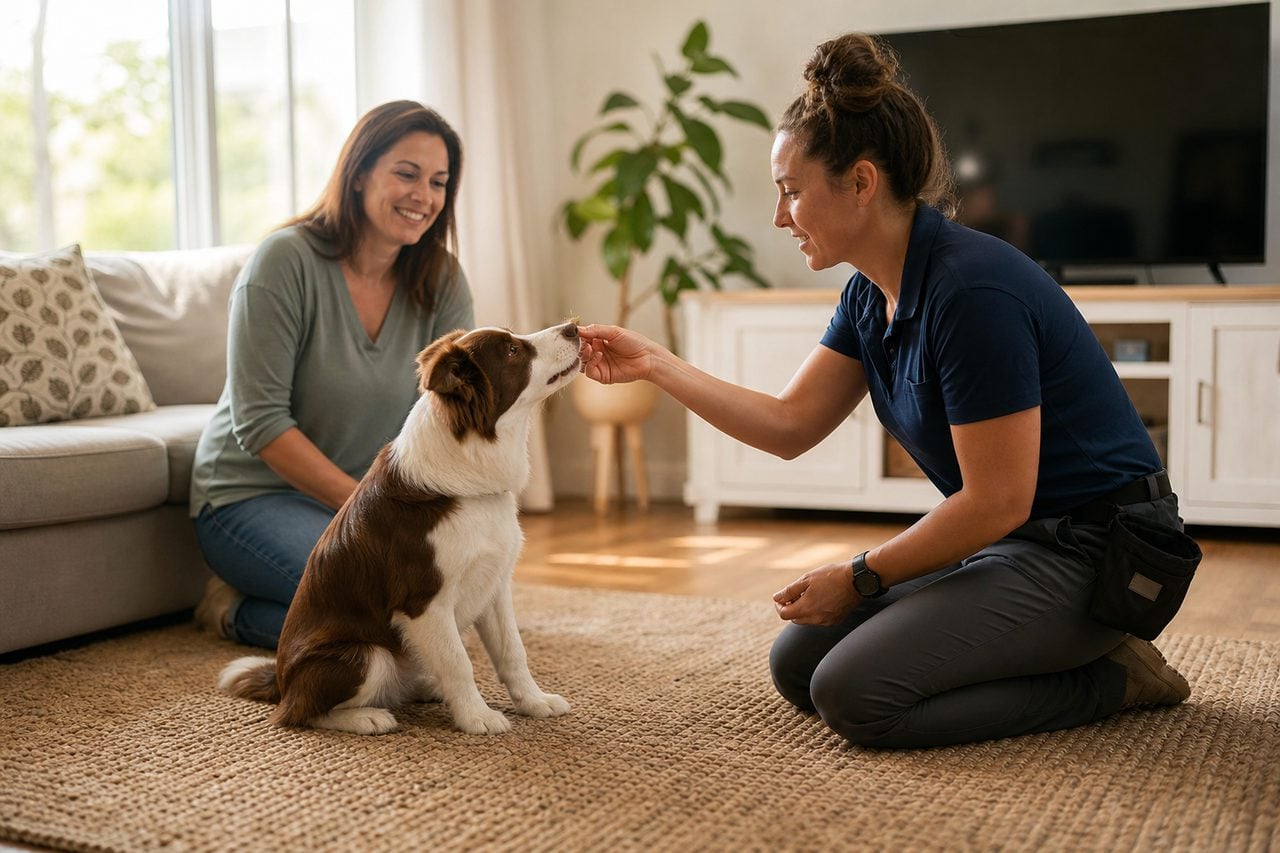
In-home dog training brings the trainer to your house, so the lessons happen where your dog actually lives: the front door where it jumps on visitors, the kitchen where it counter-surfs and the street where it pulls. Around Annapolis it is one of the most common ways trainers work.
Several Anne Arundel County trainers and franchise territories teach in your home, from puppy starter lessons to obedience packages, behavior work and in-home stay-and-train programs. This page explains when in-home training makes sense, what a typical program looks like and how to choose a trainer.
When in-home training is the right choice
In-home lessons suit problems that happen at home: house training, crate training, jumping on guests, barking at the window, guarding food or toys, and trouble being left alone. They also suit dogs that are too worried or too excited to learn in a classroom, puppies that are not yet ready for group settings, and owners whose schedules do not fit a weekly class.
They are less ideal on their own if your dog needs to practice around many other dogs. Most in-home trainers solve that by moving later sessions to quiet streets, parks or stores near your home.
What local in-home trainers offer
- Franchise territories. Several territories based in Annapolis and Anne Arundel County teach private in-home lessons, with packages that run from a single puppy starter session to obedience, off-leash, behavior, therapy dog and service dog training.
- Independent trainers. Local trainers offer in-home private coaching, often moving into nearby places with distractions once the basics are solid.
- Stay-and-train at home. One Annapolis trainer runs immersive stay-and-train programs while your dog remains in its own home, including a behavioral program and an off-leash program.
- In-home follow-up after board and train. An Arnold trainer finishes a five-week board and train with in-home classes, and offers in-home packages of two-hour sessions on their own.
How a typical program runs
Most in-home programs start with a conversation or assessment, where the trainer watches your dog, asks about routines and agrees on goals. Sessions then follow a plan: a new skill or two, practice with you holding the leash, and homework until the next visit. Several trainers here sell programs by goal rather than by the hour, with support between sessions.
Expect the trainer to coach you as much as your dog. The point of training at home is that you learn to handle the situations yourself, so ask questions and practice between visits.
Choosing an in-home trainer
Check that your town is inside the trainer’s service area, since many list one rather than a street address. Ask what methods and tools they use, how long each session lasts, what support you get between visits and whether sessions can move into public places later.
For behavior problems, ask about the trainer’s experience with similar cases and how they handle safety, such as muzzle training or management at the door. A good in-home trainer will give you a clear plan and tell you honestly how long change is likely to take.
It also helps to ask how the trainer handles scheduling around school runs, shift work or weekends, since home visits need to fit the times your household can actually practice together.
Making the most of home sessions
Prepare the space before each visit: put away clutter, have treats and a leash ready and make sure everyone who handles the dog can attend at least some sessions. Keep a short log of what happens between visits, including setbacks, so the trainer can adjust the plan.
Use the trainer’s time for the situations you find hardest. If your dog is calm in the living room but wild when the doorbell rings, ask for a session built around arrivals and visitors.
In-home training for puppies, adult dogs and behavior problems
In-home programs around Annapolis cover a wide range of needs. For puppies, the focus is house training, crate training, nipping, jumping and first cues. For adult dogs, sessions usually cover loose leash walking, recall, door manners, settling on a mat and polite greetings, often moving onto nearby streets once the dog is ready. Advanced packages add higher distraction work and, with some trainers, off-leash skills.
For behavior problems such as resource guarding, aggression and anxiety, in-home work lets the trainer see the triggers in context: the hallway where your dog guards a toy, the window where it barks at passers-by, the moment you pick up your keys. Several local trainers offer behavior packages taught at home, and one runs an intensive stay-and-train while the dog remains in its own house. Ask how many visits a typical behavior case needs, what you will practice between them and how the trainer decides when the dog is ready for the next step.
Reviewed In-Home Dog Training Trainers in Annapolis
These reviewed Annapolis-area trainers from our directory handle in-home dog training. Each links to a full profile with specialties, certified credentials, reviews, and contact info:
- Always Faithful Dog & Puppy Training Annapolis MD — 5.0★ (110 reviews)
- Dog Training Elite Annapolis — 5.0★ (17 reviews)
- Serenity Pet: Training and Behavior Solutions — 5.0★ (15 reviews)
- Bark Busters Home Dog Training Greater Annapolis — 5.0★ (11 reviews)
- KompK9 LLC — 5.0★ (10 reviews)
- Nedra’s WAGZ LLC — 5.0★ (3 reviews)
- Paws and Possibilities – Maryland — 4.9★ (50 reviews)
See all Annapolis in-home dog training trainers →
Frequently Asked Questions
Do in-home trainers cover all of Anne Arundel County?
Each trainer sets a service area, often naming towns such as Annapolis, Severna Park, Glen Burnie, Pasadena, Edgewater, Davidsonville, Crofton and Odenton. Ask before you book whether your address is included and whether travel fees apply.
Is in-home training good for puppies?
Yes. In-home lessons can start before a puppy is ready for group classes and focus on house training, crate training, nipping and routines. Several local trainers offer a single puppy starter lesson at home.
Can in-home training help with separation anxiety or aggression?
Often, because these problems happen at home. Several local in-home programs include behavior modification. Ask about the trainer’s experience with your dog’s specific problem and how the plan will be adjusted over time.
What is stay-and-train in your own home?
Instead of boarding with the trainer, your dog stays home while the trainer runs intensive sessions there over a set period. One Annapolis trainer offers this for behavior problems and for off-leash work.
How many in-home sessions will I need?
It depends on your goals. Basic manners may take a handful of visits, while behavior problems often need more sessions over a longer period. Ask the trainer to outline a likely plan after the first visit.
Related: read our complete in-home dog training guide or the full Annapolis dog training overview.
Ready to find the right in-home dog training pro in Annapolis?