
In-Home Dog Training in Bellingham, WA
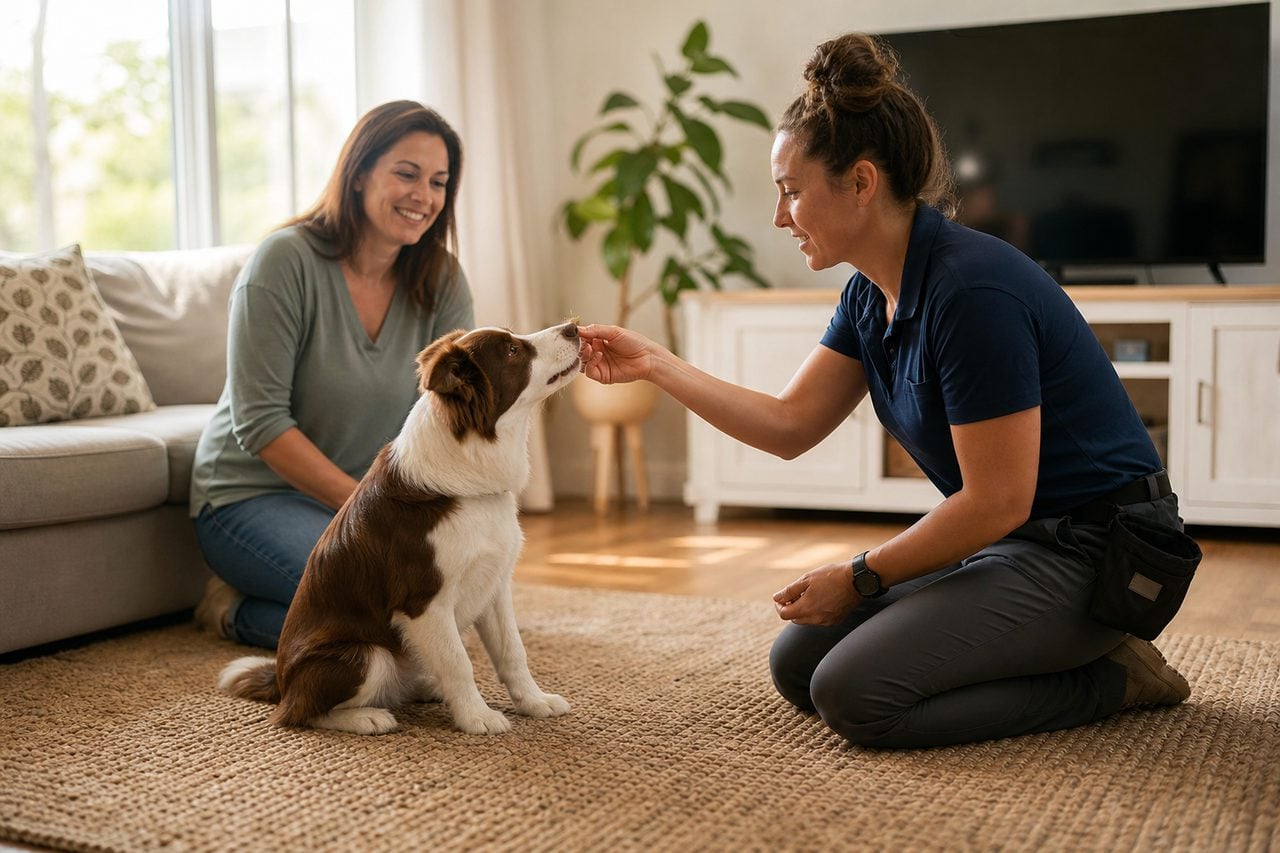
In-home training brings the trainer to the place where most problems actually happen: the front door, the kitchen counter, the living room window and the walk around the block. Three of the trainers listed below this guide say in their own words that they teach in clients’ homes around Bellingham.
This guide explains why training at home helps, how it is offered locally, how it differs from a stay in a trainer’s home, what to ask before booking and how to get the most from each visit.
Why train at home
Dogs learn in context. A dog that sits perfectly in a class can still jump on guests at home, because the doorbell, the hallway and the family’s habits are all part of the picture. Training at home lets the trainer see that picture and fix it where it happens.
- Real problems in real places. Door dashing, counter surfing, house soiling, barking at the window and pulling on your own street.
- The whole household. Everyone who handles the dog can learn the same cues and rules.
- Calmer learning. Fearful or reactive dogs often learn better without a room full of strange dogs.
- Convenience. No travel with a dog that hates the car, and sessions that fit around work and children.
Home sessions also let a trainer spot small things owners rarely mention, such as where the dog sleeps, how visitors are greeted, how food and toys are left around and which windows the dog watches from. Small changes to those routines often make the training itself easier.
How it is offered around Bellingham
- Behavior consultations at home. One Bellingham behavior consultant starts every case with a long in-home consultation that gathers the dog’s history, reviews daily routines, sets up management and practices a few skills, followed by coaching sessions to adjust the plan. It works within about a twenty-minute drive of downtown Bellingham and asks owners elsewhere in the county to check first.
- Weekly private lessons. A force-free Bellingham trainer holds private lessons in clients’ homes or in public places, usually once a week, for dogs from puppies to seniors, and can run some or all of a program online.
- In-home lessons alongside classes. A Bellingham team that also runs group classes offers private in-home lessons across Bellingham and Whatcom County, using a least intrusive, minimally aversive approach.
Other trainers in the area offer home evaluations or private lessons that can take place at home on request, so ask when you call.
In-home training is not a stay in the trainer's home
The phrase can be confusing. In-home training means the trainer comes to your home and teaches you and your dog there. A board and train, even one where the dog lives in the trainer’s own house, is a different service: the trainer does most of the work and hands the dog back afterward.
Boarding and pet sitting in someone’s home are different again; they are care, not training. If you want in-home training, ask clearly whether the trainer will be working in your house with you present, how long each visit lasts and how many visits a plan usually takes.
What to ask before booking
- Is my address inside your travel area, and is there a travel fee beyond it?
- What happens in the first visit, and do I get a written plan?
- Which methods and equipment do you use?
- How many visits do dogs like mine usually need?
- Can sessions move to parks, stores or my walking route once the basics are in place?
- Do you offer support between visits, by phone, text, email or video?
- Are there cases you do not take on, such as a serious bite history?
It also helps to ask what the trainer expects of you. In-home plans work best when the owner practices daily and keeps notes, and a good trainer will tell you honestly how much time that takes each week.
Making home sessions work
The trainer is in your home for an hour or so; the rest of the week is up to you. To get the most from in-home training:
- Have everyone who handles the dog present for at least the first session.
- Keep a short diary of incidents and progress between visits.
- Set up management before the trainer arrives, such as gates, a crate or a leash on the dog for visitors, so the problem cannot be rehearsed.
- Practice in short, frequent sessions rather than one long one.
- Ask the trainer to watch you practice, not only to demonstrate.
Problems that suit home sessions especially well include house training, jumping on guests, barking at the door or window, resource guarding, fearfulness with visitors and leash pulling that starts at your own front door.
Reviewed In-Home Dog Training Trainers in Bellingham
These reviewed Bellingham-area trainers from our directory handle in-home dog training. Each links to a full profile with specialties, certified credentials, reviews, and contact info:
- The Pawsitive Pooch, llc — 4.7★ (31 reviews)
- Embarking Dogs — 4.6★ (20 reviews)
- Dogwell Behavior and Training
See all Bellingham in-home dog training trainers →
Frequently Asked Questions
Is in-home training more effective than a class?
For problems that happen at home, often yes, because the trainer can see and change the real situation. For practice around other dogs, a class adds distractions you cannot create at home. Many owners use both.
Do Bellingham in-home trainers travel to Ferndale or Lynden?
Some do. One in-home behavior consultant works within about twenty minutes of downtown Bellingham and asks people elsewhere in Whatcom County to check, and another trainer covers Bellingham and Whatcom County. Ask each trainer about your address.
Can in-home training help an aggressive dog?
It often helps, because the trainer sees the triggers in context. Some consultants here do not take cases of aggression toward people or dogs with an extensive bite history, so describe the problem honestly when you call.
Can sessions be online instead?
Yes, for some cases. At least one in-home trainer here can run part or all of a program as virtual sessions, which suits follow-ups and owners outside the trainer’s travel area.
How many in-home visits will my dog need?
It depends on the problem and how much you practice. Simple manners problems may need only a few visits, while fear or aggression cases usually involve an initial consultation and a series of follow-up coaching sessions. Ask the trainer for a realistic estimate after the first visit.
Related: read our complete in-home dog training guide or the full Bellingham dog training overview.
Ready to find the right in-home dog training pro in Bellingham?