
In-Home Dog Training in Lancaster, PA
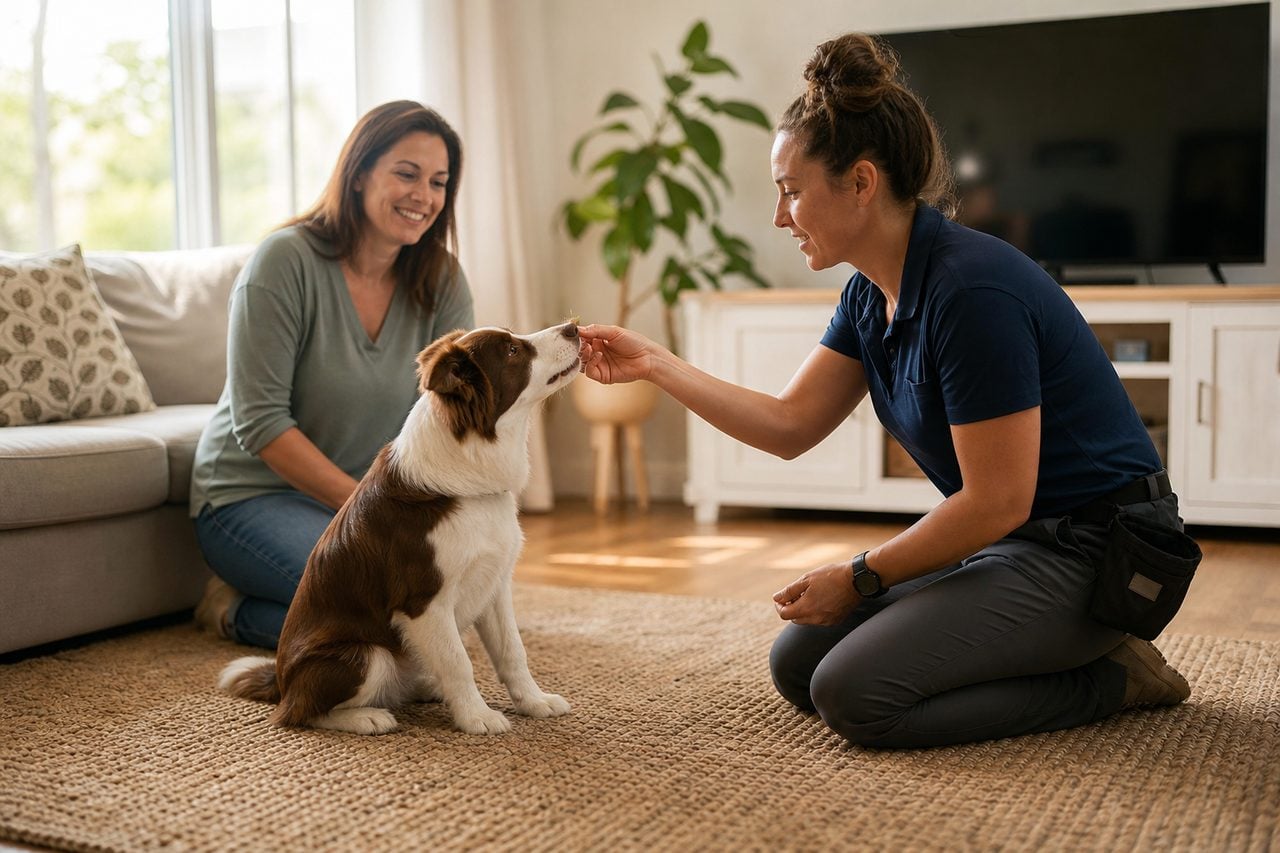
In-home dog training brings a professional trainer directly to your house, yard, and neighborhood — the exact places where your dog actually lives, gets excited, and gets into trouble. For many Lancaster County families, this is the most practical and effective way to work on behavior, because dogs do not generalize well from one setting to another. A dog can be an angel in a quiet training facility and a different animal entirely the moment it is back home hearing the doorbell, watching deliveries roll up the driveway along a quiet Manheim lane, or reacting to the neighbor’s dog along the fence line. Training in the real environment closes that gap, because the lessons are learned exactly where they need to be used.
Whether you are in a tight rowhome block near downtown Lancaster and Central Market, in a newer development around Mount Joy or Elizabethtown, in one of the Susquehanna river towns like Columbia or Mountville, or on rural acreage out toward Strasburg and the Amish farm country, in-home sessions are tailored to your specific space and your specific challenges. The trainer sees the actual layout, the actual triggers, and the actual family routine, then builds a plan that fits how you really live rather than a generic curriculum. It is also a strong fit for busy households juggling work and kids, multi-dog homes with tangled dynamics, fearful or reactive dogs that simply shut down in group classes, and young puppies whose vaccinations are not yet complete enough for them to safely attend a class.
This guide explains how in-home training works, what kinds of problems it solves best, how sessions are typically structured, how to prepare your home and family, how to choose a qualified local trainer, and how to make the training actually stick between visits. In-home training is widely available across Lancaster County, from the city to the northern boroughs to the rural southern end, so finding the right fit close to home is realistic for most owners willing to do a little homework first.
What In-Home Dog Training Involves
In-home training is exactly what it sounds like: a trainer comes to your residence and works with you and your dog in your own environment. A typical engagement starts with an assessment session where the trainer observes your dog in context, asks about routines, diet, exercise, prior training, and the specific behaviors you want to change. From there, the trainer builds a customized plan and coaches you through hands-on exercises during each visit.
A defining feature of in-home work is that it trains the humans as much as the dog. Because the trainer is only present for an hour or two at a time, the real learning happens in the hours and days between visits when you practice. Good in-home trainers therefore focus heavily on teaching you the mechanics — timing, body language, reward delivery, consistency — so the whole household can keep the dog progressing. Sessions often move through the actual problem zones of your home: the front door for greeting manners, the kitchen for counter-surfing, the yard for recall, the sidewalk for leash walking. In rural Lancaster properties with open acreage, that might include working on a reliable recall across a large yard; in a city block near Central Market, it might mean polite passing of pedestrians and other dogs on a busy sidewalk. By the end, the dog has practiced the right behavior in the very spots where it used to struggle, which is what makes the results hold.
Problems In-Home Training Solves Best
Certain issues are inherently tied to a specific environment, and those are where in-home training shines. Household manners — jumping on guests, door-dashing, counter-surfing, stealing items, demand barking, and not settling — are all context-bound to your home and are far easier to fix where they actually occur. A trainer can stage realistic setups, like a knock at your real front door, that a classroom simply cannot replicate.
In-home work is also well suited to dogs that struggle in group settings. A fearful, anxious, or reactive dog often cannot learn in a crowded class because it is over its threshold the entire time; in the calm of its own home, the same dog can actually think and absorb training. Puppies benefit too, especially before they have completed their vaccination series and can safely attend group classes — early manners and socialization foundations can begin safely at home. Multi-dog households gain from having a trainer untangle dog-to-dog dynamics on site. And for owners with mobility limitations, demanding schedules, or simply a preference for one-on-one attention, the convenience of training at home removes a major barrier to following through — which is ultimately what makes any training work. The common thread is that these are all problems best solved where they actually happen — in your home, with your routine, on your terms.
How In-Home Sessions Are Structured
Most in-home programs are sold as packages of several sessions rather than one-off visits, because behavior change takes repetition and follow-through. A common arc is an initial longer assessment, followed by a series of working sessions spaced about a week apart to give you time to practice between visits. Some trainers add phone or message support between sessions for quick questions.
Each working session usually reviews homework from the prior visit, introduces the next skill or refines a difficult one, and ends with clear instructions for what to practice. Sessions typically run roughly 45 minutes to an hour and a half — long enough to make progress but short enough that the dog does not get fatigued and stop learning. A good trainer keeps notes and adjusts the plan based on how your dog responds, since no two dogs progress identically. Expect to be an active participant, not a spectator; the trainer will often hand you the leash and coach your timing in real time. The overall length of a program depends on the goals — basic manners might take a handful of sessions, while reactivity or more complex behavior can take longer. Across Lancaster County, in-home programs are structured this way regardless of whether you are in the city or out in the countryside.
Preparing Your Home And Family
A little preparation makes in-home sessions far more productive. Before the first visit, think through the specific behaviors you want to address and, if possible, note when and where they happen most — that history helps the trainer pinpoint triggers quickly. Have your dog’s usual treats, favorite toys, leash, and any equipment ready, and feed lightly beforehand so food rewards are motivating.
Decide who in the household will attend. One of the biggest advantages of in-home training is getting everyone — partners, kids old enough to participate, other regular caregivers — on the same page, since inconsistent rules between family members undermine progress fast. For the session itself, plan a calm starting environment: it can help to have the dog a little settled rather than wildly over-aroused when the trainer arrives, though a reactive greeter is exactly the kind of thing the trainer will want to see and work on. Clear a workable space, secure anything fragile near the training zones, and be ready to take notes or record the trainer’s demonstrations on your phone for later reference. Finally, commit to the between-session homework before you start; the families who practice consistently get dramatically better results than those who rely on the visits alone.
Choosing A Qualified Local Trainer
The dog training industry is unregulated, so vetting matters. Look for a trainer who uses modern, reward-based, humane methods and can clearly explain their approach. Reputable trainers are transparent about what they do, welcome your questions, and do not lean on fear, pain, or intimidation to get results. Ask about their experience with your specific issue — reactivity, puppies, multi-dog homes — since specialties vary.
It is reasonable to ask how a trainer measures progress, what happens if the plan is not working, and how they coach the human side of the equation, because in-home training lives or dies on owner follow-through. Trust your read of the first session: a good trainer explains the why behind each exercise, sets realistic expectations, and treats both you and your dog with patience. Be cautious of anyone promising guaranteed results or a permanent fix in a single visit — behavior change does not work that way. Lancaster County has a range of in-home trainers serving the city, the northern boroughs like Lititz and Manheim, the Susquehanna towns of Columbia and Mountville, and the rural southern end, so you have room to find someone whose methods and personality fit your family and your dog. Taking the time to choose well up front pays off, since the relationship often spans several weeks of working together in your home.
Making Training Stick Between Visits
The real work of in-home training happens when the trainer is gone. Short, frequent practice sessions — a few minutes several times a day — beat occasional marathon sessions, because dogs learn best in brief, upbeat bursts that end before they get bored or tired. Weave training into daily routines: ask for a sit before meals, practice door manners every time someone comes and goes, and reward calm behavior you want to see more of rather than only correcting problems.
Consistency across the household is the multiplier. If one person allows jumping while another forbids it, the dog stays confused and progress stalls. Agree on the rules and the cue words everyone will use, and post them somewhere visible if needed. Build training into Lancaster’s rhythm of life — practice loose-leash walking on neighborhood sidewalks, work on recall during yard time, and use real-world distractions as gradual challenges once the basics are solid in quiet conditions. Keep sessions positive; ending on a success leaves the dog eager for the next round. If you hit a sticking point, that is exactly what the next scheduled visit — or a quick message to your trainer — is for. With steady, consistent practice in the home where your dog actually lives, the skills generalize naturally into a calmer, better-mannered companion.
Is In-Home Training Right For You?
In-home training is an excellent fit for many situations, but it is worth weighing against the alternatives so you choose the best path. It is ideal when the problems are home-specific, when your dog struggles in group settings, when you have a busy or mobility-limited household, when you want one-on-one customized attention, or when you have a young puppy not yet ready for group classes. The convenience and personalization tend to produce strong follow-through, which is the real engine of results.
There are trade-offs to consider. Per-session, private in-home training generally costs more than a group class, and pricing varies widely by trainer and program length, so ask for clear package details up front. Group classes offer something in-home cannot: controlled exposure to other dogs and people, which is valuable for socialization and for proofing skills around real distractions. Many Lancaster owners actually combine the two — starting at home to build foundations and resolve household issues, then graduating to a group class to generalize the skills in a busier setting. There is no single right answer; the best choice depends on your dog’s temperament, your goals, your schedule, and your budget. If you value tailored attention in your real environment and are willing to do the between-session homework, in-home training is a powerful and convenient option available throughout Lancaster County.
Reviewed In-Home Dog Training Trainers in Lancaster
These reviewed Lancaster-area trainers from our directory handle in-home dog training. Each links to a full profile with specialties, certified credentials, reviews, and contact info:
- Paw & Order Dog Training Harmony — 5.0★ (38 reviews)
- Pups Unleashed — 5.0★ (33 reviews)
- Ray’s Canine Services — 5.0★ (32 reviews)
- Always Stay Pawsitive Dog Training, LLC — 5.0★ (18 reviews)
- Tried and True Canines — 5.0★ (12 reviews)
- Magnus K9 — 5.0★ (11 reviews)
- Karen Barlow’s Dog Training — 5.0★ (1 reviews)
- The Structured K9 — 5.0★ (1 reviews)
- Faithful Companion Dog Training, LLC — 4.3★ (31 reviews)
- Amazing Tails LLC — 4.1★ (13 reviews)
See all Lancaster in-home dog training trainers →
Frequently Asked Questions
How is in-home training different from a group class?
In-home training is one-on-one in your own house and yard, customized to your specific dog and problems, and ideal for home-specific issues or dogs that struggle in crowds. Group classes are more affordable and offer controlled exposure to other dogs and people, which is great for socialization and proofing skills around distractions. Many Lancaster owners combine both: home first for foundations, then a class to generalize.
How many in-home sessions will my dog need?
It depends on your goals and your dog. Basic manners might take a handful of sessions, while reactivity or more complex behavior can take longer. Most trainers sell packages spaced about a week apart so you can practice between visits. Because so much progress depends on your follow-through at home, owners who practice consistently typically need fewer sessions overall.
Is in-home training good for puppies?
Yes, especially before a puppy has completed its vaccination series and can safely attend group classes. Early manners, handling, crate and potty foundations, and safe at-home socialization can all begin at home. An in-home trainer can also coach your whole family on consistent rules from day one, which prevents many common puppy problems from taking root.
Do I need to be present and involved during sessions?
Absolutely. In-home training largely trains the humans, since the trainer is only there briefly and the real practice happens between visits. Expect to hold the leash, practice timing, and get coached in real time. Getting all regular caregivers on the same page is one of the biggest advantages of training at home, because inconsistent rules between family members stall progress fast.
What should I do to prepare for the first visit?
Note the specific behaviors you want to address and when and where they happen most. Have your dog’s usual treats, toys, and leash ready, and feed lightly so food rewards are motivating. Decide which family members will attend, clear a workable space, and be ready to take notes or record demonstrations. Most importantly, commit to practicing the homework between sessions before you begin.
How do I find a good in-home trainer in Lancaster County?
Look for a trainer using modern, reward-based, humane methods who can clearly explain their approach and has experience with your specific issue. Ask how they measure progress and how they coach the owner side of training. Be wary of guaranteed results or single-visit cures. In-home trainers serve the whole county — from Lancaster city to Lititz, Columbia, Mount Joy, and the rural south — so you have room to find a good fit.
Related: read our complete in-home dog training guide or the full Lancaster dog training overview.
Ready to find the right in-home dog training pro in Lancaster?