
In-Home Dog Training in Newton, MA
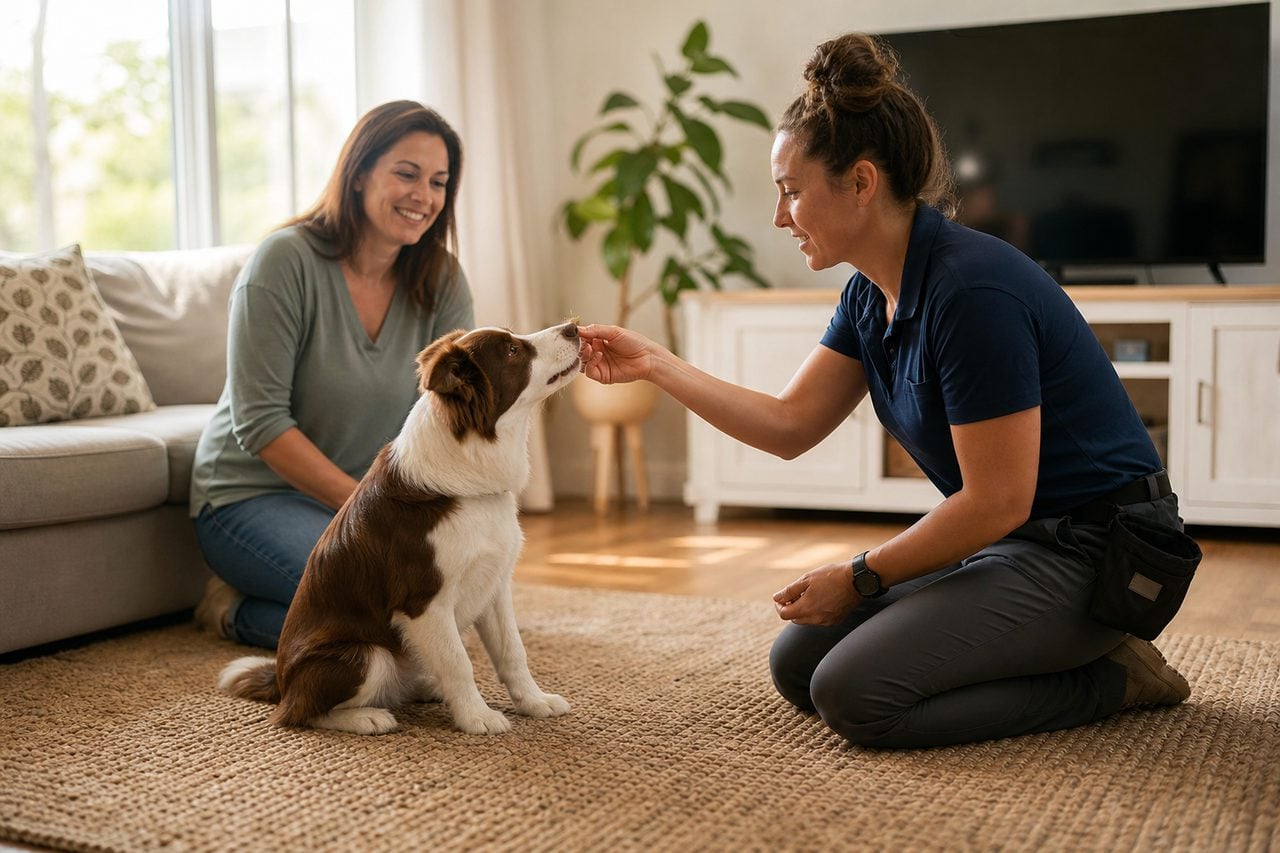
In-home dog training means the trainer comes to you. Sessions take place in your living room, your yard and your street, where the barking, pulling and door-dashing actually happen, so the dog learns in the setting where it has to behave.
In-home training is the most common format around Newton, Wellesley, Needham and Norwood. Local trainers who work this way include a force-free team for reactive and fearful dogs, a trainer with more than 30 years of private lessons, reward-based trainers serving the towns from Norwood to Dover, and a Medfield center that starts with a consultation in your home. This page explains how in-home training works and when it is the right choice.
Why train at home
Dogs do not generalize well. A dog that walks nicely in a training hall may still drag you down your own street, and a dog that settles in class may still bark at your front window. Working at home lets the trainer see the real triggers, the layout of the house and how each family member handles the dog.
Home sessions also suit dogs that find new places stressful, families with young children or busy schedules, and problems that only happen at home, such as guarding the couch, jumping on visitors or house training accidents.
Who offers in-home training locally
- Behavior-focused teams. A Newton force-free team holds one-hour sessions in your home for house training, leash walking, resource guarding and fear-based aggression, built around each dog’s triggers and thresholds.
- Long-experience private trainers. A trainer with more than 30 years of private lessons teaches in homes across Wellesley, Weston, Newton, Needham and Dover, from puppies to aggression and reactivity.
- Reward-based family trainers. An in-home trainer works with families from Norwood to Stoughton, and a family business near Dover covers leash pulling, reactivity and puppy basics.
- Facilities that also visit. A Medfield training center offers in-home sessions and family training, and a Wellesley trainer offers in-home private lessons for dogs nine months and older.
- Hiking and training teams. A positive-reinforcement team lists in-home training options for puppies and adult dogs.
What a first visit looks like
Most in-home trainers start with an evaluation or consultation. Expect questions about your dog’s history, routine, health and the problems you want to solve, and expect the trainer to watch the dog in its usual setting. Some consultations last well over an hour.
By the end of the first visit you should have a plan: what to manage right away, what to practice and how often the trainer will return. Ask who in the household should attend each session, since everyone who handles the dog needs to be consistent.
Taking the training outside
Home is the starting point, not the finish line. Good in-home trainers move the work to your street, local parks and busier places as the dog improves. Some local teams combine sessions with training walks or off-leash hikes, so skills are practiced in the real world.
Newton’s off-leash park areas are open only to licensed dogs with an off-leash permit, and dogs must be leashed entering and leaving. A trainer can help you decide when your dog is ready for that freedom.
Ask the trainer which outdoor places they use for practice, how they choose quiet times and how they protect a reactive dog from surprise meetings. A clear answer shows that the move from home to the wider world has been planned rather than left to chance.
Is in-home training right for your dog?
In-home training is a strong choice for behavior problems at home, reactive or fearful dogs, puppies in their first weeks and families who cannot fit classes into the week. It costs more per session than a group class because of the trainer’s travel and one-on-one time.
If your dog needs practice around other dogs, consider adding a class once the basics are in place. Check that your town is inside the trainer’s service area, how often visits happen and what support is available between them.
Preparing your home for the visit
Before the trainer arrives, write down the main problems, when they happen and what you have already tried. Have treats, a leash and any equipment you already use ready, and plan for every adult who handles the dog to be present. If your dog is reactive to visitors, tell the trainer in advance so the arrival can be managed safely.
Afterward, keep a simple log of practice and progress. Short notes on how many times the dog barked at the window, pulled on a walk or settled on its mat help the trainer adjust the plan at the next visit and show you how far the dog has come.
Reviewed In-Home Dog Training Trainers in Newton
These reviewed Newton-area trainers from our directory handle in-home dog training. Each links to a full profile with specialties, certified credentials, reviews, and contact info:
- Down 4 Paws Dog Training — 5.0★ (85 reviews)
- Cavalletto Canine, LLC — 5.0★ (8 reviews)
- Life’s A Pooch — 5.0★ (6 reviews)
- Empawthy Dog Training — 5.0★ (4 reviews)
- Peak Paws LLC — 5.0★ (2 reviews)
- Good Wellesley Dogs — 4.9★ (41 reviews)
- Fluxpack LLC — 4.6★ (34 reviews)
See all Newton in-home dog training trainers →
Frequently Asked Questions
Which towns do in-home trainers near Newton cover?
Each trainer sets its own area. Local trainers list towns such as Newton, Wellesley, Weston, Needham, Dover, Norwood, Walpole, Westwood, Dedham, Canton and Medfield. Ask before booking whether your street is inside the area.
Is in-home training good for a reactive dog?
Often, yes. Several local trainers work with reactive, fearful and aggressive dogs at home, where triggers can be managed carefully before practice moves outside. Mention any bite history when you first call.
How many in-home sessions will I need?
It depends on the goal. Puppy basics may take a short package, while behavior problems often need a longer plan. Ask the trainer for an expected number of visits and what you will practice between them.
Can the whole family take part?
Yes, and they should. In-home sessions let children and adults practice the same cues and rules, which keeps the dog’s learning consistent. Ask the trainer how to involve younger children safely.
Is in-home training more expensive than classes?
Usually, per session, because the trainer travels and works with one dog. It can still be good value when the problem only happens at home, since the trainer sees and fixes it where it occurs.
Related: read our complete in-home dog training guide or the full Newton dog training overview.
Ready to find the right in-home dog training pro in Newton?