
In-Home Dog Training in Pittsburgh, PA
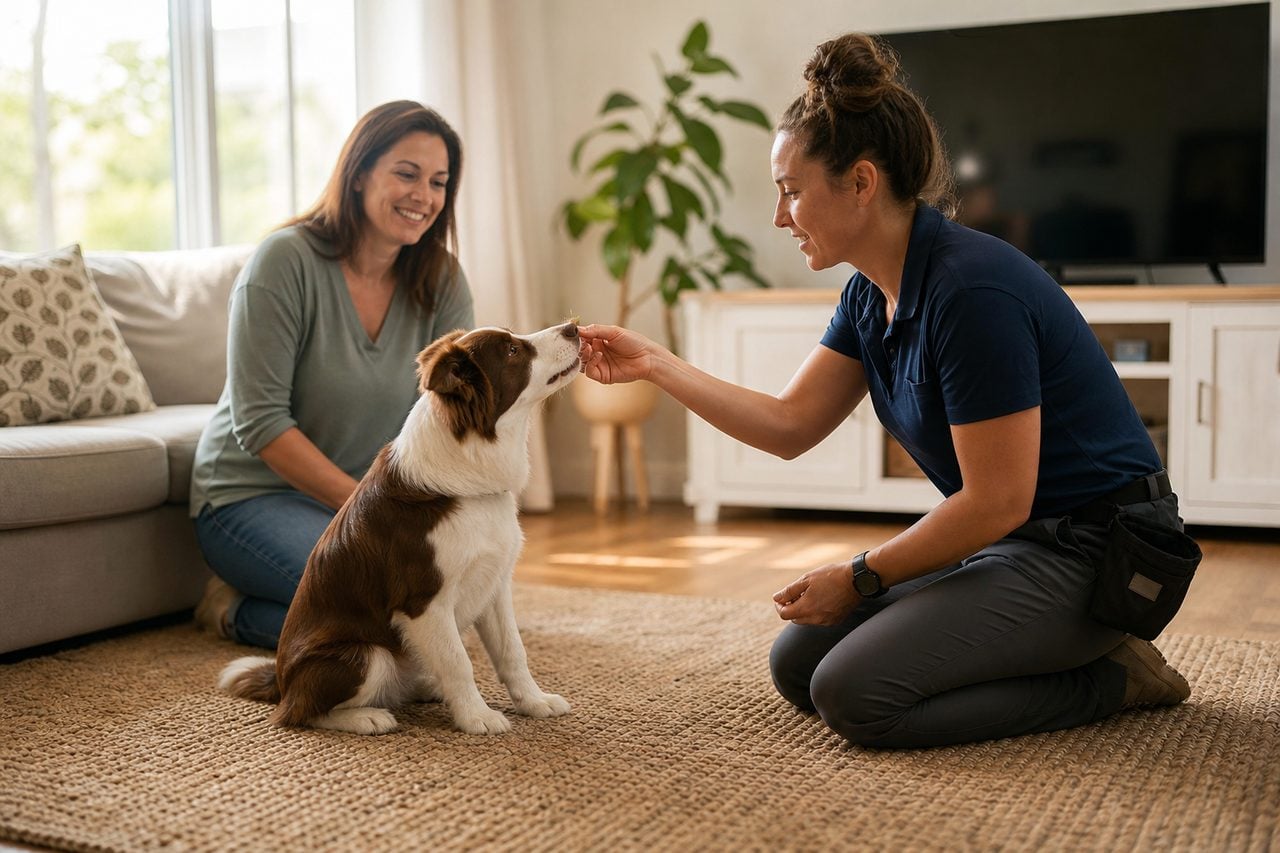
In-home dog training meets the dog where the problems actually happen. A reactive lunge at the mail carrier on a narrow Bloomfield sidewalk, counter-surfing in a Mount Lebanon kitchen, a dog that bolts down the front steps of a hilly South Side rowhouse the second the door cracks — these behaviors are tied to specific rooms, doorways, and routines. A dog can be a model student in a training-center class and still fall apart at home, because the home is where the triggers, the habits, and the family dynamics live. Bringing the trainer to your house closes that gap.
Pittsburgh’s housing and geography make this format especially practical. Many homes here are older, multi-level, and built into slopes — tight stairwells, split entries, fenced-but-steep backyards, on-street parking that puts the front door right on a busy sidewalk. A neighborhood like Lawrenceville or the South Side packs rowhouses wall to wall, while a place out in Cranberry or Peters Township brings its own layout quirks. A trainer standing in your actual entryway can see why the dog spins up at every passerby through the front window, watch the real dynamic at the dinner table, and design a plan around your specific layout rather than a generic one. For owners juggling long commutes through the tunnels or wrangling kids and pets at once, having the lesson come to you also removes a major scheduling hurdle — no loading an over-aroused dog into the car and driving across town for class.
This guide explains how in-home training works across the Pittsburgh area, what it is well suited for, what it is not, how to prepare your home so each visit pays off, and how to choose a trainer who will actually change behavior in your household — not just demonstrate a tidy command once and drive away.
How In-Home Training Works
A typical engagement starts with an in-home assessment. The trainer comes to your house — whether that’s a Shadyside flat or a place out in Wexford — observes the dog in its normal environment, and talks through what’s going wrong and what you want instead. From there it’s usually a package of sessions rather than a single visit, because real behavior change needs repetition and follow-up.
The defining feature is that training happens in context. If the dog mugs guests at the door, you practice at the actual door. If it ignores recall in the backyard, you work in that backyard with its real distractions. Crucially, much of the work is coaching the humans: the trainer shows you the mechanics, watches you do it, and corrects your timing and handling. The dog learns, but so do you — which is what makes the change stick after the trainer drives off. Expect homework between sessions; the daily reps you do matter more than the hour the trainer is present.
What In-Home Training Is Best For
Some goals fit the in-home format particularly well:
- Household manners — jumping on guests, counter-surfing, door-dashing, stealing food, settling on a mat while the family eats.
- House-training and crate work — inherently location-specific, especially in multi-level Pittsburgh homes where "outside" means a flight of stairs.
- New-puppy foundations — getting routines, boundaries, and socialization started right in the home environment.
- Mild-to-moderate reactivity — beginning the work in the controlled setting of your home and yard before generalizing to the sidewalk.
- Multi-dog dynamics and resource guarding — issues that revolve around the specific home, the specific dogs, and the specific layout.
It’s also ideal for owners who are anxious in group settings, dogs that don’t do well around other dogs in a class, and busy households where getting everyone to a training center on the same evening is unrealistic.
Where Group Class or a Facility Wins
In-home training isn’t the answer to everything, and an honest trainer will say so. Some objectives need things a living room can’t supply:
- Controlled exposure to other dogs. If the core goal is calm behavior around unfamiliar dogs, a structured group class provides stooge dogs at safe distances — something a home visit can’t replicate.
- Proofing in novel environments. Solid home behavior doesn’t automatically transfer to Schenley Park, the Strip District on a Saturday, or a busy patio. Generalization requires deliberately practicing in new places.
- Specialized facilities — agility equipment, scent-work setups, or large secure fields for off-leash recall.
The strongest plans often combine formats: build the foundation in-home where it’s quiet and controllable, then take the skills out to public Pittsburgh settings to proof them. Treat in-home and out-in-the-world training as complementary stages, not rivals.
Preparing Your Home for a Session
You’ll get more from each visit with a little prep. Before the trainer arrives:
- Have the whole household present for at least the first session. Consistency across people is half the battle — if one person allows jumping, the dog stays confused.
- Stock high-value treats and the dog’s regular gear (harness, leash, crate, favorite toys) so you’re practicing with what you actually use.
- Write down a short list of the moments that go wrong — specific times, rooms, and triggers. "Lunges at delivery drivers from the front window around 2 p.m." is far more useful than "he’s bad."
- Don’t over-tire or over-feed the dog right before — you want it alert and food-motivated.
If reactivity to visitors is the issue, ask the trainer how they want to handle their own arrival; some prefer to meet the dog a certain way, or to have it behind a gate at first. A bit of planning turns the session into real practice instead of a meet-and-greet.
Working Around Pittsburgh Homes and Weather
Local conditions shape what in-home training looks like here. Pittsburgh’s hills and stairs mean leash manners and controlled door exits are safety issues, not just niceties — a dog that pulls down a steep, icy front stoop in January is a genuine fall risk for its owner. Many homes open directly onto sidewalks or share entries, so door-control and calm greetings carry extra weight.
Winter also pushes more training indoors for months at a time. A good in-home trainer leans into that, building plenty of indoor enrichment, impulse-control games, and settle routines that don’t depend on the weather cooperating. When conditions allow, the backyard, the front steps, and quiet stretches of local streets become the proving ground for taking inside skills outside. Humid summers bring their own caution — trainers will schedule outdoor reps for cooler morning hours and keep heavy-coated dogs from overheating. The point is a plan that fits your actual home and your actual climate, not a one-size script.
Choosing an In-Home Trainer
Because anyone can call themselves a dog trainer, screen for substance:
- Methods. Favor reward-based, positive-reinforcement training. Be cautious of anyone leading with shock or prong collars, especially for fear or reactivity, where aversives can make things worse.
- Education and continuing learning — certifications and a habit of staying current matter more than vague claims of "X years of experience."
- A coaching mindset. The best in-home trainers teach you, not just the dog — ask how they handle owner homework and between-session support.
- Clear scope. They should tell you honestly when a problem needs a group class, a vet behaviorist, or a different specialty instead of overselling in-home work.
Ask how they structure a package, what follow-up looks like, and how they measure progress. Compare a few options in the directory across your part of the metro — city, South Hills, North Hills, or the eastern suburbs — and pick on fit and method, not just proximity.
What Realistic Results Look Like
In-home training works, but it isn’t magic, and the trainer is not the variable that determines success — you are. The lessons set the direction; the daily reps you run between visits are what actually rewire the dog’s habits. Owners who practice five to ten minutes a day, consistently, see steady change. Owners who expect the trainer to "fix" the dog in an hour while they watch are usually disappointed.
Set expectations by problem type. Basic manners — jumping, polite greetings, a reliable settle — often improve noticeably within a few weeks. Reactivity and deeper behavioral issues take longer and may need ongoing maintenance. Progress also depends on the whole household pulling the same direction; mixed messages from different family members slow everything down. The realistic payoff is a dog that’s genuinely easier to live with in your home, on your steps, and on your street — built on skills you now know how to maintain yourself long after the sessions end.
Reviewed In-Home Dog Training Trainers in Pittsburgh
These reviewed Pittsburgh-area trainers from our directory handle in-home dog training. Each links to a full profile with specialties, certified credentials, reviews, and contact info:
- FurEver Good Dog Training — 5.0★ (96 reviews)
- H-D Interactions Dog Training Co. — 5.0★ (72 reviews)
- Paw & Order Dog Training Westmoreland — 5.0★ (66 reviews)
- Paw & Order Dog Training Washington PA — 5.0★ (64 reviews)
- Suburban K9 Dog Training — 5.0★ (53 reviews)
- Paw & Order Dog Training Harmony — 5.0★ (38 reviews)
- McWreath Dog Training – Washington, PA — 5.0★ (36 reviews)
- Happy Pets Training — 5.0★ (31 reviews)
- So Help Me Dog LLC — 5.0★ (27 reviews)
- Happy Dog Pittsburgh — 5.0★ (24 reviews)
See all Pittsburgh in-home dog training trainers →
Frequently Asked Questions
Is in-home training better than a group class in Pittsburgh?
It depends on the goal. In-home wins for household manners, house-training, and problems tied to your specific home. Group classes win when the goal is calm behavior around other dogs or proofing skills in new places. Many owners use both.
How many in-home sessions will my dog need?
Most trainers work in packages rather than one-offs. Basic manners might take a handful of sessions plus daily homework; reactivity or more complex issues take longer. Ask any trainer how they structure their packages and follow-up before committing.
Will the trainer fix my dog or do I have to do the work?
You do the work — that’s the point. A good in-home trainer coaches you on technique and timing, then expects you to practice daily between visits. The dog changes because you change how you handle it.
Can in-home training help with my dog dashing out the front door?
Yes, and it’s a great fit — door-dashing is location-specific, so practicing at your actual door matters. It’s especially important on Pittsburgh’s hilly, stepped entries where a bolting dog is a safety risk for everyone.
Should everyone in the household be there for the session?
Ideally yes, at least for the first session. Consistency across all family members is critical — if one person allows a behavior the trainer is working to stop, the dog stays confused and progress stalls.
Does in-home training work in winter when we can't go outside much?
Yes. A good trainer builds indoor enrichment, impulse-control games, and settle routines that don’t need good weather, then takes skills outdoors when Pittsburgh’s conditions allow. Winter is actually a fine time to build a strong indoor foundation.
Related: read our complete in-home dog training guide or the full Pittsburgh dog training overview.
Ready to find the right in-home dog training pro in Pittsburgh?