
Leash Reactive Dog Training in Columbus, OH — Stop the Barking & Lunging
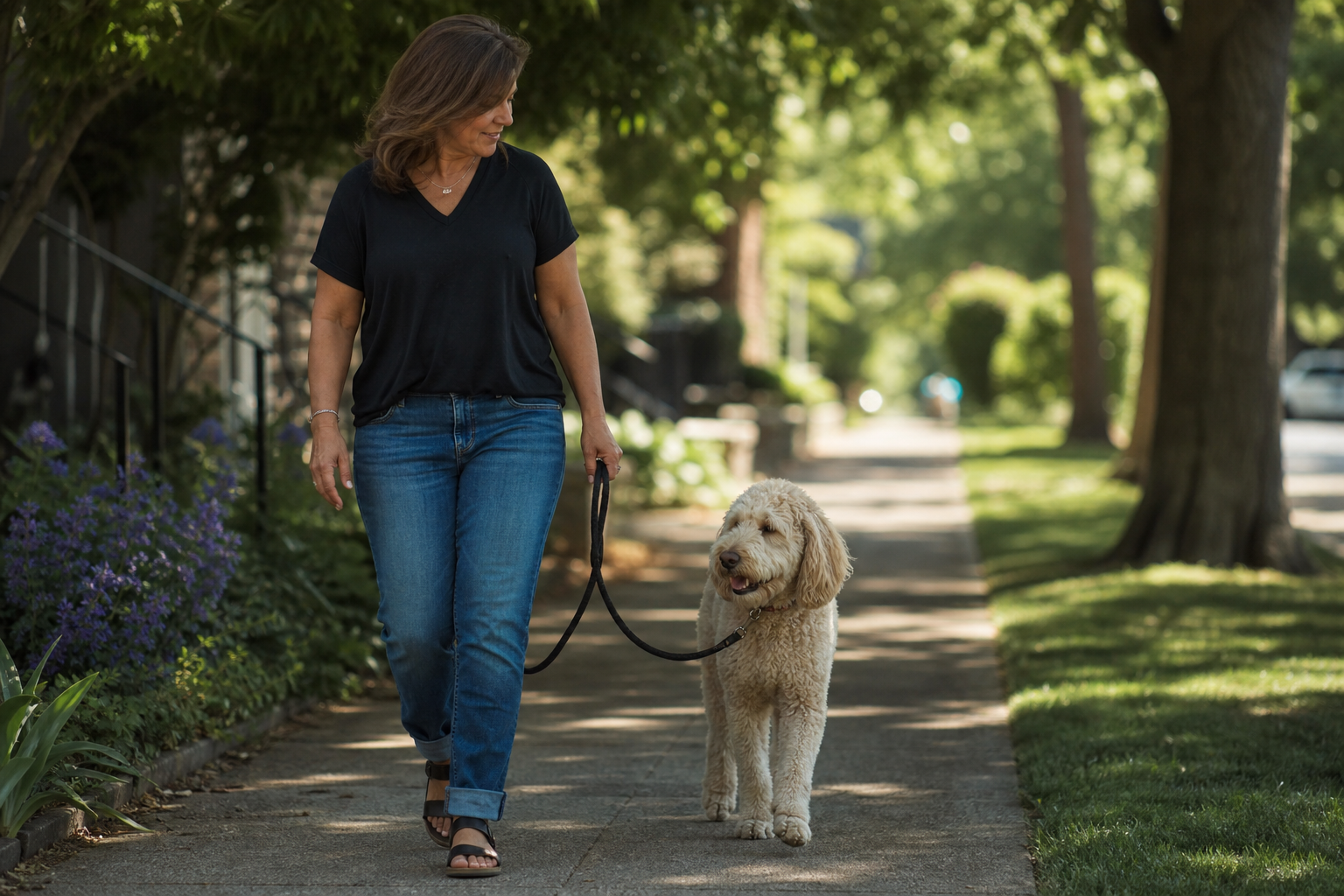
You’re walking your dog along the Olentangy Trail, everything is fine — until another dog appears. Your dog erupts: barking, lunging, pulling, spinning. This is leash reactivity, and it’s one of the most common behavior issues in dogs — and one of the most treatable when handled correctly.
Every walk is stressful. You’ve started avoiding certain routes, certain times of day, certain parks. You’ve considered giving up walks altogether. It looks like aggression. It feels like aggression. But in most cases, it’s not.
Here’s what leash reactivity is, why your dog does it, how treatment works, what it costs in Columbus, and how to find the right trainer.
What Leash Reactivity Is (and Isn’t)
Leash reactivity is an overreaction to triggers — usually other dogs, but sometimes people, bikes, skateboards, or other moving objects — that specifically occurs when the dog is on leash. The reactive display: barking, lunging, growling, hackling, spinning, pulling toward or away from the trigger.
But here’s the critical distinction: most leash-reactive dogs are not aggressive. If you took the leash off and let them approach the trigger in a controlled setting, most would either play, sniff, or lose interest. The leash creates the problem.
Why the leash changes everything
Frustration. Your dog wants to investigate, greet, or approach — and the leash prevents it. This is “frustrated greeter” reactivity and is the most common type.
Fear. Your dog is scared of the trigger and would naturally flee. The leash prevents flight, so the dog switches to fight — barking and lunging to make the scary thing go away. This is “fearful reactive,” the second most common type.
Barrier frustration. The leash itself is the trigger. Some dogs who are perfectly social off-leash become reactive specifically because the leash introduces constraint.
Learned behavior. Every reactive episode reinforces the behavior. The dog barks and lunges → the other dog moves away → the dog learns that the display “works.” After enough repetitions, it becomes an automatic pattern.
Why “Just Socialize Them” Doesn’t Work
Well-meaning friends will tell you to take your reactive dog to the dog park, let them meet more dogs, expose them to triggers until they “get used to it.” This is flooding — forced, uncontrolled exposure — and it makes leash reactivity worse, not better.
- Every reactive episode is practice. The dog gets better at reacting.
- Forcing proximity to triggers increases anxiety, which increases reactivity.
- Dog parks are uncontrolled environments where reactive dogs get overwhelmed, and their reactions provoke other dogs.
- The dog learns that being around other dogs means stress and conflict.
Effective treatment is the opposite of flooding. It’s systematic, gradual, and always below the dog’s threshold.
How Leash Reactivity Treatment Works
The gold standard treatment combines desensitization and counter-conditioning (DS/CC). It’s evidence-based, well-documented, and produces reliable results when executed consistently.
Desensitization: Expose the dog to the trigger at a distance where they notice it but don’t react. Gradually decrease the distance over time.
Counter-conditioning: Pair the trigger with something the dog loves (usually high-value food). The goal is to change the emotional response from “threat/frustration” to “good things happen when I see that.”
In practice, this looks like:
- Identify the threshold. How close can another dog be before your dog reacts? 50 feet? 100 feet? This is the starting point.
- Work below threshold. Position yourself where your dog notices the trigger but can still think, take treats, and respond to you.
- Engage the protocol. When the trigger appears, feed high-value treats rapidly and continuously. When the trigger disappears, the treats stop.
- Read the dog. Over sessions, the dog starts looking at you when they see the trigger — the “conditioned emotional response.”
- Decrease distance gradually. Push too fast and you’ll trigger a reaction that sets back progress.
- Add complexity. Different dogs, environments, and angles of approach so the dog generalizes the new response.
How Long Treatment Takes
This varies based on the severity of the reactivity, the dog’s underlying temperament, and the owner’s consistency.
- Mild reactivity (reacts only at close range, recovers quickly, food-motivated): 4 to 6 weeks of consistent daily practice.
- Moderate reactivity (reacts at 20 to 40 feet, takes several seconds to recover): 6 to 12 weeks.
- Severe reactivity (reacts at 50+ feet, explosive display, cannot take food when triggered, redirects on leash/handler): 3 to 6 months, often with professional help and potentially medication.
The timeline is heavily dependent on management. Every uncontrolled reaction slows progress. Managing the dog’s environment so they don’t practice the behavior between sessions is as important as the training sessions themselves.
What Treatment Costs in Columbus
| Service | Best for | Cost |
|---|---|---|
| Reactive dog group class (6–8 weeks) | Controlled setups, best value | $250–$450 |
| Private behavior mod session (each) | Custom, one-on-one work | $125–$200 |
| Private session package (6–8 sessions) | Structured private program | $650–$1,400 |
| Board & train, reactivity focus (2–4 wk) | Intensive jumpstart | $2,000–$4,000 |
| Online reactivity course (self-paced) | Budget, DIY with support | $100–$300 |
| Veterinary behaviorist consult (if meds) | Severe / fear-based cases | $350–$500 |
Reactive dog classes are one of the best values — professional guidance, controlled setups with real dogs at calibrated distances, and a curriculum designed for this specific issue. Several facilities in Columbus offer them. See the full Columbus dog training prices guide.
Finding the Right Trainer for Leash Reactivity
✅ Look for
- Experience with reactivity specifically (understands DS/CC and threshold management)
- Positive reinforcement / force-free approach
- Reactive dog class availability (helper dogs at calibrated distances)
- Ability to read subtle stress signals before the explosive reaction
🚩 Red flags
- “Your dog needs to be corrected when they react.”
- “They just need to meet dogs and they’ll calm down.” (flooding)
- “It’s a dominance issue.” (outdated and incorrect)
- No management plan for between sessions
Punishment-based approaches can suppress the display temporarily but often make the underlying emotional state worse — and the dog may redirect aggression toward the handler or suddenly bite without warning. If reactivity tips into genuine aggression, see aggressive dog training in Columbus or consult a Columbus dog behaviorist.
What You Can Start Doing Today
While you’re finding a trainer, these management strategies will prevent the reactivity from getting worse:
Increase distance. Cross the street, turn around, duck into a driveway — whatever it takes to keep your dog below threshold. Avoiding reactions is not “giving up” — it’s preventing practice.
Change your routes and timing. Walk during off-peak hours. Use less trafficked streets. Avoid the Olentangy Trail at 5pm on a Saturday. Set your dog up for success by controlling the environment.
High-value treats on every walk. Carry chicken, cheese, or hot dog pieces. When you see a trigger at a distance, feed your dog. This begins building positive associations even before formal training.
Use a front-clip harness. If your dog pulls toward triggers, a front-clip harness gives you better control without adding pain or discomfort that could worsen the reactive response.
Don’t punish the growl. Growling is communication — a warning that says “I’m uncomfortable.” If you punish it, the dog learns to skip the warning and go straight to lunging or biting.
Stop apologizing. You don’t owe other dog owners an explanation. Focus on your dog, manage the distance, and move on.
When Medication Helps
For moderate to severe reactivity — especially fear-based reactivity — medication can significantly accelerate treatment progress. A dog whose baseline anxiety is too high can’t learn effectively; the fight-or-flight response overrides the learning centers of the brain.
- Fluoxetine (Prozac): Daily medication that lowers baseline anxiety. Takes 4 to 6 weeks to reach full effect.
- Trazodone: Situational medication used for walks or known trigger situations while fluoxetine builds up.
- Gabapentin: Sometimes used for situational anxiety and mild pain that may contribute to irritability.
The Realistic Outcome
Leash reactivity is one of the most treatable behavior problems in dogs. With consistent DS/CC work:
- Most dogs: significantly reduced reactivity. They notice triggers but no longer explode, and can pass other dogs on the opposite side of the street with minimal reaction.
- Some dogs: near-complete resolution. They barely glance at other dogs. Walks become genuinely enjoyable.
- A few dogs: managed, not resolved. Much better, but still react in close-range or high-intensity situations. These dogs live perfectly good lives with management strategies in place.
What’s not realistic: your reactive dog becoming a dog park regular who loves every dog. That’s not the goal. The goal is calm, manageable, stress-free walks — for both of you.
Frequently Asked Questions
My dog is friendly off-leash but reactive on-leash. Why?
This is classic frustrated greeter reactivity. Your dog wants to say hi, the leash prevents it, and the frustration explodes as barking and lunging. It’s one of the easiest types to treat because the underlying emotion is excitement, not fear.
Will a prong collar or e-collar fix leash reactivity?
They can suppress the display, but they don’t change the underlying emotion. A dog corrected for reacting learns that seeing other dogs leads to pain — which often makes the emotional response worse. This can lead to suppressed warning signals followed by sudden bites with no warning.
Can I use daycare or dog parks to help my reactive dog?
For frustrated greeters who are genuinely social off-leash, supervised daycare with appropriate playgroups can help burn off energy and reduce on-leash frustration. For fear-reactive dogs, daycare and dog parks are usually overwhelming and counterproductive. Ask your trainer for guidance specific to your dog.
My puppy is starting to show reactive behavior. Is it too early to address?
It’s the perfect time. Reactivity is much easier to modify in puppies and adolescent dogs than in adults with years of practiced behavior. Start DS/CC work immediately and consult a trainer if it’s escalating. Early puppy socialization also helps prevent it.
How do I walk my reactive dog while working on this?
Management walks and training walks are separate. On management walks, your only goal is to avoid triggers and prevent reactions. On training walks, you actively work the DS/CC protocol in controlled setups. Don’t try to train on every walk — that’s exhausting for both of you.
Leash reactivity doesn’t have to define your life with your dog. With the right approach, your walks in Columbus can go from stressful ordeals to enjoyable routines.
Leash reactivity trainers in Columbus
Reviewed local trainers from our directory who handle leash reactivity:
See all dog trainers in Columbus or read the related training guides.