
Off-Leash Dog Training in South Bend, IN
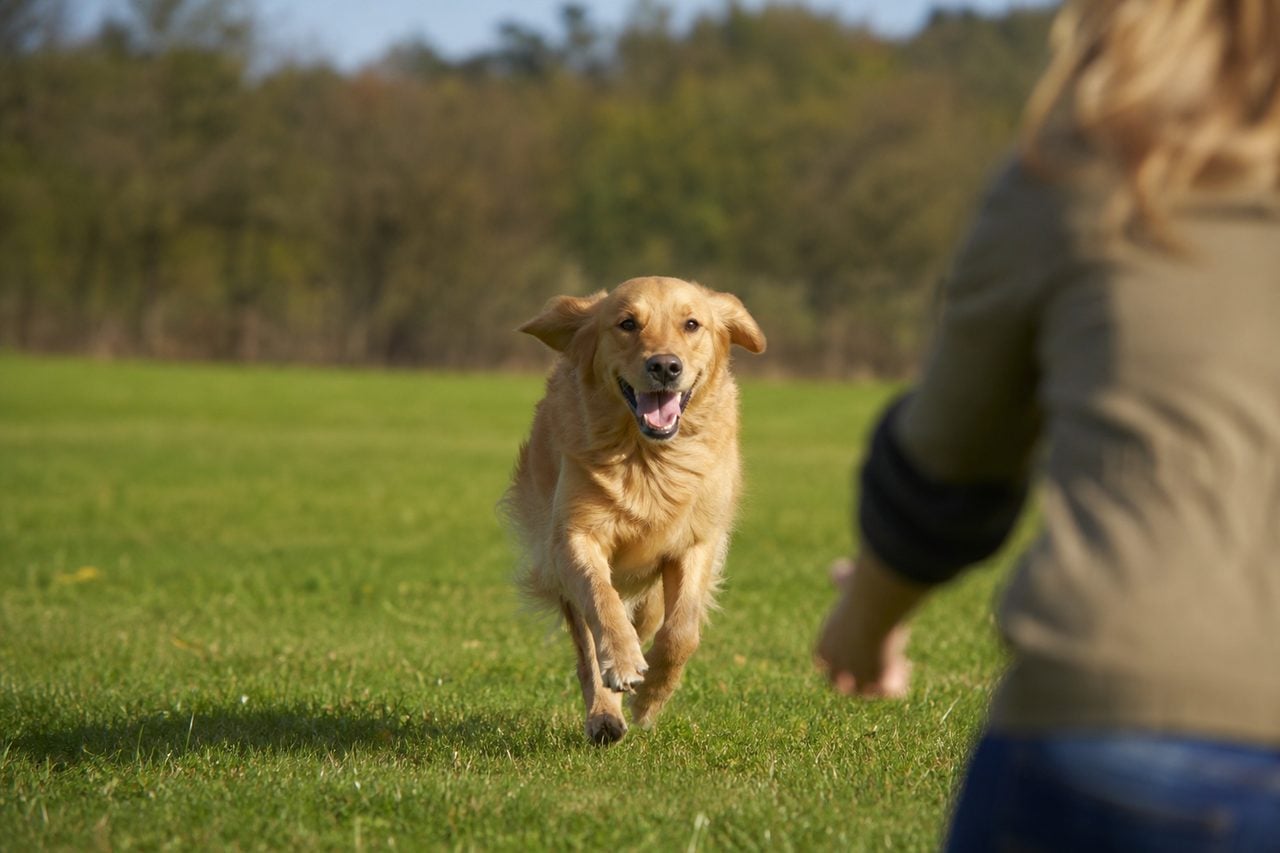
The dream of off-leash freedom — a dog that stays close, comes the instant it is called, and can enjoy a trail without a tether — is one many owners in the South Bend and Elkhart area share. Done properly, off-leash reliability is one of the most rewarding things you can build with a dog, and it rests on a foundation of trust, clear communication, and a truly bombproof recall. Done carelessly, it can put a dog in real danger near roads, wildlife, or other dogs.
This guide covers what reliable off-leash behavior actually requires, how to build recall from the ground up, and the honest truth about when e-collar training is and is not appropriate. It also covers where you can legally and safely practice around Michiana, and how to think about local leash rules — because Indiana does not have a single statewide leash law, and the rules that matter to you are set locally.
Off-leash reliability, and especially remote-collar work, is a specialized skill that benefits enormously from qualified in-person guidance. For the most specialized cases, some owners in the South Bend area travel to the larger Indianapolis market or arrange remote and telehealth consults to work with a specialist — more on that below.
What Reliable Off-Leash Really Means
Off-leash reliability is not simply a dog that ignores the leash; it is a dog that chooses to stay connected to you even when the environment offers competing temptations. The gold standard is a recall so strong that your dog will turn away from a squirrel, another dog, or an interesting smell to come back to you — every time, without hesitation. That level of reliability is earned over many months, not taught in a weekend.
A genuinely off-leash-ready dog typically demonstrates several skills:
- An automatic check-in habit, glancing back to locate you without being asked
- A recall that works under real-world distraction, not just in the backyard
- The ability to stop or wait on cue, which can prevent a dog from crossing a road or approaching a hazard
- Calm, non-reactive behavior around other dogs, people, and wildlife
Honesty matters here. Not every dog is a good candidate for off-leash freedom, and no dog is reliable in every environment. A dog with a strong prey drive near a road, or one that becomes reactive around other dogs, may never be safe off leash in certain places regardless of training. Recognizing your individual dog’s limits is part of responsible ownership, and there is no shame in deciding that a long line is the right permanent tool for a particular dog or a particular location.
Foundation First: Building a Rock-Solid Recall
Everything about safe off-leash work is built on recall, and recall is built long before the leash ever comes off. Rushing this stage is the single biggest mistake owners make. A recall that only works when there are no distractions is not a recall you can trust with your dog’s life near a road.
A strong recall is developed in careful stages:
- Start indoors and in the yard with zero distractions. Make coming to you the best thing in the world, using enthusiastic praise and high-value food every single time. Never call your dog to do something it dislikes, or the cue becomes poisoned.
- Add gradual distraction only once the basics are solid, slowly increasing the difficulty of the environment while keeping success rates high.
- Use a long line — a fifteen to thirty foot lead — as the essential bridge between on-leash and true off-leash work. The long line gives your dog a feeling of freedom while guaranteeing you can prevent a failed recall from being rehearsed or from ending in danger.
- Proof the recall everywhere, practicing in many different locations and around the specific distractions your dog will actually face, from other dogs to wildlife scents on the trail.
The long line stage often lasts weeks or months, and that is exactly as it should be. Every successful recall on the long line deposits trust in the account you will eventually draw on when the line comes off. Owners who skip straight to off leash usually discover their recall was an illusion the first time a rabbit bolts across the path.
A few principles keep the foundation strong throughout. Make the recall word mean something unmistakably good every time it is used, and protect it by never repeating it endlessly into thin air — a cue the dog learns it can ignore is worse than no cue at all. If your dog does not respond, that is information that the environment was too hard or the foundation is not yet solid at that level, not a reason to nag or scold. Vary your rewards so coming back stays genuinely exciting: sometimes a jackpot of several treats, sometimes a favorite toy, sometimes the chance to go right back to sniffing. And practice recalls when nothing is wrong, calling your dog for a treat and then releasing it to play again, so the word never becomes a reliable predictor that the fun is ending. A recall that only ever means the leash is going back on is a recall the dog will eventually learn to dodge.
When E-Collar Work Is and Is Not Appropriate
Electronic collars, also called remote or e-collars, are among the most debated tools in dog training. Handled by a knowledgeable professional as part of a well-built program, some trainers use low-level e-collar work to add reliability to an already-trained recall at distance. Handled poorly, the same tool can cause fear, confusion, and lasting harm. The tool is far less important than the skill and ethics of the hand using it.
The single most important principle is foundation first. An e-collar is never a shortcut to skip recall training. The dog must already understand and reliably perform the recall on a long line before any remote-collar work is considered. The collar is used to reinforce a behavior the dog already knows, not to teach it through discomfort. Skipping the foundation and using the collar to punish a confused dog is where most harm happens.
Just as important is knowing when an e-collar is not appropriate at all:
- Not for fearful or anxious dogs, where added pressure deepens the fear.
- Not for aggressive or reactive dogs, where the tool can suppress warning signs, add stress, and make the behavior more dangerous rather than safer. These dogs need behavior modification, not remote correction.
- Not as a substitute for training, management, or supervision.
- Not without professional guidance. Proper conditioning, correct level-finding for the individual dog, and precise timing are technical skills. This is not a tool to buy online and figure out alone.
If you are considering e-collar work, do so only with a qualified professional who conditions the collar humanely, uses the lowest effective level, and treats it as one part of a positive, foundation-first program — never as the whole plan.
Local Ordinances, Not a Statewide Law
Before practicing off leash anywhere in the South Bend area, it is essential to understand the legal picture — and to get it right. Indiana does not have a single statewide leash law that applies everywhere. Instead, the rules that govern where and whether a dog can be off leash are set by local ordinances across the South Bend area, meaning they vary from one city, town, and county to the next, and from one park or property to another.
What this means in practice:
- Cities and towns like South Bend, Mishawaka, Elkhart, Goshen, and the surrounding communities each set their own animal-control and leash ordinances, and county rules may differ again in unincorporated areas.
- Individual parks, trails, and nature preserves — whether run by a city, a county park system, or another authority — often have their own posted rules, and many popular spots require dogs to be leashed at all times.
- Rules can change, so the responsible step is to check the current ordinance for the specific municipality and the posted rules for the specific property before letting your dog off leash.
The practical takeaway is simple: do not assume off-leash is allowed anywhere just because it is not obviously prohibited. Look up the local ordinance and read the posted signage. Beyond legality, keeping your dog leashed where required protects wildlife, other trail users, and dogs that are not comfortable being approached — and it keeps off-leash owners in good standing so access is not restricted further.
Practicing Recall on Quiet Local Trails
Once your recall is genuinely solid on a long line and you have confirmed the local rules for your chosen spot, the Michiana area offers some pleasant places to practice at increasing levels of difficulty. The key is to progress gradually, starting in the quietest environments and only adding distraction as your dog proves ready.
Approaches that work well include:
- Begin in low-traffic, low-distraction settings at off-peak times — early mornings and weekdays — when trails and parks are quiet. Open areas within places like Rum Village Nature Center in South Bend or Ox Bow County Park in Elkhart give you room to work at a distance from other trail users.
- Use the long line on the trail for as long as needed. A dragging long line along a quiet stretch of the Pumpkinvine Nature Trail near Goshen or the East Bank Trail lets you practice real-world recall while keeping a safety net if a distraction appears.
- Practice around graduated distractions — the sounds and smells of nature, the occasional distant person, then eventually another dog at a distance — always keeping success rates high.
- Choose your times and places to succeed. Wildlife-heavy areas near the river can be too much for a dog still building reliability; save those for later stages.
Even when your dog is doing beautifully, keep a long line handy in any environment where a failed recall could mean crossing a road or reaching wildlife. The trail is where you prove the recall you built at home, not where you first attempt it.
Timing and awareness on the trail matter as much as the training itself. Read the environment constantly — a jogger cresting a hill, another dog rounding a bend, a cyclist on a shared path near the river — and call your dog back before it commits its attention to the distraction rather than after. Recalling a dog that has already locked onto a squirrel is asking far more than recalling one that has just noticed it, so the earlier you act, the more reliably your dog succeeds and the more that success reinforces the habit. Be considerate of other trail users, too: not everyone is comfortable with a loose dog approaching, some dogs on leash are reactive or in training themselves, and leashing up as you pass others is both courteous and a mark of a well-managed dog. Building this situational awareness into every outing is part of what makes off-leash freedom sustainable rather than a source of conflict.
When to Seek Specialized Help
Building basic recall and general off-leash manners is well within reach for many committed owners working with a good local trainer. But some situations call for more specialized expertise — particularly high-drive dogs, dogs with a history of bolting, cases where e-collar conditioning is being considered, or dogs that mix strong prey drive with proximity to roads and wildlife. These cases reward precise, experienced hands.
Off-leash reliability and remote-collar work are areas where the South Bend area has comparatively fewer dedicated specialists than a large metro. For the most specialized cases, some owners travel to the larger Indianapolis market to work with trainers who focus heavily on off-leash and recall programs, or arrange remote and telehealth consultations that let a specialist coach them through a structured plan from a distance. South Bend sits roughly two and a half hours north of Indianapolis, so an in-person trip is a real commitment — often worth it for a complex case, but worth weighing against a remote option.
If you pursue specialized help, apply the same standards you would locally: look for humane, foundation-first methods, transparency about tools and technique, realistic expectations, and a willingness to teach you the mechanics so the results last. Whether you work with a nearby trainer or a specialist further afield, the goal is the same — a dog that enjoys freedom safely, and an owner who understands exactly how that freedom was earned and how to maintain it.
Realistic Expectations and Ongoing Maintenance
Off-leash reliability is not a finish line you cross once; it is a skill that needs maintaining over the life of the dog. Even a beautifully trained dog can have its recall erode if it is never practiced, or if it is repeatedly allowed to ignore the cue without consequence. Building the habit of ongoing reinforcement keeps freedom safe for years.
Keep these realistic principles in mind:
- No dog is one hundred percent reliable in every situation. Wildlife, a dog in heat, a sudden scare, or an especially exciting distraction can override even good training. Plan for that reality rather than being surprised by it.
- Keep rewarding recalls throughout your dog’s life, at least intermittently, so coming to you always remains worthwhile. A recall you stop paying will slowly stop working.
- Match the freedom to the environment. A quiet, enclosed field is very different from a trail near a road. Reserve off-leash for places and moments where a lapse would not be catastrophic, and use a long line elsewhere.
- Know your individual dog. Age, breed tendencies, prey drive, and temperament all shape what is realistic. Adjusting your expectations to the dog in front of you is not failure — it is good ownership.
Approached with patience, honesty, and a foundation-first mindset, off-leash freedom becomes one of the great joys of life with a dog in the South Bend area. Rushed or forced, it becomes a risk. The difference is almost always the quality of the recall you built and the humility to respect your dog’s limits.
Off-Leash Dog Training in South Bend: Local Options & Nearest Specialists
Right now there are no listed South Bend trainers focused specifically on off-leash dog training. Many general South Bend dog trainers can help you get started, and the nearest specialists for this focus are below.
Nearest off-leash dog training specialists — Indianapolis
For complex cases, some families travel to the larger pool of specialists in the Indianapolis area for an assessment or a board-and-train stay. Top-reviewed options:
- Off-Leash K9 Training Indianapolis — 5.0★ (454 reviews)
- Canine Retreat — 4.9★ (10 reviews)
See all Indianapolis off-leash dog training trainers →
Frequently Asked Questions
Is it legal to have my dog off leash in South Bend parks?
It depends entirely on the specific location. Indiana does not have a single statewide leash law; instead, local ordinances across the South Bend area set the rules, and they vary by city, town, and county. On top of that, individual parks, trails, and preserves often have their own posted rules, and many require dogs to be leashed at all times. Before letting your dog off leash anywhere, check the current ordinance for that municipality and read the posted signage at the specific park or trail. Do not assume off-leash is allowed just because it is not obviously banned.
Do I need an e-collar to train a reliable recall?
No. Many dogs develop excellent, reliable recalls through positive, foundation-first training and long-line work without any e-collar at all. Where an e-collar is used, it should only ever reinforce a recall the dog already knows well, under the guidance of a qualified professional who conditions it humanely and uses the lowest effective level. It is never a shortcut to skip the foundation. If you are considering one, treat it as a technical tool that requires professional coaching, not something to buy and figure out on your own.
When is an e-collar not appropriate?
An e-collar is not appropriate for fearful or anxious dogs, where added pressure deepens fear, and it is not appropriate for aggressive or reactive dogs, where it can suppress warning signals and make the behavior more dangerous rather than safer — those dogs need behavior modification instead. It is also never a substitute for foundation training, management, or supervision, and it should not be used without professional guidance. If a dog has not first learned recall reliably on a long line, remote-collar work is premature and can cause real harm.
How long does it take to train a dog to be off leash?
Reliable off-leash behavior is typically built over many months, not weeks. Recall is developed in stages — starting indoors with no distractions, adding gradual difficulty, then spending an extended period on a long line before the line ever comes off. That long-line stage alone often lasts weeks or months, and rushing it is the most common reason off-leash freedom fails. The exact timeline depends on the individual dog, its drive and temperament, and how consistently you practice. Patience during the foundation stage pays off in a recall you can actually trust.
What is a long line and why is it important?
A long line is a light, non-retractable lead, usually fifteen to thirty feet, that serves as the bridge between on-leash and true off-leash work. It lets your dog experience real freedom — moving away, exploring, sniffing — while guaranteeing you can prevent a failed recall from being rehearsed or from ending in danger near a road or wildlife. Every successful recall on the long line builds the trust you will eventually rely on when it comes off. It is one of the most valuable tools in off-leash training and is worth using well beyond the point where you think you no longer need it.
Where can I get specialized off-leash help near South Bend?
Basic recall and off-leash manners are well within reach with a good local trainer. For the most specialized cases — high-drive dogs, serious bolting, or e-collar conditioning — the South Bend area has comparatively fewer dedicated specialists, so some owners travel to the larger Indianapolis market, roughly two and a half hours south, to work with trainers who focus on off-leash and recall programs, or arrange remote and telehealth consultations that let a specialist coach them through a plan from a distance. Whichever route you choose, hold to humane, foundation-first methods and realistic expectations.
Related: read our complete off-leash dog training guide or the full South Bend dog training overview.
Ready to find the right off-leash dog training pro in South Bend?