
Off-Leash Dog Training in Valparaiso, IN
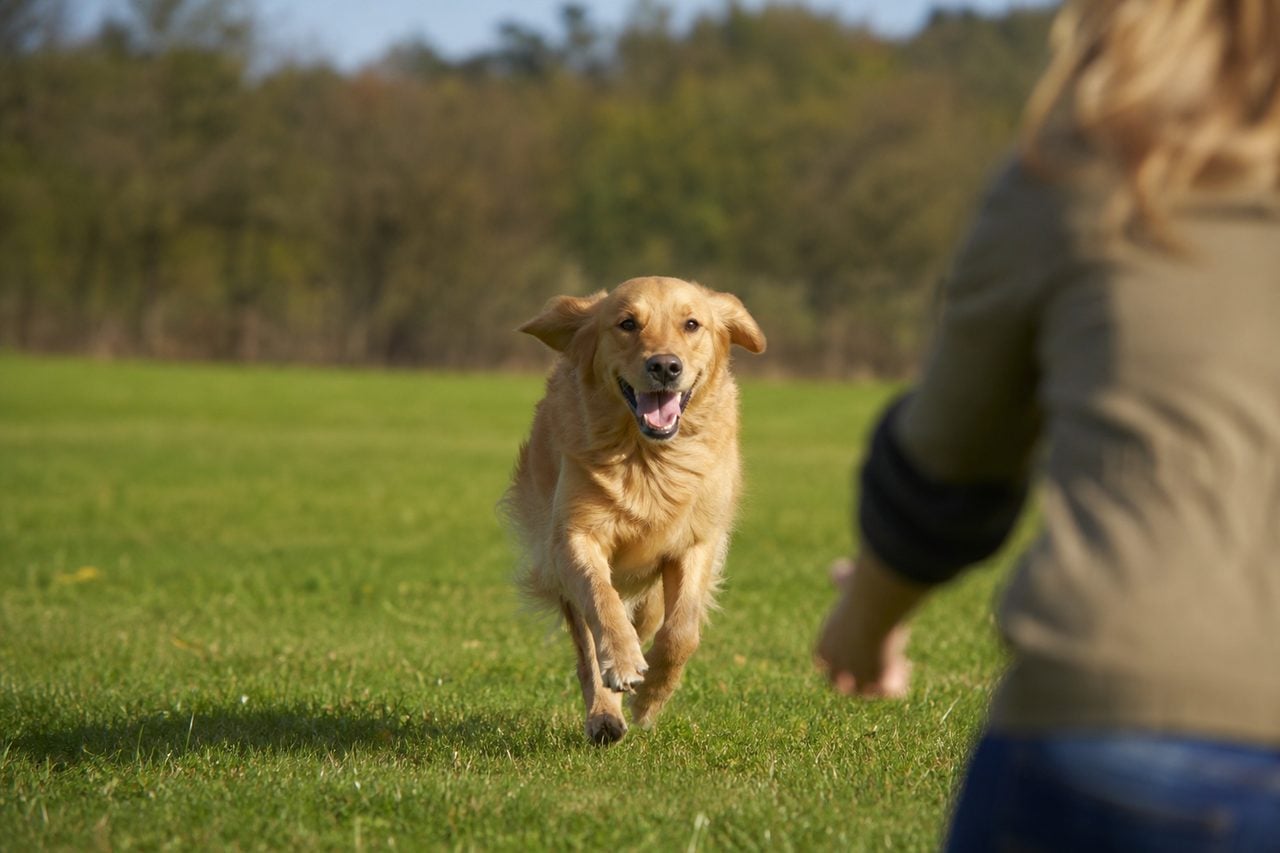
Few things feel as rewarding as watching a well-trained dog roam a trail, explore a field, and return the instant you call — calm, connected, and reliable no matter what distractions appear. Off-leash freedom is a genuine quality-of-life upgrade for the right dog, and for owners across Valparaiso and the wider Region it opens up the open spaces of Northwest Indiana in a whole new way. But true off-leash reliability is earned, not assumed. It rests on a rock-solid recall and a great deal of foundation work, and it is not appropriate for every dog or every situation.
- What Reliable Off-Leash Behavior Really Means
- Foundation First: Building a Rock-Solid Recall
- When E-Collar Work Is and Is Not Appropriate
- How Proper E-Collar Introduction Works Under Guidance
- Practicing Off-Leash Skills on the Region's Quiet Trails
- Local Leash Rules: Ordinances, Not a State Statute
- Finding an Off-Leash or E-Collar Specialist in the Region
- Reviewed trainers
- FAQ
Off-leash training is also the area where owners most often ask about e-collars, or electronic collars. Used correctly, under professional guidance, and only after a strong foundation is in place, remote-collar training can be a tool some trainers use to build reliable recall. Used incorrectly, or on the wrong dog, it can cause fear, confusion, and lasting harm. Responsible off-leash training is foundation-first, and the tool — if one is used at all — comes last.
This guide covers what reliable off-leash behavior actually requires, how to build recall from the ground up, when e-collar work is and is not appropriate, and how to practice safely on the Region’s quieter trails. It also addresses local leash rules honestly: Indiana has no statewide leash law, so what governs off-leash access is a patchwork of local ordinances across the Valparaiso area, not a single state statute. The Region has several off-leash and e-collar specialists who can guide the process, and the sections below explain how to work with them wisely.
What Reliable Off-Leash Behavior Really Means
Off-leash reliability is not a single trick; it is a whole set of behaviors and a relationship. A dog that is genuinely ready to be off-leash can do several things consistently, even when something interesting is happening: it stays reasonably close and checks in with you on its own, it stops and turns back when called from a distance, it disengages from distractions like wildlife or other dogs when asked, and it settles rather than bolting when startled. Recall — coming when called — is the centerpiece, but it sits on top of a broader foundation of attention and impulse control.
It is important to be realistic about candidacy. Some dogs, because of strong prey drive, deep fearfulness, dog- or human-reactivity, or a history of bolting, may never be safe fully off-leash in unfenced areas, and that is a responsible conclusion rather than a failure. For those dogs, a long training line offers much of the freedom of off-leash exercise while keeping a safety net. Age and maturity matter too; adolescent dogs in particular often need more time before they are trustworthy without a leash.
The other reality is that off-leash reliability is context-dependent. A dog that recalls beautifully in a quiet field may fail completely near a running deer or a group of playing dogs, because distractions dramatically raise the difficulty. This is why good training deliberately builds reliability across increasing levels of distraction, and why the process cannot be rushed. Proofing a recall so it holds up in the real world is the bulk of the work.
Foundation First: Building a Rock-Solid Recall
Everything in off-leash training starts with recall, and recall is built long before any dog is trusted off a leash. The goal is to make coming when called the most rewarding thing your dog can do — so reliable that it becomes almost automatic. That reputation is built through hundreds of positive repetitions, starting easy and gradually getting harder.
A sound recall-building progression generally looks like this:
- Charge the cue. Pick a distinct recall word and pair it with something exceptional — high-value food or an enthusiastic game. In a quiet, distraction-free room, say the word and immediately reward, so the word itself begins to predict wonderful things.
- Add short distance. Call your dog from a few feet away and reward generously every single time. Never call your dog to do something it dislikes, or the cue will weaken.
- Build distance and duration. Gradually call from farther away and in slightly more interesting environments, always keeping success high.
- Move to a long line. Before ever going fully off-leash, practice on a long training line (fifteen to thirty feet) in more distracting outdoor settings. The line lets you prevent failures — you can gently guide the dog back if it ignores the cue — while giving it freedom to explore.
- Proof against distractions. Systematically practice recall around other dogs, wildlife scents, joggers, and other real-world temptations, at whatever distance the dog can still succeed, gradually raising the difficulty.
Two habits protect a recall for life: always make coming back worthwhile (even occasionally with a jackpot of several treats), and never punish a dog that comes to you, even if it took its time — punishing a slow return teaches the dog that coming back is risky. The long line is the unsung hero of this process, because it lets a dog practice freedom and recall together without the risk of a failed, self-rewarding escape into the woods.
When E-Collar Work Is and Is Not Appropriate
Electronic or remote collars are a subject of genuine debate, and it is worth being clear-eyed about them. When used skillfully by an experienced professional, at low levels, as a communication tool layered on top of a fully trained recall, some trainers use e-collars to add reliability at a distance — particularly for high-drive dogs in wide-open environments. When used carelessly, at high levels, as a shortcut, or on the wrong dog, they can cause fear, anxiety, and lasting behavioral damage.
The foundation-first principle is non-negotiable. An e-collar is never a substitute for teaching the recall in the first place. A dog must already understand and reliably perform the behavior on a long line before any collar work begins; the tool is used to reinforce a known cue, not to teach it through pressure. Skipping the foundation and using the collar to force a behavior the dog does not understand is where most harm happens.
Just as important is knowing which dogs are not good candidates. E-collar work is generally not appropriate for fearful, anxious, or aggressive dogs, because adding aversive pressure can intensify fear and, in the case of aggression, escalate the behavior or create dangerous associations. It is also not appropriate for puppies or for owners who want a quick fix without the underlying training. For these dogs and situations, positive-reinforcement recall on a long line is the safer and more suitable path.
The most responsible framing is this: an e-collar is an advanced tool, not a starting point. If it is used at all, it should be introduced only after the foundation is solid, only under experienced professional guidance, only at the lowest effective level, and only on a suitable dog. Many dogs achieve excellent off-leash reliability without one, and there is no shame — and often more safety — in choosing a purely reward-based, long-line route.
How Proper E-Collar Introduction Works Under Guidance
Because e-collar work carries real risk when done wrong, it should be learned hands-on from a qualified professional rather than from a video or a manual. Still, understanding the outline of a responsible introduction helps owners recognize good practice and ask the right questions.
A careful introduction shares several features. The collar is properly fitted so contact points sit correctly without being too tight, and it is not left on for excessive periods. The trainer first finds the dog’s working level — the lowest level at which the dog shows a subtle recognition, such as an ear flick or a slight head turn, far below anything that causes yelping or distress. Modern remote collars have very fine gradations at the low end precisely so they can be used at this barely-perceptible level. Effective work happens at that low level; escalating to high levels is a sign the approach has gone wrong.
From there, the collar is layered onto behaviors the dog already knows on the long line, so the dog can easily understand what turns off the mild sensation — typically by performing the familiar recall. The emphasis is on clarity and consistency, keeping the dog confident and never confused or frightened. Throughout, generous rewards remain part of the picture; the collar supplements a positive foundation rather than replacing it.
Warning signs that e-collar work is being done badly include a dog that becomes shut down, fearful, or hesitant; use of high levels or as punishment for reactivity or aggression; a trainer who skips the long-line foundation; or the collar being sold as a fast fix. Any of these should prompt you to stop and reassess. The right professional will be transparent about their methods, show you exactly how to find and use a low working level, and be honest about whether your particular dog is a good candidate at all.
Practicing Off-Leash Skills on the Region's Quiet Trails
Real-world practice in safe, low-distraction settings is how off-leash skills mature. Northwest Indiana offers a wealth of open space for this, but the key is to match the environment to your dog’s current level — and to respect that off-leash access depends on local rules, covered in the next section. Until a dog is fully proofed and legally permitted to be off-leash, a long line lets you practice in these spaces safely.
Quiet, open areas at off-peak hours are ideal for building recall against gentle, natural distractions. Long, straight trails such as the Prairie Duneland Trail and the Erie Lackawanna Trail give you clear sightlines to see approaching people or dogs well in advance. County parks and preserves like Deep River County Park in Hobart, Sunset Hill Farm County Park in Valparaiso, and the Coffee Creek Watershed Preserve in Chesterton provide wide, open ground for long-line work. The Indiana Dunes area along the lakeshore offers striking natural space as well, though popular natural areas often have specific rules about leashes and pets that you must check and follow.
A few guidelines make trail practice productive and responsible:
- Start where it is quiet. Early mornings and weekdays generally mean fewer distractions, so your dog can succeed.
- Use a long line until proven. Do not remove the safety net before your dog has demonstrated reliable recall around the level of distraction present.
- Build difficulty gradually. Add distractions one step at a time; a dog that recalls in an empty field is not yet ready for a busy trailhead.
- Respect wildlife and other users. The Region’s natural areas host wildlife and plenty of people; keeping your dog under control protects everyone and preserves access for all dog owners.
Weather and season are worth factoring in as well. Northwest Indiana summers can be hot, so early-morning sessions protect your dog from heat and tend to be quieter anyway, while the lakeshore near the dunes can be windy in ways that carry scents and sounds farther than you expect. Adjusting your distances and expectations to the conditions of the day — and cutting a session short when the environment is working against you — keeps every outing a net positive for your dog’s training.
Local Leash Rules: Ordinances, Not a State Statute
Owners are often surprised to learn that Indiana has no statewide leash law. There is no single state statute that says dogs must be leashed everywhere. Instead, whether and where a dog may be off-leash is governed by local ordinances across the Valparaiso area — rules set by individual cities, towns, counties, and the specific parks or preserves you visit. This is an important distinction, because it means the rules can differ from one municipality or park to the next within Porter, Lake, and LaPorte counties.
What this means in practice is that the responsibility falls on you to know the rules for the specific place you are in. Many municipalities have leash requirements within town limits, and most parks and preserves post their own pet policies, which frequently require dogs to be leashed and always require owners to clean up after them. Some areas may permit off-leash activity in designated spots or under specific conditions; others prohibit it entirely. There are also common-sense legal realities regardless of leash rules — owners are responsible for their dog’s behavior, and a dog that runs loose and causes harm can create serious liability.
The responsible approach is straightforward: before letting your dog off-leash anywhere, confirm that it is permitted at that specific location, follow any posted signs, and default to a long line or leash when you are unsure. Designated off-leash dog parks are the one setting explicitly created for legal off-leash play, and they can be excellent for exercise, though they are a different environment from the calm, controlled practice that recall training requires. When in doubt about a particular trail, park, or town, check the local ordinance or the managing agency’s posted rules rather than assuming.
Finding an Off-Leash or E-Collar Specialist in the Region
Off-leash reliability, and especially any e-collar work, benefits enormously from professional guidance. The Region has several trainers who specialize in reliable recall and off-leash training, including those experienced with remote-collar work. Because the stakes and the tools involved carry real risk, choosing the right professional matters.
When evaluating a specialist, ask how they build recall from the foundation up, how they use a long line, and — if e-collars are part of their toolkit — how they introduce the collar, how they find a low working level, and how they decide whether a given dog is a suitable candidate. A trustworthy professional will emphasize foundation-first training, will be honest that not every dog should be off-leash or on an e-collar, and will refuse to use aversive tools on fearful or aggressive dogs. They should be transparent about their methods and willing to explain the reasoning behind each step.
Be cautious of anyone who promises instant off-leash reliability, who reaches for an e-collar before teaching the behavior, who works at high levels, or who dismisses the risks for reactive or anxious dogs. Fast fixes in off-leash training tend to come at the cost of the dog’s confidence and, ultimately, its reliability. Good off-leash training takes time because it is building genuine understanding and trust.
Whether you pursue a purely reward-based, long-line path or work with a professional who uses a remote collar responsibly, the destination is the same: a dog that is safe, happy, and reliable off-leash in the places where it is permitted, able to enjoy the open spaces of Northwest Indiana with you. That freedom is worth building carefully — foundation first, tool last, and always with the individual dog’s temperament and safety in mind.
Reviewed Off-Leash Dog Training Trainers in Valparaiso
These reviewed Valparaiso-area trainers from our directory handle off-leash dog training. Each links to a full profile with specialties, certified credentials, reviews, and contact info:
- Crimson K9 Dog Training — 5.0★ (22 reviews)
- Kriegerhund K9 Services — 5.0★ (5 reviews)
- Lakefront K9 — 4.9★ (16 reviews)
- Landheim Training And Boarding Center — 4.8★ (353 reviews)
- Foundation K9 NWI — 4.8★ (69 reviews)
See all Valparaiso off-leash dog training trainers →
Frequently Asked Questions
Does Indiana have a statewide leash law?
No. Indiana has no single statewide leash statute. Whether and where a dog may be off-leash is governed by local ordinances across the Valparaiso area — rules set by individual cities, towns, counties, and the specific parks or preserves you visit. Because these rules differ from place to place within Porter, Lake, and LaPorte counties, the responsibility is on you to check the posted policy or local ordinance for wherever you are before letting your dog off-leash.
Is an e-collar necessary for off-leash training?
No. Many dogs achieve excellent off-leash reliability through positive-reinforcement recall built on a long line, with no e-collar at all. When used, a remote collar is an advanced tool that some trainers layer on top of an already-trained recall, only after a solid foundation, only under experienced guidance, only at low levels, and only on suitable dogs. It is never a substitute for teaching the recall in the first place, and there is often more safety in a purely reward-based route.
Which dogs should not do e-collar training?
E-collar work is generally not appropriate for fearful, anxious, or aggressive dogs, because adding aversive pressure can intensify fear or escalate aggression and create dangerous associations. It is also unsuitable for puppies and for owners seeking a quick fix without the underlying training. For these dogs, positive-reinforcement recall on a long line is the safer and more appropriate path. A responsible professional will decline to put an e-collar on a dog that is not a good candidate.
What is a long line and why does it matter so much?
A long line is a training leash, often fifteen to thirty feet, that lets a dog explore and practice recall at distance while you keep a safety net. It is the bridge between on-leash and off-leash: it lets a dog experience freedom and practice coming when called without the risk of a failed, self-rewarding escape. Using a long line until a dog has proven reliable around the relevant level of distraction is one of the most important habits in off-leash training.
Where can I practice off-leash skills around Valparaiso?
Use open, low-distraction spaces at off-peak hours, and keep your dog on a long line until it is fully proofed and off-leash is permitted there. Long trails like the Prairie Duneland Trail and Erie Lackawanna Trail offer clear sightlines, and county parks and preserves such as Deep River County Park in Hobart, Sunset Hill Farm in Valparaiso, and the Coffee Creek Watershed Preserve in Chesterton provide wide ground. Always check and follow the posted pet rules for each location, including in the Indiana Dunes area.
How long does it take to build a reliable off-leash recall?
There is no fixed timeline; it depends on the dog’s temperament, drive, age, and how consistently you train and proof the recall. Reliability is built through many repetitions, starting easy and gradually adding distraction, usually over months rather than weeks. Adolescent and high-prey-drive dogs typically need more time. The process cannot be rushed, because genuine off-leash reliability comes from proofing the recall against real-world distractions one careful step at a time.
Related: read our complete off-leash dog training guide or the full Valparaiso dog training overview.
Ready to find the right off-leash dog training pro in Valparaiso?