
Puppy Socialization in Bloomington, IN
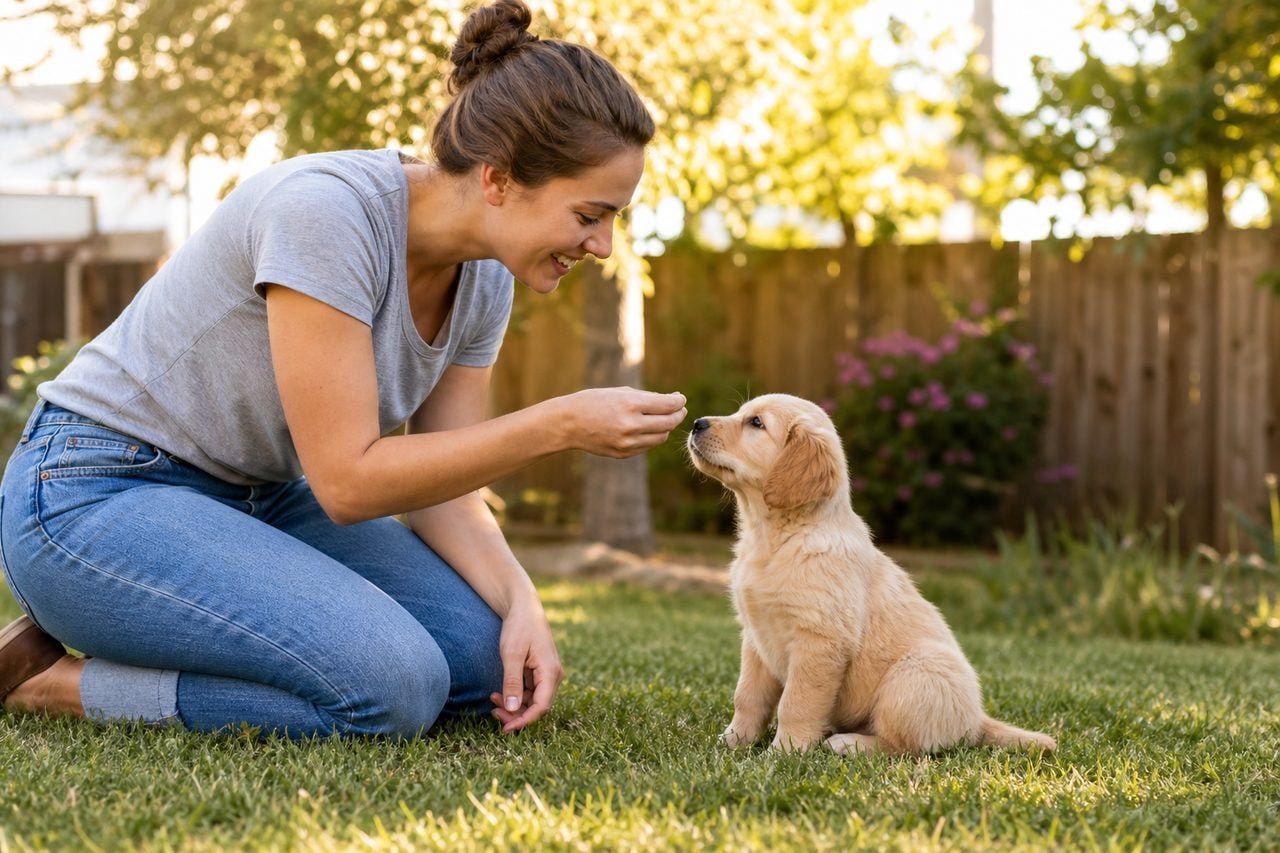
Socialization is the single most consequential thing an owner can do for a young dog, and it is widely misunderstood. It is not about letting a puppy play with every dog it meets or being handled by every passerby. Proper socialization means giving a puppy positive, controlled exposure to the variety of people, animals, environments, sounds, and surfaces it will encounter in life — building an adult dog that meets the world with confidence rather than fear. In the Bloomington area, that world is unusually varied, from the bustle of the Indiana University campus to the quiet forests of Monroe and Brown counties.
The window for this work is narrow. A puppy is most receptive to new experiences before about sixteen weeks of age, and the associations formed in that period tend to last. This guide explains what socialization really involves, how to do it safely before a puppy is fully vaccinated, which local settings serve the goal well, and how to keep exposure positive so it builds confidence instead of fear. The emphasis throughout is on quality over quantity — a handful of good experiences beats a flood of overwhelming ones.
What Socialization Actually Means
Many owners equate socialization with dog-to-dog play, but that is only a sliver of it. A well-socialized dog is comfortable with a broad range of experiences: people of different ages, sizes, and appearances; other animals; varied surfaces underfoot; loud and sudden noises; being handled and restrained; car rides; and novel environments. The aim is a dog that encounters something unfamiliar and stays curious or neutral rather than fearful or reactive.
The mechanism is association. When a puppy meets something new and the experience is paired with calm and good things — treats, praise, a relaxed handler — it learns that novelty is safe. When a new experience is frightening or overwhelming, the puppy can form a lasting negative association that is far harder to undo later. This is why the quality of each exposure matters so much more than the number.
Crucially, socialization is not flooding. Dragging a nervous puppy into the middle of a crowded festival to force it to cope does the opposite of what is intended. Good socialization keeps the puppy under its threshold — close enough to notice something new, far enough that it stays relaxed — and lets the puppy set the pace. A puppy that chooses to approach and investigate is learning confidence; one that is trapped and overwhelmed is learning fear.
It is worth naming a common misconception directly: a puppy that seems bold and unbothered by everything still needs careful socialization, and a puppy that seems timid needs it handled gently rather than skipped. Owners of confident puppies sometimes assume the work is unnecessary and stop arranging exposures, only to find the dog develops fears in adolescence when its temperament shifts. Owners of shy puppies sometimes avoid new situations to spare the puppy stress, which allows the fearfulness to harden. Both outcomes come from misreading the goal. Socialization is not a personality test the puppy passes or fails — it is a deliberate program of positive experiences that every puppy benefits from, tailored to how much and how fast the individual dog can comfortably take in.
Safe Socialization Before Full Vaccination
The central tension of puppy socialization is timing. The most important socialization window closes around sixteen weeks, but puppies are not fully protected by vaccines until roughly the same age. Many owners resolve this by simply waiting, and in doing so they miss the very window that matters most. The better approach is to socialize safely rather than not at all.
Safe early socialization means controlling the environment to manage disease risk while still exposing the puppy to the world. Practical tactics include:
- Carry the puppy in public. A young puppy watching downtown Bloomington from a carrier or your arms — the buses, bikes, and foot traffic near campus — gets rich exposure without touching contaminated ground.
- Invite the world home. Have visitors of different ages and appearances come to the puppy’s own yard or living room, where the ground is clean and the setting is calm.
- Arrange playdates with known-healthy dogs. A friend’s vaccinated, friendly adult dog in a private yard is a safe and valuable teacher.
- Use surfaces and sounds at home. Introduce grass, gravel, metal grates, and stairs, and play recordings of thunder, traffic, and fireworks at low volume paired with treats.
This approach lets an owner accomplish the bulk of socialization’s goals — people, sounds, surfaces, handling, and calm dog contact — before the puppy ever sets paw in a high-traffic public dog area. Consult your veterinarian about the specific timing for your puppy, but do not let vaccination caution become an excuse to skip the window entirely.
People, Handling, and the Campus Advantage
Exposure to a wide variety of people is one of the highest-value forms of socialization, and Bloomington’s character makes it easier than in many towns. A dog raised near campus naturally encounters people of many ages and backgrounds, students carrying backpacks, delivery workers, cyclists, and the shifting crowds of a university town. Households further out in Ellettsville, Bedford, or the Greene County towns of Bloomfield and Linton can recreate this deliberately with trips into town and a stream of visitors.
The goal is for the puppy to meet people who wear hats, use umbrellas, push strollers, ride bikes, use wheelchairs or canes, and have beards or deep voices — the ordinary human variety that an unsocialized dog may later find alarming. Each encounter should be low-pressure: let the puppy choose whether to approach, and reward calm curiosity. People should not loom over or grab at the puppy; a treat tossed on the ground often builds more trust than a reaching hand.
Handling is a related and often neglected skill. A puppy that learns to accept having its ears, paws, mouth, and body gently touched — each paired with a reward — grows into a dog that tolerates veterinary exams, nail trims, and grooming without stress. This work costs nothing and pays off for the dog’s entire life. Practice it in short sessions during quiet evenings, gradually building the puppy’s comfort with the kind of contact it cannot avoid.
Children deserve particular attention in this process, in both directions. A puppy that grows up around calm, respectful children learns that small, unpredictable humans are safe and pleasant. At the same time, children must be taught how to interact with a puppy — no chasing, no grabbing, no disturbing it while it eats or sleeps — so that neither the puppy nor the child has a frightening experience. For households near campus that host frequent visitors, a simple rule helps: guests may offer the puppy a treat and let it approach, but should not corner it or pass it around. This keeps a steady stream of new faces firmly in the positive column, which is exactly where an owner wants every early human encounter to land.
Meeting Other Dogs and Animals the Right Way
Dog-to-dog socialization is valuable but easy to get wrong. The instinct to rush a puppy into a crowd of unknown dogs at a busy off-leash area can backfire badly — one bad encounter with a rough or reactive dog during a sensitive period can create lasting wariness. Quality and control matter far more than sheer exposure.
The ideal early dog contact is with known, healthy, well-mannered adult dogs in a calm setting. A friend’s stable dog teaches a puppy canine manners — how to read signals, when to back off, how play is negotiated — in a way that a chaotic group cannot. Puppy classes, once vaccination allows, offer supervised play with age-matched peers, which many puppies enjoy and learn from because a professional can intervene before things escalate.
Busy off-leash dog areas are best approached with caution and only once a puppy is confident and fully vaccinated. Even then, watching the group before entering and being ready to leave if the energy is too rough protects the puppy’s developing view of other dogs. Not every puppy needs or benefits from a dog park; a dog that is neutral and calm around other dogs on leash is often better socialized than one that is frantic to play with every dog it sees.
Rural households around Spencer, Solsberry, and the Lawrence County countryside near Mitchell and Heltonville often have livestock or wildlife nearby. Early, calm exposure to farm animals, and teaching a puppy to remain settled around them, prevents chasing behavior later and keeps the dog safe in a landscape where deer, raccoons, and the occasional farm animal are part of daily life.
Households with a resident cat or other pets have their own version of this work. First introductions should be gradual and controlled — a barrier between the animals, short sessions, and rewards for calm behavior on the puppy’s part — rather than a face-to-face free-for-all that teaches the puppy to chase and the cat to fear. A puppy that learns from the start to be relaxed and polite around a cat, rather than fixated on it, grows into a dog that shares a home peacefully. The same measured, reward-based approach that governs every other kind of socialization applies here: keep the puppy under threshold, let good associations build over days rather than minutes, and never force an interaction that either animal finds frightening.
Environments, Surfaces, and Sounds
A confident adult dog is one that has learned early that new places and sensations are nothing to fear. Environmental socialization — exposing a puppy to varied settings, surfaces, and sounds — is easy to overlook because it feels less obvious than meeting people or dogs, but it prevents a great deal of adult anxiety.
Surfaces matter more than owners expect. A puppy that only ever walks on carpet and grass may balk at metal grates, wet limestone, gravel, wooden boardwalks, or slick tile. Deliberately walking a puppy across different textures — the varied ground on the B-Line Trail, the stone and boardwalk stretches at Cascades Park, the natural surfaces at Griffy Lake or Leonard Springs once vaccination allows — builds a dog that moves through the world without hesitation.
Sound sensitivity is a common adult problem that early work can prevent. Southern Indiana delivers its share of thunderstorms rolling through in spring and summer, plus the fireworks that cluster around the Fourth of July and, in a college town, the noise of game days and celebrations. Playing recordings of these sounds at low volume during pleasant activities — mealtime, play — and gradually increasing the volume teaches a puppy that loud noises predict nothing bad. Pairing an actual distant thunderstorm with treats and calm handling reinforces the lesson.
New environments should be introduced gradually and kept positive. A short, upbeat visit to a quiet corner of a park, a dog-friendly patio downtown during an off-peak hour, or a calm stretch of trail teaches a puppy to take novelty in stride. Ending each outing before the puppy tires or grows anxious ensures it remembers the experience as a good one.
Seasonal Timing in Southern Indiana
The Bloomington calendar and climate shape how socialization unfolds, and planning around them helps. A puppy that arrives in different seasons faces different opportunities and obstacles, and thoughtful owners adjust accordingly.
A spring or early-summer puppy has the easiest path in some respects: long daylight, mild mornings and evenings, and abundant outdoor activity make it simple to arrange varied exposure. The tradeoff is the season’s thunderstorms and the approach of the Fourth of July, which make early, gentle sound work especially important. Summer heat and humidity, which peak in July and August, mean outings should happen in the cooler hours to keep a puppy comfortable and willing.
A fall puppy benefits from the return of students and the renewed activity of the academic year — more people, more movement, more of the ordinary bustle that builds confidence. The cooling weather is comfortable for outdoor work. A winter puppy faces the hardest environmental conditions: short days, cold, and snow can shrink the world just when it most needs to expand. These owners lean more heavily on carried outings, indoor visitor sessions, and controlled exposure at home, then make the most of milder winter days for brief trips into town.
Across all seasons, the principle holds: the socialization window does not pause for weather. An owner who cannot get outside as much in January simply shifts more of the work indoors — visitors, surfaces, sounds, and handling — rather than letting the window close unused.
The academic calendar adds its own rhythm worth using. The stretches when students return — late summer into fall, and again after the winter break — flood Bloomington with people, movement, and activity, which is a gift for a puppy that needs exposure to bustle. The quieter spells, such as the summer lull between terms and the breaks when much of the student population leaves, offer calmer conditions well suited to a more sensitive puppy that would find peak-semester crowds overwhelming. An owner who thinks about which phase of the year the puppy is entering can deliberately match the intensity of outings to the town’s natural ebb and flow, dialing exposure up during the busy weeks and focusing on gentler settings during the quiet ones.
Reading Your Puppy and Avoiding Overwhelm
The most important skill in socialization is reading the puppy in front of you. Every exposure should leave the puppy more confident, not more anxious, and the only way to ensure that is to watch its body language and respond to it. A puppy that is loose, wiggly, curious, and willing to take treats is comfortable. A puppy that is tucked, stiff, panting, yawning, licking its lips, trying to retreat, or refusing food it normally loves is over threshold and learning fear rather than confidence.
When a puppy shows stress signals, the correct response is to increase distance from whatever is worrying it, give it space, and let it recover — not to push it closer to force it to cope. There is no benefit to making a frightened puppy endure something overwhelming, and real harm in doing so. Backing off, ending on a calm note, and trying again another day at an easier level is how confidence is built.
It also helps to remember that puppies, like young children, tire quickly and need rest to consolidate what they learn. A short, positive outing followed by a nap does more good than a long, exhausting one. Two or three deliberate exposures a day, each brief and pleasant, add up to a thoroughly socialized dog over the course of the window.
Finally, socialization does not end at sixteen weeks. While the critical window is early, maintaining exposure through adolescence and into adulthood keeps a dog’s confidence intact. A dog that was well socialized as a puppy but then rarely leaves home can lose some of that ease. Ongoing gentle exposure — regular walks on the trails, calm outings in town, continued positive contact with people and dogs — keeps a Bloomington-area dog comfortable in its varied world for life.
Reviewed Puppy Socialization Trainers in Bloomington
These reviewed Bloomington-area trainers from our directory handle puppy socialization. Each links to a full profile with specialties, certified credentials, reviews, and contact info:
- Jolly Dogs — 5.0★ (45 reviews)
- 11:6 Canine — 5.0★ (14 reviews)
- Hoosier Pup — 5.0★ (7 reviews)
- Hoosier Pup LLC — 5.0★ (2 reviews)
- Bright Pet Behavior and Training — 5.0★ (1 review)
- Scout’s Honor — 4.9★ (248 reviews)
- Keller’s K-9s — 4.8★ (37 reviews)
- Mad 4 My Dog — 4.7★ (214 reviews)
- Conifer Canine — 4.4★ (19 reviews)
- Applied Canine Behaviors, LLC — 5.0★ (37 reviews)
See all Bloomington puppy socialization trainers →
Frequently Asked Questions
Can I socialize my puppy before it is fully vaccinated?
Yes, and you should — the socialization window closes around sixteen weeks, before vaccines are fully protective, so waiting means missing the most important period. Socialize safely by carrying the puppy in public places like downtown Bloomington, inviting healthy visitors and known-vaccinated dogs to your home, and introducing surfaces and sounds where the ground is clean. Discuss the specific timing with your veterinarian, but do not skip socialization entirely out of vaccination caution.
Is a dog park the best place to socialize my puppy?
Usually not for a young puppy. Busy off-leash areas can expose a puppy to rough or reactive dogs, and one bad encounter during a sensitive period can create lasting wariness. Controlled contact with known-healthy, well-mannered adult dogs and supervised puppy classes teaches better canine manners. Off-leash dog areas are best reserved for confident, fully vaccinated dogs, and even then only when the group looks calm.
How many new experiences should my puppy have each day?
Quality matters far more than quantity. Two or three brief, positive exposures a day — a new surface, a calm visitor, a low-volume sound session — followed by rest are more valuable than a long, exhausting outing. Each experience should leave the puppy more confident, so keep sessions short and end them before the puppy tires or shows stress.
What are the signs my puppy is overwhelmed during socialization?
Watch for a tucked posture, stiffness, heavy panting, yawning, lip-licking, trying to retreat, or refusing food it normally likes. These signal the puppy is over threshold and learning fear rather than confidence. The right response is to increase distance from whatever is worrying it, give it space to recover, and try again later at an easier level — never to force it closer.
How do I socialize a puppy in winter when it is cold and dark?
Shift more of the work indoors when outdoor conditions are hard. Invite a variety of visitors to your home, introduce different surfaces and low-volume recordings of thunder and fireworks, and practice handling during quiet evenings. Use milder winter days and the daylight hours for brief carried or on-leash trips into town. The socialization window does not pause for weather, so the goal is to keep exposure going in whatever form the season allows.
Does socialization stop being important after sixteen weeks?
The most critical window is early, but socialization should continue through adolescence and adulthood to keep a dog’s confidence intact. A dog that was well socialized as a puppy but then rarely leaves home can become less comfortable over time. Regular walks on the area’s trails, calm outings in town, and continued positive contact with people and other dogs keep a Bloomington-area dog at ease in its world for life.
Related: read our complete puppy socialization guide or the full Bloomington dog training overview.
Ready to find the right puppy socialization pro in Bloomington?