
Puppy Socialization in Evansville, IN
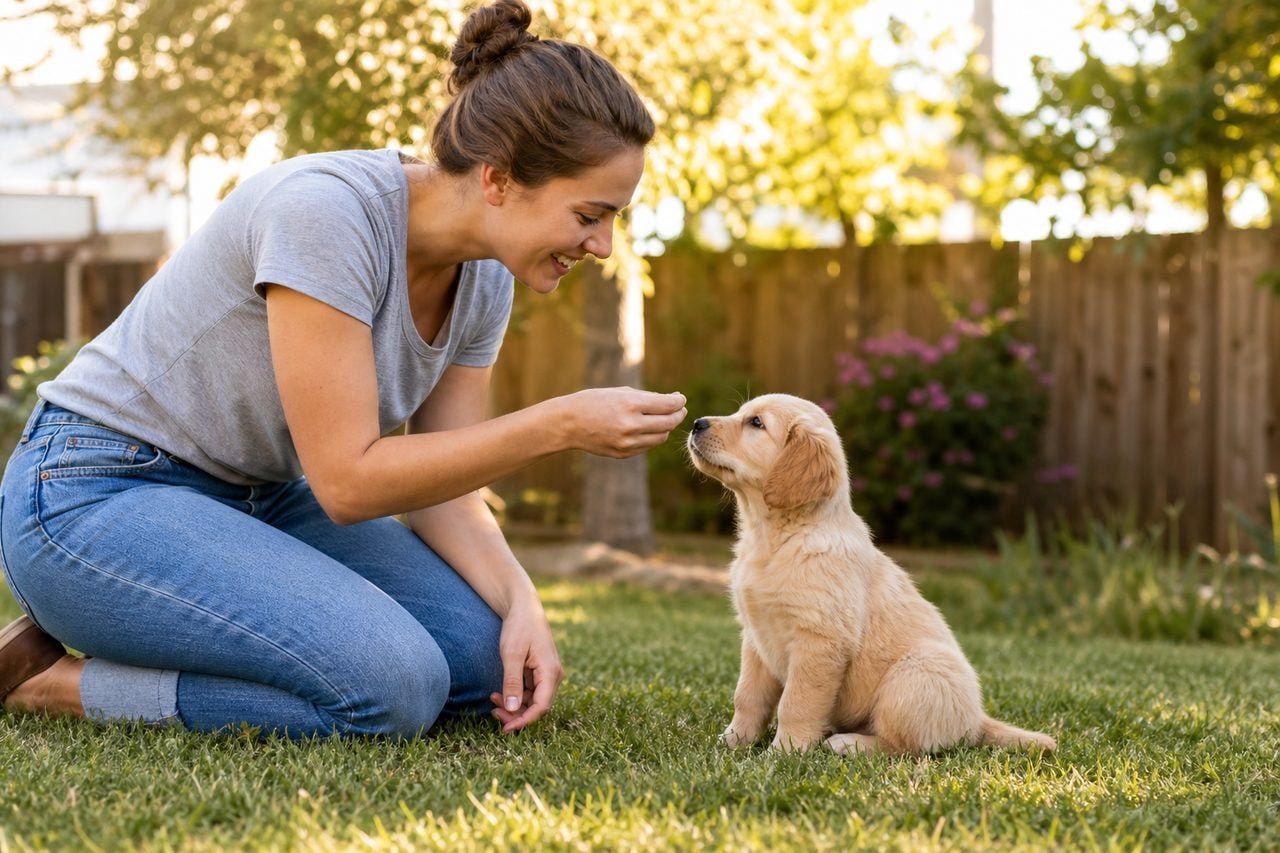
Socialization is one of the most misunderstood parts of raising a puppy, and getting it right in the Evansville area pays off for the life of the dog. Well-socialized puppies grow into adults who handle the everyday surprises of Tri-State life with ease, from a barge horn on the Ohio River to a crowd at a Newburgh festival to the bustle of a USI move-in weekend.
Contrary to a common belief, socialization is not simply about letting a puppy play with as many other dogs as possible. It is a deliberate process of introducing a puppy to the sights, sounds, surfaces, people, and situations it will encounter in life, all at a pace the puppy can handle and always paired with positive experiences. Done well, it builds resilience; done carelessly, it can create the very fears it was meant to prevent.
This guide explains what genuine socialization looks like for puppies raised in southwestern Indiana, how to use the region’s parks, neighborhoods, and community life as a training resource, and how to keep experiences positive while respecting the health precautions that matter during a puppy’s early weeks.
What Socialization Really Means
Socialization is the process of teaching a puppy that the world is a safe and manageable place. It covers far more than dog-to-dog interaction. A properly socialized puppy has had positive exposure to a wide variety of people, including children, older adults, people in hats or uniforms, and people using wheelchairs or walkers. It has experienced different surfaces underfoot, everyday household and outdoor noises, car rides, and being handled by strangers such as veterinary staff.
The goal is not to overwhelm a puppy with as much stimulation as possible, which can backfire badly. The goal is quality exposure: each new experience should be positive or at least neutral, with the puppy able to observe and retreat if it needs to. A puppy that is forced into a frightening situation may learn to fear that thing for life, which is the opposite of what socialization is meant to achieve.
Reading a puppy’s body language is central to doing this well. Signs of stress include tucking the tail, flattening the ears, yawning, lip-licking, freezing, or trying to move away. When these appear, the answer is to create distance and let the puppy relax, not to push it closer. A confident, loose, wiggly puppy that willingly approaches something new is a puppy that is learning the right lesson.
Because the prime socialization window closes around sixteen weeks, there is genuine urgency to start early. This creates a well-known balance to strike between exposure and disease risk during the weeks before a puppy is fully vaccinated. The solution is smart, controlled socialization rather than avoidance, which the following sections address in the context of Evansville’s specific resources.
Balancing Socialization With Health Precautions
The tension every new puppy owner faces is real: the most important socialization window overlaps with the period before a puppy has full vaccine protection. Avoiding all exposure to be safe means missing the critical learning window and risking a fearful adult dog, which is itself a serious welfare and safety problem. The modern consensus among veterinary behavior professionals is that controlled socialization should happen during this window, with sensible precautions.
Lower-risk options work well early on. Invite healthy, fully vaccinated adult dogs with known temperaments to meet the puppy in a clean home or yard. Carry the puppy through public spaces so it can watch and hear the world without walking on ground where unknown dogs have been. Host small gatherings so the puppy meets a variety of calm, gentle people in a familiar setting. All of these deliver strong socialization value with limited disease exposure.
Higher-risk environments, such as busy public dog areas, standing water, and places where many unknown dogs congregate, are best saved until a puppy’s vaccinations are further along. Owners in the Evansville area should follow their veterinarian’s specific guidance on timing, since the right schedule depends on the individual puppy and the vaccines administered.
The key principle is that socialization and health protection are not either-or. With a little planning, an owner can give a puppy rich, varied experiences during its most receptive weeks while keeping real risks low. Erring completely on the side of isolation carries its own long-term cost that is easy to underestimate in the moment.
Introducing People, Sounds, and Everyday Surprises
People come in a huge variety, and a puppy needs to learn that all of them are safe. Aim to introduce a puppy to men and women of different ages, children who interact gently under supervision, and people with different appearances, from beards and sunglasses to hats and heavy coats. Each introduction should be calm and rewarding, letting the puppy approach at its own pace rather than being crowded or passed around.
Sound exposure is easy to overlook but deeply important. The Evansville area offers plenty of everyday noises to introduce gradually: traffic, lawn equipment, thunderstorms that roll through during humid Tri-State summers, fireworks around the Fourth of July along the river, and the general hum of a busy neighborhood. Recordings played at low volume indoors can help a puppy get comfortable with sounds like thunder and fireworks before it encounters them at full intensity.
Household and environmental novelty rounds out the picture. Let a puppy experience different floor surfaces, stairs, umbrellas opening, vacuum cleaners, and objects that move or make noise. The aim is a puppy that treats new things with curiosity rather than alarm. Pairing each novelty with treats and praise teaches the puppy that unfamiliar equals good.
Children deserve special attention because interactions between kids and puppies can go wrong in both directions. Teach children to be calm and gentle, to let the puppy come to them, and to avoid grabbing, chasing, or cornering. Supervise every interaction closely. A puppy that learns children are predictable and pleasant is far less likely to become a fearful or reactive adult around them.
Using Evansville's Outdoor Spaces Wisely
The Evansville area’s parks, greenways, and open spaces are excellent socialization resources once a puppy is ready for them. The Pigeon Creek Greenway and the paved paths along the Ohio River let a puppy observe joggers, cyclists, strollers, and other walkers from a comfortable distance, building calm exposure to movement and activity without forcing close contact. Garvin Park and Burdette Park offer open areas for practicing focus amid mild distractions.
Natural areas add valuable variety. Wesselman Woods Nature Preserve provides woodland sounds, uneven ground, and new scents, while the grounds around Angel Mounds and the trails at Harmonie State Park near New Harmony expose a puppy to wider open spaces. Scales Lake Park in Boonville introduces the sights and sounds of water. As always, owners should confirm and follow the posted rules and leash requirements at each specific site, as these differ by location.
The right approach in these spaces early on is exposure at a distance, not nose-to-nose meetings with every dog. Let the puppy watch the world go by while rewarding calm attention. This teaches the puppy to stay relaxed and focused around distractions, a skill far more valuable than a chaotic play session with an unknown dog, which can teach a puppy to lunge toward every dog it sees.
Seasonal timing matters throughout the Tri-State. The intense summer humidity makes early-morning outings kindest for a young puppy, with shade and water on hand. Spring and fall offer the most comfortable conditions for longer socialization walks, and mild winter days can work well for brief, upbeat trips that keep a puppy learning through the colder months.
Positive Dog-to-Dog Introductions
Dog-to-dog socialization is valuable, but quality matters enormously more than quantity. The goal is for a puppy to learn appropriate play and communication from stable, well-mannered dogs, not to be flooded with random encounters. A single positive interaction with a patient adult dog teaches a puppy more than a dozen chaotic meetings, and one bad experience with a rough or aggressive dog can create lasting wariness.
Curated playmates are the safest route early on. Friends and family with healthy, vaccinated, dog-friendly adults make ideal partners, as do the other puppies in a well-run local puppy class where interactions are supervised and matched by size and play style. Structured puppy socials, where a knowledgeable facilitator watches the group and intervenes when play gets too rough, provide excellent controlled exposure.
Learning to read canine body language helps owners keep play healthy. Good play is loose, bouncy, and reciprocal, with frequent pauses and role reversals. Warning signs include one dog repeatedly pinning or overwhelming another, stiff body posture, a puppy trying to hide or escape, or play that escalates without breaks. When play tips out of balance, a brief calm interruption resets things before a bad experience forms.
Busy public dog parks are often not ideal for young or undersocialized puppies, since the mix of unknown dogs and uneven supervision creates real risk. Many experienced owners prefer arranged play with known dogs until a puppy is older and more confident. As the puppy matures and demonstrates solid social skills, its circle of appropriate canine companions can expand gradually.
Recognizing and Preventing Fear
Even a well-intentioned socialization plan can go wrong if it moves too fast or ignores a puppy’s signals. Fear that takes root during puppyhood can be difficult to reverse, so preventing it is far easier than treating it later. The foundation of prevention is always working within a puppy’s comfort zone and treating any sign of stress as information to act on, not a hurdle to push through.
Puppies also go through predictable fear periods, developmental stages during which they may suddenly become cautious about things they previously accepted. These are normal, and the right response is to reduce pressure temporarily rather than force exposure. A puppy in a fear period that is pushed into a scary situation can form a lasting negative association, while a puppy that is allowed to observe safely usually recovers its confidence.
Building positive associations is the antidote to fear. Pairing new or slightly unsettling experiences with treats, praise, and the freedom to retreat teaches a puppy that novelty predicts good things. Distance is a powerful tool: a puppy that seems worried about something can almost always handle it better from farther away, and closing that distance gradually as the puppy relaxes builds genuine confidence.
If a puppy shows persistent fearfulness, excessive caution, or reactions that do not improve with gentle, gradual exposure, it is worth consulting a qualified professional early rather than hoping the behavior fades. Fear-related issues respond far better to intervention during puppyhood than after they have hardened into adult patterns, and local trainers experienced with behavior can help design a careful, individualized plan.
Building a Socialization Plan You Can Sustain
The most effective socialization happens through steady, everyday effort rather than a few big outings. A simple checklist approach works well: list the categories a puppy should experience, such as types of people, surfaces, sounds, environments, and handling, and aim to check off a few each week while keeping every experience positive. This turns an abstract goal into manageable daily habits.
Fold socialization into normal routines rather than treating it as a separate chore. A trip to pick up supplies can include a few minutes of watching activity from the car or a quiet corner. An evening walk on a greenway path doubles as exposure to joggers and cyclists. Having a friend visit becomes a chance to practice calm greetings. This integration makes consistent socialization realistic even for busy households and student owners near USI or UE.
Keep sessions short and end on a good note. A puppy that leaves each experience feeling successful and relaxed is building the resilience socialization aims for. Overloading a puppy in a single outing, by contrast, can tip a positive experience into an overwhelming one, so it is better to do a little often than a lot at once.
Track progress honestly and adjust as needed. If a puppy is thriving, gradually expand the difficulty and variety of experiences. If it seems overwhelmed, scale back and rebuild confidence at an easier level. A flexible, puppy-led plan that respects the individual dog’s pace produces a confident adult far more reliably than a rigid schedule pushed regardless of how the puppy is coping.
Reviewed Puppy Socialization Trainers in Evansville
These reviewed Evansville-area trainers from our directory handle puppy socialization. Each links to a full profile with specialties, certified credentials, reviews, and contact info:
- Midwest Canine Training Academy — 5.0★ (3 reviews)
- The Training Retreat by Barks and Recreation — 4.8★ (30 reviews)
- Evansville Obedience Club — 4.7★ (41 reviews)
- Canine Aquatic Center — 5.0★ (20 reviews)
- District K9 — 5.0★ (20 reviews)
- Training With Grace — 5.0★ (2 reviews)
- Doggie Do Right — 4.8★ (130 reviews)
- Opie’s Doggie Playcare and Salon — 4.8★ (80 reviews)
- Tri-State K9 University — 4.7★ (107 reviews)
- Barks & Recreation Evansville — 4.5★ (55 reviews)
See all Evansville puppy socialization trainers →
Frequently Asked Questions
What is the best age for puppy socialization?
The prime socialization window runs from roughly three to sixteen weeks of age, with the weeks after a puppy comes home around eight weeks being especially important. Experiences during this period shape a puppy’s lifelong temperament. Socialization should continue well beyond sixteen weeks too, but the early window is when exposure has the greatest and most lasting impact.
Can I socialize my puppy before it is fully vaccinated?
Yes, with sensible precautions. Because the prime socialization window overlaps with the period before full vaccination, veterinary behavior guidance favors controlled early socialization over isolation. Use lower-risk options such as meeting known, vaccinated adult dogs, carrying the puppy through public spaces, and hosting calm visitors, while saving busy public dog areas for later. Follow your veterinarian’s specific timing advice.
Is socialization just about meeting other dogs?
No. Dog-to-dog interaction is only one part. True socialization means positive exposure to a wide range of people, sounds, surfaces, environments, car rides, and handling. In fact, quality matters far more than quantity with other dogs, since a few good interactions with stable dogs teach more than many chaotic ones. The broader goal is a puppy that finds the whole world manageable.
Are Evansville dog parks good for socializing puppies?
Busy public dog parks are often not ideal for young or undersocialized puppies, because the mix of unknown dogs and uneven supervision creates real risk. Many owners prefer arranged play with known, vaccinated, dog-friendly dogs or supervised puppy socials until a puppy is older and more confident. Greenways and open parks are better early on for calm exposure at a distance.
How do I know if my puppy is stressed during socialization?
Watch body language. Stress signs include a tucked tail, flattened ears, yawning, lip-licking, freezing, cowering, or trying to move away. When these appear, create distance and let the puppy relax rather than pushing it closer. A confident, loose, willingly approaching puppy is learning the right lesson; a frightened one may develop a lasting fear if forced.
What if my puppy seems fearful of new things?
Puppies go through normal fear periods and may become cautious temporarily; reduce pressure and let the puppy observe from a comfortable distance rather than forcing exposure. Pair new experiences with treats and the freedom to retreat. If fearfulness is persistent or does not improve with gentle, gradual exposure, consult a qualified professional early, since fear responds far better to intervention during puppyhood.
Related: read our complete puppy socialization guide or the full Evansville dog training overview.
Ready to find the right puppy socialization pro in Evansville?