
Puppy Socialization in Toledo, OH
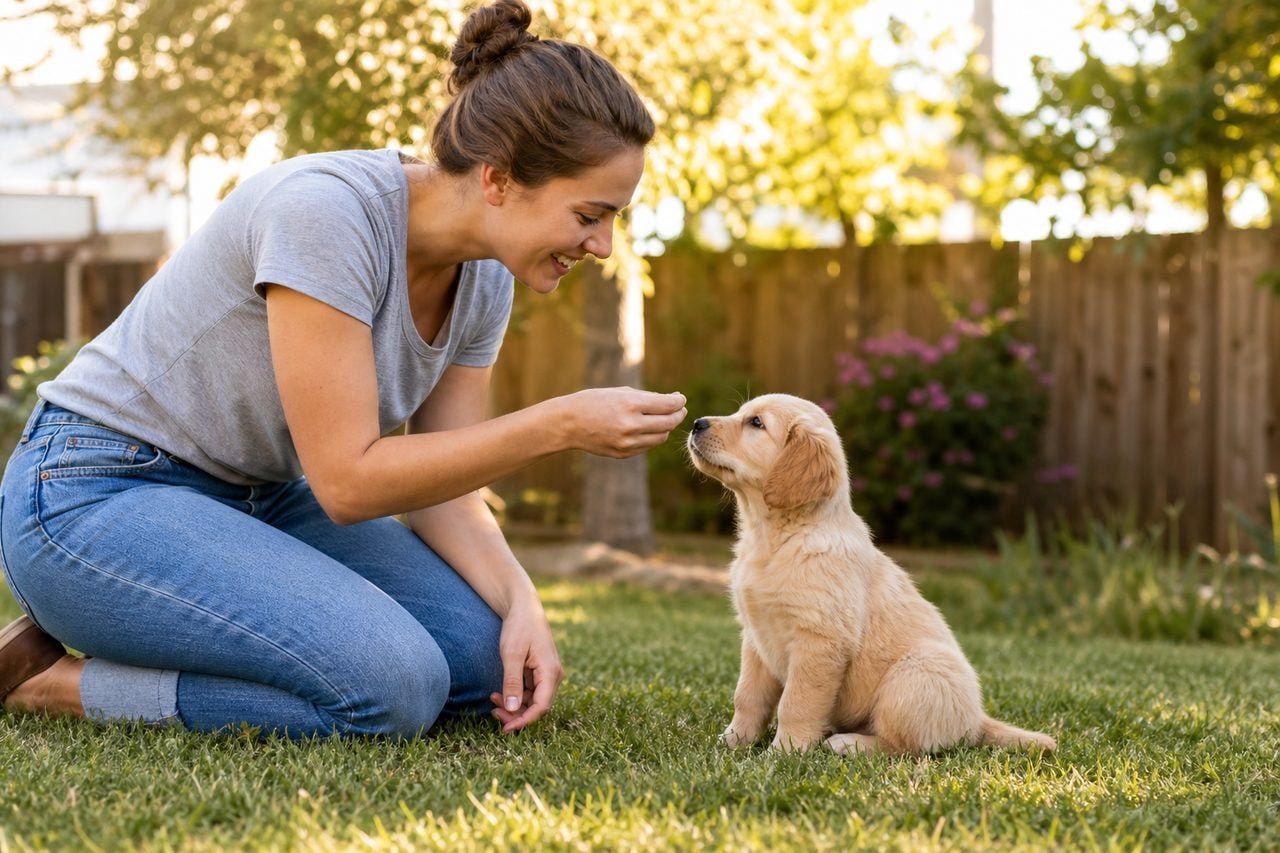
Socialization is the single most important and most time-sensitive project of a puppy’s first few months, and in Toledo it comes with a complication most guides never mention: the calendar fights you. The critical window during which a puppy’s brain is primed to accept new experiences as normal closes around sixteen weeks of age, and for a huge number of Glass City puppies that window falls squarely in the depths of a lake-effect winter. A litter born in October hits its most important developmental weeks when the Maumee River valley is frozen, the wind off Lake Erie is brutal, and outdoor exposure is genuinely limited. Knowing this in advance is half the battle.
- What Socialization Actually Means (and What It Doesn't)
- The Toledo Winter Problem: Socializing Through Lake-Effect Cold
- Safe Socialization Before Your Puppy Is Fully Vaccinated
- Toledo's Best Environments for Building a Confident Puppy
- Dog-to-Dog and Dog-to-People Socialization Done Right
- Reading Fear and Knowing When to Get Help
- Reviewed trainers
- FAQ
Done right, socialization produces a dog that moves through the world with calm confidence: unbothered by the rumble of a Jeep plant shift change, the crowds at a Mud Hens game, the skateboards downtown, or the chaos of a busy Metroparks trailhead on a perfect spring Saturday. Done poorly or skipped, it produces a fearful, reactive, or anxious adult dog, and those problems are far harder to fix later than they are to prevent now. The stakes in these few weeks are enormous.
This guide is specific to raising a puppy in Toledo and Lucas County. It explains what real socialization is and is not, how to work around the winter timing problem, exactly which local environments build which skills, how to keep a puppy safe before its vaccines are complete, and how to recognize and respond to fear before it hardens. The window is short. Here is how to make the most of it.
What Socialization Actually Means (and What It Doesn't)
The word socialization gets misused constantly, and the misunderstanding causes real harm. Many new owners think it means letting their puppy meet as many dogs and people as possible, as quickly as possible. That is not it, and an aggressive meet-everyone approach can actually create the fearful dog you are trying to avoid. True socialization means giving a puppy positive, controlled, age-appropriate exposure to the full range of sights, sounds, surfaces, people, and situations it will encounter in life, in doses small enough that the puppy stays under threshold and comfortable.
The emphasis on positive and controlled is everything. A puppy that is dragged into an overwhelming environment, swarmed by strangers, or forced to greet a pushy adult dog does not learn that the world is safe; it learns that the world is frightening and that you will not protect it. The goal is the opposite: the puppy notices a new thing from a comfortable distance, feels calm, perhaps gets a treat, and concludes that novelty is no big deal. Quality matters infinitely more than quantity.
It also helps to understand the breadth of what should be exposed. Socialization is not just about dogs and people. It includes surfaces underfoot like the sand at Oak Openings, the boardwalks at the Metroparks, the brick of the Old West End, metal grates downtown, and slick floors indoors. It includes sounds like traffic, thunder, vacuum cleaners, and the industrial hum of a manufacturing city. It includes people of all kinds: children, people in hats and uniforms, people using mobility aids, people of every size and demeanor. A puppy that has met all of this calmly in its first months becomes an adult that takes the world in stride.
Finally, socialization is not a checkbox you complete once. The most intense window closes around sixteen weeks, but the work continues in a lighter form well into adolescence. Dogs that were beautifully socialized as puppies can still backslide during the teenage fear periods if exposure stops entirely. Think of the early window as foundation-pouring and the months after as maintenance.
The Toledo Winter Problem: Socializing Through Lake-Effect Cold
Here is the hard truth Toledo puppy owners have to confront: the most important socialization weeks of your dog’s life may land in January and February, when going outside is a brief, miserable, head-down affair. The flat western Lake Erie basin gives the wind nothing to slow it down, lake-effect snow can bury the north side of the city, and a small puppy simply cannot spend long stretches outdoors safely. Pretending the window can wait until spring is the mistake that produces fearful dogs.
The solution is to bring socialization indoors and to be creative about it. Indoor puppy classes are worth their weight in gold in a Toledo winter; they provide controlled exposure to other puppies, new people, and a novel environment in a heated space, which is exactly what the season otherwise denies you. Beyond classes, you can manufacture an enormous amount of novelty inside your own home. Introduce new surfaces by laying down baking sheets, bubble wrap, a yoga mat, and a wobble cushion. Play recordings of thunderstorms, fireworks, traffic, and crying babies at low volume paired with treats. Invite a rotating cast of friends over, one at a time, so the puppy meets many kinds of people without being overwhelmed.
Car rides become a winter socialization tool too. A puppy that is warm and safe in a vehicle can watch the world go by, see and hear downtown traffic, and visit the parking lot of a busy shopping area to observe people and carts from a comfortable distance, all without prolonged exposure to the cold. Sitting in the car outside a Sylvania plaza or near Glass City Metropark, treating the puppy as interesting things pass, accomplishes real work on a brutal day.
Crucially, do not let the winter become an excuse to do nothing. If your puppy’s window falls in the cold months, treat indoor and car-based socialization as urgent, not optional, and then explode outward into the Metroparks and neighborhoods the instant spring breaks. A puppy that got thoughtful indoor socialization through a Toledo winter and an intensive outdoor push in early spring can absolutely turn out beautifully; a puppy whose owners simply waited for warm weather usually does not.
Safe Socialization Before Your Puppy Is Fully Vaccinated
Owners often feel trapped between two competing fears: the vet’s warning to keep an unvaccinated puppy away from disease risk, and the trainer’s warning that the socialization window is closing fast. Both are right, and the good news is that you do not have to choose between them. The modern consensus is that the behavioral risks of under-socialization are, statistically, a greater long-term threat to most dogs than the disease risk, provided you socialize smartly while the vaccine series is still in progress.
The guiding principle is to control the ground your puppy touches and the dogs it meets. Avoid places where unknown, potentially unvaccinated dogs congregate and where the ground is heavily contaminated, which in practice means steering clear of dog parks, pet store floors, and the busiest Metroparks trailheads until your vet gives the all-clear. That does not mean keeping the puppy home. It means choosing controlled exposures instead.
- Carry your puppy through novel environments. A puppy in your arms downtown in the Warehouse District or at the edge of Glass City Metropark experiences the sights, sounds, and crowds without its paws touching contaminated ground.
- Host controlled playdates with dogs you know to be healthy and vaccinated, in clean spaces like your own yard or a friend’s home.
- Use your own car and yard as safe observation posts for traffic, people, and neighborhood activity.
- Enroll in a reputable indoor puppy class that requires proof of age-appropriate vaccinations from all participants and keeps its space clean. These are designed precisely for this delicate stage.
Talk to your veterinarian about your specific puppy and your specific plans; risk varies by area and by individual dog. But do not let vaccine caution become a reason to skip socialization entirely. The aim is smart exposure, not zero exposure, and the difference between those two approaches often determines what kind of adult dog you end up living with.
Toledo's Best Environments for Building a Confident Puppy
Once your puppy is cleared for fuller exposure, Toledo offers a remarkable variety of environments, and deliberately rotating through them is how you build a genuinely bombproof dog. The strategy is to expose the puppy to many different kinds of places in short, positive sessions rather than overdoing any single one. Variety is the active ingredient.
The Metroparks system is the backbone of outdoor socialization, and each park trains something different. Oak Openings Preserve stands out for its rare sand dunes and oak savanna, offering a range of surfaces and footing found almost nowhere else in the region, which is gold for building a puppy’s physical confidence. Wildwood Preserve provides broad, calm trails for early outings. Side Cut along the Maumee adds water sounds, anglers, and bridges. Glass City Metropark downtown delivers urban energy, crowds, and a skyline backdrop. Swan Creek offers a quieter setting for a puppy that needs to dial the intensity down. Remember that Metroparks require leashes on trails, which is ideal for controlled, structured exposure rather than chaotic free-for-alls.
The city’s neighborhoods are socialization environments in their own right. A short walk through the Old West End surrounds a puppy with historic Victorian architecture, varied foot traffic, and quiet residential rhythm. The downtown Warehouse District piles on concrete, glass, delivery trucks, and the bustle of a working city. Suburban areas like Perrysburg, Maumee, and Ottawa Hills give you calmer streets to build duration and focus, while Point Place near the lake offers a different soundscape entirely. Outdoor cafe patios and pet-friendly shops, where allowed, let a puppy practice settling amid activity.
The unifying idea is intentional diversity. Make a simple list of categories to expose your puppy to over the coming weeks: a busy urban setting, a calm natural one, varied surfaces, water, crowds, traffic, and a range of people. Then use Toledo’s geography to check each box in low-pressure doses. A puppy that has calmly experienced the full spread of what the Glass City contains becomes an adult that almost nothing rattles.
Dog-to-Dog and Dog-to-People Socialization Done Right
The two relationships people worry about most, how the puppy will be with other dogs and with people, are also the two most commonly mishandled. The instinct to maximize meetings is exactly backward. Good dog-to-dog and dog-to-people socialization is about quality, supervision, and reading the puppy’s comfort, not about racking up a high count of encounters.
For dog-to-dog work, the gold standard is well-matched play with appropriate, vaccinated dogs whose temperament you trust. A confident adult dog with good social skills can teach a puppy more about canine manners than any human can, while a rough or pushy dog can frighten a puppy and create lasting wariness. This is why structured puppy classes and curated playdates beat the dog park, where you have no control over who shows up. Supervise play actively, watch for one-sided pestering, and give the puppy frequent breaks so it learns that play has an off-switch and that you remain a calm presence throughout.
For dog-to-people work, the goal is for the puppy to feel relaxed around all sorts of humans, not to be passed around like a toy. Let the puppy approach new people on its own terms rather than having strangers loom over it. Ask people to crouch sideways, avoid direct staring, and offer a treat from a flat hand. Deliberately expose the puppy to the kinds of people that often surprise dogs later: children moving unpredictably, people in hats and high-visibility clothing, people with beards or umbrellas or walkers. Each calm, positive encounter banks confidence.
Throughout all of it, advocate for your puppy. If a situation is too much, calmly create distance; you are not being rude, you are protecting a developing brain. The puppy that learns its owner will step in when things get overwhelming becomes a secure, trusting adult. The puppy that learns it is on its own in scary moments becomes anxious or defensive. Your job in every social encounter is to be the steady, reliable buffer between your puppy and a world that is sometimes too much, too fast.
Reading Fear and Knowing When to Get Help
Even with the best plan, puppies have moments of fear, and learning to read those signals is one of the most valuable skills an owner can develop. Catching fear early and responding well prevents it from hardening into a chronic problem; missing it or responding badly is how reactive adult dogs are made.
Learn the body language. A frightened puppy may freeze, tuck its tail, flatten its ears, lick its lips, yawn out of context, turn its head away, tremble, or try to retreat. These are requests for help, not defiance. The correct response is never to force the puppy through the scary thing or to scold it for being afraid. Instead, calmly increase distance from whatever is causing the fear, let the puppy decompress, and either reintroduce the stimulus much more gradually or skip it for now and try again another day in an easier form. Comforting a scared puppy does not reinforce fear; supporting your puppy through a frightening moment builds trust.
Be especially aware of the adolescent fear periods. Puppies typically go through one or more phases, often in the second half of their first year, where things they previously accepted suddenly seem alarming. This is normal developmental wiring, not a regression you caused. The right move during a fear period is to ease off pressure, avoid forcing scary experiences, and keep exposures gentle and positive until it passes.
Finally, know when a situation is beyond do-it-yourself solutions. If your puppy shows persistent fear that is not improving, reacts intensely to other dogs or people, panics in situations most puppies handle easily, or if you simply feel out of your depth, that is the time to bring in a qualified professional. Toledo has experienced local trainers who specialize in helping fearful and reactive young dogs, and the earlier you reach out, the easier these issues are to resolve. Asking for help is not a failure; it is exactly what a responsible owner does when the stakes, a puppy’s lifelong temperament, are this high.
Reviewed Puppy Socialization Trainers in Toledo
These reviewed Toledo-area trainers from our directory handle puppy socialization. Each links to a full profile with specialties, verified credentials, reviews, and contact info:
- Ready, Set…Train! — 5.0★ (46 reviews)
- P2K9 Training — 5.0★ (36 reviews)
- Alpha K9 Connections — 5.0★ (23 reviews)
- Clever Canine Companion LLC — 5.0★ (9 reviews)
- Tranquil Tails Training Academy, LLC — 5.0★ (5 reviews)
- Let’s Train! Dog Training — 4.8★ (157 reviews)
- Toledo Kennel Club — 4.7★ (48 reviews)
- Glass City K9 LLC — 4.6★ (163 reviews)
- Toledo’s PET Bull Project — 4.4★ (188 reviews)
- Sit Means Sit Dog Training Toledo — 4.1★ (19 reviews)
See all Toledo puppy socialization trainers →
Frequently Asked Questions
What is the critical socialization window for puppies?
The most important socialization window runs from roughly three weeks to about sixteen weeks of age, with the brain especially primed to accept new experiences as normal during the weeks you typically have your puppy at home. After sixteen weeks the window does not slam shut entirely, but it narrows considerably and new experiences become harder to make positive. In Toledo this matters because the window often overlaps with deep winter, so owners need a deliberate plan to socialize indoors and through car rides rather than waiting for warm weather.
How do I socialize my puppy during a Toledo winter?
Bring socialization indoors and get creative. Enroll in a heated indoor puppy class for controlled exposure to other puppies and people. At home, introduce novel surfaces like baking sheets, bubble wrap, and wobble cushions, and play recordings of thunder, traffic, and other sounds at low volume paired with treats. Invite friends over one at a time, and use car rides to let your puppy safely observe downtown traffic and busy plazas from a warm vehicle. Treat this work as urgent if the window falls in winter, then push outdoors hard the moment spring arrives.
Can I socialize my puppy before it's fully vaccinated?
Yes, and you should, because the behavioral risk of under-socialization is generally a bigger long-term threat than the disease risk when you socialize smartly. The key is controlling exposure: avoid dog parks, pet store floors, and the busiest trailheads where unknown dogs and contaminated ground are common. Instead carry your puppy through novel places, host playdates with dogs you know are healthy and vaccinated, use your own yard and car as safe observation posts, and enroll in a clean indoor class that requires vaccination proof. Always discuss your specific plan with your veterinarian.
Where are the best places to socialize a puppy in Toledo?
Rotate through varied environments. The Metroparks are excellent: Oak Openings for its rare sand dunes and varied footing, Wildwood for calm early walks, Side Cut for river sounds, Glass City Metropark for downtown energy, and Swan Creek for quieter outings, all leashed as the Metroparks require. Neighborhoods add value too, from the historic Old West End to the busy Warehouse District to calmer suburbs like Perrysburg and Maumee. The goal is intentional diversity in short positive sessions: urban and natural settings, varied surfaces, water, crowds, traffic, and many kinds of people.
Is the dog park a good place to socialize my puppy?
Generally no, especially for a young or under-vaccinated puppy. At a dog park you cannot control who shows up, whether the dogs are vaccinated, or whether they are appropriate playmates, and a single bad encounter with a rough or pushy dog can create lasting fear. Quality matters far more than quantity in socialization. Structured indoor puppy classes and curated playdates with dogs you trust are much safer and more productive ways to build good dog-to-dog skills. Consider supervised dog park visits, if at all, only for a confident, fully vaccinated, socially skilled adult dog.
How do I know if my puppy is scared, and what should I do?
Watch for freezing, a tucked tail, flattened ears, lip licking, out-of-context yawning, turning away, trembling, or trying to retreat. These are requests for help, not disobedience. Never force a frightened puppy through the scary thing or scold it. Instead, calmly increase distance, let it decompress, and reintroduce the stimulus much more gradually another time. Comforting a scared puppy does not reinforce fear. If fear is persistent, intense, or not improving, or if your puppy reacts strongly to dogs or people, reach out to a qualified local trainer early, when the issue is easiest to resolve.
Related: read our complete puppy socialization guide or the full Toledo dog training overview.
Ready to find the right puppy socialization pro in Toledo?