
Puppy Training in Ann Arbor, MI
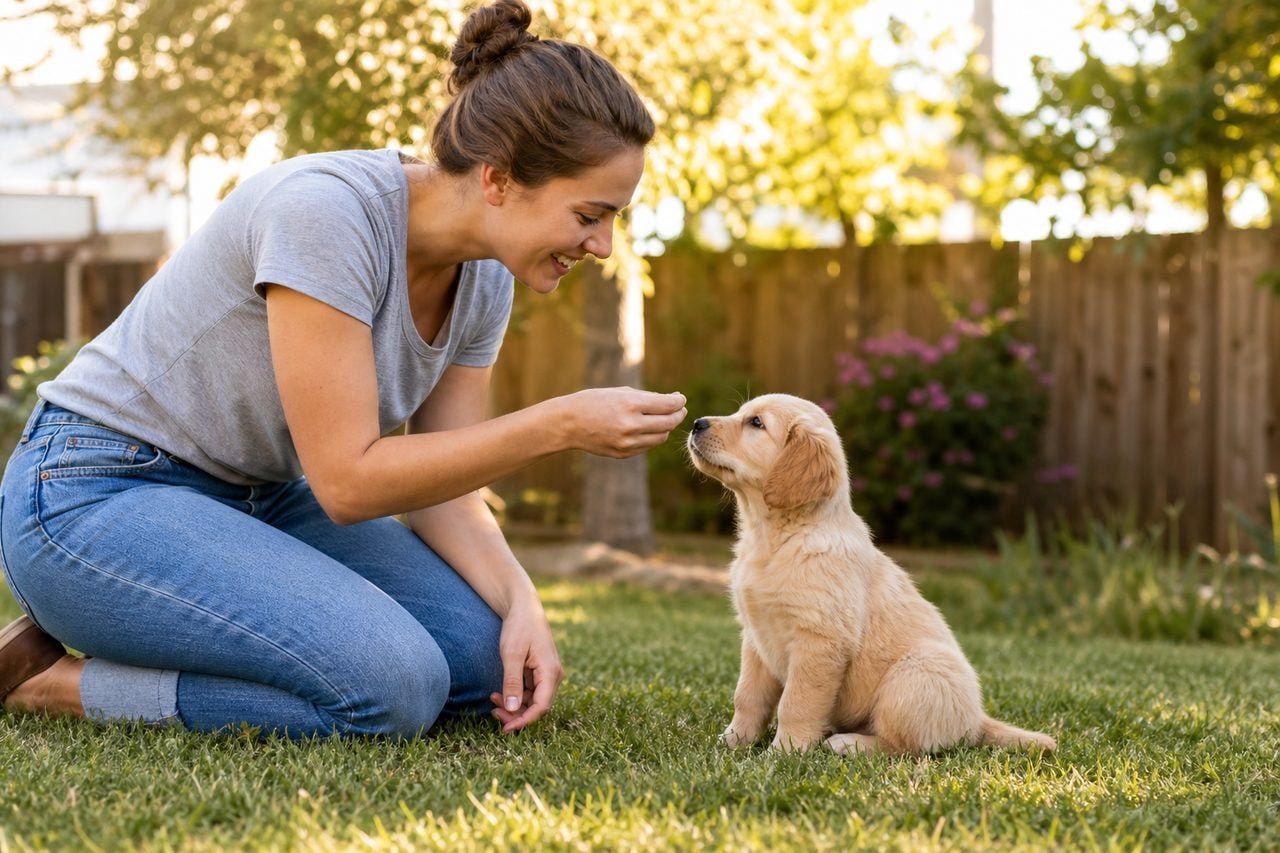
Bringing a puppy home in Ann Arbor is exciting, but those first weeks set the tone for everything that follows. Whether you live near the University of Michigan campus, in a Burns Park bungalow, or out toward Dexter and Chelsea with more room to roam, the fundamentals of good puppy training are the same: start early, keep sessions short, reward the behavior you want, and stay consistent. The habits your puppy learns before six months old are the ones that stick.
This guide walks through what puppy training in Ann Arbor actually looks like, from house-training and crate work to leash manners and choosing the right class. It draws on how positive-reinforcement trainers work, how to take advantage of local parks and the Huron River corridor for real-world practice, and how to avoid the common mistakes that turn a fun puppy stage into a frustrating one.
When to Start Training Your Ann Arbor Puppy
The best time to start training is the day your puppy comes home. Puppies begin learning immediately, whether or not you are teaching them on purpose. Every time they figure out that whining gets attention or that the couch is comfortable, that is a lesson learned. The goal is to make sure the lessons they absorb are the ones you actually want.
Most puppies join their new families around eight weeks old. At that age they have short attention spans but soak up information quickly. Keep training sessions to just a few minutes, several times a day, rather than one long block. A puppy will happily practice sit five times before breakfast and forget the whole thing if you drill it for twenty minutes straight. Short and frequent wins.
There is an important developmental window that closes around sixteen weeks, sometimes called the primary socialization period. During this time your puppy forms lasting impressions about what is normal and safe in the world. This is why early training and early socialization go hand in hand: you are teaching skills and building confidence at the same time. Waiting until your dog is six months old to start means missing the window when learning is easiest.
If your puppy has not finished its core vaccination series, talk to your veterinarian about balancing disease safety with socialization. Many Ann Arbor trainers run well-run puppy classes on sanitized indoor floors specifically so young puppies can start learning before they are cleared for places like Gallup Park. You do not have to choose between health and training; you just have to be thoughtful about where the early practice happens.
House-Training and Crate Training Basics
House-training is usually the first thing new puppy owners want to solve, and the formula is simpler than most people expect: supervise, take the puppy out often, reward success outside, and prevent accidents inside. Puppies do not generalize well, so praising them the instant they finish outdoors teaches the lesson far faster than scolding an accident you find after the fact.
A young puppy can only hold its bladder for roughly one hour per month of age, so an eight-week-old needs frequent trips outside, including right after waking, eating, drinking, and playing. Ann Arbor winters make this less pleasant, but consistency in January pays off for years. Pick one door and one spot in the yard so the routine becomes predictable, and keep a jacket by the door so you never delay a trip because you are cold.
The crate is your best house-training ally when it is used correctly. Dogs naturally avoid soiling where they sleep, so a properly sized crate encourages your puppy to hold it and signal to go out. The crate should be just big enough to stand, turn around, and lie down; too much space lets a puppy use one corner as a bathroom. Feed meals in the crate and toss treats inside so it becomes a good place, never a punishment.
Expect accidents. They are part of the process, not a sign of failure. If you catch your puppy mid-accident, calmly interrupt and take them outside to finish, then reward. Clean indoor spots with an enzymatic cleaner so no scent lingers to draw them back. Most puppies given consistent structure are reliably house-trained within a few weeks to a couple of months.
Teaching the First Essential Cues
Once your puppy is settling in, you can start teaching the handful of cues that make daily life smoother. Focus first on sit, name recognition, come, and a release word. These four form the backbone of a well-mannered dog and are easy to teach with food rewards and a cheerful tone.
Name recognition is the foundation for everything else. Say your puppy’s name once, and the moment they look at you, mark it with a happy word and a treat. Practice this in quiet rooms first, then gradually in busier settings. A puppy who reliably turns to look when you say their name is a puppy you can redirect out of trouble before it starts.
Sit is the easiest cue to teach and a great confidence builder for both of you. Hold a treat just above your puppy’s nose and slowly move it back over their head; as their nose lifts, their rear drops. The instant they sit, mark and reward. Within a few sessions you can add the word sit right before they do it. Use the same lure-and-reward approach for down by lowering the treat to the floor.
Come, or recall, is the most important safety cue your dog will ever learn, so make it wildly rewarding from day one. Call your puppy in a happy voice, and when they run to you, throw a party with treats and praise. Never call your puppy to you for something unpleasant like nail trims or the end of playtime, or you will teach them that coming is a bad bet. Practice recall in the fenced areas of your yard before ever relying on it near open water or roads.
Leash Skills and Early Outings
Ann Arbor is a walkable town, and a dog who pulls turns those walks into a chore. Leash training starts indoors, long before you tackle a busy sidewalk. Let your puppy wear a lightweight collar and flat harness around the house until it feels normal, rewarding calm behavior rather than fighting against a puppy who freezes or bites the leash.
The core idea of loose-leash walking is simple: a loose leash means forward progress, a tight leash means the walk pauses. When your puppy hits the end of the leash, stop moving. The moment the leash softens and they glance back, praise and continue. Puppies learn quickly that pulling gets them nowhere and staying near you keeps the walk going. Reward generously whenever they walk beside you.
Start your outings in quiet, low-distraction spots and build up. A short stroll around a residential block in your neighborhood is a better first outing than a crowded stretch near campus on a football Saturday. As your puppy gains confidence and completes their vaccinations, the paved paths at Gallup Park along the Huron River and the trails at Nichols Arboretum offer excellent practice with mild, manageable distractions like joggers and other dogs at a distance.
Keep early outings short and positive. A tired, overwhelmed puppy learns nothing useful and may develop worries about the outside world. Watch for signs your puppy has had enough, such as excessive panting, tail tucking, or trying to head home, and end on a good note. Over the following months you can gradually work up to busier environments like downtown sidewalks and the farmers market area, where controlled exposure builds a truly city-proof dog.
Managing Biting, Chewing, and Puppy Energy
Sharp puppy teeth and boundless energy surprise almost every new owner. Nipping and chewing are completely normal puppy behaviors, not signs of aggression. Puppies explore the world with their mouths and are teething through about six months of age. The job is not to stop the behavior entirely but to redirect it toward acceptable outlets.
For mouthing on hands, teach bite inhibition by keeping a chew toy handy and swapping it in whenever teeth touch skin. If your puppy bites too hard during play, a brief pause in the fun teaches them that rough mouthing ends the good times. Consistency across the whole household matters here; if one person allows hand-wrestling, the puppy cannot learn that skin is off limits.
Destructive chewing usually spikes when a puppy is under-exercised, bored, or teething. Provide a rotating variety of appropriate chews and puppy-safe toys, and put valuables and shoes out of reach during this stage. Frozen chews can soothe sore teething gums. If your puppy targets a specific forbidden item repeatedly, manage the environment so they simply cannot access it while the habit fades.
Much of what looks like misbehavior is really unspent energy. A puppy needs both physical exercise and mental stimulation, and mental work tires them out faster than people expect. Short training games, food puzzles, sniffing walks, and simple problem-solving toys drain energy without over-taxing growing joints. On days when Ann Arbor weather keeps you inside, a few minutes of nose work hiding treats around a room can settle a wired puppy better than a long walk in the cold.
Choosing a Puppy Training Class in Ann Arbor
A structured class gives you expert feedback, a safe place to socialize, and the accountability of a weekly commitment. Ann Arbor and the surrounding Washtenaw County area have a healthy training scene, from group puppy classes to private in-home coaching, so you have real choices without leaving town. The key is matching the format to your puppy and your schedule.
Look for trainers who use positive-reinforcement, reward-based methods. This approach is backed by mainstream veterinary behavior guidance and builds the trusting relationship you want with a young dog. Ask any prospective trainer how they handle mistakes and unwanted behavior; you want to hear about redirection, management, and rewarding alternatives, not intimidation or harsh corrections on a puppy.
Group puppy classes are ideal for socialization plus basic skills, since your puppy learns to focus on you while other puppies are present. Private sessions suit owners who want customized help with a specific issue or who have unusual schedules. Many families in Ann Arbor, Ypsilanti, and Saline use a mix: a group class for the social exposure and a private session or two to troubleshoot house-training or leash struggles.
Before you enroll, ask about class size, whether the trainer has relevant certifications or continuing education, and what vaccination requirements they set. Smaller classes mean more individual attention. It is completely reasonable to observe a class before signing up. A good puppy program should feel upbeat and encouraging, leave you with clear homework, and give your puppy a positive first experience of learning alongside other dogs.
Reviewed Puppy Training Trainers in Ann Arbor
These reviewed Ann Arbor-area trainers from our directory handle puppy training. Each links to a full profile with specialties, certified credentials, reviews, and contact info:
- The Dog Wizard Ann Arbor — 5.0★ (152 reviews)
- Countrytime K9 — 5.0★ (37 reviews)
- Chelsea Animal Recreation Center — 5.0★ (5 reviews)
- Attaboy Dog Training — 4.8★ (62 reviews)
- Ann Arbor Dog Training Club — 4.7★ (145 reviews)
- Szegi Haus K9 Solutions — 4.7★ (75 reviews)
- Longsnouts [Dog Training] — 3.4★ (14 reviews)
- KB Canine Campus — 5.0★ (4 reviews)
- Northfield Dog Training — 4.8★ (97 reviews)
- The Learning Dog Behavior & Enrichment Services — 4.8★ (17 reviews)
See all Ann Arbor puppy training trainers →
Frequently Asked Questions
How early can I start training my puppy in Ann Arbor?
You can and should start the day your puppy comes home, usually around eight weeks old. Puppies learn constantly, so early gentle training on cues like their name and sit takes advantage of a critical learning window that begins closing around sixteen weeks. Keep sessions short and reward-based, and coordinate with your vet on where early socialization can safely happen before vaccinations are complete.
How long does house-training a puppy usually take?
Most puppies become reliably house-trained within a few weeks to a couple of months with consistent supervision, frequent outdoor trips, crate use, and rewards for going in the right spot. A rough guideline is that a puppy can hold its bladder about one hour per month of age, so young puppies need very frequent trips outside. Accidents are normal and are not a sign the process is failing.
Is my puppy biting a sign of aggression?
Almost never. Puppy nipping and mouthing are normal exploration and teething behaviors, not aggression. The goal is to redirect those teeth onto appropriate chew toys, teach bite inhibition by pausing play when bites get too hard, and stay consistent across everyone in the household. Most puppies grow out of the worst of it as their adult teeth come in and they learn what is acceptable.
Where can I safely socialize and walk my puppy near Ann Arbor?
Once your vet clears your puppy, the paved paths at Gallup Park along the Huron River and the trails at Nichols Arboretum are great low-key spots to build confidence with mild distractions. Start in quiet residential neighborhoods first, keep outings short and positive, and work up to busier areas like downtown sidewalks over time. Well-run indoor puppy classes are a good option before vaccinations are finished.
Should I choose group classes or private training for my puppy?
Both have value and many owners combine them. Group puppy classes are excellent for socialization plus basic skills because your puppy learns to focus on you around other dogs. Private in-home sessions are better for customized help with a specific problem or for owners with unusual schedules. Ann Arbor and nearby Ypsilanti and Saline have enough options that you can pick the format that fits your puppy and your life.
What training method should I look for in an Ann Arbor puppy trainer?
Look for trainers who use positive-reinforcement, reward-based methods, which align with mainstream veterinary behavior guidance and build trust with a young dog. Ask how they handle mistakes; you want redirection, management, and rewarding good alternatives rather than harsh corrections. Also ask about class size, vaccination requirements, and any certifications, and consider observing a class before enrolling.
Related: read our complete puppy training guide or the full Ann Arbor dog training overview.
Ready to find the right puppy training pro in Ann Arbor?