
Puppy Training in Bloomington, IN
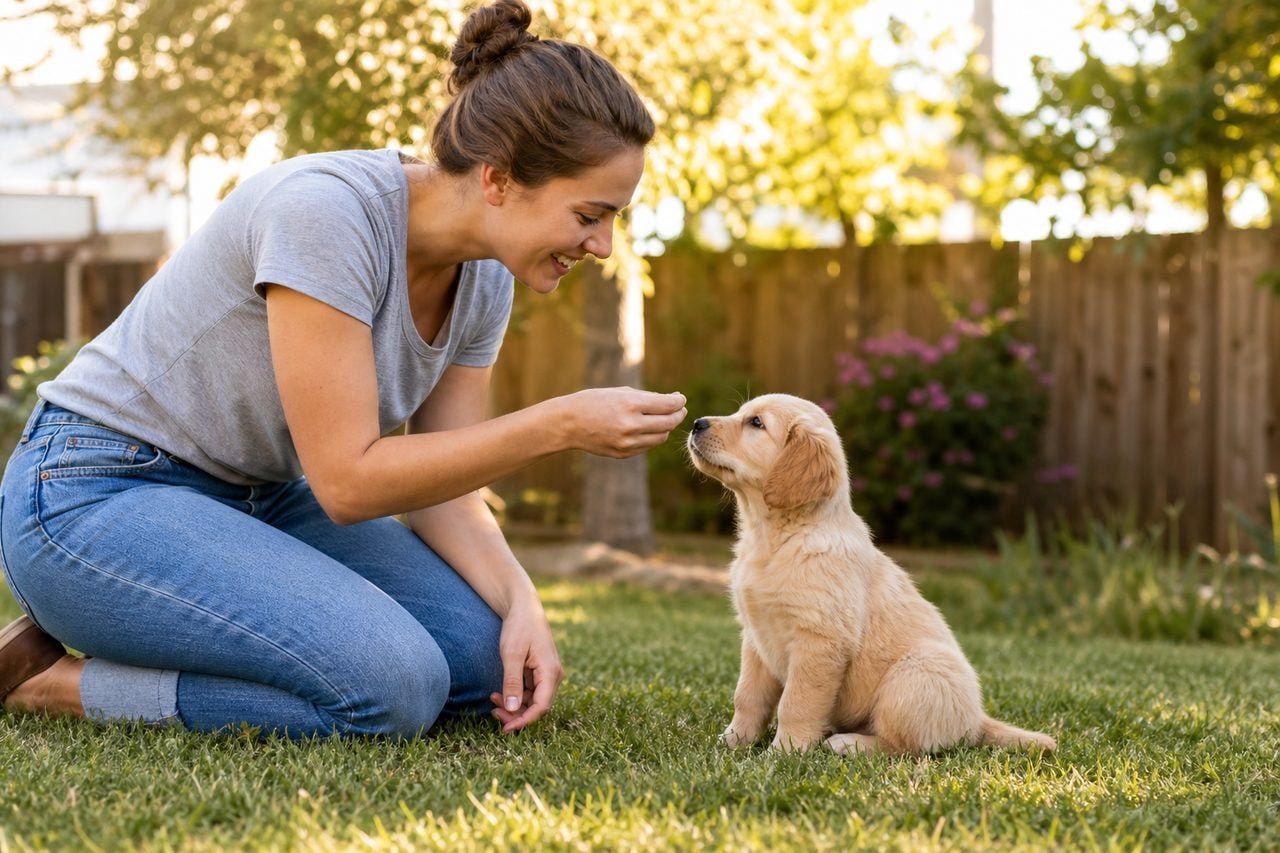
Bringing a puppy home in the Bloomington area means starting a training journey against one of the most distinctive backdrops in southern Indiana — a college town wrapped in limestone country, ringed by state forest, and busy with foot traffic that a young dog has to learn to navigate. Whether the new arrival is joining a graduate student in an apartment near the Indiana University campus, a family in Ellettsville, or a household out toward Nashville and Brown County, the early weeks set the tone for years of behavior. Puppies are learning constantly from the moment they wake, and the environment around Monroe County offers both rich opportunities and real challenges for shaping that learning well.
This guide covers the fundamentals of puppy training for the Bloomington region: what to prioritize in the first months, how to house-train through the swings of an Indiana year, which local settings help and which overwhelm a young dog, and how to decide when professional help is worth the cost. The aim is practical, honest advice grounded in how life actually unfolds here — the trails, the weather, the student calendar, and the mix of urban and rural that defines this pocket of the state.
Why the First Sixteen Weeks Matter Most
A puppy’s brain is unusually open to new experiences during a window that closes around sixteen weeks of age. What a young dog meets, hears, and practices during this period shapes how it will respond to the world as an adult. This is not a reason to rush — it is a reason to be intentional. The goal in these weeks is not a dog that performs tricks on cue, but a dog that feels safe and curious rather than fearful and reactive.
Training in this stage rests on a few pillars: gentle exposure to a wide variety of sights and sounds, the beginnings of house-training, learning to be handled and groomed, building a positive association with a crate or safe space, and the earliest cues like name recognition and coming when called. Each of these is a foundation rather than a finished skill.
Households near campus have an advantage worth using: constant, low-stakes exposure to people, bicycles, delivery vehicles, and other dogs simply from living in a busy area. A puppy that grows up hearing the ordinary rhythm of a Bloomington neighborhood — students walking to class, buses on the arterials, the occasional siren — often generalizes more easily than one raised in total quiet. The trick is to keep those experiences positive by pairing them with calm handling and food, never by flooding the puppy with too much at once.
Rural households out toward Solsberry, Heltonville, or Gosport face the opposite situation. Space and quiet are wonderful for a growing dog, but a puppy that rarely meets strangers or hears traffic can struggle later. For these families, deliberate trips into town during the socialization window become important rather than optional.
It also helps to reframe what training means during this stage. Every interaction is a lesson whether the owner intends it or not — a puppy that is picked up every time it whines learns to whine, and a puppy that gets attention for jumping learns to jump. The most successful early owners think in terms of what behavior they are rewarding at any given moment, and they arrange the household so the puppy stumbles into good habits rather than bad ones. Managing the environment — baby gates, closed doors, picked-up shoes, a consistent daily rhythm — does more in these weeks than any amount of correction. A tired, well-fed, appropriately exercised puppy on a predictable schedule is far easier to shape than one left to improvise, and that structure is largely the owner’s to provide.
House-Training Through an Indiana Year
House-training is the first project most new owners tackle, and it is fundamentally about management and consistency rather than correction. The reliable method is simple to describe and harder to execute: take the puppy out often, reward heavily the moment it finishes outside, supervise closely indoors, and use a crate or confined space when direct supervision is not possible. Young puppies generally need to relieve themselves after waking, after eating, after play, and roughly every couple of hours in between.
Southern Indiana weather adds wrinkles worth planning around. A puppy that arrives in the depth of winter will face frozen ground, salted sidewalks, and short daylight. Cold and snow can make a young dog reluctant to linger outside, which tempts owners to rush the process and accept an incomplete job. Clearing a small patch near the door and going out with the puppy — rather than sending it out alone — keeps sessions productive. Booties or a quick paw rinse help with the road salt common on Bloomington streets after a plow run.
Summer brings the opposite problem: humidity and heat that peak in July and August. Early-morning and evening potty trips are kinder on a puppy’s pads and reduce the risk of overheating during longer outings. Spring, with its heavy rains rolling through the region, means muddy yards and the need for a consistent surface the puppy learns to use in any weather.
Apartment dwellers near campus have a particular challenge: the distance from a fourth-floor unit to a patch of grass is long for a puppy with a small bladder. A consistent route, a reward waiting in a pocket, and patience through the elevator or stairwell all help. Accidents on the way down are a management failure, not a puppy failure — the answer is more frequent trips, not frustration.
Two details separate owners who house-train quickly from those who struggle for months. The first is that the reward must come the instant the puppy finishes outside, not when it comes back indoors — a treat delivered thirty seconds late teaches nothing about the right place to go. Carrying a few treats on every trip and delivering them on the spot is the single most effective habit. The second is thorough cleanup of any indoor accident with an enzyme-based cleaner rather than an ordinary household product, because a lingering scent invites the puppy to use the same spot again. Ordinary cleaners can mask an odor to a human nose while leaving it obvious to a dog. Handled this way, most puppies grasp the pattern well before they have the physical control to be fully reliable, and the reliability follows as the bladder matures.
Building Focus and the First Cues
Early obedience is less about commands and more about teaching a puppy that paying attention to its person pays off. The single most valuable early skill is a strong response to its name and a habit of checking in. Short, upbeat sessions — a minute or two, several times a day — work far better than long drills that exhaust a young attention span.
A practical starting sequence looks like this:
- Name game: say the puppy’s name once, and the instant it looks, mark the moment and reward. Repeat in different rooms and gradually with mild distractions.
- Recall foundation: back away a few steps, sound happy, and reward generously when the puppy follows. Never call the puppy to something it dislikes.
- Sit and settle: lure the puppy into a sit and reward calm behavior on a mat. A settle cue pays dividends later in cafes and on patios.
- Handling: touch ears, paws, and mouth gently, pairing each with a treat, so vet visits and grooming become non-events.
Reward-based methods are the standard for good reason: they build confidence and a willing partner rather than a dog that works out of worry. Timing matters more than the size of the treat — the mark needs to land the instant the puppy does the right thing. Owners who feel lost with timing often benefit from a few sessions with a trainer purely to calibrate their own mechanics.
Local Spots to Practice — and When to Wait
The Bloomington area is rich in places to walk a dog, but not all of them suit a puppy that has not finished its vaccination series. Until a veterinarian gives the all-clear — usually around sixteen weeks after the final round of shots — heavily trafficked dog areas carry real disease risk. That caution shapes where early outings should happen.
Before full vaccination, the safest practice grounds are quiet, low-traffic spots and carried outings. Sitting on a bench along the edge of a calm stretch of the B-Line Trail with the puppy on a lap or in a carrier lets it watch the world — cyclists, joggers, strollers — without touching ground that many unknown dogs use. A friend’s fenced yard where the dogs’ health is known is another good option.
Once fully vaccinated, the region opens up. The B-Line Trail through downtown is excellent for building calm around bikes and crowds. Griffy Lake Nature Preserve and Leonard Springs Nature Park offer quieter, natural settings for practicing loose-leash walking and recall in a low-distraction environment. Cascades Park gives a middle ground of moderate activity. For a young dog ready for a bigger adventure, the trails around Brown County State Park near Nashville and McCormick’s Creek State Park near Spencer provide varied terrain and new smells — just keep sessions short and watch for fatigue, since limestone-country trails can be steep and rocky.
Lake Monroe and the Hoosier National Forest are wonderful for older, steadier dogs, but they can overwhelm a young puppy with wide-open space and wildlife scent. Build up to them. Throughout, remember that leash rules come from local ordinances across the Bloomington area rather than any statewide park or leash law — Indiana has none — so check the posted rules at each specific park, preserve, or trail before letting a puppy off leash.
A useful way to think about practice locations is on a ladder of difficulty. The bottom rung is the home and yard, where distractions are minimal and a puppy can learn a cue cleanly. The middle rungs are quiet, natural settings like Leonard Springs or a low-traffic stretch of trail, where the puppy practices the same cue with mild new smells and occasional passersby. The top rungs are busy environments — downtown sidewalks, the crowded parts of the B-Line Trail, a park on a warm weekend afternoon — where the puppy must hold behavior amid real distraction. Owners who try to skip straight to the top rung set the puppy up to fail and themselves up for frustration. Climbing the ladder gradually, and dropping back a rung when the puppy struggles, is how a cue learned in the living room becomes reliable at Lake Monroe.
Crate Training and Alone-Time Skills
Teaching a puppy to rest calmly in a crate serves two purposes: it aids house-training and it builds the ability to be alone, a skill that has become more important as routines shift. For the many student and faculty owners in Bloomington, the rhythm of the academic year means schedules can change dramatically between semesters, and a dog that only ever experiences constant company can struggle when class or work resumes.
The crate should be introduced as a good place, never a punishment. Feeding meals inside it, tossing treats in for the puppy to find, and letting it choose to enter build a positive association. Duration is added gradually — a few seconds with the door closed, then longer, always ending before the puppy panics. A crate sized so the puppy can stand, turn, and lie down but not much larger supports house-training by discouraging soiling.
Alone-time training runs parallel. Practicing short departures — stepping out for a minute, then five, then longer — while the puppy is relaxed teaches it that being alone is normal and temporary. Leaving a stuffed food toy turns departures into something the puppy mildly looks forward to. The goal is to prevent separation-related distress before it starts, which is far easier than resolving it once established. Owners heading into a busy semester should build these skills well before the schedule change, not on the first hectic Monday.
Group Classes, Private Trainers, or Do-It-Yourself
Many Bloomington-area owners can handle the basics at home with good information and consistency. Others benefit enormously from professional guidance, and there is no shame in either path. The right choice depends on the dog, the household, and the owner’s confidence.
Group puppy classes offer a controlled environment for early socialization and a chance to practice cues around mild distractions, with a professional watching the owner’s technique. They suit friendly, resilient puppies and owners who want structure and community. Private training makes sense for households with specific concerns — a shy puppy, a busy schedule, or an issue like nipping or house-training that has stalled — because sessions are tailored and can happen at home where problems actually occur.
Do-it-yourself is entirely viable for a straightforward puppy in a committed household, provided the owner reads widely from reputable, reward-based sources and stays consistent. The common failure mode is not lack of knowledge but lack of follow-through when life gets busy. A hybrid approach works well for many: a class or a handful of private sessions to establish good mechanics, then home practice to maintain and extend them.
When evaluating any trainer in the region, ask about their methods, whether they use reward-based techniques, what their classes or sessions include, and whether they encourage owner involvement. A good fit matters as much as credentials, since the working relationship will last months.
A Realistic Timeline and Staying Patient
New owners often expect faster results than a puppy can deliver. Understanding the arc of development prevents frustration and the mistakes it breeds. The first weeks are about safety, house-training, and positive exposure. By three to four months, basic cues begin to stick in low-distraction settings. Between four and eight months, the puppy enters an adolescent phase where previously reliable behaviors may seem to vanish — this is normal, not a sign the training failed. Consistency through adolescence is what separates a well-mannered adult from a difficult one.
Setbacks are part of the process. A house-training regression during a cold snap, a burst of chewing during teething, or a sudden wariness of something the puppy used to accept are all common and usually temporary. The response is calm management and a return to fundamentals, not escalation.
Perhaps the most useful mindset for a Bloomington-area owner is to treat training as woven into daily life rather than a separate chore. A short recall game before the morning walk, a settle on the patio of a dog-friendly spot downtown, a bit of handling practice while watching a Hoosiers game — these small, repeated moments add up to a confident, well-adjusted dog. Patience, consistency, and kindness through the ups and downs are what carry a puppy from a chaotic first week to a steady companion for the years ahead.
Reviewed Puppy Training Trainers in Bloomington
These reviewed Bloomington-area trainers from our directory handle puppy training. Each links to a full profile with specialties, certified credentials, reviews, and contact info:
- Jolly Dogs — 5.0★ (45 reviews)
- 11:6 Canine — 5.0★ (14 reviews)
- Hoosier Pup — 5.0★ (7 reviews)
- Hoosier Pup LLC — 5.0★ (2 reviews)
- Bright Pet Behavior and Training — 5.0★ (1 review)
- Scout’s Honor — 4.9★ (248 reviews)
- Keller’s K-9s — 4.8★ (37 reviews)
- Mad 4 My Dog — 4.7★ (214 reviews)
- Conifer Canine — 4.4★ (19 reviews)
- Applied Canine Behaviors, LLC — 5.0★ (37 reviews)
See all Bloomington puppy training trainers →
Frequently Asked Questions
When can my puppy start walking on the B-Line Trail or other public paths?
Most veterinarians advise waiting until roughly a week or two after the final round of the puppy vaccine series, which typically lands around sixteen weeks of age, before letting a puppy walk on ground used by many unknown dogs. Before then, carried outings — watching the world from a bench or a carrier — give safe exposure without the disease risk of high-traffic areas. Confirm the timing with your own veterinarian, since it depends on the individual puppy’s vaccination schedule.
How long does house-training a puppy usually take in the Bloomington area?
Most puppies are reliably house-trained somewhere between four and six months of age, though this varies widely by dog and by how consistent the household is. Indiana’s weather can slow things down — winter cold and summer humidity both tempt owners to cut potty trips short. Staying consistent with frequent, supervised outings and heavy rewards for going outside is what moves the timeline along, regardless of season.
Is it safe to take my puppy to Brown County or McCormick’s Creek State Park?
Once a puppy is fully vaccinated and has built some stamina, the trails around Brown County State Park near Nashville and McCormick’s Creek State Park near Spencer make excellent practice grounds. Keep early outings short, since limestone-country terrain can be steep and rocky and a young dog tires quickly. Leash rules at these parks come from posted local and park ordinances rather than a statewide law, so check the signage at each entrance before your visit.
Should I use group puppy classes or a private trainer?
Group classes are a strong choice for social, resilient puppies and owners who want structure plus early socialization in a controlled setting. Private training fits households with a specific concern, a shy puppy, or a busy schedule, since sessions happen at home and are tailored to the dog. Many owners get the best of both by taking a class or a few private sessions to establish good mechanics, then continuing practice at home.
My puppy was doing well but suddenly stopped listening around six months. What happened?
This is almost always adolescence, a normal developmental phase in which previously reliable behaviors seem to slip. It is not a failure of earlier training. The remedy is patience and consistency — return to easier versions of each cue, keep rewarding good choices, and avoid escalating. Dogs that get calm, steady handling through this stage generally come out the other side as well-mannered adults.
How do I prepare my puppy for being alone when the semester starts?
Start alone-time training well before your schedule changes rather than on the first busy day. Build up short departures gradually while the puppy is relaxed, pair your leaving with a stuffed food toy, and use crate or confined-space time so being alone feels normal and temporary. For student and faculty households in Bloomington, laying this groundwork over the quieter weeks prevents separation distress once class or work resumes.
Related: read our complete puppy training guide or the full Bloomington dog training overview.
Ready to find the right puppy training pro in Bloomington?