
Dog Training Prices in Arlington, VA
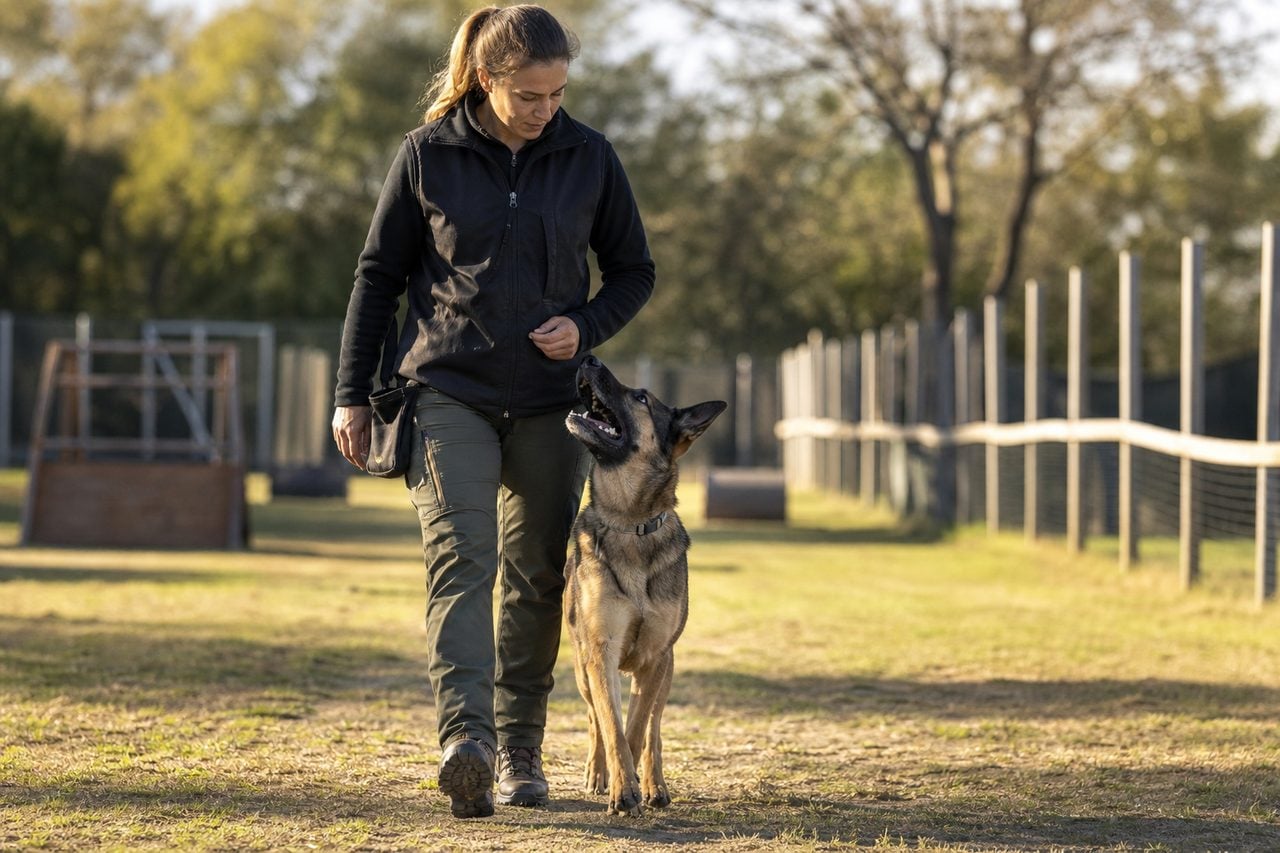
Dog training around Arlington runs from inexpensive group classes to residential programs that cost many times more, and the two ends are not the same product at different quality levels. They solve different problems for different dogs, and the most expensive mistake in this market is buying the right format for the wrong problem.
This page does not reprint rate cards, because published prices change. It explains what each format buys in this corridor, what local providers publish about how they work, what is typically included and what is extra, how the terms work, and — the most useful part for most people — which format gives the best return for a given problem. Ask each provider for its current rates once you know which format you are pricing.
One framing point first: the cheapest thing that solves your problem is not the cheapest thing on the list. Matching the format to the problem is worth more than negotiating any price.
What each format actually buys
Group classes — the lowest cost per hour. Weekly sessions with other dogs and one instructor. For a large share of dogs this is the correct answer, and it delivers what a private lesson cannot: proofing around other dogs with somebody managing the room.
Private lessons — priced per session or package. One trainer, one dog, one handler. The right purchase when the problem is specific to your dog or your building rather than generic.
In-home sessions — private rates, sometimes plus travel. The premium buys a trainer who sees your actual doorway, hallway and elevator. For behaviors tied to a building, it is the only way to see the real problem.
Day training — quoted per program. The dog trains with a professional during the day and sleeps at home. Several short sessions across a day, plus owner lessons that hand the work over to you.
Residential programs — typically the largest figure. The dog lives with the trainer for weeks. What decides whether the money worked is the handover at the end, not the length of the stay.
Group classes around Arlington
The cheapest structured training in the metro, and published in enough detail to compare.
What the courses cover. One Falls Church school's published syllabus pairs the basics — walking on a leash, heel position, sit, down, stay and recall — with what it calls situational training: door lunging, a leave-it command, go-to-place, free walking, street contacts and long-line work. That is the curriculum a dense county actually needs.
Age and prerequisite gates. The same school's puppy stream takes dogs from 14 weeks to 11 months, and its intermediate course is open only to dogs that have completed a basic course. A Bailey's Crossroads facility's basic class takes pups over five months at the first session, and its tricks class requires a completed basic class or equivalent. Check the gate before you book; a dog in the wrong class struggles in both directions.
Short intensives. The same Bailey's Crossroads facility runs a leash-manners intensive with no prerequisites — a shorter, cheaper way to find out whether a trainer suits you and your dog before committing to a longer course.
The ladder beyond the basics. Advanced group classes, Canine Good Citizen preparation, an introduction to Rally and nose work classes are all published by trainers serving this corridor, so a dog that finishes a basic course has somewhere to go next.
What drives the difference between two group courses is class size, venue and instructor credentials more than curriculum. Ask how many dogs are in the room and how far apart they will be, and ask to watch a session before enrolling.
Private, in-home and day training
The middle of the market, and where most Arlington households with a specific problem end up.
Evaluations first. One Falls Church practice requires a one-hour in-home evaluation of every new client before any program is sold. Budget for that visit separately from the package that follows it.
Blocks of sessions. The same practice sells in-home work in blocks of sessions, which usually cost less per visit than single sessions. Compare blocks on how many sessions happen outside your home, not just on the total.
Day training. One McLean trainer runs day training in conjunction with boarding or daycare at an animal health center. Day-training structures attach in-home or owner lessons to the block, and that number is the first thing to compare between quotes, because it is the mechanism by which the training reaches your household.
Why day training fits this county. The behaviors that matter in Arlington are tied to a specific building — an elevator door, a corridor, a lobby floor, your threshold. A day-training dog sleeps at home every night, so the work is practiced in the real environment from the first week.
Residential programs
The expensive end, and the format where the difference between a good and a bad purchase is largest.
A residency buys intensity: weeks of daily handling and structured work. It does not buy a finished dog, because the dog comes back to a household that has not changed. That is why the included handover and follow-up sessions are the number to compare across programs — ask for it in writing, along with what happens if you need more.
A residency suits an owner who genuinely cannot do the daily homework, a behavior that is entrenched, or a household deadline. It is the wrong purchase for leash reactivity, which is handler-dependent, and for separation distress, which by definition needs the dog in its own home.
Daycare, boarding and walking: the adjacent costs
Not training, but frequently part of the same budget — particularly for separation cases and for households whose schedules do not fit an evening class.
Daycare and walking. A walker or a daycare place keeps a dog from being left alone too long while a protocol is built. Many local businesses offer both, and some sell them in packages.
Boarding and grooming. Often sold by the same facilities as training. Combined packages can be worth asking about if you already use the facility.
Why this matters for a training budget: a separation-anxiety protocol is unworkable unless the dog is not left over threshold while you build it, and that scaffolding — walker, daycare or day training — is frequently the larger half of the total cost. Budget for it explicitly at the start rather than discovering it in week three.
What is included, what is extra, and the terms
The local market publishes its terms in more detail than most, which makes comparison easier if you read them.
Assessments. An Arlington trainer offers a complimentary consultation, a Falls Church club offers a free evaluation, and a Falls Church practice requires a paid in-home evaluation before any program. A quote given over the phone for a dog nobody has met is a guess.
Equipment. Some programs include equipment and others leave it to you. Ask before comparing two quotes.
Transport. One Falls Church practice includes complimentary pick-up and drop-off with all of its programs, and a Falls Church club offers pick-up and drop-off for its sessions. In a county where parking is the binding constraint on everything, that is a genuine benefit.
Payment plans. One Falls Church practice publishes payment plans for all of its programs, with a deposit followed by staged payments. If you pay over time, ask for the total rather than the installment.
Cancellation and expiry. Deposits, cancellation windows and package expiry dates are all worth reading before you pay. None of that is unreasonable; all of it is easier to accept before than after.
Best value by problem
The most useful way to read all of the above is by what you are trying to fix.
A normal puppy, no particular problem. A puppy class inside the socialization window. The cheapest training you will ever buy, and the one that prevents the expensive categories later.
An adolescent that pulls and ignores you. A group obedience course or a short leash-manners intensive, with daily homework.
Door lunging, lobby behavior, settling in a small apartment. In-home, every time. This is the highest-return purchase in the local market for a high-rise household.
Leash reactivity. An assessment, then private work at a distance the dog can cope with. Do not buy a residency for this.
Separation distress. A vet conversation, then a structured protocol at home with daycare or a walker as the scaffolding. Do not buy a residency for this either; it is the most expensive mistake available locally.
No time, at all. Day training, with the owner lessons taken seriously. Structurally the right answer for an Arlington schedule.
A dog genuinely too much for its handler. A residency can make sense here — buy it on included follow-up sessions, not on weeks.
A bored working dog. Nose work classes at group-course prices. They solve a problem people routinely try to solve with far more expensive formats.
Three questions that save money
“What would you do if this were your dog and the budget were half?” A trainer who can answer this well is a trainer who is diagnosing rather than selling, and the answer is frequently a cheaper format. The best sign in this whole market is a practitioner who talks you out of the expensive option at the assessment.
“How many sessions do you think this needs, and what would make it more?” A number, and the conditions that change it. An open-ended arrangement with no target is a subscription rather than a plan. Ask for that number and the reason for it; a separation case in particular is a small number of sessions plus months of your own homework.
“What is included, and what is extra?” Equipment. Follow-up. Written notes. Between-session support. Travel. Transport.
And one thing that is not a money question but saves more than all three: start earlier than you want to. Every price in this market rises with the age and duration of the problem. A threshold behavior caught at five months is a session. The same behavior at three years, rehearsed daily in a corridor for years, is a package. The single largest determinant of what dog training costs in Arlington is how long you waited.
Reviewed Dog Trainers in Arlington
These reviewed Arlington-area trainers from our directory can walk you through pricing for their programs. Each links to a full profile with specialties, certified credentials, reviews, and contact info:
- Giving Tree K9 Club — 5.0★ (167 reviews)
- The Polite Dog — 5.0★ (36 reviews)
- Paw Mind Body Dog Training — 5.0★ (29 reviews)
- Mickey & Friends Dog Walks and Playdates LLC — 5.0★ (13 reviews)
- North Star Canine — 5.0★ (12 reviews)
- Dunn Loring Dog Walking — 5.0★ (5 reviews)
- Fall in Line K9 — 5.0★ (4 reviews)
- Boss Man Dog Training LLC — 5.0★ (4 reviews)
- Pawfect Pups — 5.0★ (4 reviews)
- C&C PALS, Dog Training — 5.0★ (3 reviews)
See all Arlington dog training prices trainers →
Frequently Asked Questions
How much does dog training cost in Arlington?
It depends far more on the format than on the trainer. Group classes are the lowest cost per hour, private and in-home sessions cost more per session, and day-training and residential programs are quoted per program. Decide the format first, then ask each provider for its current rates — published prices change.
Why is in-home training more expensive?
Travel and parking, mostly, and the trainer's time in your building. For threshold, lobby, settling and house-training problems it is money well spent, because those problems cannot be seen anywhere else.
What is the best-value training in Arlington?
For a normal puppy or adolescent, a group course with daily homework. For a problem that lives in your building, a small number of in-home sessions. For a bored working dog, a nose-work class at group-course prices solves a problem people routinely spend far more on.
Do local trainers offer payment plans?
Some do. One Falls Church practice publishes payment plans for all of its programs, with a deposit followed by staged payments. If you are paying over time, ask for the total rather than the installment.
What should I check in the terms before paying?
The deposit, the cancellation window and any package expiry date. Also check the age and prerequisite gates: one local puppy stream runs from 14 weeks to 11 months, one local basic class takes pups over five months, and intermediate and tricks classes locally require a completed basic course or equivalent.
Related: read our complete dog training prices guide or the full Arlington dog training overview.
Ready to find the right dog training prices pro in Arlington?