Dog Trainers in Arlington, VA

Arlington is the densest county in Virginia and one of the densest in the country, and that single fact decides what dog training here has to be about. Almost nothing in this market happens on private land. The county is twenty-six square miles with no incorporated towns inside it, built along two Metro corridors, and a very large share of its dogs live above the ground floor — in the Rosslyn and Ballston towers, in the Crystal City and Pentagon City high-rises, in the garden apartments off Columbia Pike. A dog in Arlington meets a lift, a shared corridor, a lobby, a sidewalk and another dog before it has been awake ten minutes. The problems trainers here are asked to solve follow directly from that: leash reactivity at close range, barking at footsteps in the hallway, a dog that cannot be left alone in a building with neighbors on three sides, and pulling on a sidewalk that is never empty. Falls Church and the Seven Corners edge feel different again — older detached housing, real gardens, and the start of the drive-out market that sends dogs to residential programs on land the county cannot offer. The other thing that shapes this market is the federal cadence: a large share of Arlington households are on posting, rotation or deployment cycles, which is why residential and day-training formats sell here at a rate you would not expect from a county this small. This page lists {COUNT} dog trainers serving Arlington, Falls Church, McLean and Bailey’s Crossroads and the neighboring Northern Virginia towns, with what each one actually offers, so you can shortlist before you call.
- Top-Rated Dog Trainers in Arlington
- What Kind of Training Does Your Dog Need?
- Training Formats and Typical US Dog-Training Prices
- Dog Training Schools & Classes in Arlington
- How to Pick the Right Trainer
- Dog Training by Arlington Neighborhood
- Arlington Dog Training Resources
- Common Questions About Dog Training in Arlington
- Start Here
This page is your starting point. Whether you need puppy socialization, basic obedience, off-leash training, or help with a serious behavior problem, we’ll help you understand your options, what to expect, and how to connect with the right professional in Arlington.
Top-Rated Dog Trainers in Arlington
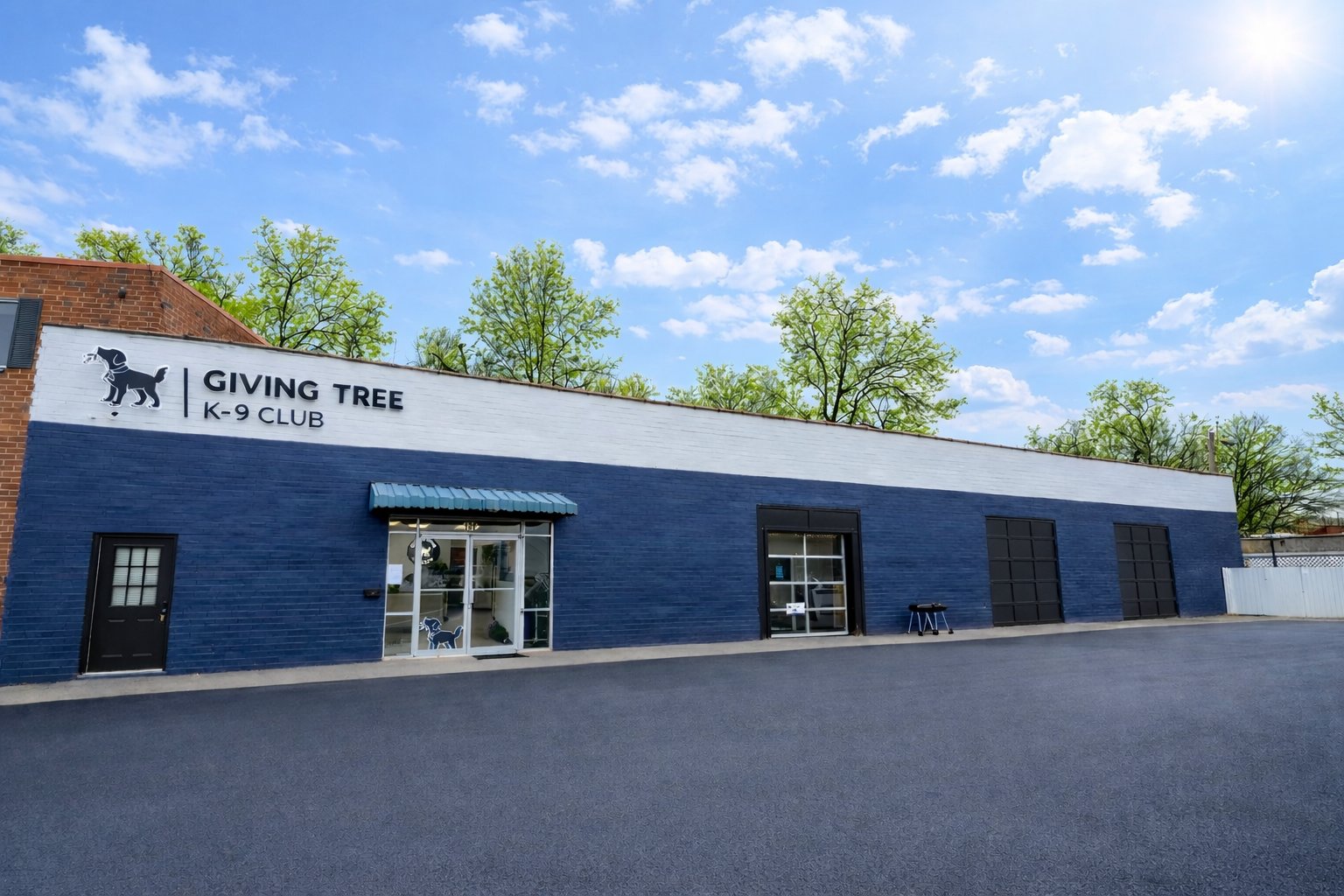
Compare Arlington’s top-rated dog trainers below — each listing shows real Google reviews and, where we’ve checked them, certified credentials, so you can reach out with confidence.

What Kind of Training Does Your Dog Need?
Before you start comparing trainers, figure out which category your dog falls into. This determines the type of training, the format, and the realistic timeline.
Puppy (8 weeks to 5 months)
Priority: socialization and foundation habits. This is the most time-sensitive stage — the critical socialization window closes around 16 weeks, and what your puppy is exposed to during this period shapes their temperament permanently. Group puppy classes are ideal. Read our full guide: Puppy Training in Arlington.
Adolescent dog (5 to 18 months)
Priority: obedience and impulse control. This is the stage where most owners hit the wall — the cute puppy has turned into a teenager who jumps on guests, pulls on the leash, and has developed selective hearing. Group obedience classes or private lessons work well here. Consistency is everything.
Adult dog — new to training
Priority: basic obedience and household manners. It’s never too late. Adult dogs are often faster learners than puppies because they have longer attention spans.
Adult dog — specific behavior issue
Priority: targeted behavior modification. Reactivity, aggression, separation anxiety, resource guarding, excessive barking. These issues need a qualified trainer or behaviorist — not a group class. Start with a behavior consultation.
Any dog — intensive training needed fast
Priority: results on a compressed timeline. Board-and-train programs offer intensive daily training over 2 to 6 weeks — the fastest path to results when done right. Read our full guide: Board and Train in Arlington.
Training Formats and Typical US Dog-Training Prices
The formats below are the same everywhere; the figures are national ranges, not Arlington rates. Prices vary by city and by trainer — confirm directly with the trainer before you book.
Group classes
Best for socialization and foundation obedience. Meet once a week for 5 to 6 weeks with other dogs. Most affordable option. Typical US range: $150 to $300 for a full course.
Private lessons
One-on-one with a trainer at their facility or your home. Best for specific goals, reactive dogs, or customized plans. Typical US range: $100 to $175 per session (facility) or $125 to $200 (in-home).
Day training
Your dog goes to the trainer during the day and comes home at night. Great for working professionals. Typical US range: $75 to $125 per day.
Board and train
Your dog stays with the trainer for 2 to 6 weeks. Most intensive option. Typical US range: $1,500 to $6,000+ depending on length and complexity.
Behavior consultation
A diagnostic assessment for serious behavioral issues — a professional evaluation that produces a treatment plan. Typical US range: $200 to $400 for the initial assessment.
Dog Training Schools & Classes in Arlington
Looking for a dog training school or group obedience classes in Arlington? Plenty of local trainers and facilities run weekly group classes — a structured, affordable way to cover socialization and basic obedience alongside other dogs. Browse dog obedience classes in Arlington, or use the trainer directory above to compare every dog school and trainer in the Arlington area by specialty, reviews and price.
How to Pick the Right Trainer
Choosing a dog trainer is a lot like choosing a doctor — credentials matter, but so does communication style, philosophy, and whether you trust them with someone you care about.
Training methodology
This is the most important factor and the one most people skip. Dog training ranges from purely positive reinforcement (rewards only) to balanced training (rewards plus corrections). There is no single “right” approach — but there IS a right approach for your dog. A fearful rescue needs a different approach than a confident, drive-y working breed. Ask every trainer what tools and methods they use, and don’t commit until you understand and agree with their philosophy.
Credentials
Look for recognized certifications — CPDT-KA (Certified Professional Dog Trainer), KPA-CTP (Karen Pryor Academy), IACP, AKC CGC Evaluator, or for complex behavior, a CAAB or veterinary behaviorist. Credentials aren’t everything — some of the best trainers built their skills through decades of hands-on experience — but a trainer with no credentials AND no verifiable track record is a risk.
Transparency — red flags and green flags
Red flags: won’t let you observe a class or tour the facility, gets defensive about methodology, guarantees specific results, pressures you to sign up immediately, or trash-talks every other trainer. Green flags: welcomes questions, offers to let you observe a class first, gives references, is honest about what training can and cannot achieve, and tells you upfront if your dog’s issue is outside their expertise.
Dog Training by Arlington Neighborhood
The Arlington metro is large, and driving 45 minutes for a weekly class isn’t sustainable for most people. Here’s a quick overview of training availability by area:
Rosslyn and Courthouse
The tallest part of the county and the hardest place in it to raise a dog without help. Rosslyn is towers, structured parking lots, a Metro entrance and a hard ceiling on green space; Courthouse is a little softer but still stacked. Dogs here live on a lift, a lobby and six feet of lead, and the two problems that come up first are close-quarters reactivity — because there is no way to add distance in a corridor — and alarm barking at the sounds of a shared building. The Custis Trail runs along the top of the neighborhood and gives handlers the one thing the streets do not: a long, predictable strip where an oncoming dog can be seen forty meters out instead of appearing around a corner.
Clarendon, Virginia Square and Lyon Village
The restaurant corridor, and the part of Arlington where a dog is most likely to be asked to settle under a table while the world goes past. Wilson and Clarendon Boulevards carry constant foot traffic, most of the patios along them allow dogs and expect them to lie down quietly, and the side streets into Lyon Village turn residential within a block. Trainers working this corridor spend their time on duration settles, on polite greetings from strangers who will reach for a dog without asking, and on loose-lead walking in a place where the lead is never slack for long. The small fenced dog run off Clarendon is where a lot of that gets tested.
Ballston and Bluemont
Ballston is the county’s second tower cluster; Bluemont, immediately west of it, is where the density breaks. The two matter together because the W&OD and Four Mile Run trails meet at Bluemont Park, which makes this the natural graduation ground for a dog that has learned something in a flat and now has to prove it outdoors. Expect the classic sequence here: a dog that holds a settle beautifully in a Ballston living room, then loses it entirely at a trail junction with cyclists coming through at speed. Building that gap closed is most of the work in this part of the county.
Crystal City, Pentagon City and National Landing
The newest and fastest-changing dog population in the metro, and the one most visibly shaped by employment. National Landing has absorbed a great deal of office-to-residential growth, which means a lot of young dogs acquired recently by people in buildings, on schedules that shift. Two things follow. First, separation problems are over-represented here relative to the rest of the county. Second, daycare and day-training formats carry more of the load than they do elsewhere, because the owner is out of the flat for ten hours. Long Bridge Park and the Mount Vernon Trail along the river are where the outdoor work happens, and the aircraft noise on approach to the airport is a genuine, useful desensitization tool if you use it deliberately.
Shirlington and Fairlington
Shirlington is a compact walkable village center with the county’s best-known off-lead space at the bottom of it: the Shirlington dog park, a long fenced run along Four Mile Run with water access, busy almost every evening. Fairlington behind it is low-rise garden apartments with mature trees and real walking routes. This pairing produces a specific Arlington argument — owners bring an under-socialized or reactive dog straight to the busiest dog park in the county because it is close, and it goes badly. Trainers here spend a lot of time teaching people to use the fence line and the path outside it before they use the gate.
Columbia Pike, Penrose and Arlington View
The Pike is the county’s most mixed corridor: garden apartments, older single-family streets, small shopfronts and the densest immigrant-household share in Arlington. The dogs are correspondingly mixed — a lot of adopted and rehomed adults rather than bought puppies — and the training question skews toward starting late with a dog whose history is unknown. In-home work is the dominant format on this side of the county, partly because it suits the housing stock and partly because it removes the transport problem for households without a car.
North Arlington — Cherrydale, Westover and the Langston Boulevard corridor
The detached-housing half of the county, where dogs are most likely to have a garden and least likely to have learned anything useful outside it. Cherrydale and Westover both have small village centers with sidewalk cafes; Langston Boulevard connects them at speed. The characteristic North Arlington problem is a dog that is perfectly behaved at home and unrecognisable on a sidewalk, because it has never had to practice. Benjamin Banneker Park at the western edge, where the W&OD Trail enters the county, is the usual place for the first honest test.
Falls Church City and Seven Corners
Falls Church is two miles square, independently incorporated, and feels like a small town wedged between two counties. West Broad Street is its spine and the W&OD Trail crosses it, so the city has an unusual amount of usable practice ground for its size. Seven Corners, just south, is the opposite: a road interchange with retail wrapped round it and very little that is pleasant to walk. Most of the training supply in this part of the metro sits in Falls Church rather than in Seven Corners, and a good deal of it is in-home work traveling out into the surrounding Fairfax County streets.
Bailey’s Crossroads, Lincolnia and McLean
Two very different edges of the metro that share one characteristic: they are Fairfax County addresses whose dog owners behave like Arlington’s. Bailey’s Crossroads and the Seminary Road corridor are dense, apartment-heavy and close enough to south Arlington that the same trainers work both. McLean, north of the river bend, is the opposite — large lots, mature trees, the Chain Bridge approach — and its training demand runs toward group classes and nose work rather than the reactivity and separation work that dominates the corridors.
Arlington Dog Training Resources
Beyond professional training, Arlington has some excellent resources for dog owners.
Parks and off-leash areas
- Shirlington Dog Park, Four Mile Run — The best-known off-lead space in Arlington: a long fenced run stretching along Four Mile Run at the bottom of Shirlington village, with direct water access that most dogs in the county have used at least once. It is popular enough to be genuinely crowded on summer evenings, which is exactly why trainers treat it as an advanced environment rather than a starting point. The useful ground for most dogs in training is the paved path running outside the fence: close enough to get real dog-to-dog exposure at a chosen distance, far enough that the dog is never trapped.
- Bluemont Park and the W&OD / Four Mile Run trail junction — Where Arlington’s two big paved trails meet, with a fenced dog area, open playing fields and a long stretch of tree-lined path in both directions. This is the county’s standard proving ground for loose-lead work and for recall on a long line, because the path is wide, the sightlines are long and the traffic is constant but predictable — cyclists, runners, prams and other dogs arriving in a steady stream rather than in surprises. If a behavior holds here on a Saturday morning it is close to reliable.
- Benjamin Banneker Park, north-west Arlington — A fenced dog area on North Sycamore Street at the point where the W&OD Trail crosses into the county from Falls Church. Smaller and much quieter than Shirlington, which makes it the sensible first fenced space for a dog that cannot yet cope with a crowd. The trail immediately beside it gives you an instant escape route and an instant distance dial, which is the combination reactivity work actually needs.
- Glencarlyn Park, Four Mile Run — A long wooded stream valley running along Four Mile Run in the west of the county, with natural-surface trails, a fenced dog area and the Long Branch Nature Center at its top end. The value here is the terrain rather than the crowd: uneven ground, water, and enough tree cover that a dog has to use its nose. It is the usual Arlington answer for an anxious or over-aroused dog that needs a long structured walk rather than another distraction drill.
- Long Bridge Park and the Mount Vernon Trail, National Landing — The riverside strip below Crystal City, with a wide paved esplanade, open lawn and a direct link onto the Mount Vernon Trail running down the Virginia bank of the Potomac. Flat, exposed and busy with runners, and directly under the approach to the airport — which sounds like a drawback and is actually the single best sound-desensitization resource in the metro, because the aircraft arrive on a schedule you can plan a session around.
- The Custis Trail, Rosslyn to Ballston — Not a park but the most-used training corridor in north Arlington: a paved commuter trail running the length of the Metro corridor, parallel to the motorway for part of its length. It is narrow, fast and full of cyclists, which makes it a poor first outing and an excellent final exam. Trainers use it to test whether a settle and a loose lead survive an environment where the handler cannot control the approach distance.
- Towers Park and Fort Barnard Park, south Arlington — Two small neighborhood fenced dog areas on the south side of the county, the sort of place people actually use on a weekday evening. Both are compact enough that a nervous dog can be walked past the fence rather than put inside it, and both sit in residential streets that give you somewhere to go the moment a session stops going well. For most south-Arlington dogs these are the realistic training venues, not the big-name park.
- The W&OD Trail through Falls Church — The old railway line runs straight through the middle of Falls Church City, crossing West Broad Street and continuing west into Fairfax County. Within the city it is flat, paved, tree-shaded and busy with commuters on bikes. It is the main reason a city two miles square has usable practice ground at all, and it is where most of the in-home trainers working Falls Church take a dog once the indoor work is holding.
These parks are great for socialization practice AFTER your dog has a foundation of training. Taking an untrained dog to an off-leash park is asking for trouble.
Veterinary behaviorists
For complex behavior cases that may require medication alongside training, ask your primary vet for a referral to a veterinary behaviorist serving the Arlington area.
Dog Trainers by Community in the Arlington Area
Looking for a trainer in a specific Arlington-area community? Here are the local options town by town.
Dog Trainers in Alexandria, VA
- JW Dog Training & Behavior Consulting — 5.0★ (44)
- Best Behaved Dogs — 5.0★ (27)
- Nutty Pups Canine Club — 5.0★ (26)
- Mount Vernon Dog Training Club — 5.0★ (6)
- K9 Reactive Rehab — 5.0★ (4)
- Pack Leader Help — 4.9★ (135)
- Bark Busters Home Dog Training – Virginia Beltway — 4.9★ (70)
- Core Canine — 4.9★ (67)
Also in Alexandria: Off Collar, NOVA Canine Academy, Olde Towne School For Dogs, Frolick Dogs, Wholistic Hound Academy, Whole Dogz, Your Dog’s Best Friends, Alexandria Dog Training Company, King Street Canine
Dog Trainers in Woodbridge, VA
- Happy Pack Dog Care, LLC — 5.0★ (29)
- Woodbridge K9 Training — 5.0★ (6)
- Fall in Line K9 — 5.0★ (4)
- Improving Pets — 5.0★ (4)
- Boss Man Dog Training LLC — 5.0★ (4)
- Steadfast K9 LLC — 5.0★ (2)
- Golden Paw Rules, LLC – Dog Training Service — 5.0★ (2)
- The Dog Eaze Inn — 4.8★ (811)
Also in Woodbridge: Off Leash K9 of Northern Virginia, G&S Dog Training, Dogtopia of Woodbridge, Alpha Pets, inc
Dog Trainers in Springfield, VA
- North Star Canine — 5.0★ (12)
- Dog Tranquility LLC — 5.0★ (11)
- Prudent K9 Training — 5.0★ (7)
- Positive K9 Obedience Training — 5.0★ (2)
- PuppyK — 4.9★ (206)
- Zoom Room Dog Training — 4.9★ (121)
- Pumpuni Pups — 4.9★ (38)
- Lively – Pet Services, Training, & Boarding
Dog Trainers in Falls Church, VA
- Giving Tree K9 Club — 5.0★ (167)
- Unleashed Abilities: Coaching People, Training Dogs — 5.0★ (132)
- Comeback Dog Training L.L.C. — 5.0★ (36)
- The Polite Dog — 5.0★ (36)
- Dogfullife, LLC — 5.0★ (1)
- Dog Solve LLC. — 5.0★ (1)
- Nova Pack Dog Training LLC — 4.7★ (59)
Dog Trainers in Fairfax, VA
- Lead With Fun — 5.0★ (44)
- Apex K9 — 5.0★ (30)
- Paw Mind Body Dog Training — 5.0★ (29)
- Mickey & Friends Dog Walks and Playdates LLC — 5.0★ (13)
- Treats and Triumphs Dog Training — 5.0★ (13)
- MVP Resort — 4.6★ (54)
- Animal Behavior Wellness Center — 4.4★ (96)
Dog Trainers in Vienna, VA
- Dunn Loring Dog Walking — 5.0★ (5)
- Heyer Canine Learning LLC — 5.0★ (5)
- Pawfect Pups — 5.0★ (4)
- Hunter Mill Retrievers — 5.0★ (1)
- Dog University — 4.7★ (124)
Dog Trainers in Mclean, VA
- C&C PALS, Dog Training — 5.0★ (3)
- Capitol Canine Club — 3.6★ (8)
Dog Trainers in Bailey's Crossroads, VA
- Bark + Boarding — 4.5★ (149)
Also in Arlington: Yates Family Labradors LLC, The Unlimited Canine, Pooch Pals LLC – Dog Walker, Arlington Dog Nanny, Canine Cardio, District Dogs National Landing, WOOFS! Dog Training Center, District Dogs Clarendon, Best Friend’s Dog Training of Northern Virginia, Dogs Need Moore Love
More trainers near Arlington
These trainers are just outside the Arlington communities listed above.
- Zayne’s World K9 Training — Burke, VA · 5.9 mi
- 4 the Love of Dogs — Dumfries, VA · 15.6 mi
Dog Training by Specialty in Arlington
Arlington-specific guides for each type of training:
- Puppy Training
- Puppy Socialization
- Dog Obedience Classes
- Aggressive Dog Training
- Off-Leash Dog Training
- Separation Anxiety Training
- In-Home Dog Training
- Service Dog Training
- Dog Training Prices
Also live across Virginia: Charlottesville · Fredericksburg · Hampton Roads · Harrisonburg · Leesburg · Lynchburg · Reston · Richmond · Roanoke · Staunton.
Common Questions About Dog Training in Arlington
How much does dog training cost in Arlington?
Published local prices sort into three bands. Group classes are the cheapest: an eight-week obedience or puppy course is published locally at $140, and a five- or six-session group program at $250. Private work runs $125 to $180 an hour, with in-home sessions priced above campus or virtual ones by about $30; multi-session packages are published at $405 to $765 for three to six sessions, $500 for five private obedience sessions, $675 for a four-session puppy package and $700 for a five-lesson puppy program. Residential and day-training programs are the expensive end: $1,900 for a ten-day day-school program, $2,400 to $3,600 for four weeks of day training, $2,500 to $5,670 for hybrid programs and $3,300 to $5,220 for full board-and-train, with one local rehabilitation program published at $7,470.
Do Arlington trainers come to your apartment, or do you go to them?
Both, and the split is unusually even here because so little of the county has a garden. Six of the trainers listed on this page publish in-home or private one-to-one work as a core format, and at least one publishes a service area covering Alexandria, Arlington, Fairfax, Falls Church and Merrifield. The trade-off is straightforward: in-home work starts where the problem actually is — the lobby, the hallway, the lift — and costs about $30 more per session locally than the same session at a training center.
My dog barks and lunges at other dogs on the sidewalk. Who handles that?
That is the commonest presenting problem in this county and six of the businesses on this page publish reactivity, aggression or behavior-modification work on their own sites, including a dedicated leash-manners intensive published at $250. A word on sequencing: the fenced dog parks are the wrong place to start. The paved paths beside them — the Four Mile Run path outside Shirlington, the W&OD at Bluemont and Banneker — let you choose the distance, which is the whole mechanism.
Is board-and-train worth it in a place with this many trainers?
It is the right answer for a specific situation rather than a generally better product. Two of the businesses on this page publish residential programs, priced locally from $3,300 for a two-week puppy program to $5,220 for four weeks and $7,470 for an in-depth rehabilitation program. What decides the value is the handover: the local programs that publish a fixed number of included in-home follow-up sessions — one publishes three included post-program in-home sessions, and six on its longest package — are structurally better purchases than the ones that do not, because your dog learns the behavior for the trainer, in the trainer’s environment, and none of that transfers to your apartment on its own.
What is different about training a dog in a high-rise?
Three things, all of them about the absence of a buffer. There is no transition space between your sofa and a public corridor, so a dog gets no warm-up before it meets the world. There is no way to add distance in a lift or hallway, so ordinary reactivity has nowhere to go. And your neighbors share walls on three sides, so barking becomes a housing problem long before it becomes a training problem. Arlington trainers plan around this explicitly — door and threshold routines, a settle that works on a hard floor with no bed, and lobby-to-sidewalk drills are standard here in a way they are not in a suburb.
Falls Church and McLean have their own trainers — are they on this page?
Yes. This hub covers the inner Northern Virginia corridor as one market — Arlington, Falls Church, McLean and Bailey’s Crossroads, and out through Alexandria, Fairfax, Springfield, Vienna and Woodbridge — because that is how it behaves: trainers cross those lines every day and most of them publish the whole corridor as their service area. So a business with an Alexandria or a Fairfax address can appear on this page, and so can an Arlington trainer who drives out to Springfield or Vienna. The thing worth checking when you shop is which of the two you are looking at: a service area is not an address, and neither is a phone number, so ask where the trainer is actually based and whether your own street is inside the radius.
Start Here
The best time to start training is today. Whether your puppy needs socialization, your adolescent dog needs impulse control, or your adult dog has a behavior issue that’s been building for years — the sooner you start, the faster things improve.
Browse dog trainers in Arlington on GetDogSchool.com. Compare programs, read reviews, and connect with professionals who fit your dog’s needs and your budget.
Find Dog Trainers in Arlington →
Ready to find the right trainer for your dog in Arlington?
Get matched with a trainer in Arlington →