
Puppy Socialization in Canton, OH
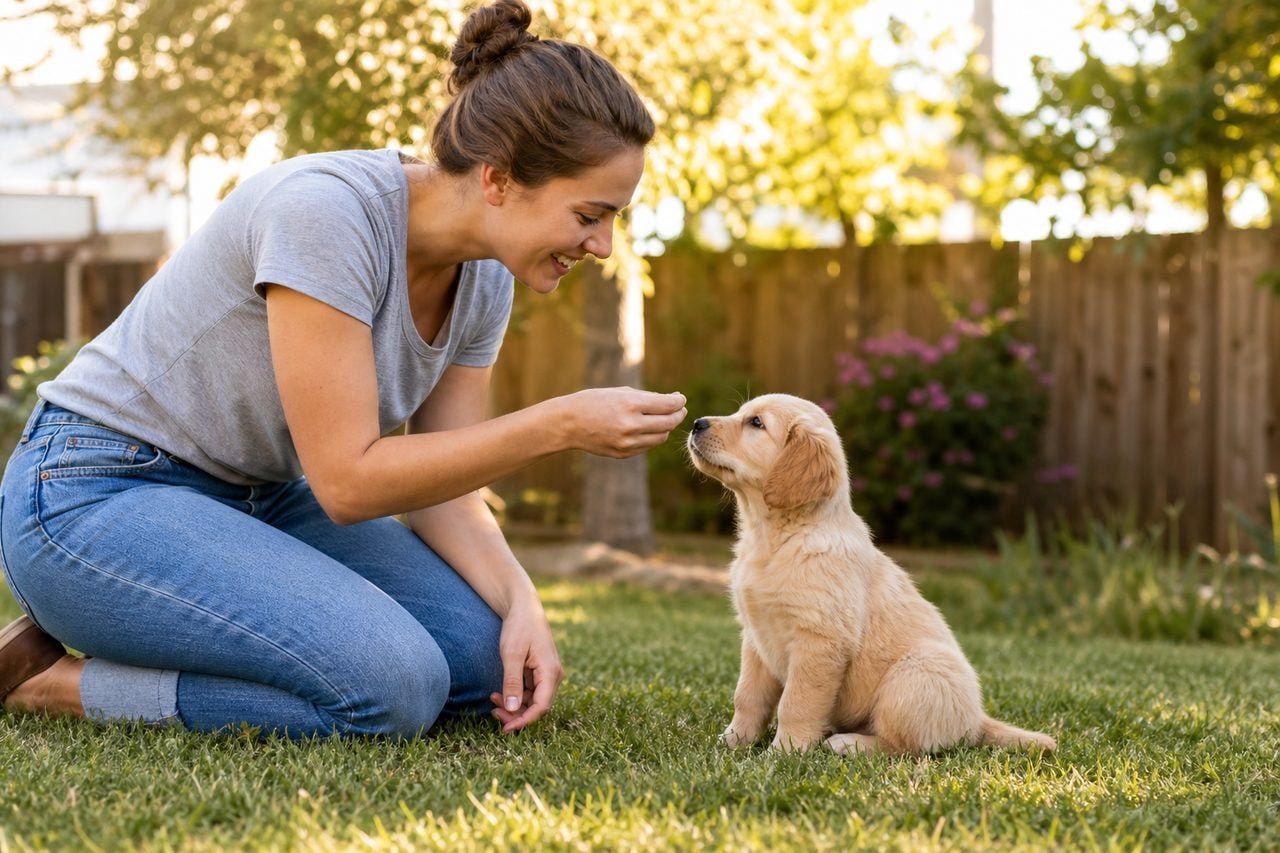
Socialization is the quiet work that decides what kind of adult dog your puppy becomes, and in Canton it’s both easier and harder than people expect. Easier, because the Hall of Fame City and surrounding Stark County offer an unusually rich spread of environments — trail systems, small-town main streets, busy shopping districts, and quiet rural roads all within a short drive. Harder, because Northeast Ohio’s long, cold winters can swallow the very weeks a puppy most needs to be out meeting the world.
- What socialization really means — and the window that closes
- Safe socialization before your puppy is fully vaccinated
- People, dogs, sounds, and surfaces: building a broad foundation
- Canton's best places to socialize a puppy
- Socializing through a Northeast Ohio winter
- When local classes and trainers make the difference
- Reviewed trainers
- FAQ
It helps to be clear about what socialization actually means. It is not simply letting your puppy play with every dog it meets, and it is definitely not flooding a nervous pup with overwhelming experiences. Real socialization is the deliberate, positive introduction of your puppy to the full range of sights, sounds, surfaces, people, and animals it will encounter in life — at a pace and intensity the puppy can handle, so each experience builds confidence rather than fear.
This guide is built specifically for raising a well-socialized puppy in Canton: why the developmental window is so unforgiving, how to expose your puppy safely before and after vaccinations, the people and animals and sounds that matter, how to use local parks and neighborhoods as a graduated training ladder, how to keep the work alive through a brutal winter, and where local trainers and classes fit in. The throughline is doing this on purpose, because a half-socialized puppy is one of the most common and preventable problems Canton dog owners face.
What socialization really means — and the window that closes
The prime socialization window for puppies runs from roughly three weeks to about three or four months of age. During this stretch a puppy’s brain is primed to accept new things as normal; after it begins to close, the same novel experiences are far more likely to trigger caution or fear. This is why a puppy that meets dozens of friendly people in its first months usually grows into a relaxed adult, while one kept isolated often becomes wary of strangers for life.
Crucially, socialization is about quality, not just quantity. The aim is for your puppy to have many positive experiences — pleasant, low-pressure encounters paired with treats, praise, and the freedom to retreat if it wants. A bad experience during this window, like being mobbed by a rowdy dog or frightened by a loud crowd at a Canton event, can do lasting damage. More is not always better; better is better.
It also helps to separate socialization from obedience training. Teaching sit and stay is useful, but it’s a different project from building a dog that feels safe in the world. A puppy can know a dozen cues and still panic at the sight of a stranger or a passing car. Socialization targets the emotional foundation — how your puppy feels about novelty — which ultimately matters more than any single trained behavior.
Because the window is short and unforgiving, treat these weeks as a genuine priority rather than something to get to eventually. Make a simple checklist of the sights, sounds, surfaces, and people your puppy should meet, and work through it steadily. The effort you invest now is effectively impossible to fully replicate later, which is exactly why under-socialization is so common and so hard to reverse.
Safe socialization before your puppy is fully vaccinated
New owners often feel trapped between two real risks: the socialization window is closing fast, but a young puppy isn’t fully protected against disease yet. The resolution is to socialize safely rather than to wait. The behavioral risk of under-socialization is, for most puppies, a bigger long-term threat than the disease risk — but you manage both by choosing controlled, lower-risk exposures during these early weeks. Always coordinate with your veterinarian on timing.
You can do a great deal before full vaccination. Carry your puppy through new environments — the edge of a Belden Village parking lot, the sidewalks of downtown Canton’s Arts District, a friend’s porch — so it sees and hears the world without its feet touching high-traffic ground. Invite calm, vaccinated, healthy adult dogs to meet your puppy in your own yard. Take short car rides to build comfort with travel. Each of these builds confidence at low risk.
Home is a powerful socialization classroom in this phase, too. Introduce your puppy to a steady stream of visitors of different ages, appearances, and energy levels, always letting the puppy approach in its own time and rewarding calm curiosity. Expose it to everyday household sounds, surfaces, and objects — vacuum, doorbell, slippery floors, umbrellas — so the ordinary stops being scary. A lot of valuable work happens without ever leaving the house.
What to avoid in this window is the high-risk middle ground: dog parks, pet-store floors, and other spots where many unknown, possibly unvaccinated dogs congregate. Once your veterinarian confirms your puppy is adequately protected, you can open up to those busier shared spaces. Until then, lean on carried outings, private introductions, and the structured environment of a reputable puppy class that requires proof of age-appropriate vaccination.
People, dogs, sounds, and surfaces: building a broad foundation
A well-socialized Canton puppy needs exposure across several categories, and people come first. Aim to introduce your puppy to a wide variety of humans — men and women, children and seniors, people in hats and uniforms and high-visibility gear, people with beards or sunglasses or mobility aids. Dogs generalize less than we assume, so a pup that’s only met young women may be wary of a man in a Massillon Tigers cap. Keep every meeting calm and rewarded.
Other animals matter too, but quality control is everything. Arrange for your puppy to meet known, friendly, vaccinated dogs with good social skills rather than turning it loose in a chaotic group. A few good canine friends teach far more than a swarm of strangers. If you have cats, livestock near Hartville or the rural south, or other pets, gentle, supervised introductions during the early window pay off for years.
Sounds are an underrated piece of the puzzle. Northeast Ohio delivers thunderstorms, snowplows scraping the streets, leaf blowers, fireworks around holidays, and the roar of a crowd during football season in a region that lives and breathes the sport. Introduce these sounds gradually and at low volume when possible, pairing them with treats, so your puppy learns they’re nothing to fear. A sound-sensitive dog is genuinely hard to live with, and prevention is far easier than treatment.
Don’t forget surfaces and physical handling. Let your puppy walk on grass, gravel, metal grates, wet pavement, snow, and slick indoor floors, so nothing underfoot rattles it later. Pair this with daily gentle handling of paws, ears, and mouth so grooming, vet care, and the constant winter ritual of toweling off muddy, salty feet stay stress-free. A puppy comfortable with handling and varied footing is a puppy that copes well with real Canton life.
Canton's best places to socialize a puppy
Once your veterinarian clears your puppy for busier shared spaces, Stark County offers a natural ladder of socialization settings. Start gentle: a quiet weekday walk on the paved loop at Sippo Lake Park or a calm residential street in North Canton or Louisville, where your puppy can watch the world from a comfortable distance. These low-key settings let a pup succeed and build confidence before facing anything overwhelming.
From there, step up gradually. The Ohio & Erie Canal Towpath Trail introduces cyclists, joggers, and other leashed dogs in a flowing, predictable stream — great practice for staying calm around movement. Petros Lake Park and Walborn Reservoir offer open, varied scenery, while the wide quiet of Quail Hollow State Park in Hartville suits a puppy who needs space and fewer surprises. Read your puppy and only advance when it’s relaxed at the current level.
The higher rungs of the ladder are the genuinely busy environments: the downtown Arts District with its foot traffic, the bustle around Belden Village, and the small but lively main streets of Massillon, Canal Fulton, and Hartville. These deliver crowds, noise, and unpredictable movement — valuable exposure for a confident pup, but too much for a nervous one. Approach them only after your puppy has handled calmer settings well, and keep sessions short and positive.
Be thoughtful about dog parks specifically. While they look like ideal socialization, off-leash dog parks can expose a young puppy to overwhelming or even frightening encounters with poorly socialized adult dogs, and a single bad experience can set back weeks of careful work. Many experienced owners prefer controlled playdates with known dogs and structured puppy classes over the unpredictability of an open dog park, at least until the puppy is older and solidly confident.
Socializing through a Northeast Ohio winter
Winter is where Canton socialization plans most often fall apart, and it’s worth naming the trap directly: a puppy born in late summer or fall hits its prime socialization weeks just as the snow sets in and the days go dark. If owners respond by keeping the pup home until spring, the window quietly closes, and the result is a dog that finds the world startling for months afterward. The goal is to keep the work alive despite the cold, not to wait it out.
Indoor and car-based exposure carry a lot of the load in winter. Reputable indoor puppy classes are invaluable in this season, offering safe socialization with other puppies and people in a heated, controlled space. Short car rides to varied locations — even just sitting in a parked car watching a Belden Village lot, or a quick carried walk through a covered, dog-friendly area — keep novelty flowing without exposing a small puppy to dangerous cold.
Make the most of your home as a winter socialization hub. Keep a steady flow of different visitors coming through, introduce new household sounds and objects, and set up safe, supervised playdates with known healthy dogs indoors. Rotate the experiences so your puppy keeps meeting genuinely new things rather than repeating the same few. A well-run winter at home can deliver a surprising amount of the exposure a puppy needs.
When you do head outside, do it safely. Dress yourself for long enough sessions to be useful, keep outings short for a small or thin-coated puppy in extreme cold, watch for signs of shivering or lifted paws, and rinse off road salt and ice-melt afterward since it irritates paws and is harmful if licked. Brief, positive winter outings — even just a few confident minutes on a snowy sidewalk — add up and keep your puppy comfortable with the season it will live in.
When local classes and trainers make the difference
A structured puppy socialization class is one of the most efficient tools available, especially through a Canton winter. A good class delivers supervised interaction with other puppies of similar age, controlled exposure to new people and handling, and an experienced eye to make sure play stays appropriate — all in a safe indoor space. Just as importantly, it coaches you on how to read your puppy and structure exposure, which makes everything you do at home more effective.
Choose carefully. Look for local trainers and puppy classes around Canton, Jackson Township, North Canton, and Massillon that use positive, reward-based methods and that require age-appropriate vaccination for all participants. A quality program manages puppy play to prevent any pup from being bullied or overwhelmed, and welcomes your questions about its approach. Be wary of any class that lets play turn into chaos or that relies on fear-based handling with young puppies.
Private help is worth considering when your puppy is already showing signs of fear, intense reactivity, or guarding, or when it’s too overwhelmed to cope in a group yet. An experienced local trainer can build a customized desensitization plan and coach you through it, addressing problems while the puppy is young and the issues are still malleable. Catching a budding fear early, in a young puppy, is dramatically easier than rehabilitating a fearful adult dog.
You don’t have to choose just one path. Plenty of Canton families combine at-home socialization, a structured puppy class for safe peer contact, and occasional private coaching for specific concerns. The right mix depends on your puppy’s temperament, your schedule, and the season — but the constant is intentionality. A puppy whose socialization is planned and guided, rather than left to chance, is overwhelmingly likely to grow into the confident, easygoing dog every owner hopes for.
Reviewed Puppy Socialization Trainers in Canton
These reviewed Canton-area trainers from our directory handle puppy socialization. Each links to a full profile with specialties, verified credentials, reviews, and contact info:
- Raising Pawtential — 5.0★ (26 reviews)
- Cathy’s K9 Kids Dog Training, LLC — 5.0★ (14 reviews)
- Ridgeside K9 Ohio — 4.9★ (138 reviews)
- K9 Manners Matter, LLC — 4.9★ (7 reviews)
- WAGS & Wiggles Dog Training — 4.8★ (27 reviews)
- Preschool Puppy training 50 years of experience — 4.6★ (10 reviews)
See all Canton puppy socialization trainers →
Frequently Asked Questions
What ages count as the puppy socialization window?
The prime window runs from roughly three weeks to about three or four months of age. During this period a puppy’s brain readily accepts new experiences as normal, so positive exposure to people, dogs, sounds, and places has an outsized, lasting effect. After the window starts closing, novel things are far more likely to trigger fear, which is why early, intentional socialization matters so much.
Can I socialize my Canton puppy before it's fully vaccinated?
Yes, safely and in coordination with your veterinarian. You can carry your puppy through new environments, arrange meetings with known healthy vaccinated dogs in your yard, take car rides, and host a variety of visitors at home. What you avoid until your vet clears it is high-risk shared ground like dog parks and pet-store floors. For most puppies, the risk of under-socialization outweighs the controlled exposures you can safely do early.
Are dog parks good for socializing a puppy in Canton?
Generally not for young puppies. Off-leash dog parks can expose a pup to overwhelming or frightening encounters with poorly socialized adult dogs, and a single bad experience can undo weeks of careful work. Most experienced owners prefer controlled playdates with known dogs and structured puppy classes until the dog is older and solidly confident. Save the dog park for a mature, well-adjusted dog.
How do I keep socializing my puppy through a snowy winter?
Lean on indoor puppy classes, car rides to varied locations, a steady flow of home visitors, new household sounds and objects, and supervised indoor playdates with known healthy dogs. When you go outside, keep sessions short for small or thin-coated puppies, watch for shivering, and rinse off road salt afterward. The key is keeping novelty flowing through winter rather than waiting for spring.
What kinds of things should my puppy be exposed to?
Aim for breadth: many types of people (different ages, appearances, hats, uniforms), friendly known dogs, other animals if relevant, everyday sounds (storms, snowplows, leaf blowers, crowds), varied surfaces (grass, gravel, snow, slick floors), and gentle daily handling of paws, ears, and mouth. The goal is a puppy that finds the ordinary world unremarkable, paired with treats and praise so each experience stays positive.
Should I use a puppy class or socialize on my own?
Both have a place, and many Canton owners combine them. At-home and carried-outing socialization covers a lot, especially before vaccinations are complete, but a structured class adds safe, supervised peer interaction and expert coaching that’s hard to replicate solo — particularly valuable in winter. Choose a class that uses positive methods and requires vaccination, and add private coaching if your puppy shows early fear or reactivity.
Related: read our complete puppy socialization guide or the full Canton dog training overview.
Ready to find the right puppy socialization pro in Canton?