
In-Home Dog Training in Youngstown, OH
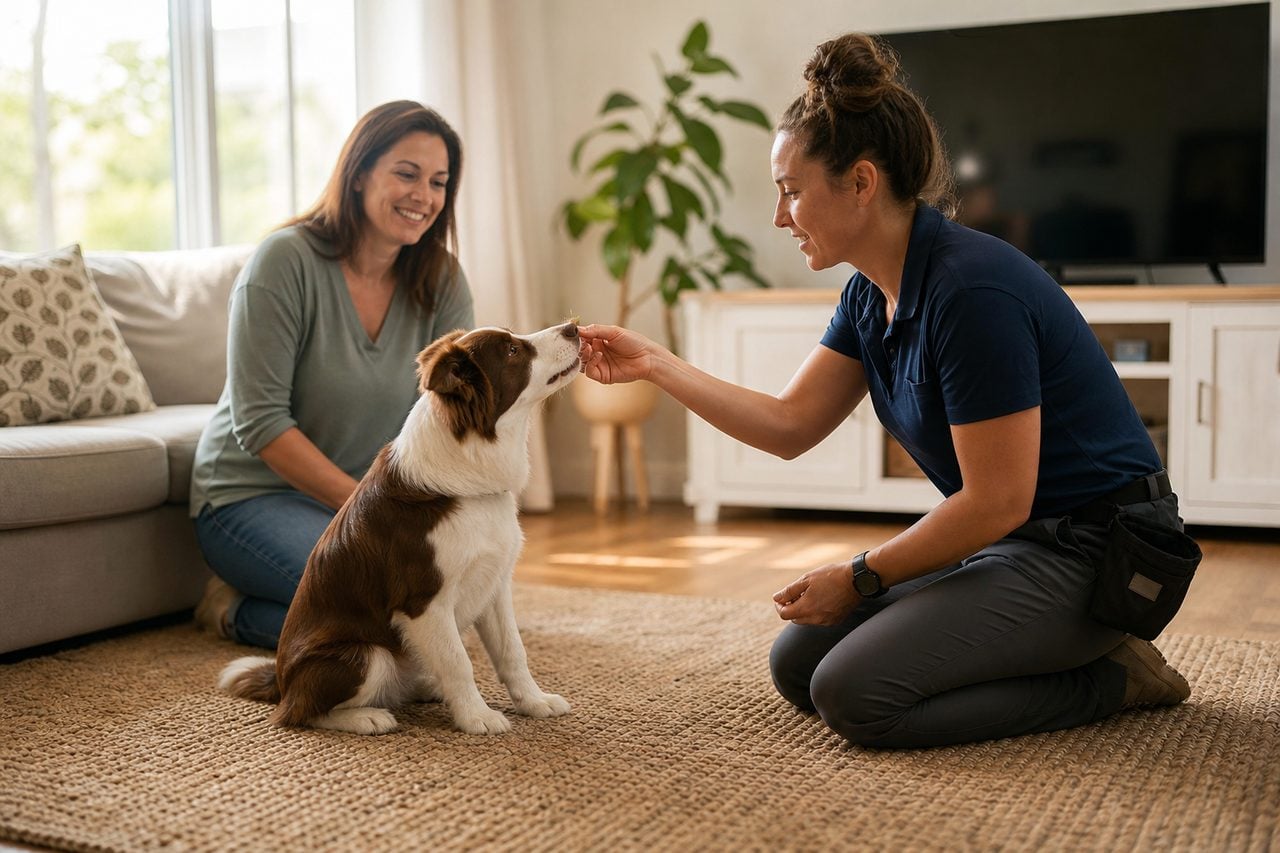
Life in the Mahoning Valley moves at the rhythm of shift work, school pickups, and the long commute up I-680 or out Route 224. Between a job in Boardman, errands in Canfield, and a household that never seems to slow down, finding time to haul a misbehaving dog across town to a group class can feel impossible. That is the gap in-home dog training is built to fill. Instead of asking you to load a car-sick or leash-reactive dog into the back seat and fight for parking, a trainer comes to your front door in Poland, Austintown, Struthers, or wherever you happen to live, and works with your dog in the exact place the problems actually happen.
- Why In-Home Training Fits Busy Mahoning Valley Households
- What a Typical In-Home Program Looks Like
- Which Dogs and Problems Are the Best Fit
- What In-Home Training Costs in the Youngstown Area
- Surviving Steel Valley Winters and Other Local Realities
- How to Choose a Local In-Home Trainer
- Reviewed trainers
- FAQ
In-home training simply means private lessons delivered in the owner’s own home, with a service-area model that covers Youngstown and the surrounding Mahoning and Trumbull County communities. For families pulled in ten directions at once, that convenience is not a luxury, it is often the difference between following through on training and quietly giving up. This article walks through how in-home training works in the Steel Valley, what it costs, which dogs benefit most, and how to choose a local trainer who fits the way your household actually runs.
Why In-Home Training Fits Busy Mahoning Valley Households
The Youngstown area is a region of commuters and shift workers. Plenty of households have one person heading to a hospital like Mercy Health St. Elizabeth for a night rotation while another drops kids at a Boardman or Canfield school before driving to work. By the time everyone is home, the last thing anyone wants is to reload the car and drive across town to a 7 p.m. class. In-home training removes that friction entirely. The trainer arrives on your schedule, often in the evening or on a weekend, and the lesson happens in your living room, your kitchen, and your own backyard.
That matters for more than convenience. Most of the behaviors that drive owners crazy are tied to a specific place. The dog that bolts the front door is reacting to your front door, not a strange one in a training facility. The dog that loses its mind when the mail carrier comes up the walk is responding to your walk, your windows, your routine. When a trainer works in the home, they see the real triggers in real time and build a plan around the actual layout of your space rather than a generic version of it.
There is also a quieter benefit for families that feel stretched thin. A private, in-home session is one task that does not require coordinating schedules, finding a sitter for the kids, or skipping dinner. The whole family can take part, including children who can be coached on how to interact with the dog calmly. For a lot of Valley households juggling work, school, and aging parents, folding training into the home rather than adding another errand to the week is what makes it sustainable.
What a Typical In-Home Program Looks Like
Most local trainers who offer in-home work start with an assessment visit. During that first session, the trainer watches how your dog behaves in its normal environment, asks detailed questions about your routine, and identifies which problems are urgent versus which are simply annoying. A dog that has bitten someone or guards food aggressively needs a different plan than a happy but jumpy Labrador that nobody ever taught to settle. The assessment is where a good trainer separates the two and sets honest expectations.
From there, programs are usually sold as packages rather than single lessons, because behavior change takes repetition. A common structure is four to eight sessions spaced a week or two apart, with homework in between. The first sessions tend to cover foundations: name recognition, attention, a reliable sit and down, loose-leash walking down your own street, and a solid recall in the backyard. Later sessions move to the harder, real-world stuff, like polite greetings when a neighbor knocks or calm behavior when the family sits down to eat.
The homework is the part people underestimate. A trainer in your home for an hour can show you exactly what to do, but the dog learns from the hundreds of small reps you do during the rest of the week. Good in-home trainers build that into the plan, leaving you with clear instructions, sometimes written notes or short videos, and concrete daily drills. Expect to be coached as much as the dog is. The most successful in-home outcomes in the Valley come from owners who treat the week between sessions as the actual training period and the session itself as the tune-up.
One more practical note: because in-home training is private, the pace bends to your dog. A fearful rescue from a Trumbull County shelter can go slowly without holding up a class full of confident dogs, and a quick-learning young dog can move ahead without waiting. That flexibility is one of the biggest advantages of the format.
Which Dogs and Problems Are the Best Fit
In-home training is a strong fit for a wide range of dogs, but it shines for a few specific situations common in the Youngstown area. The first is the reactive or anxious dog. If your dog barks and lunges at other dogs on walks, panics in the car, or melts down around strangers, a group class can actually make things worse by flooding the dog with the very triggers it cannot handle. Working at home, where the dog feels safe, lets a trainer build skills gradually before ever testing them in a busier setting.
The second strong fit is the household with young children or multiple family members. So much of what goes wrong between dogs and kids happens in the home: the dog that swipes food off the table, the puppy that nips small hands, the dog that guards the couch. An in-home trainer can coach the whole family at once and set up routines that everyone actually follows, which is far more durable than a single owner trying to relay instructions to the rest of the household after a class.
Puppies are another natural fit, especially for busy families. Early, in-home guidance on house-training, crate work, and bite inhibition during the critical socialization window can prevent months of frustration later. That said, puppies also benefit from controlled exposure to the wider world, so a good trainer will eventually push you to take the foundations you built at home out into low-key public settings around Boardman or Canfield once the basics are solid.
It is worth being honest about the limits, too. In-home training works for obedience, manners, anxiety, and most everyday behavior problems. Serious aggression with a bite history can sometimes be addressed at home, but it requires an experienced trainer, realistic expectations, and sometimes a veterinary behaviorist alongside the trainer. A trustworthy local trainer will tell you plainly if a case is beyond what private home lessons alone can fix, rather than promising a guaranteed cure.
What In-Home Training Costs in the Youngstown Area
Pricing in the Mahoning Valley tends to sit at or just below the national average, with the southern suburbs like Poland, Canfield, and the nicer parts of Boardman often running a little higher than the city or the eastern communities.
Most owners get better value buying a package. Because these are realistic ranges rather than fixed prices, the smart move is to get a clear quote up front that spells out the number of sessions, session length, what happens between visits, and whether any follow-up support is included.
Travel can affect the price. A trainer based near downtown may add a small fee for visits out to Girard, Niles, Warren, or the more distant parts of Trumbull County, simply because the drive eats into their day. That is normal and worth asking about so there are no surprises. When you compare the cost to the convenience of not driving anywhere yourself, and the value of training that targets your actual home, many Valley families find the in-home premium reasonable.
Finally, weigh cost against fit rather than chasing the lowest number. A cheaper trainer who uses harsh methods or makes guarantees no honest trainer can make may cost you far more later in undoing damage. Look at what the package actually delivers, how the trainer communicates, and whether their approach matches your dog, then judge the price against that.
Surviving Steel Valley Winters and Other Local Realities
Northeast Ohio winters are no joke, and they shape how training plays out here. From roughly November through March, lake-effect snow, ice, and brutal cold can wipe out outdoor walks for days at a time. That is actually one of the underrated advantages of in-home training: when it is too cold or icy to safely work a dog on a sidewalk in Austintown or Struthers, the indoor portion of the plan keeps going. Foundation skills, impulse control, settling on a mat, and indoor enrichment games can all be built when the weather makes the yard a no-go.
A good in-home trainer will plan around the seasons. In the warmer months, you might do more loose-leash work along quiet residential streets and short outings to dog-friendly spots near Mill Creek MetroParks. In deep winter, the emphasis shifts indoors, with the trainer giving you cold-weather enrichment ideas so a high-energy dog does not turn the house upside down during a week stuck inside. Planning for the climate is a sign you have found someone who actually understands working dogs in this region rather than applying a generic curriculum.
Local geography matters in smaller ways too. Many Valley homes have fenced yards, but plenty do not, and the trainer should account for that by teaching reliable recall and management routines for off-leash time. Households near busier roads or with frequent visitors get extra attention on door manners and safety. The point of the in-home model is exactly this: the plan is shaped by your home, your neighborhood, and the season you are training in, not a one-size-fits-all script.
How to Choose a Local In-Home Trainer
Start by being clear about what you need. A family with a new puppy in Poland wants something different from a household struggling with a reactive adult rescue in Warren. When you contact local trainers, describe your dog and your goals plainly and listen to how they respond. A good trainer asks questions back, wants to understand your routine, and gives you a realistic picture rather than an instant promise to fix everything in two sessions.
Ask about methods. The training world has moved strongly toward reward-based, humane approaches, and you want a trainer who can explain how they teach without relying on fear or pain. Be wary of anyone who guarantees results, since no honest trainer can promise how a living animal will respond, or anyone who refuses to explain their methods. It is fair to ask what tools they use, how they handle mistakes, and what happens if your dog is not progressing.
Practical fit matters as much as philosophy. Confirm the trainer actually services your community, whether that is Canfield, Girard, Niles, or the city itself, and ask about scheduling, since the whole point of in-home work is that it fits your life. Clarify the package details, the cost, and what support you get between sessions. If a trainer offers a brief phone consult before booking, take it, because the conversation itself tells you a lot about whether they listen and explain clearly.
Finally, trust the chemistry. You will be inviting this person into your home repeatedly and following their guidance closely, so you want someone you find clear, patient, and easy to work with. The best in-home trainer for your family is one whose approach matches your dog, whose schedule fits yours, and whose communication leaves you feeling more confident, not more confused.
In-Home Dog Training in Youngstown: Local Options & Nearest Specialists
Local Youngstown-area options for in-home dog training:
- B.O.N.E.S., a dog training company — 5.0★ (3 reviews)
Nearest in-home dog training specialists — Akron
For complex cases, some families travel to the larger pool of specialists in the Akron area for an assessment or a board-and-train stay. Top-reviewed options:
- The People’s Pup – Adventures and Training — 5.0★ (45 reviews)
- Focus Dog Training — 5.0★ (36 reviews)
- Jackie the Dog Trainer / SouthPaw Pet Care & Training — 5.0★ (27 reviews)
- Ace Dog Training — 5.0★ (6 reviews)
- American Caniner Akron Dog Training Services — 4.9★ (152 reviews)
- The Dog Wizard Medina — 4.9★ (100 reviews)
- On Cloud Canine LLC — 4.9★ (54 reviews)
- American Caniner Stow Dog Training & Behavioral Modification — 4.9★ (17 reviews)
See all Akron in-home dog training trainers →
Frequently Asked Questions
What exactly is in-home dog training?
In-home dog training means private, one-on-one lessons delivered by a trainer in your own home rather than at a facility or in a group class. In the Youngstown area it usually follows a service-area model, where the trainer travels to homes across Mahoning and Trumbull County so busy families do not have to drive anywhere. The dog learns in the exact environment where its behavior problems actually happen, and the whole household can take part.
How much does in-home training cost in the Youngstown area?
Costs in the Mahoning Valley generally sit at or just below the national average, with the southern suburbs running a bit higher. These are realistic ranges, so always get a clear written quote covering the number of sessions, length, and any follow-up before you commit.
Is in-home training better than a group class?
Neither is universally better; they serve different needs. In-home training is ideal for busy families, anxious or reactive dogs, and behavior problems tied to the home, because it is convenient and works in the dog’s real environment. Group classes offer socialization and practice around distractions. Many dogs do best with a blend, starting at home to build foundations and later adding controlled outings or a class once the basics are solid.
How many sessions will my dog need?
It depends on the dog and the goals. Many basic manners and obedience programs run four to eight in-home sessions spaced a week or two apart, with daily homework in between. Puppies and quick learners may need fewer; dogs with deeper anxiety or serious behavior issues often need more, plus ongoing follow-up. A good local trainer will give you an honest estimate after an assessment visit rather than a one-size-fits-all number.
Can in-home training fix aggression?
It can help with many cases, but it depends on the severity. Everyday issues like resource guarding or fear-based reactivity can often be improved at home with an experienced trainer. Serious aggression with a bite history requires a skilled professional, realistic expectations, and sometimes a veterinary behaviorist working alongside the trainer. Be cautious of anyone who guarantees a cure for aggression, since no honest trainer can promise how a living animal will respond.
Does in-home training still work in the winter?
Yes, and the winter is actually one of its strengths. When lake-effect snow and ice make outdoor walks unsafe across Northeast Ohio, the indoor portion of an in-home program keeps moving. Trainers can build foundation skills, impulse control, settling routines, and indoor enrichment during the cold months, then shift to more outdoor work in the warmer seasons. A good local trainer plans the program around the climate from the start.
Related: read our complete in-home dog training guide or the full Youngstown dog training overview.
Ready to find the right in-home dog training pro in Youngstown?