
Puppy Training in Newark, OH
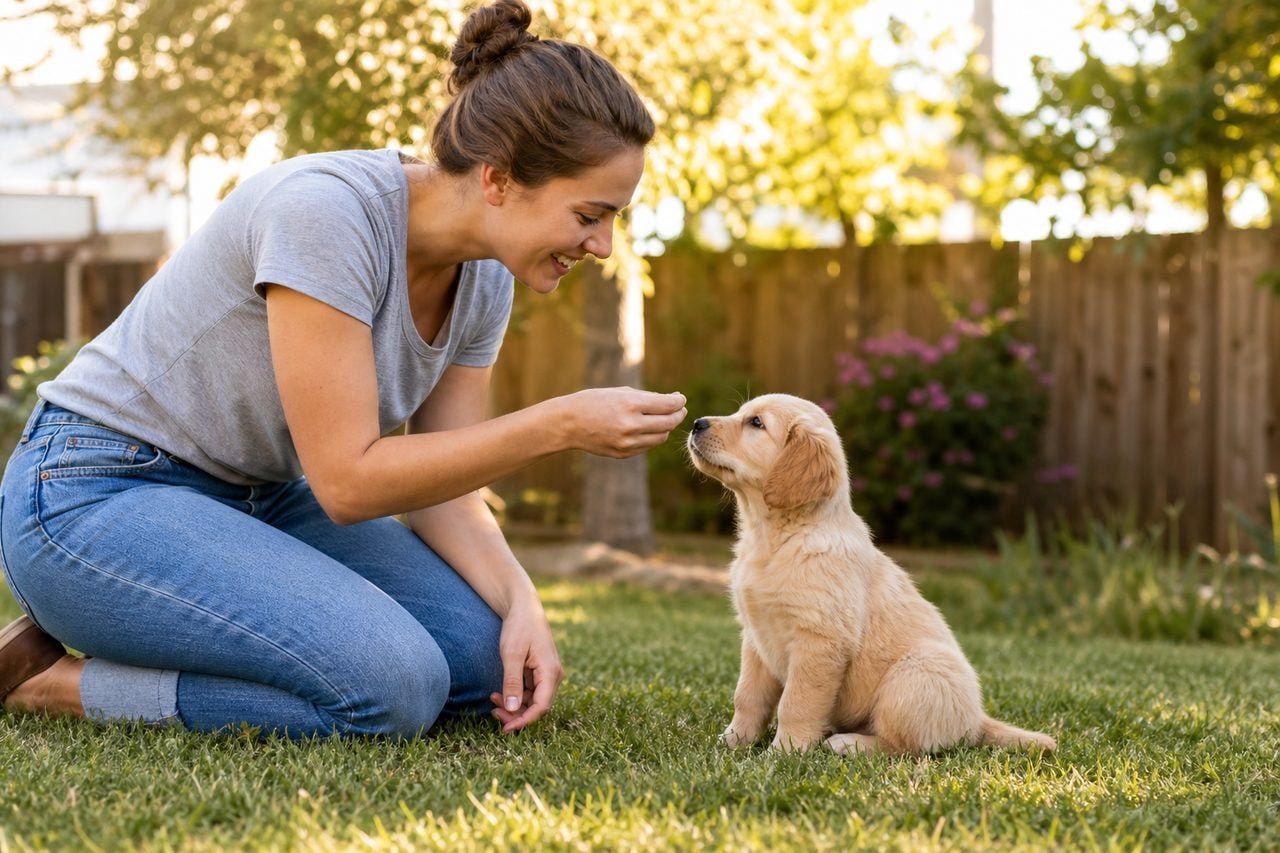
Bringing a new puppy home in Newark is one of those small-town milestones that touches your whole routine. Whether you live in one of the older neighborhoods near the Licking County Courthouse square, out toward Heath and Hebron, or in the newer subdivisions stretching toward Granville and Pataskala, those first few months set the tone for the next decade of life with your dog. Puppy training is not about turning your dog into a show-ring performer. It is about building a calm, confident companion who can handle a Friday evening at the Canal Market District, a leashed lap around the Great Circle, and the occasional thunderstorm rolling in off the Licking River valley without falling apart.
- Why the First Four Months Matter More Than You Think
- House Training in Newark's Four Distinct Seasons
- The Core Skills Every Newark Puppy Should Learn First
- Where to Practice: Real Newark-Area Training Spots
- What Puppy Training Costs in the Newark Area
- How to Choose a Puppy Trainer in Newark
- Building a Daily Routine That Actually Sticks
- Reviewed trainers
- FAQ
This guide is written specifically for puppy owners in and around Newark, Ohio. It walks through what to expect at each developmental stage, the local realities that shape training here (long humid summers, real winters, a mix of rural and downtown environments), what professional puppy training actually costs in central Ohio, and how to choose the right approach for your household. The goal is simple: give you a clear, honest roadmap so the next few months feel less like chaos and more like progress.
Why the First Four Months Matter More Than You Think
Puppies are not blank slates that you train later. They are sponges from the day you bring them home, and the window between roughly eight and sixteen weeks of age is the single most influential stretch of their entire life. During this period, a puppy’s brain is wired to decide what is normal and safe versus what is strange and threatening. A puppy who experiences the world thoughtfully during these weeks tends to grow into a stable adult. A puppy who is kept isolated “until the shots are done” often grows into a fearful or reactive dog, even with excellent training later on.
This is the part many Newark owners get wrong, usually with the best intentions. Your veterinarian is right that an unvaccinated puppy should not be wandering through high-traffic dog areas. But that advice gets stretched into total isolation, and the puppy misses the very window that matters most. The solution is controlled exposure rather than no exposure: carrying your puppy through a quiet corner of downtown, inviting calm vaccinated adult dogs to visit, letting the puppy watch the world from a safe distance.
Early training during this period is less about obedience drills and more about emotional foundation. You are teaching your puppy that new sounds, surfaces, people, and situations predict good things. Sit and down can wait a week. Confidence cannot. If you only take one idea from this guide, let it be this: in Newark’s mix of rural quiet and downtown bustle, a puppy that has been gently, repeatedly shown that the world is safe will be infinitely easier to live with than one that learned the world is scary.
House Training in Newark's Four Distinct Seasons
Central Ohio gives you all four seasons in full force, and that directly affects house training. A puppy you bring home in July faces different challenges than one you bring home in January, and the most common house-training failures here trace back to weather, not to a “stubborn” dog.
In the humid Newark summer, puppies drink more and need to relieve themselves more often, so your trip-outside schedule has to tighten up. Aim to take a young puppy out after every nap, every meal, every play session, and roughly every hour while awake. Pick a consistent spot in your yard and use a consistent phrase. The heat works in your favor here because puppies are happy to be outside.
Winter is where Newark owners struggle. When the yard is buried under snow or coated in ice, a small puppy genuinely does not want to step out, and many owners cave and let accidents slide indoors. The fix is to shovel a small clear potty zone close to the door so the puppy is not wading through cold snow, and to go out with the puppy rather than sending it alone. Layer rewards heavily in winter; you are competing against real discomfort, so the payoff for going outside has to be obvious. Consistency through the cold months is what separates a reliably house-trained spring dog from one that backslides every December.
Across all seasons, the core principles hold: supervise constantly, confine when you cannot watch (a crate or small gated area), reward the instant the puppy finishes outside, and never punish an accident you find after the fact. Punishment after the fact teaches a puppy to hide from you, not to hold it.
The Core Skills Every Newark Puppy Should Learn First
Once the emotional foundation and house training are underway, a handful of practical skills make daily life dramatically smoother. These are the ones worth prioritizing for a Newark household.
Name recognition and attention. Before any command, your puppy needs to reliably turn to you when you say its name. This is the anchor for everything else and it is the safety skill that matters most near roads and parking lots.
Loose-leash walking. Newark has genuinely pleasant places to walk a dog, from the paved T.J. Evans Trail to the sidewalks around the courthouse square, but none of them are enjoyable with a puppy that drags you down the block. Start leash work in your living room and backyard long before you attempt a real outing. A puppy that has practiced walking calmly at home has a fighting chance on the trail.
Recall (coming when called). This is the skill that can save your dog’s life. Build it indoors first as a happy game, then in a fenced yard, and only later in more open settings. Never call your puppy to do something it dislikes; you want “come” to always mean something good.
Settle and crate comfort. A puppy that can relax in a crate or on a mat is a puppy you can take places, leave safely, and live with sanely. Crate training also supports house training and gives your puppy a secure den, which matters during central Ohio’s loud summer thunderstorms.
Handling and grooming tolerance. Get your puppy comfortable having paws touched, ears looked at, and nails handled early. Your future self, your vet, and your groomer will all thank you.
Where to Practice: Real Newark-Area Training Spots
One advantage of raising a puppy in Licking County is the variety of safe, dog-friendly environments within a short drive. Once your puppy has started its vaccination series and your vet gives the nod for low-risk public exposure, these local spots are excellent training grounds.
The T.J. Evans Trail is a 14-mile paved rail-trail connecting Johnstown through Granville and into Newark. Its flat, predictable surface and tree-covered stretches make it ideal for practicing loose-leash walking and for letting a puppy get used to passing cyclists, joggers, and other dogs from a comfortable distance. Dogs must be leashed.
Dawes Arboretum, just south of Newark off SR-13, welcomes leashed dogs across its grounds and offers a gentle, low-pressure setting for exposure to open spaces, varied terrain, and calm crowds. Admission applies, and dogs must stay out of the ponds and the Conifer Glen. The variety of surfaces and sights here is a quiet training asset.
The Great Circle Earthworks in nearby Heath, part of the UNESCO-listed Hopewell Ceremonial Earthworks, allows leashed dogs across the grounds. The wide-open grassy expanse is a wonderful place to practice attention and recall games at a distance from distractions.
Infirmary Mound Park off SR-37 includes the Paws 2 Play dog park, with separate fenced areas for dogs over and under 30 pounds. For a young puppy, the off-leash areas are best approached cautiously and only once vaccinations are complete; the park’s rentable Special Use Area, available by the hour, is a smart option for controlled solo practice or small supervised playdates without a crowd of strange dogs.
A note of caution: avoid letting an under-vaccinated puppy onto the ground in busy off-leash areas. Use these spots for carried exposure, parking-lot watching, and leashed walks until your vet clears full public access.
What Puppy Training Costs in the Newark Area
Pricing for professional puppy training in central Ohio falls into a few predictable tiers, and knowing the ranges helps you budget and avoid both overpaying and undervaluing real expertise.
Group puppy classes typically run in the range of $150 to $300 for a multi-week course, usually four to six weekly sessions. These classes are excellent value for early socialization and foundation skills because your puppy practices around other puppies and people in a controlled setting. For most first-time Newark puppy owners, a group class is the natural starting point.
Private in-home or one-on-one sessions generally fall between $100 and $175 per session in central Ohio. Private training is worth the premium when you have a specific challenge (a fearful puppy, a hectic household, a tight schedule) or when you want a program tailored precisely to your home and yard. Many owners combine the two: a group class for socialization plus a private session or two for personalized troubleshooting.
Board-and-train programs, where your puppy stays with a trainer for an intensive period, range widely from roughly $1,500 to $6,000 depending on length and inclusions. For a young puppy, board-and-train is generally not the first recommendation, because the most valuable thing you can do during the critical socialization window is build the bond and habits at home, with you. Board-and-train is more commonly considered later, for specific adolescent or behavioral goals.
When comparing prices, ask what is actually included: number of sessions, follow-up support, written plans, and whether the trainer uses reward-based methods. The cheapest option is rarely the best value if it skips the follow-through that makes training stick.
How to Choose a Puppy Trainer in Newark
Choosing the right trainer matters as much as the training itself, because methods vary widely and your puppy’s emotional development is on the line. Use these questions and signals to guide your decision.
Ask about methods first. Look for trainers who emphasize reward-based, positive-reinforcement approaches, especially for puppies. The science is clear that fear-based or heavily corrective methods carry real risk of creating anxiety in young dogs. A good puppy trainer should be able to explain in plain language how they build behaviors with rewards and how they handle mistakes without intimidation.
Look for genuine puppy specialization. Working with an eight-week-old is different from training an adult dog. Ask whether the trainer runs puppy-specific classes and how they structure early socialization.
Ask about class size and structure. Smaller group classes mean more individual attention. Ask how many puppies are typically in a class and how they keep interactions safe.
Watch how they talk about your dog. A trainer who blames the puppy, labels it “dominant,” or promises instant fixes is a red flag. A trainer who asks about your home, your routine, and your goals, and who sets realistic expectations, is showing the mindset you want.
Trust the fit. You will be taking instruction from this person and practicing daily. If their communication style does not click with you, it will not click for your puppy either. It is completely reasonable to talk to more than one trainer before committing, and the local trainers listed on this page are a good place to start that conversation.
Building a Daily Routine That Actually Sticks
The single biggest predictor of puppy training success is not which trainer you hire or which method you use. It is consistency at home, every day, in short doses. Professional sessions point you in the right direction, but the real work happens in the small moments between them.
Aim for several very short training bursts throughout the day rather than one long session. A puppy’s attention span is measured in minutes, so three or four sessions of five minutes each will outperform a single twenty-minute slog every time. Tie training to things you already do: a quick sit before the food bowl goes down, a name-recognition game while the coffee brews, a few seconds of settle practice during a commercial break.
Build socialization into your errands. If you are driving past the courthouse square or stopping near the Canal Market District on a quiet morning, a few minutes of calm watching from a bench is a training session. Exposure does not require a special trip; it requires noticing the opportunities already in your day.
Finally, keep a simple log for the first month. Jot down what your puppy practiced and how it went. Patterns emerge quickly, and seeing progress on paper keeps you motivated through the inevitable frustrating days. Raising a puppy in Newark is a months-long project, not a weekend fix, and the families who treat it that way end up with the calm, capable adult dogs everyone else admires on the trail.
Reviewed Puppy Training Trainers in Newark
These reviewed Newark-area trainers from our directory handle puppy training. Each links to a full profile with specialties, verified credentials, reviews, and contact info:
- Sit Means Sit Dog Training Licking Valley — 5.0★ (62 reviews)
- Rowan’s Dog Training — 5.0★ (56 reviews)
- Ohio K9 Ranch — 5.0★ (18 reviews)
- Central Ohio K9 — 5.0★ (5 reviews)
- Paradigm K9 LLC — 4.9★ (37 reviews)
See all Newark puppy training trainers →
Frequently Asked Questions
When should I start training my puppy in Newark?
Start the day you bring your puppy home, usually around eight weeks of age. The most important learning window runs from roughly eight to sixteen weeks, so early socialization and foundation work should not wait. Formal group classes can often begin once your puppy has started its first vaccinations, but gentle at-home training and controlled exposure should begin immediately.
Is my puppy too young to be around other dogs before all its shots?
An unvaccinated puppy should not be on the ground in busy off-leash areas, but total isolation does more harm than missing a few germs. The safer middle path is controlled exposure: inviting healthy, vaccinated adult dogs to your home, carrying your puppy through quiet public spaces, and using puppy classes that require proof of vaccination. Ask your veterinarian what level of public access is appropriate for your puppy’s stage.
How much does puppy training cost around Newark, Ohio?
In central Ohio, group puppy classes generally run $150 to $300 for a multi-week course, private one-on-one sessions typically cost $100 to $175 each, and intensive board-and-train programs range from about $1,500 to $6,000. For most new puppy owners, a group class is the best starting value, with private sessions added if you need tailored help.
Where can I safely walk and train my puppy in the Newark area?
Good local options include the paved T.J. Evans Trail for loose-leash practice, the leashed grounds of Dawes Arboretum, and the open expanse of the Great Circle Earthworks in Heath for attention and recall games. Infirmary Mound Park has the Paws 2 Play dog park, though its off-leash areas are best saved until your puppy is fully vaccinated. Dogs must be leashed at all of these except inside the fenced dog-park areas.
How long does it take to train a puppy?
Basic house training and foundation skills usually take several weeks to a few months of consistent daily practice, but training is genuinely an ongoing process through your dog’s first year and beyond. Adolescence, which often hits around six to twelve months, can bring temporary backsliding. The owners who succeed treat training as a daily habit rather than a one-time course.
Should I do group classes or private training for my puppy?
For most Newark puppy owners, group classes are the ideal first step because they combine foundation training with the social exposure puppies need. Private training is the better choice when you have a specific challenge, a fearful puppy, or a schedule that does not fit class times. Many owners get the best results by combining both.
Related: read our complete puppy training guide or the full Newark dog training overview.
Ready to find the right puppy training pro in Newark?