Dog Trainers in Columbia, MO
Mid-Missouri is a single dog-training market wearing three different hats. Columbia is a university town of roughly 130,000 where a large share of households rent, move every couple of years and own a dog anyway, which is why so much of the local supply is group classes and in-home lessons rather than long residential programs. Thirty miles south, Jefferson City is a state-government town with a steadier population and a different demand profile, and it is where the metro’s residential board-and-train and service-dog work is concentrated. Fulton, Ashland and Boonville fill in the rural edges, and the drive between any two of them is 20 to 40 minutes on I-70, US 63 or US 54.That geography matters more here than in a compact metro, because a six-week class you have to reach every Tuesday at 6pm is a very different commitment from Columbia than it is from Boonville. This page lists every trainer we have verified across the whole catchment, along with what each one actually publishes about its programs, so you can weigh a closer generalist against a further specialist before you make the call. Where a trainer’s own website could not be read, we say so on the profile rather than filling the space with guesses.
- Top-Rated Dog Trainers in Columbia
- What Kind of Training Does Your Dog Need?
- Training Formats and Typical US Dog-Training Prices
- Dog Training Schools & Classes in Columbia
- How to Pick the Right Trainer
- Dog Training by Columbia Neighborhood
- Columbia Dog Training Resources
- Common Questions About Dog Training in Columbia
- Start Here
This page is your starting point. Whether you need puppy socialization, basic obedience, off-leash training, or help with a serious behavior problem, we’ll help you understand your options, what to expect, and how to connect with the right professional in Columbia.
Top-Rated Dog Trainers in Columbia
Compare Columbia’s top-rated dog trainers below — each listing shows real Google reviews and, where we’ve checked them, certified credentials, so you can reach out with confidence.

What Kind of Training Does Your Dog Need?
Before you start comparing trainers, figure out which category your dog falls into. This determines the type of training, the format, and the realistic timeline.
Puppy (8 weeks to 5 months)
Priority: socialization and foundation habits. This is the most time-sensitive stage — the critical socialization window closes around 16 weeks, and what your puppy is exposed to during this period shapes their temperament permanently. Group puppy classes are ideal. Read our full guide: Puppy Training in Columbia.
Adolescent dog (5 to 18 months)
Priority: obedience and impulse control. This is the stage where most owners hit the wall — the cute puppy has turned into a teenager who jumps on guests, pulls on the leash, and has developed selective hearing. Group obedience classes or private lessons work well here. Consistency is everything.
Adult dog — new to training
Priority: basic obedience and household manners. It’s never too late. Adult dogs are often faster learners than puppies because they have longer attention spans.
Adult dog — specific behavior issue
Priority: targeted behavior modification. Reactivity, aggression, separation anxiety, resource guarding, excessive barking. These issues need a qualified trainer or behaviorist — not a group class. Start with a behavior consultation.
Any dog — intensive training needed fast
Priority: results on a compressed timeline. Board-and-train programs offer intensive daily training over 2 to 6 weeks — the fastest path to results when done right.
Training Formats and Typical US Dog-Training Prices
The formats below are the same everywhere; the figures are national ranges, not Columbia rates. Prices vary by city and by trainer — confirm directly with the trainer before you book.
Group classes
Best for socialization and foundation obedience. Meet once a week for 5 to 6 weeks with other dogs. Most affordable option. Typical US range: $150 to $300 for a full course.
Private lessons
One-on-one with a trainer at their facility or your home. Best for specific goals, reactive dogs, or customized plans. Typical US range: $100 to $175 per session (facility) or $125 to $200 (in-home).
Day training
Your dog goes to the trainer during the day and comes home at night. Great for working professionals. Typical US range: $75 to $125 per day.
Board and train
Your dog stays with the trainer for 2 to 6 weeks. Most intensive option. Typical US range: $1,500 to $6,000+ depending on length and complexity.
Behavior consultation
A diagnostic assessment for serious behavioral issues — a professional evaluation that produces a treatment plan. Typical US range: $200 to $400 for the initial assessment.
Dog Training Schools & Classes in Columbia
Looking for a dog training school or group obedience classes in Columbia? Plenty of local trainers and facilities run weekly group classes — a structured, affordable way to cover socialization and basic obedience alongside other dogs. Browse dog obedience classes in Columbia, or use the trainer directory above to compare every dog school and trainer in the Columbia area by specialty, reviews and price.
How to Pick the Right Trainer
Choosing a dog trainer is a lot like choosing a doctor — credentials matter, but so does communication style, philosophy, and whether you trust them with someone you care about.
Training methodology
This is the most important factor and the one most people skip. Dog training ranges from purely positive reinforcement (rewards only) to balanced training (rewards plus corrections). There is no single “right” approach — but there IS a right approach for your dog. A fearful rescue needs a different approach than a confident, drive-y working breed. Ask every trainer what tools and methods they use, and don’t commit until you understand and agree with their philosophy.
Credentials
Look for recognized certifications — CPDT-KA (Certified Professional Dog Trainer), KPA-CTP (Karen Pryor Academy), IACP, AKC CGC Evaluator, or for complex behavior, a CAAB or veterinary behaviorist. Credentials aren’t everything — some of the best trainers built their skills through decades of hands-on experience — but a trainer with no credentials AND no verifiable track record is a risk.
Transparency — red flags and green flags
Red flags: won’t let you observe a class or tour the facility, gets defensive about methodology, guarantees specific results, pressures you to sign up immediately, or trash-talks every other trainer. Green flags: welcomes questions, offers to let you observe a class first, gives references, is honest about what training can and cannot achieve, and tells you upfront if your dog’s issue is outside their expertise.
Dog Training by Columbia Neighborhood
The Columbia metro is large, and driving 45 minutes for a weekly class isn’t sustainable for most people. Here’s a quick overview of training availability by area:
The District and downtown Columbia
The dense center of the city, where apartment living, constant foot traffic and the University of Missouri campus next door create the classic mid-Missouri training brief: a young dog that has to be calm on a busy sidewalk and quiet in a shared building. Trainers who work in the home tend to do a lot of their real work here, on the street rather than in a living room.
East Campus and Benton-Stephens
Older Columbia neighborhoods of narrow streets, small yards and close-set houses, with Stephens Lake Park within walking distance of much of it. Leash manners and door manners come up constantly in this part of town simply because there is no space to let a dog make its own decisions.
Southwest Columbia and Rock Bridge
Newer subdivisions on the south side running down toward Rock Bridge Memorial State Park, with bigger yards and more fenced gardens. This is where recall and off-property reliability matter more than sidewalk manners, and where the trail networks make a good practice ground once a dog can hold attention.
North Columbia and Vanderveen
The growing northern edge of the city, closer to Cosmo Park and the Bear Creek trail. Convenient for the training facilities out toward I-70 on the east and north sides, which is where most of Columbia’s indoor class space sits.
Jefferson City
The state capital, 30 miles south of Columbia across the Missouri River. A settled residential town with its own cluster of trainers, and the part of the metro where residential board-and-train programs and service-dog work are actually available rather than referred out.
Callaway County: Fulton, New Bloomfield and Holts Summit
The eastern side of the catchment, between Columbia and Jefferson City on US 54. Small-town and rural, and worth knowing that Fulton itself has no verified dog trainer of its own, so residents there are choosing between Columbia and Jefferson City, both roughly a 25-minute drive.
Boonville and Cooper County
West of Columbia across the river on I-70, Boonville is the far edge of this catchment at about 25 miles. Local options are thin enough that an in-home trainer who will make the drive is often more practical than a class in Columbia.
Ashland and the US 63 corridor
The strip of southern Boone County between Columbia and Jefferson City, including Ashland and Hartsburg. Close enough to both ends of the metro that residents genuinely have the whole list to choose from, which is not true of the outer towns.
Columbia Dog Training Resources
Beyond professional training, Columbia has some excellent resources for dog owners.
Parks and off-leash areas
- Twin Lakes Recreation Area, Columbia — Columbia’s off-leash dog parks are here, in a 73-acre community park in south Columbia with a fishing lake and its own access to the MKT and County House trails. There is a lakeside area for all sizes, a separate small-dog area with an 18-inch height limit, and a winter off-season area set back from the lake ice. Useful once a dog has a reliable recall and is comfortable around strangers; a poor first exposure for a reactive dog, which is the mistake local trainers see most often.
- Stephens Lake Park, Columbia — A central park with a lake, open lawns and paved loops, close enough to downtown neighborhoods to be a daily walk for a lot of households. The mix of joggers, strollers and other dogs on lead makes it a realistic place to practice attention work at a controlled distance.
- Cosmo Park, Columbia — The city’s largest park, on the north side, with wide open space and enough separation between areas to find a quiet corner. Good for long-line recall practice when the sports fields are not in use.
- MKT Nature and Fitness Trail, Columbia — The crushed-limestone trail running from downtown out to the Katy Trail at McBaine. Narrow enough that two dogs pass close, which makes it the single best local test of whether leash work has actually generalized beyond the back yard.
- Rock Bridge Memorial State Park, south of Columbia — Woodland trails and the Devil’s Icebox area just south of the city. Leashed dogs are welcome on the trails, and the uneven ground and wildlife scent make it a step up in difficulty from a city park.
- Grindstone Nature Area, Columbia — A wooded area on the east side along Hinkson Creek, quieter than the city parks and connected into the trail network. Often suggested for dogs that need distance from other dogs while still getting real-world practice.
- Katy Trail State Park, Rocheport and North Jefferson City — The long rail-trail crosses this metro, with trailheads at Rocheport west of Columbia and at North Jefferson City. Flat, predictable and long, with cyclists passing at speed, which is a specific thing worth proofing a dog for before you go.
- Binder Park, Jefferson City — A large park on the west side of Jefferson City with a lake and trails, and the most usable open space on that end of the metro for practice away from traffic.
- Ellis-Porter Riverside Park, Jefferson City — A riverfront park on the Missouri River side of the city, with paved paths and open lawn. Convenient for Jefferson City households who want a short, repeatable practice loop rather than a trail outing.
These parks are great for socialization practice AFTER your dog has a foundation of training. Taking an untrained dog to an off-leash park is asking for trouble.
Veterinary behaviorists
For complex behavior cases that may require medication alongside training, ask your primary vet for a referral to a veterinary behaviorist serving the Columbia area.
Dog Trainers by Community in the Columbia Area
Looking for a trainer in a specific Columbia-area community? Here are the local options town by town.
Dog Trainers in Columbia, MO
- Off Leash K9 Training of Columbia Mo, LLC — 5.0★ (162)
- Good Dog CoMo LLC — 5.0★ (16)
- The Devoted Dog — 5.0★ (13)
- Argot Animal Training LLC — 5.0★ (5)
- Elevated Dog Training — 5.0★ (3)
- PetSmart Dog Training — 5.0★ (2)
- Paw Finesse’ With Jess — 5.0★ (2)
- Ann Gafke’s Dogschooling — 4.9★ (50)
Also in Columbia: BackyardK9, Dog Daze Playcare, Howie’s Happy Dog Training Columbia, MO, Columbia Canine Sports Center
Dog Trainers in Jefferson City, MO
- K9s On The Front Line — 5.0★ (5)
- Steady Paws — 4.8★ (98)
- MidMo Dog Training — 4.8★ (90)
- PetSmart Dog Training
- Central Missouri Canine Solutions
Dog Trainers in Boonville, MO
- Countryside Canine — 4.9★ (20)
- Top Dog USA — 4.1★ (59)
Dog Trainers in Ashland, MO
- Triple B Retrievers — 5.0★ (2)
Dog Trainers in Centertown, MO
- GOT YOUR SIX DOG TRAINING — 4.9★ (129)
Dog Trainers in New Bloomfield, MO
- River Poodles Training, LLC — 5.0★ (1)
Dog Training by Specialty in Columbia
Columbia-specific guides for each type of training:
- Puppy Training
- Puppy Socialization
- Dog Obedience Classes
- Aggressive Dog Training
- Separation Anxiety Training
- In-Home Dog Training
- Protection & K9 Training
- Service Dog Training
- Therapy Dog Training
- Dog Training Prices
Also live across Missouri: Kansas City · Springfield · St. Louis.
Common Questions About Dog Training in Columbia
Is there a dog trainer in Fulton?
Not one we could verify. Fulton has a dog park, a boarding facility, a groomer and a breeder, but no business in the town publishes dog training as a service. Fulton residents realistically choose between Columbia, about 25 miles northwest, and Jefferson City, about 25 miles southwest. Two trainers in this directory list Fulton in their own service area and will travel, which for a small town is usually the more practical option than a weekly class drive.
What is the difference between a group class and a board and train here?
A group class teaches you to train your dog, in six weekly sessions, and costs a few hundred dollars; the work happens at home between classes and the results depend on you doing it. A board and train has the dog live at a facility for two to four weeks while a trainer does the work, then hands the skills back to you, and costs thousands. Both of this metro’s residential providers, Dog Daze Playcare in Columbia and Got Your Six near Jefferson City, build owner sessions into the program, which matters: a dog that comes home trained to someone else’s handling will not stay that way without them.
Which trainers handle aggression or reactivity?
Several, and they approach it differently. Ann Gafke’s Dogschooling runs a dedicated class for dogs aggressive toward dogs or people, which it attributes largely to fear. Argot Animal Training works one to one and in small real-world groups with reactive and fearful dogs on a force-free basis. The Devoted Dog asks owners with severe aggression, reactivity, anxiety or obsessive behavior to start with a behavioral consultation rather than a general lesson, and Central Missouri Canine Solutions offers an in-depth behavior consultation for the same reasons. Got Your Six is explicit that its two-week program is not for dog- or human-aggressive dogs and routes those cases to its longer program instead, which is a useful thing to know before you call.
Can I get a service dog or a therapy dog trained locally?
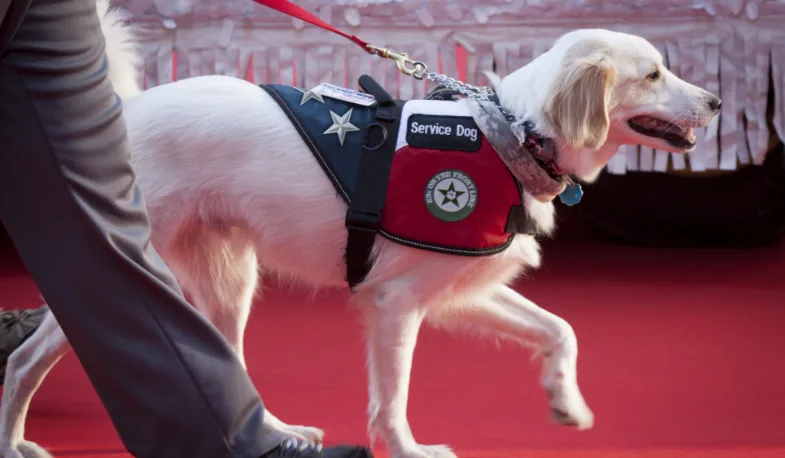
Yes, and the options are genuinely different. K9s on the Front Line in Jefferson City is a nonprofit that pairs Veterans and first responders with shelter dogs and trains them into full ADA-access service dogs or companion dogs, at no cost to the recipient. Got Your Six runs a paid service-dog program over two to four months covering public access, task training, restaurant tests and classes on ADA law. For therapy work rather than service work, Ann Gafke’s Dogschooling prepares therapy teams and says its teams visit hospitals, libraries, nursing homes and schools, and The Devoted Dog also lists therapy preparation.
My dog needs something more specialized than obedience. Is that available here?
More than you would expect for a metro this size. River Poodles Training in New Bloomfield teaches K9 Nose Work at every level and its owner is a certifying official for the national scent-work body. Triple B Retrievers in Ashland trains retrievers to AKC and UKC hunt-test standard. Columbia Canine Sports Center runs agility, rally, barn hunt and scent work alongside its pet-manners classes, and MidMo Dog Training has an indoor agility room. Protection and working-K9 work is thinner: Central Missouri Canine Solutions is the only local provider that publishes it.
How do I check a trainer's credentials in Missouri?
Dog training is unregulated, so anyone can use the title. What can be checked is a credential in the issuing body’s public registry, and that is what the Certified mark on these listings means. In this metro we confirmed AKC Canine Good Citizen Evaluators at Ann Gafke’s Dogschooling, Columbia Canine Sports Center, MidMo Dog Training and K9s on the Front Line, plus a CPDT-KA at MidMo Dog Training. Several other trainers name real training programs and certifications that simply are not in a public registry we can search; those appear on their profiles as their own claim, not as a confirmed credential, which is a distinction worth holding onto when you compare two websites.
How far will trainers travel in mid-Missouri?
Further than in most metros, because the towns are spread out and everyone knows it. Howie’s Happy Dog Training lists Columbia, Jefferson City, Ashland, Fulton, Boonville, Holts Summit and New Bloomfield as its service area. Central Missouri Canine Solutions publishes a catchment reaching north to Columbia, Boonville and Mexico and south to the Lake of the Ozarks. If you are outside Columbia or Jefferson City, ask about travel on the first call rather than assuming you are out of range.
Start Here
The best time to start training is today. Whether your puppy needs socialization, your adolescent dog needs impulse control, or your adult dog has a behavior issue that’s been building for years — the sooner you start, the faster things improve.
Browse dog trainers in Columbia on GetDogSchool.com. Compare programs, read reviews, and connect with professionals who fit your dog’s needs and your budget.
Find Dog Trainers in Columbia →
Ready to find the right trainer for your dog in Columbia?
Get matched with a trainer in Columbia →