
Board & Train in State College, PA
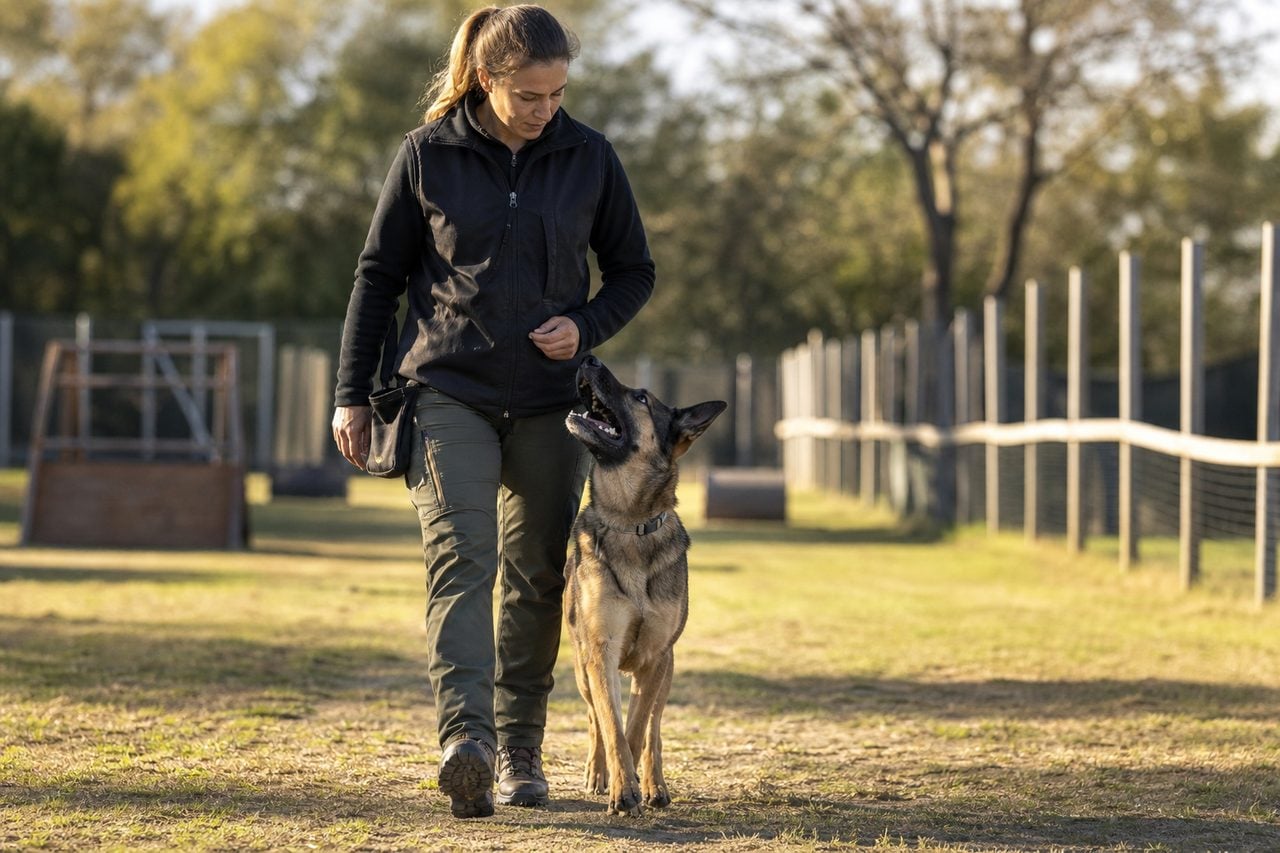
Board-and-train is a residential program: your dog boards with a trainer for a set number of weeks and works on obedience or behavior every day, then comes home with a structured handoff so you can maintain the results. For a busy State College household — a Penn State family juggling a semester, a Happy Valley professional with a young dog who needs more than an hour a week, or an owner in Bellefonte or Boalsburg dealing with a specific problem — the appeal is obvious: consistent daily repetition in a controlled setting, faster than most weekly group classes can deliver.
- What Board-And-Train Actually Means
- Is Residential Training The Right Fit For Your Dog?
- Local Options Versus Traveling To Harrisburg
- How To Vet A Board-And-Train Facility
- The Handoff: Making Results Stick At Home
- Costs, Timelines, And Setting Expectations
- Getting Started In The State College Area
- Reviewed trainers
- FAQ
Here is the honest picture for Centre County. This is a small college-town market, and dedicated multi-week residential board-and-train is a low-supply service locally. Some area trainers do offer it, often in limited slots or seasonally, and a good local option is worth pursuing first — proximity makes the crucial owner-transfer sessions far easier. But if you want the deepest selection of dedicated residential programs, or a facility built specifically around multi-week boarding curricula, the nearest bigger market is Harrisburg, roughly an hour and a half east. Weigh the value of local handoff sessions against the wider selection farther out.
Before you book anything, it helps to understand what these programs really deliver and where their limits are. Residential training can produce impressive obedience in weeks, but the results live or die on the handoff back to you, and on keeping the structure going once your dog is home in the Happy Valley routine. It is a genuine head start, not a finished dog delivered in a box.
This guide from the GetDogSchool Editorial Team explains how residential programs work, who they suit and who they do not, what realistic outcomes look like, how to vet a facility you will trust with your dog, and how State College’s geography, weather, and Penn State rhythm shape the decision — so you can choose the right fit whether that ends up being in Happy Valley or down the road toward Harrisburg.
What Board-And-Train Actually Means
Board-and-train means your dog lives with a trainer or at a training facility for a defined block — commonly two to four weeks, sometimes longer for behavior cases — and receives daily structured sessions. It differs from a day-based boot camp, where the dog comes home each evening, and from boarding-plus-a-little-training, which is really just kenneling with a few sessions added on. In a true residential program, training is the point and boarding is the delivery method.
The value comes from consistency and volume of reps. A dog practicing recall, place, loose-leash walking, or impulse control several times a day for weeks builds habits faster than one weekly class allows. The trade-off is that the dog learns to respond to the trainer, in the trainer’s environment. That is why the owner-transfer phase — where you learn to give the same cues and hold the same standards — is the part that determines whether results survive the drive home to State College, Pleasant Gap, or Port Matilda. Ask any program you consider exactly how they handle that handoff before you commit.
Is Residential Training The Right Fit For Your Dog?
Board-and-train fits some situations well and others poorly. It tends to suit owners short on time — a Penn State schedule in full swing, shift work at Mount Nittany Health, a household with young kids — who want a jump-start on foundation obedience. It also suits dogs whose owners have tried weekly classes and stalled, or dogs with a specific, definable goal like reliable off-leash recall on Rothrock trails.
It fits less well when the core issue is the home environment or the human handling, because sending the dog away does not change what it returns to. Very young puppies often do better with owner-led socialization at home during their key developmental window. And any dog with fear or aggression concerns needs an assessment first, not an automatic residential booking — some behavior work is better done with the owner present throughout. Be honest about your goal: a well-mannered companion, a competition prospect, or a fix for a serious behavior problem are three different projects, and not every program is built for all three. A candid trainer will tell you when board-and-train is not the answer.
Local Options Versus Traveling To Harrisburg
Centre County has trainers, and some offer residential or semi-residential programs — but dedicated, multi-week board-and-train with a full curriculum is thin on the ground here compared to a larger metro. That is simply the reality of a college-town market of this size. It does not mean you must leave; it means you should confirm what is actually available before assuming.
Start local. A State College or Bellefonte program keeps the drive short, which matters enormously for the follow-up transfer sessions where you learn to maintain the work — those are hard to do well from ninety minutes away. If local slots are booked, seasonal, or not a fit for your specific goal, then Harrisburg (about ninety minutes southeast, mostly on US-322) opens a wider selection of dedicated facilities. The right call depends on your priorities: choose local for easier handoff and ongoing support, or travel for a program that specializes in exactly what your dog needs. Neither is automatically correct.
How To Vet A Board-And-Train Facility
Because your dog will live somewhere out of your sight, vetting matters more here than for any weekly class. Ask to tour the facility in person before booking. Look at where dogs sleep, how they are exercised, how many dogs one trainer handles at once, and whether the space is clean, secure, and climate-controlled — a real concern in a Pennsylvania winter and a humid summer alike.
Ask about methods directly. You want a clear, plain-language explanation of how they teach and how they handle mistakes, plus a willingness to let you observe a session. Ask what happens if your dog gets sick or injured, which local veterinarian they use, and how they communicate progress during the stay — regular photo or video updates are a reasonable expectation. Request references and read independent reviews yourself rather than relying on testimonials the business selects. Finally, get the scope, timeline, and included transfer sessions in writing. Any reputable program welcomes these questions; reluctance to answer them is your answer.
The Handoff: Making Results Stick At Home
The most common disappointment with board-and-train is a dog that behaves beautifully for the trainer and then slides at home within weeks. The cause is almost never the training itself — it is the transfer. Skills learned with one handler in one place do not automatically generalize to a new person and a new environment, whether that is a downtown State College apartment or a farmhouse out in Penns Valley.
A quality program builds the handoff in: one or more sessions where you practice the cues yourself, written notes on exactly what was taught, and a plan for the first few weeks home. Plan to keep the structure going — same words, same expectations, short daily practice — especially in the first month, which is when habits either lock in or unravel. Introduce real-life settings gradually: a quiet street, then the Sunset Park area, then somewhere busier like the trails around Mount Nittany. If a program offers little or no follow-up support, treat that as a meaningful gap, because the weeks after your dog comes home are where the investment is either protected or lost.
Costs, Timelines, And Setting Expectations
Residential training is priced by the week and reflects boarding, daily one-on-one work, and the trainer’s time, so it sits well above group classes. Expect meaningful ranges rather than a single figure — a two-week foundation-obedience stay and a month-long behavior program are very different investments. Ask precisely what is included: how many sessions per day, what goals are realistic in the time booked, and whether transfer sessions and any follow-up are part of the price or billed separately.
Set expectations on outcomes too. A few weeks can build a strong obedience foundation and noticeably better manners, but it is not a personality transplant and it does not erase the need for ongoing practice. No honest trainer guarantees a permanent fix, and you should be wary of any who does. Timelines also flex with the individual dog — age, temperament, and the difficulty of the goal all matter. Treat the program as a strong head start that you then maintain, not a one-time purchase of a finished dog. Framed that way, board-and-train can be genuinely worth it for the right household in the State College area.
Getting Started In The State College Area
Begin by writing down your goal in one sentence: reliable recall, calm leash manners, a reset after months of stalled progress, or help with a specific problem behavior. That sentence tells you whether board-and-train is even the right tool and helps every trainer you contact give you a straight answer. Then map your practical constraints — budget, how far you can travel for handoff sessions, and when you actually need this done, keeping the Penn State calendar and Happy Valley winters in mind.
Next, contact local Centre County trainers first and ask directly whether they run residential programs, what the current wait looks like, and how they handle the transfer. If local availability or specialization does not match your need, widen the search toward Harrisburg for a deeper selection. Whichever direction you go, tour before you book, get the plan in writing, and confirm the follow-up support. A little diligence up front is what separates a program that changes your dog’s life from an expensive boarding stay with a training label on it.
Board & Train in State College: Local Options & Nearest Specialists
Right now there are no listed State College trainers focused specifically on board & train. Many general State College dog trainers handle milder cases, and for anything serious the nearest specialists are below.
Nearest board & train specialists — Harrisburg
For complex cases, the closest metro with dedicated board & train trainers is Harrisburg (an easy drive for an assessment or a board-and-train stay). Top-reviewed options:
- Carolyn Hart Dog Training — 5.0★ (63 reviews)
- Cold Creek Dog Training- Hummelstown – Harrisburg — 5.0★ (34 reviews)
- Arcona Prep — 5.0★ (32 reviews)
- Bark Boot Camp — 5.0★ (22 reviews)
- Hard Nose K9 Services LLC — 5.0★ (20 reviews)
- Anchors Dog Training Academy — 5.0★ (11 reviews)
- Magnus K9 — 5.0★ (11 reviews)
- Cold Creek Dog Training- Carlisle, PA — 5.0★ (7 reviews)
See all Harrisburg board & train trainers →
Frequently Asked Questions
Is board-and-train available in State College, PA?
Some Centre County trainers do offer residential or semi-residential programs, but dedicated multi-week board-and-train is a low-supply service in a market this size. Start by contacting local trainers directly to confirm current availability and fit. If local slots or specialization do not match your goal, the nearest bigger market with a wider selection is Harrisburg, roughly ninety minutes east.
What is the difference between board-and-train and a dog boot camp?
Board-and-train is residential — your dog lives at the facility for the program’s duration. A boot camp is usually a day program: the dog trains intensively during the day and comes home each evening. Residential offers more continuous immersion; day-based boot camp keeps the dog in its home environment nightly and can make the owner handoff easier. The right choice depends on your schedule and your dog’s needs.
How long does a board-and-train program take?
Foundation-obedience stays commonly run two to four weeks, while behavior-focused programs may run longer. The exact timeline depends on your goal and your individual dog’s age and temperament. Ask any program to spell out what is realistically achievable in the window you are booking rather than assuming a fixed result by a fixed date.
Will the training last after my dog comes home?
It lasts when the handoff is done well. Skills learned with one trainer in one place do not automatically transfer to you and your home, so quality programs include transfer sessions and a maintenance plan. Plan to keep the same cues and structure going, especially in the first month home, which is when habits either lock in or unravel. Choose a program that offers real follow-up support.
How much does residential dog training cost near State College?
Residential training is priced by the week and includes boarding plus daily one-on-one work, so it costs well more than group classes. Expect ranges rather than one number, since a two-week obedience stay and a month-long behavior program differ widely. Ask exactly what is included — sessions per day, transfer sessions, and follow-up — so you can compare programs fairly.
How do I vet a board-and-train facility before booking?
Tour in person, look at where and how dogs are housed and exercised, and ask how many dogs one trainer handles at once. Ask them to explain their methods plainly and to let you observe a session. Confirm their veterinary plan, how they update you during the stay, and what transfer support is included. Read independent reviews yourself and get the full scope in writing before you commit.
Related: read our complete board & train guide or the full State College dog training overview.
Ready to find the right board & train pro in State College?