
Board & Train in Williamsport, PA
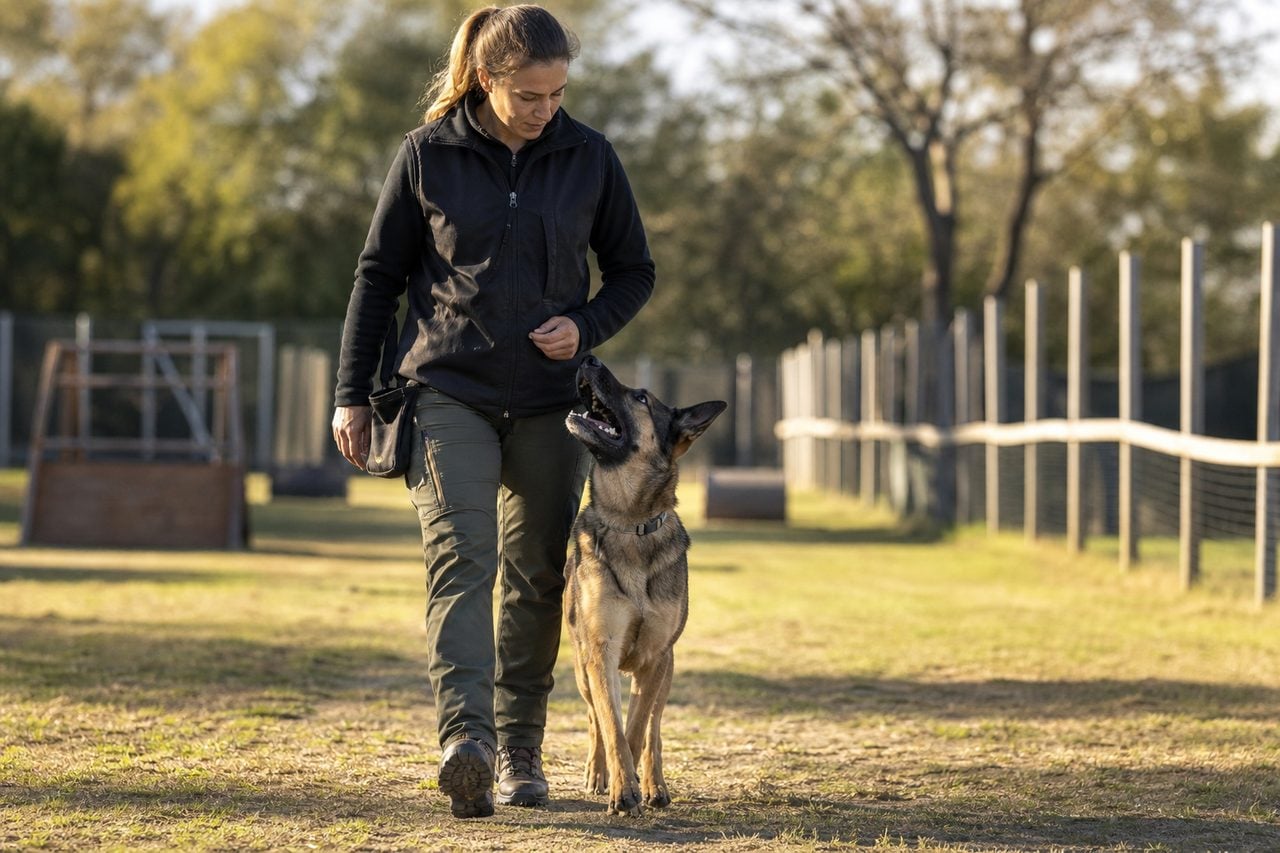
Board-and-train is a residential program: your dog lives with a trainer for one to several weeks, works through a structured curriculum every day, and comes home with new skills that you then learn to maintain. For busy families in Williamsport and across Lycoming County — from the River City neighborhoods along the West Branch Susquehanna to Loyalsock, Montoursville, and out toward Jersey Shore — it can be an appealing option when the schedule for daily home training simply is not there. The trainer does the heavy, repetitive early work, and you step in for the handoff.
It is worth being honest about the local landscape. Williamsport is a smaller market, roughly ninety minutes from both Harrisburg and Scranton, and the number of dedicated residential board-and-train facilities here is limited. Some area trainers offer a residential option seasonally or by arrangement, while others focus on private lessons and group classes. For the deepest selection of full-time residential programs — and for specialized cases needing a board-certified behavior professional — families sometimes look toward Harrisburg or Scranton, each about an hour and a half away. That does not mean you must leave town; it means you should compare what is available locally against what a larger market offers before committing.
This guide from the GetDogSchool Editorial Team explains how board-and-train works, what a good program looks like, and how to weigh a residential option against day training or private lessons for your dog and your household. Our aim is to help you ask sharper questions, not to push you toward any single answer. Whether you live in the heart of the River City, up in Loyalsock and Old Lycoming, across the river in South Williamsport and Duboistown, out east toward Muncy and Hughesville, west along Pine Creek near Jersey Shore, or up in the Endless Mountains, the same principles apply: assess the trainer, understand the method, and plan for the follow-through at home. A residential program is a serious commitment of money and trust, so it is worth comparing your options carefully before you hand over your dog for several weeks.
What Board-And-Train Actually Means
In a true board-and-train, your dog boards at the trainer’s facility or home and trains daily for the length of the program, commonly two to four weeks. The dog is immersed in a consistent routine: obedience drills, leash work, impulse control, and often real-world exposure to distractions. Because the trainer controls the environment around the clock, progress on foundational skills can come faster than an hour a week of home practice allows.
The trade-off is that the dog learns to respond to the trainer, in the trainer’s environment, on the trainer’s timing. Skills do not automatically transfer to you and your home in Williamsport or Loyalsock. That is why the transfer sessions at the end — where you learn the cues, timing, and handling — matter as much as the boarding weeks themselves. A program that sends your dog home without teaching you to run the same system is only half a program.
Board-and-train suits owners who want a jump-start on foundational obedience or specific problem behaviors and who can commit to the follow-through afterward. It is not a hands-off fix. The best outcomes come when you treat the residential weeks as the start of a partnership, not the whole of it.
Board-And-Train Versus Day Boot Camp
Residential board-and-train and day training — sometimes called dog boot camp — are distinct. In board-and-train, the dog stays overnight for the full program. In a day boot-camp model, the dog is dropped off in the morning, trains intensively during the day, and goes home each evening. Both compress learning into concentrated sessions; the difference is where the dog sleeps and how much of the day the trainer controls.
For Lycoming County families, geography often decides it. If you live in Montoursville or Muncy and a day program is a reasonable drive, day training lets your dog practice in your own home each night, which can help skills stick. If daily transport is impractical, or you want the fastest foundational progress, residential board-and-train removes the commute and maximizes the trainer’s contact hours.
Neither model is inherently better. Day training keeps the dog in its normal home routine and gives you nightly practice; residential immersion gives the trainer more consistent control. Match the format to your commute, your schedule, and how much daily involvement you realistically want during the program.
What A Quality Program Looks Like
Before you enroll, ask to see the facility and meet the person who will actually handle your dog. A quality board-and-train uses clear, humane methods you can understand and repeat, keeps you updated with photos or video during the stay, and builds in structured handoff sessions at the end. You should be able to watch a training session and get a plain-language explanation of the approach.
Look for realistic promises. Reputable trainers describe likely improvements and the work involved, not guaranteed transformations. Ask how they handle setbacks, how they socialize and exercise dogs between sessions, and where dogs sleep and rest. Cold, snowy Williamsport winters also matter: ask how outdoor work and potty breaks are managed in January so your dog stays comfortable and safe.
Finally, ask about follow-up. A good program includes post-program support — check-ins, a refresher session, or written home plans — so the gains do not fade once your dog is back home near Brandon Park or out along the Loyalsock. If a trainer cannot clearly explain the handoff and follow-up, keep looking.
When To Consider Harrisburg Or Scranton
Williamsport has capable trainers, but the small-market reality is a thin bench of full-time residential facilities. If your local search turns up few or no dedicated board-and-train programs, or if the ones you find are booked out or not the right fit, the nearest larger markets — Harrisburg and Scranton, each about ninety minutes away — offer more residential options to compare.
A larger market also matters for complex cases. If your dog’s issue involves serious fear, anxiety, or aggression rather than basic obedience, a general board-and-train may not be the right tool at all. Those cases often need an assessment-first approach and sometimes a board-certified veterinary behaviorist, who are scarce in rural Pennsylvania and more likely found near a metro area.
The point is comparison, not relocation of your dog by default. Start local, list what Williamsport offers, and weigh it honestly against a Harrisburg or Scranton program on curriculum, credentials, follow-up, and cost. A ninety-minute drive can be worth it for the right specialized program — and unnecessary if a solid local option already fits your dog’s needs.
Preparing Your Dog And Your Home
Once you choose a program, a little preparation smooths the transition. Make sure vaccinations are current, since group facilities require them, and gather your dog’s normal food, any medications, and a familiar item or two. Share honest notes on your dog’s habits, triggers, and any behaviors you want addressed — the trainer works better with an accurate picture than a flattering one.
Prepare your household for the handoff, too. The skills come home with your dog, but only if the humans practice them. Clear a little daily time for the first few weeks after the program to reinforce cues, hold to the routine the trainer establishes, and keep everyone in the family using the same words and rules. Consistency across the household is where most home training quietly succeeds or fails.
Think about your Williamsport environment as well. Plan where you will practice — a quiet street in South Williamsport, a walk at Brandon Park, or your own yard — and build up to busier settings gradually. A dog that performs perfectly at the facility still needs reps in the real places it lives before the training is truly yours.
Costs, Timelines, And Realistic Expectations
Residential programs cost more than group classes because you are paying for boarding plus daily one-on-one training over multiple weeks. Prices vary by program length, the trainer’s experience, and what is included, so ask for an itemized breakdown: how many training sessions per day, what boarding conditions, whether handoff lessons and follow-up support are bundled or billed separately.
On timelines, foundational obedience and clear problem behaviors often show meaningful progress within a typical two-to-four-week program, but deeper behavioral change takes longer and continues at home. Be wary of any promise that a fixed number of weeks will permanently resolve a serious behavior. Learning is ongoing; the residential period jump-starts it rather than finishing it.
Set expectations with your whole family before you commit. Board-and-train is an investment of money and trust, and its payoff depends on the follow-through once your dog is home in Lycoming County. Owners who plan for the maintenance work — and budget for a refresher if needed — tend to be the happiest with what a residential program delivers.
Making The Right Call For Your Household
The right choice comes down to your dog, your schedule, and what is genuinely available near you. Board-and-train shines when you need a fast, structured foundation and can commit to the handoff. Day training or private lessons may fit better when you want to stay closely involved day to day, or when your dog’s issues need a slower, assessment-driven approach.
Use the local-versus-larger-market comparison deliberately. List the Williamsport and Lycoming County options first, then look at Harrisburg or Scranton for a broader residential selection or specialized help. Judge each on method, transparency, credentials, follow-up, and how well the program’s format matches your household — not on marketing claims.
Whatever you decide, the humans in the home remain the long-term trainers. A residential or day program is a powerful head start, but the routine you keep in your own kitchen, yard, and neighborhood is what makes it last. Choose the program that sets you up to carry the work forward with confidence.
Board & Train in Williamsport: Local Options & Nearest Specialists
A few Williamsport-area trainers can help with milder board & train needs:
Nearest board & train specialists — Harrisburg
For complex cases, the closest metro with dedicated board & train trainers is Harrisburg (an easy drive for an assessment or a board-and-train stay). Top-reviewed options:
- Carolyn Hart Dog Training — 5.0★ (63 reviews)
- Cold Creek Dog Training- Hummelstown – Harrisburg — 5.0★ (34 reviews)
- Arcona Prep — 5.0★ (32 reviews)
- Bark Boot Camp — 5.0★ (22 reviews)
- Hard Nose K9 Services LLC — 5.0★ (20 reviews)
- Anchors Dog Training Academy — 5.0★ (11 reviews)
- Magnus K9 — 5.0★ (11 reviews)
- Cold Creek Dog Training- Carlisle, PA — 5.0★ (7 reviews)
See all Harrisburg board & train trainers →
Frequently Asked Questions
What is the difference between board-and-train and dog boot camp?
Board-and-train is residential — your dog stays overnight at the trainer’s facility for the full program, often two to four weeks. A dog boot camp is usually a day program where your dog trains intensively during the day and comes home each evening. Both compress learning; the difference is whether your dog boards overnight and how much of the day the trainer controls. In a smaller market like Williamsport, availability of each varies, so ask specifically which model a trainer offers.
Are there board-and-train programs in Williamsport, PA?
Some Lycoming County trainers offer residential or day programs, but Williamsport is a small market and dedicated full-time board-and-train facilities are limited. It is worth searching locally first and comparing what you find. For the deepest selection of residential programs, and for specialized behavior help, families sometimes look toward Harrisburg or Scranton, each about ninety minutes away. Start local and weigh those options honestly against a larger-market program.
Will my dog's training transfer to my home after a residential program?
Not automatically. Dogs learn to respond to the trainer in the trainer’s environment, so the handoff sessions at the end — where you learn the cues, timing, and handling — are essential. Skills stick only when you practice them at home and keep the whole household consistent. Plan daily reinforcement in your own Williamsport neighborhood, building from quiet settings to busier ones, so the training truly becomes yours.
How long does a board-and-train program take?
Most residential programs run two to four weeks, which is often enough for meaningful progress on foundational obedience and clear problem behaviors. Deeper behavioral change takes longer and continues at home after the program. Be cautious of any promise that a fixed number of weeks will permanently resolve a serious behavior — the residential period jump-starts learning rather than finishing it.
How much does board-and-train cost?
Residential programs cost more than group classes because you pay for boarding plus daily one-on-one training over several weeks. Prices vary by program length, the trainer’s experience, and what is included. Ask for an itemized breakdown covering sessions per day, boarding conditions, and whether handoff lessons and follow-up support are bundled or billed separately, so you can compare programs fairly across the Williamsport area and beyond.
How do I choose a good board-and-train trainer?
Visit the facility, meet the person who will handle your dog, and ask to watch a training session. Look for clear humane methods you can repeat, regular updates during the stay, structured handoff lessons, and post-program follow-up. Ask how outdoor work is managed in Williamsport’s cold, snowy winters. Reputable trainers describe likely improvements and the work involved rather than guaranteeing transformations — be wary of anyone who promises a permanent fix.
Related: read our complete board & train guide or the full Williamsport dog training overview.
Ready to find the right board & train pro in Williamsport?