
Off-Leash Dog Training in Pottsville, PA
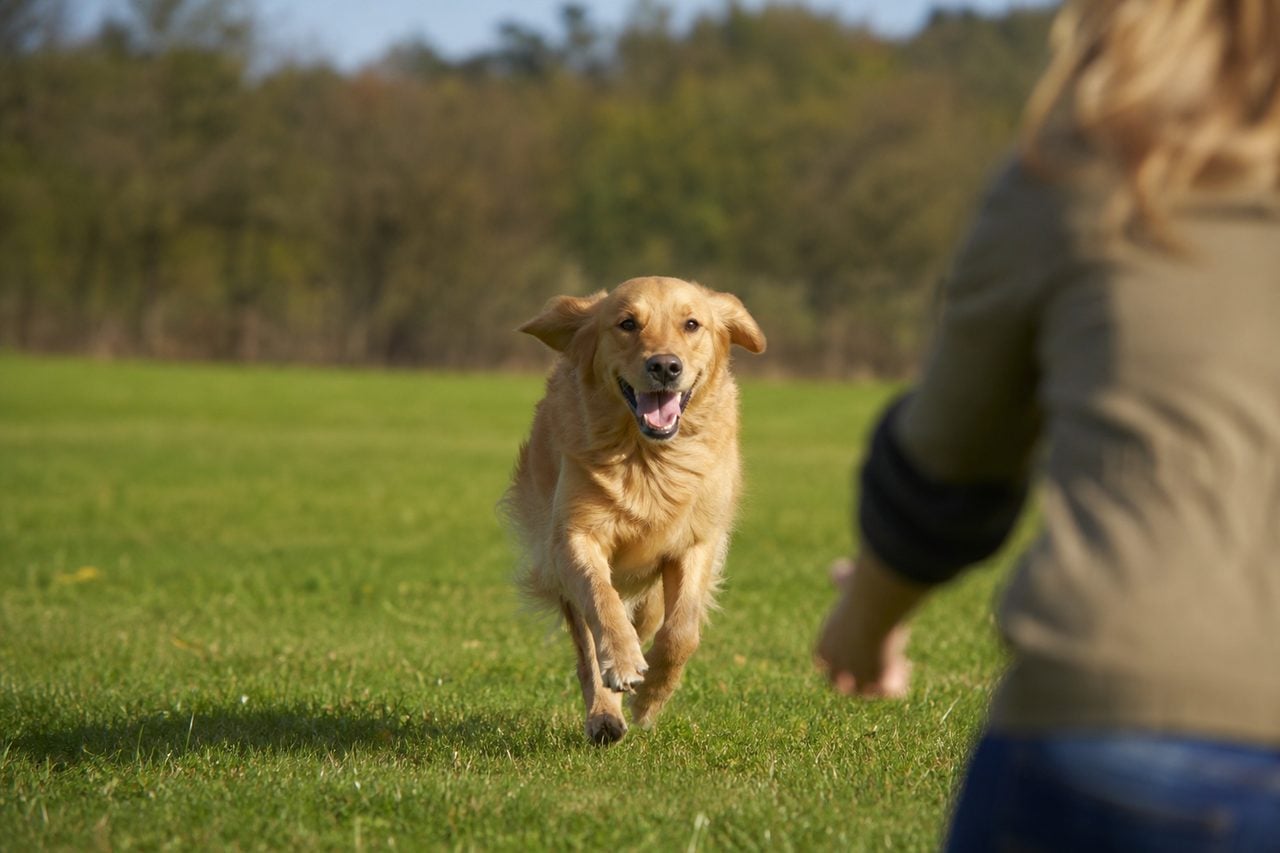
Picture your dog trotting happily beside you on a trail near Sweet Arrow Lake, ranging ahead to sniff, then spinning back to you the instant you call — no leash, no drama, just a dog you can trust. That is the promise of off-leash training, and for the right dog and the right owner it is one of the most rewarding things you can build together. It is also one of the most misunderstood, because reliable off-leash freedom is not a trick you install; it is a relationship and a skill set you develop over months.
This guide lays out what off-leash training really involves for Schuylkill County dog owners: the rock-solid recall it depends on, an honest look at which dogs are good candidates and which are not, the Pennsylvania leash-law realities you cannot ignore, a step-by-step path from your living room to the open outdoors, and where to turn for professional help when you want an expert to shorten the learning curve.
What Off-Leash Training Really Means
Off-leash training is often imagined as simply removing the leash, but that image gets it backwards. True off-leash reliability is built on months of foundation work, and the leash comes off only at the very end, in carefully chosen circumstances, once the underlying skills are genuinely solid. Taking the leash off a dog that is not ready is not off-leash training — it is gambling with your dog’s safety.
At its heart, off-leash freedom rests on one skill above all others: a rock-solid recall, meaning your dog comes back to you immediately and reliably no matter what else is going on. Around that central skill sit several supporting ones: a dog that checks in with you on its own, that responds to its name, that can stop or lie down at a distance on cue, that stays reasonably close and attentive, and that has the impulse control to not bolt after every squirrel, jogger, or interesting smell. Off-leash reliability is really the sum of all these habits working together in the face of real-world distractions.
It is also worth being clear-eyed about the goal. Off-leash work is not about dominance or about a dog blindly obeying out of fear. The most reliable off-leash dogs come back because they genuinely want to — because returning to their person has been made rewarding thousands of times and because the relationship is strong. That is why the best off-leash training and the best recall training are essentially the same project, and why building it takes patience. A dog that comes when called because it loves coming to you will hold up under distraction far better than one that has merely been threatened into compliance.
Building a Rock-Solid Recall
Recall is the foundation of everything, so it deserves the bulk of your effort. The core principle is simple to state and takes discipline to honor: coming to you must always, always be the best thing your dog can do. Every single time your dog comes when called, wonderful things should happen — exceptional treats, enthusiastic praise, a favorite toy, a game. You are building a reflex so ingrained that when you call, your dog turns and runs to you before it even thinks about the alternative.
Start in the easiest possible setting, usually inside your home with zero distractions, and pick a recall word you will use only for this purpose (many people choose a fresh word like “here” to avoid a name that has been overused or associated with nagging). Call, and the instant your dog comes, throw a party and pay generously with something it truly loves. Build a strong history of success in easy conditions before you add any difficulty. Once your dog is nailing it indoors, move to the yard, then to quiet outdoor spots on a long line, and only much later to more stimulating environments. Each time you raise the difficulty, expect to lower your dog’s reliability temporarily and rebuild it.
Guard against the classic mistakes that quietly poison a recall. Never call your dog to you for something it dislikes — nail trims, baths, the end of a fun outing — or the word starts to predict bad news. Never punish or scold a dog that comes to you, even if it took its sweet time or misbehaved beforehand; punishing arrival teaches the dog that coming back is dangerous. And never call unless you can reasonably back it up or reward it, because every ignored recall weakens the cue. A long training line — a lightweight rope 15 to 30 feet long — is the essential bridge tool: it gives your dog freedom to range while ensuring you never have to let a failed recall go unaddressed. Practice constantly, keep it fun, and pay well; a bulletproof recall is earned through thousands of happy repetitions, not a weekend.
Which Dogs Are Good Candidates — and Which Aren't
An honest part of off-leash training that many guides skip: not every dog is a realistic candidate for genuine off-leash freedom in open, uncontrolled spaces, and pretending otherwise sets owners up for heartbreak. Being clear about your individual dog protects it and everyone around it. This is not a judgment of your dog’s worth — plenty of wonderful dogs simply are not suited to running loose in unfenced areas, and that is fine.
Several factors make off-leash reliability harder. Breed and instinct matter: many hounds are wired to follow their nose for miles and can become deaf to recall once locked onto a scent, and strong sighthounds may bolt after fast-moving prey faster than any recall can override. High-prey-drive dogs, dogs with a history of chasing wildlife or bolting, and dogs that are not neutral around other dogs or people are all higher-risk. Reactivity or fearfulness is another red flag; a dog that may lunge, panic, or run from triggers should not be loose where it could hurt someone, get hurt, or disappear in a fright. Adolescent dogs, roughly the teenage months, are notoriously unreliable and generally need more maturity before serious off-leash work.
The right mindset is to assess your specific dog and, if needed, adjust the goal rather than the safety standards. For some dogs, the realistic and completely respectable version of off-leash freedom is a securely fenced yard or a legitimate fenced dog park, plus a long-line for trails so they still get to sniff and range without the risk of taking off. That is a great life for a dog. It is far better to give your dog reliable freedom within safe boundaries than to insist on true off-leash and lose your dog to a road or a chase. When in doubt, a professional can give you an honest read on whether your dog is a good candidate and what level of freedom is realistic for it.
Pennsylvania Leash Laws and Where Off-Leash Is Actually Allowed
Before you unclip anywhere, understand the legal reality, because off-leash rights are far more limited than many owners assume. Pennsylvania law includes provisions requiring dogs to be under control and confined or reasonably restrained, and — crucially — individual municipalities and boroughs across Schuylkill County can and do enact their own leash ordinances that may be stricter than the state baseline. What is allowed in one township may be prohibited in the borough next door, so the burden is on you to check local rules where you live and where you plan to go.
Public parks and state parks are a common trap. Many parks, including Pennsylvania state parks, require dogs to be leashed at all times, typically on a leash no longer than a set maximum length, and off-leash dogs can result in fines. That means popular local spots like Locust Lake State Park are generally leash-required, and you should not treat any public trail as an off-leash zone unless it is specifically and officially designated as one. Designated off-leash areas — fenced dog parks or explicitly posted off-leash zones — are the only places you can be confident it is permitted, and they are relatively scarce in rural areas.
The practical upshot for Schuylkill County owners is that legitimate off-leash locations may require some searching or travel, and much of your real-world off-leash enjoyment may come from a securely fenced private property (your own or a friend’s) or a purpose-built fenced dog park rather than public land. Beyond the letter of the law, there is the matter of courtesy and safety: even where off-leash is technically allowed, keep your dog leashed around other people, children, wildlife, and dogs unless you are certain it will not bother them. An off-leash dog running up to a leashed reactive dog, a wildlife area, or a nervous stranger causes real problems. Knowing and respecting both the law and basic trail etiquette is part of being an off-leash owner — the freedom comes with responsibility.
A Step-by-Step Progression
Reliable off-leash behavior is built by climbing a ladder of difficulty gradually, never skipping rungs. Rushing is the number one reason dogs fail off leash, so let each stage become genuinely solid before advancing, and always add distraction and distance separately rather than both at once.
Start indoors with no distractions, building recall and attention until they are effortless. Move to a securely fenced yard, where a mistake is safely contained, and rebuild the same skills with the mild new distractions of the outdoors. Next, introduce a long training line in progressively more interesting environments — a quiet field, then a park at a slow time — letting your dog range while you retain a safety connection. This long-line stage is where most of the real work happens, and many dogs stay on a long line for months. Deliberately practice around the specific distractions your dog will face: other dogs at a distance, joggers, cyclists, and especially wildlife, which is abundant on Schuylkill County trails and is often the hardest test of all.
Only when your dog is responding instantly and reliably on the long line across many different, distracting environments do you consider testing true off-leash, and even then you start in the safest, most enclosed area you can find, keep sessions short, and set your dog up to succeed. A useful in-between step is a long line that you simply let drag on the ground, giving the feel of freedom while leaving a physical backup you can step on. Throughout, keep every session positive and end on a win. If your dog blows a recall, that is information, not a betrayal — it usually means you went up a rung too fast, so drop back down, add the leash or long line again, and rebuild. Off-leash reliability is a maintained skill, not a permanent achievement; keep practicing recall and rewarding check-ins for the life of your dog, because a recall you stop reinforcing slowly rusts.
Getting Professional Help in the Pottsville Area
You can absolutely make strong progress on off-leash skills yourself with patience and consistency, but a good trainer can shorten the path considerably — sharpening your timing, troubleshooting where your dog gets stuck, giving you an honest assessment of your dog’s off-leash potential, and helping you proof recall against the distractions that matter most. If you have hit a wall, if your dog’s recall falls apart around wildlife or other dogs, or if you simply want expert eyes before you trust your dog off leash near any risk, professional help is a smart investment.
The local reality is worth stating plainly. General obedience trainers around Pottsville can help you build the recall and obedience foundation that off-leash work depends on, and that foundation is most of the battle. But trainers who specifically market advanced off-leash reliability programs — the intensive, distraction-proofing kind — can be limited within Schuylkill County. If you are after that specialized level, it is reasonable to look toward a larger metro; Reading, roughly 40 minutes south, generally offers a wider selection of trainers and facilities, including some with the space and structure for serious off-leash proofing. It can be well worth the drive for a program that gets your dog reliable safely.
Whoever you work with, choose your methods carefully, because off-leash training is an area where heavy aversive tools like remote shock (“e-collar”) systems are sometimes marketed as the fast path to reliability. Reward-based professionals build recall on motivation and relationship rather than on the threat of a shock, and that motivation-based recall tends to hold up better and does not carry the fallout risks of pain-based methods, such as increased fear or a dog that suppresses signals. Look for a trainer who emphasizes positive reinforcement, who will give you a candid opinion on whether true off-leash is realistic for your particular dog, and who talks openly about safety and legal responsibilities. Ask about their approach to recall, how they handle high-distraction proofing, and how they measure reliability. A relevant certification such as CPDT-KA is a reasonable credibility signal, but the clearest test is whether their plan builds a dog that comes back because it wants to.
Off-Leash Dog Training in Pottsville: Local Options & Nearest Specialists
Right now there are no listed Pottsville trainers focused specifically on off-leash dog training. Many general Pottsville dog trainers handle milder cases, and for anything serious the nearest specialists are below.
Nearest off-leash dog training specialists — Reading
For complex cases, the closest metro with dedicated off-leash dog training trainers is Reading (an easy drive for an assessment or a board-and-train stay). Top-reviewed options:
- Cappuccino Dog Training Inc. — 5.0★ (109 reviews)
- For Them Dog Training — 5.0★ (30 reviews)
See all Reading off-leash dog training trainers →
Frequently Asked Questions
How long does it take to train a dog to be reliable off leash?
There is no shortcut — genuine off-leash reliability is typically built over many months of consistent work, not weeks. The bulk of that time goes into developing a rock-solid recall and proofing it against real-world distractions, first indoors, then in a fenced yard, then on a long line in progressively more challenging places. Many dogs stay on a long line for months before the leash comes off for real. The exact timeline depends on your dog’s temperament, age, and instincts, and how consistently you practice. Rushing the process is the most common reason dogs fail off leash.
Is my dog a good candidate for off-leash freedom?
Not every dog is, and being honest about it keeps your dog safe. Dogs with strong prey drive, hounds that follow scent for miles, sighthounds that bolt after fast movement, dogs that chase wildlife, and dogs that are reactive or fearful around people or other dogs are all higher-risk candidates for true off-leash in open areas. Adolescent dogs are also notoriously unreliable and usually need more maturity first. For many great dogs, the realistic version of freedom is a securely fenced yard or dog park plus a long line for trails. A professional can give you an honest assessment of your specific dog.
Where can I legally let my dog off leash near Pottsville?
Far fewer places than most owners assume. Pennsylvania requires dogs to be under control, and individual municipalities across Schuylkill County can enact their own leash ordinances that may be stricter, so you must check local rules. Many public and state parks require dogs to be leashed at all times — Locust Lake State Park, for example, is generally leash-required — and off-leash dogs there can draw fines. The only places you can be confident off-leash is allowed are officially designated off-leash areas, such as fenced dog parks, or private property you have permission to use. Never assume a public trail is off-leash unless it is specifically posted as such.
What is the single most important skill for off-leash training?
A rock-solid recall — your dog coming back to you immediately and reliably no matter what is happening. Everything else in off-leash work supports it. The key principle is that coming to you must always be the best thing your dog can do, rewarded generously every single time. Avoid the classic mistakes that poison a recall: never call your dog for something it dislikes, never punish a dog that comes to you, and never call unless you can back it up. Build the recall in easy settings first and use a long training line as you add distractions.
Should I use an e-collar (shock collar) for off-leash reliability?
Reward-based professionals build off-leash recall on motivation and relationship rather than on remote shock. A recall grounded in your dog genuinely wanting to return tends to hold up well under distraction and avoids the fallout risks of pain-based tools, such as increased fear or a dog that learns to suppress its signals. Aversive e-collar systems are sometimes marketed as a fast path to reliability, but the more humane and durable route relies on generous rewards, a strong relationship, and careful proofing on a long line. Look for a trainer who emphasizes positive reinforcement and is candid about safety.
My dog was great off leash and now ignores me sometimes — what happened?
Off-leash reliability is a maintained skill, not a permanent achievement. A recall you stop reinforcing gradually rusts, and dogs often test boundaries, especially adolescents or when a new, exciting distraction like wildlife enters the picture. When reliability slips, go back a step: put the long line back on, rebuild recall in easier conditions, and refresh the habit of rewarding check-ins and returns generously. Keep practicing and paying for good recalls throughout your dog’s life. A blown recall is information that you may have progressed too fast or let maintenance lapse, not a betrayal.
Related: read our complete off-leash dog training guide or the full Pottsville dog training overview.
Ready to find the right off-leash dog training pro in Pottsville?