
In-Home Dog Training in San Mateo, CA
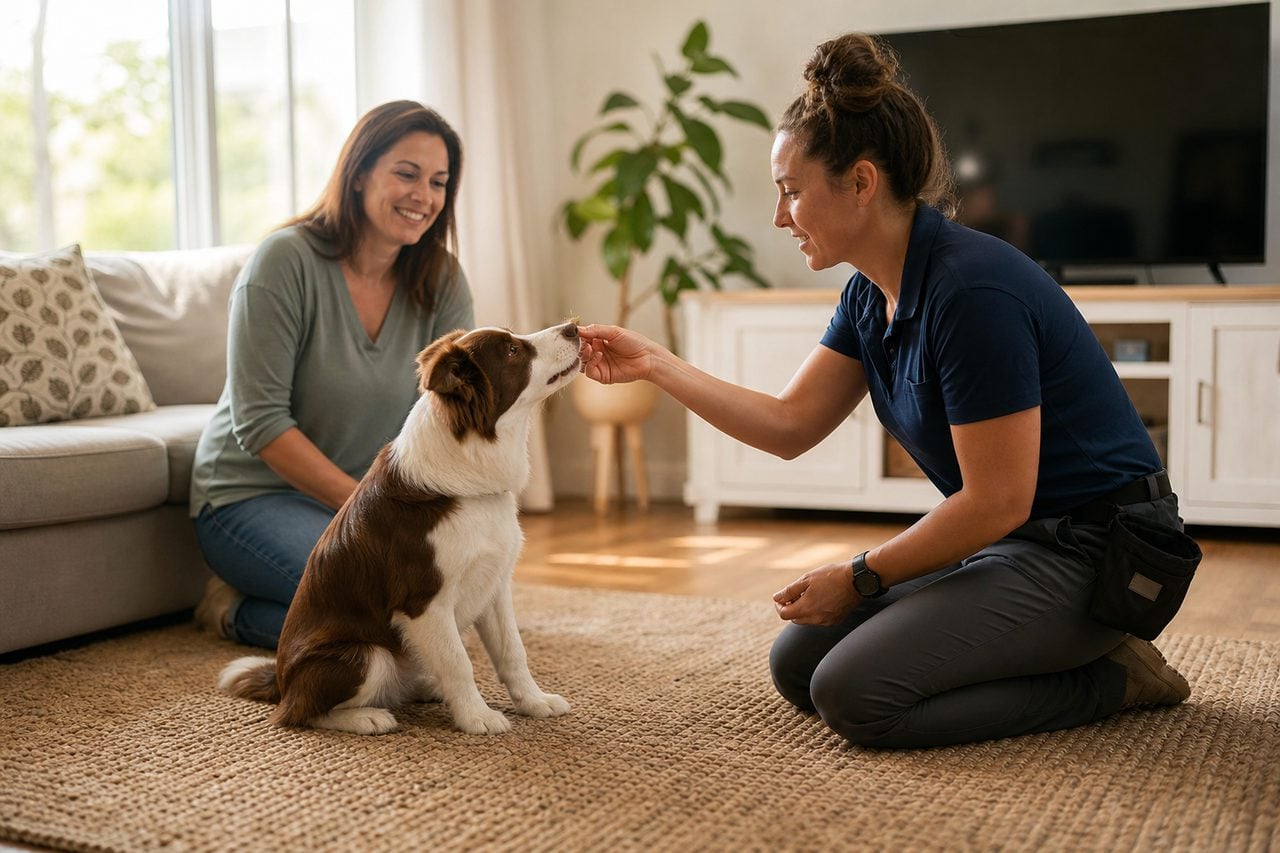
In-home training is one of the most common ways Peninsula owners work with a trainer. With many households in houses with yards, garages and side gates, a trainer who comes to you can work on the exact doors, rooms and routines where problems happen.
Seven of the trainers listed in this area publish in-home training in their own words, from puppy programs that start at home to behavior sessions for reactivity and separation anxiety and private lessons that move from the house to the neighborhood. This page explains how in-home training works and how to choose a trainer.
What in-home trainers work on
- Puppy routines: potty and crate training, nipping, barking and first cues, taught at home with minimal distractions.
- Household manners: greeting visitors, waiting at doors and gates, counter surfing, jumping and settling.
- Behavior problems: leash reactivity, separation anxiety, fear and aggression, often starting with an assessment at home.
- Leash walking from the front door, moving out to your street and local park as skills grow.
Houses with yards bring their own projects: fence running and barking at passersby, rushing out of side gates, digging and garden destruction. A trainer who sees the yard can suggest simple management changes, such as screening a fence line or adding a gate routine, alongside training.
In-home training on the Peninsula
A franchise territory with a named local trainer provides in-home obedience, behavior, separation anxiety and aggression training across San Mateo County. A San Mateo trainer teaches puppies at home and offers private behavioral training at home or remotely. Another trainer comes to your home or meets you out and about for lessons that range from new puppy work to off-leash recall. A Belmont behavior specialist holds behavior modification sessions in your home, and a Redwood City team offers in-home private training alongside its group classes.
Several private trainers also combine in-home lessons with outdoor sessions, so skills move from the living room to the trail.
Before you book, ask the trainer to explain in plain words what the first month of work will look like, what you will practice each week and how you will both know it is working. A clear answer is one of the best signs that a program is organized and that the trainer has listened to your goals.
How a home program usually runs
Most programs start with an assessment or a first session that covers history, routines, goals and the layout of the home. The trainer then shows you exercises, practices them with the dog and leaves you with homework. Follow-up visits build on what you practiced and move the work into harder settings.
Some trainers add remote or phone support between visits, which is useful for quick questions.
Between visits you will usually have short daily exercises, a few management rules and a way to record progress. Many trainers ask for a short video when something goes wrong, which helps them adjust the plan without waiting for the next appointment.
Expect the trainer to coach the people as much as the dog. Clear, consistent cues from everyone in the household are often the biggest single change in a home program.
Travel areas and scheduling
In-home trainers usually publish a service area. Some cover the whole county, while others focus on a few towns and add travel fees outside the greater San Mateo area. Ask about evening and weekend availability, how far ahead you need to book, and what happens if your dog is unwell on the day.
If you live on the coast or in the hills, ask specifically about your town; some trainers cover the bayside cities but not Half Moon Bay or Pacifica, or only on certain days.
Getting the most from a visit
Have everyone who handles the dog present, along with treats, leashes and any equipment you use. Make a short list of the three problems that bother you most. If a problem happens at a particular time, such as when the mail arrives or when you leave in the morning, tell the trainer so the session can recreate it.
Keep notes after each session, and practice in short bursts every day.
Clear a little space near the entrance and in the room where the dog spends most of its day, and put away anything you do not want the dog to practice on. If you have a cat or a second dog, ask the trainer where they should be during the session.
Write down the questions that come up between visits. A short list at the start of each session keeps the time focused on what matters most to your household.
When to combine home work with classes
Home training is ideal for household problems, but dogs also need practice around other dogs and people. Once the basics hold at home, many owners add a group class or ask their trainer for sessions in a park or shopping area. The combination makes skills reliable wherever you go.
Your in-home trainer can often recommend a class level or a local school that fits your dog once the home basics are in place, so ask before you finish the program.
Reviewed In-Home Dog Training Trainers in San Mateo
These reviewed San Mateo-area trainers from our directory handle in-home dog training. Each links to a full profile with specialties, certified credentials, reviews, and contact info:
- Freakin Pawsome — 5.0★ (18 reviews)
- Bee Positive Dog Training — 5.0★ (15 reviews)
- K9 Master Dog Training — 5.0★ (13 reviews)
- True Nature Dog Training — 5.0★ (13 reviews)
- Peninsula Canine — 5.0★ (2 reviews)
- Bark Busters Home Dog Training San Mateo — 4.9★ (119 reviews)
- By the Bay Dog Training — 4.7★ (12 reviews)
See all San Mateo in-home dog training trainers →
Frequently Asked Questions
Do in-home trainers on the Peninsula charge travel fees?
Some do, especially outside their core area. Ask about the service area and any travel fee before you book.
Can in-home training help with separation anxiety?
Yes. Several local trainers list separation anxiety among their in-home services, since the problem happens at home and needs a plan built around your routine.
Is in-home training only for puppies?
No. Adult dogs with manners or behavior problems often benefit most, because the trainer sees the exact situation where the problem happens.
Can sessions take place outdoors?
Yes. Several trainers move sessions to your street, a park or a shopping area once the dog is ready, and some offer out-and-about lessons from the start.
How many in-home sessions will my dog need?
It depends on the goal. Simple manners problems may need a few visits, while behavior cases usually need a longer series with practice in between.
Related: read our complete in-home dog training guide or the full San Mateo dog training overview.
Ready to find the right in-home dog training pro in San Mateo?