
Off-Leash Dog Training in Saginaw, MI
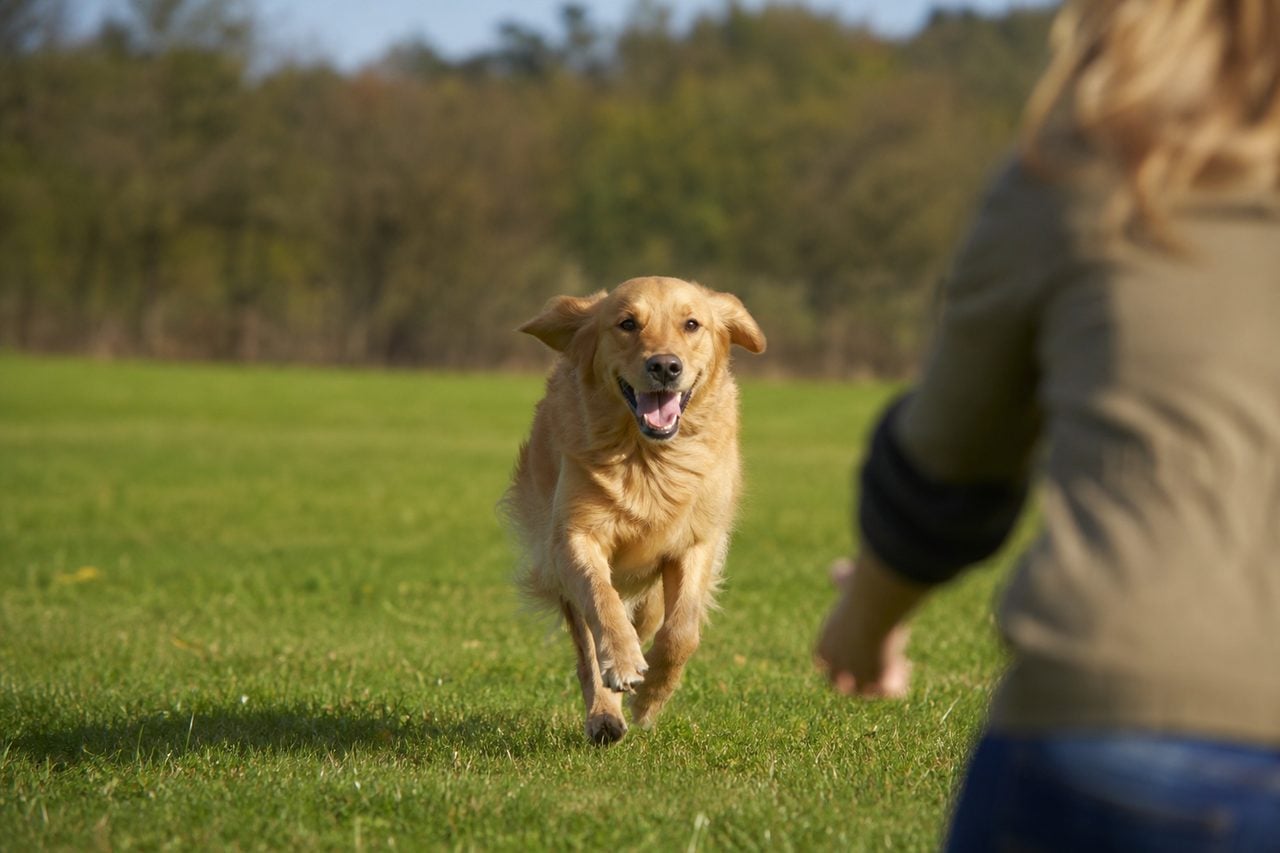
Off-leash reliability is the goal a lot of Tri-Cities dog owners quietly dream about: a dog who can walk with you along the trails at the Chippewa Nature Center, come the instant you call even with a rabbit bolting across the field, and stay under control without a leash tethering you together. It is a genuinely achievable skill for many dogs, but it is also the most advanced level of obedience there is, and getting there safely takes far more groundwork than most people expect.
- What Off-Leash Reliability Really Means
- The Foundation: Why On-Leash Work Comes First
- Tools of the Trade: The Remote Collar, Used Responsibly
- Where You Can Legally and Safely Let a Dog Off Leash
- A Realistic Timeline and What to Expect
- Finding Off-Leash Help in and Around the Tri-Cities
- Reviewed trainers
- FAQ
It is worth being upfront about the local picture. Dedicated off-leash training is a thinner specialty in the immediate Saginaw, Bay City, and Midland area than more common services like puppy classes or basic manners. Some families end up traveling to the wider region, including toward Flint, to work with a trainer who specializes in advanced off-leash and remote-collar work. That said, plenty of the foundation can be built locally, and the guidance below applies wherever you train.
This guide explains what off-leash training really involves, the rock-solid foundation it depends on, how tools like the remote collar fit in when used responsibly, and where you can and cannot let a dog off leash legally and safely around the Tri-Cities.
What Off-Leash Reliability Really Means
Off-leash training is not a single trick you teach; it is the end result of building obedience so dependable that the leash becomes unnecessary. When people picture an off-leash dog, they imagine freedom, but the trainer sees something different: a dog whose recall, stay, and impulse control are so ingrained that they hold up even when the dog is excited, distracted, or tempted by something far more interesting than you. The freedom is real, but it rests entirely on that foundation.
The core skill is a recall that works under distraction. It is easy to get a dog to come to you in a quiet kitchen. It is a completely different thing to get that same dog to turn away from a squirrel, another dog, or the scent of deer along a treeline near Hemlock and return to you immediately. That gap, between obedience in easy conditions and obedience when it actually counts, is the entire challenge of off-leash work. A recall that only works when nothing else is happening is not a reliable recall at all.
Equally important is understanding that off-leash reliability is dog-specific and never absolute. Some dogs, particularly certain high-drive or independent breeds, may never be trustworthy off leash in an open, uncontrolled area no matter how good the training, because their instincts to chase or roam are too strong. A responsible trainer will tell you this honestly rather than promise that any dog can become an off-leash dog. Knowing your individual dog’s limits is part of doing this safely.
Finally, off-leash training is a progression, not an event. You do not simply remove the leash one day and hope. You build the skills on leash, then on a long line, then in gradually more challenging environments, proofing each step before you advance. Anyone who suggests you can shortcut that progression is setting you and your dog up for a dangerous failure.
The Foundation: Why On-Leash Work Comes First
The single biggest mistake in off-leash training is trying to reach the destination without building the road. Reliable off-leash behavior is constructed entirely from on-leash skills that have been proofed until they are automatic. If your dog’s recall, sit, down, and stay are not rock solid with a leash on, they will not hold up without one. There are no shortcuts here, and attempting to skip ahead is how dogs end up loose, ignoring commands, and in danger.
The progression starts with core obedience in a low-distraction setting, usually your own home and yard in Saginaw or Freeland. The dog learns to respond quickly and consistently when nothing is competing for attention. Only once those responses are genuinely automatic do you begin to add distractions, deliberately and gradually, so the dog learns that commands apply even when something interesting is going on. This proofing stage is slow and unglamorous, and it is also where reliability is actually built.
The bridge between on-leash and off-leash is the long line, a leash of fifteen to thirty feet or more. The long line gives the dog the feeling of freedom and distance while you retain the ability to prevent a failed recall from being rehearsed. Every time a dog ignores a recall and gets away with it, the behavior of ignoring you gets stronger. The long line lets you practice recall over distance in a real environment, like an open field toward Chesaning, without ever letting the dog learn that blowing you off is an option.
Consistency and repetition are what turn these skills into instinct. Off-leash reliability comes from hundreds of successful repetitions across many settings, so that responding to you becomes the dog’s default rather than a decision the dog weighs each time. This is why the process cannot be rushed. Families who commit to the foundation get a dog they can trust; families who try to jump straight to freedom get a dog who runs.
Tools of the Trade: The Remote Collar, Used Responsibly
Off-leash training frequently involves an electronic collar, also called a remote collar or e-collar, and this is a topic worth handling carefully and factually. Used correctly by a knowledgeable trainer, a modern remote collar is a communication tool that lets you reach a dog at a distance, well beyond the length of any long line. Used incorrectly, it is a blunt instrument that can confuse or frighten a dog. The tool itself is neither magic nor cruel; everything depends on how it is introduced and used.
Modern remote collars are far more sophisticated than the crude shock collars of the past. Quality units offer a wide range of very low stimulation levels, often over a hundred, plus tone and vibration modes. When introduced properly, the collar is conditioned at a level the dog can just barely perceive, low enough that it functions as a tap on the shoulder rather than a punishment. The goal is a clear, calm signal that means the same thing as a leash cue the dog already understands, not pain or intimidation.
The critical point is that a remote collar is layered on top of a solid foundation, never used to install obedience from scratch. The dog must already know the commands on leash before the collar is introduced. The collar then becomes a way to communicate those known commands at a distance where a leash cannot reach. A trainer who straps an e-collar on an untrained dog and starts pressing buttons is misusing the tool badly, and that misuse is exactly what gives remote collars their bad reputation.
This is the strongest argument for working with a qualified professional rather than buying a collar online and experimenting. Proper conditioning of a remote collar, finding the dog’s individual recognition level, and pairing the signal correctly with known commands is a skill. Done well, it produces a dog who works happily and reliably off leash. Done poorly, it can create fear or confusion. Because dedicated off-leash and remote-collar expertise is thinner right around Saginaw, this is one area where some families choose to travel to the wider region, including toward Flint, to work with a genuine specialist.
Where You Can Legally and Safely Let a Dog Off Leash
Training a reliable off-leash dog and having legal places to enjoy that freedom are two different things, and Tri-Cities owners need to understand both. Most public parks, trails, and natural areas across Saginaw, Bay, and Midland counties have leash requirements, and popular spots like the Chippewa Nature Center have their own rules that generally require dogs to be leashed on the trails. Reliable off-leash obedience does not exempt you from local leash ordinances, and it is your responsibility to know the rules of any place before you unclip.
The safest places to enjoy off-leash freedom fall into a few categories. Your own securely fenced yard is the obvious one and a great place to practice. Designated off-leash dog parks, where they exist in the region, are another, though busy dog parks come with their own social dynamics and are not ideal for proofing a serious recall. Private land where you have permission, including the open farm country and fields toward Hemlock and Chesaning, can offer wonderful off-leash space, provided it is genuinely safe from roads and you have the landowner’s clear consent.
Even in a legal off-leash area, safety judgment still applies. Proximity to roads is the biggest hazard; a single lapse near a rural highway or a busy street can be fatal. Wildlife matters too, since a strong deer or small-game scent can override even a well-trained recall in some dogs. Other dogs and people deserve consideration, because not everyone wants a loose dog approaching them, no matter how friendly. Weather and terrain, from the marshy edges near Saginaw Bay to icy winter fields, add their own risks. Off-leash freedom is a privilege that comes with constant situational awareness.
A practical rule of thumb: only let your dog off leash in a spot where a failed recall would not be a disaster. If the worst-case outcome of your dog blowing you off is that they run a little too far in a safe, enclosed field, that is a reasonable place to test freedom. If the worst-case outcome is your dog in traffic, keep the long line on regardless of how good the training is. Building reliability is the point, but respecting the environment is what keeps your dog alive.
A Realistic Timeline and What to Expect
One of the kindest things a trainer can do is set honest expectations, because off-leash reliability takes longer than most people hope. This is the advanced tier of obedience, built on top of solid basics, and it develops over months rather than weeks. A dog needs to first master core commands, then have them proofed under distraction, then progress through long-line work, and finally be tested carefully in real off-leash conditions. Rushing any stage undermines all the ones after it.
The starting point matters a great deal. A dog who already has reliable basic obedience is much further along than a dog starting from scratch, and an adolescent dog full of energy and independence will typically take more patience than a settled adult. Breed and individual temperament shape the timeline too; a biddable dog bred to work closely with people often progresses faster than a highly independent or high-prey-drive dog, if the latter can safely reach off-leash reliability at all.
Your own consistency is the single biggest variable you control. Off-leash training is built on repetition across many sessions and many environments, and that only happens if you put in the work between lessons with a trainer. Families who practice regularly, keep the long line on until reliability is genuinely proven, and resist the temptation to grant freedom too early are the ones who succeed. Families who train sporadically and then unclip the leash hopefully are the ones whose dogs end up unreliable and at risk.
Set your expectations around the dog you have, not the dog you wish you had. For some Tri-Cities dogs, full off-leash freedom in open areas is a realistic and reachable goal. For others, the honest and responsible outcome is a rock-solid recall used within securely fenced or safely enclosed spaces, with a long line for everything else. Both are successes. A trainer who tells you the truth about your individual dog is worth far more than one who promises every dog can become an off-leash dog.
Finding Off-Leash Help in and Around the Tri-Cities
Because dedicated off-leash training is a thinner specialty locally, finding the right help takes a bit more deliberate searching than booking a basic obedience class. The directory below lists trainers serving the Saginaw, Bay City, and Midland area, and it is the right starting point. When you reach out, be specific that your goal is advanced off-leash reliability, since not every trainer who teaches obedience specializes in the proofing and remote-collar work that off-leash reliability requires.
When you talk to a prospective trainer, ask targeted questions. How do they build a distraction-proof recall? Do they use a long line, and how? If they use remote collars, how do they introduce and condition them, and at what stimulation levels? What is their honest assessment of whether your particular dog is a good candidate for off-leash work in open areas? A trainer who answers these thoughtfully, and who is willing to tell you if your dog may not be suited to open off-leash freedom, is demonstrating exactly the kind of judgment you want.
Be prepared for the possibility of traveling. Some Tri-Cities families do end up working with a specialist in the wider region, including toward Flint, precisely because deep off-leash and remote-collar expertise is easier to find across a larger area. This is not a knock on local trainers, many of whom can build the entire foundation with you; it is simply a reflection of how specialized advanced off-leash work is. If a local trainer can get you through the on-leash foundation and long-line stage, that alone is enormous progress even if you finish the off-leash proofing elsewhere.
Whatever path you take, prioritize a trainer who emphasizes foundation, honesty, and safety over one who promises fast, dramatic off-leash results. The dog whose off-leash freedom you can actually trust is the one whose trainer refused to skip steps. Start with the foundation, respect your dog’s individual limits, obey local leash rules, and build reliability the slow, durable way. That is how you end up with a dog you can genuinely trust off the leash on a quiet trail or an open field, and how you keep that dog safe for years to come.
Off-Leash Dog Training in Saginaw: Local Options & Nearest Specialists
Right now there are no listed Saginaw trainers focused specifically on off-leash dog training. Many general Saginaw dog trainers handle milder cases, and for anything serious the nearest specialists are below.
Nearest off-leash dog training specialists — Flint
For complex cases, some families travel to the larger pool of specialists in the Flint area for an assessment or a board-and-train stay. Top-reviewed options:
See all Flint off-leash dog training trainers →
Frequently Asked Questions
Can any dog be trained to be reliable off leash?
No, and it is important to be honest about that. Reliable off-leash behavior depends heavily on the individual dog. Some dogs, especially certain high-prey-drive or highly independent breeds, may never be fully trustworthy off leash in open, uncontrolled areas no matter how good the training, because their instincts to chase or roam can override even a well-drilled recall. A responsible trainer will assess your specific dog and tell you the truth. For many dogs, full off-leash freedom is achievable; for others, a rock-solid recall used within fenced or safely enclosed spaces is the responsible goal.
Are remote collars, or e-collars, cruel?
The tool itself is neither cruel nor magic; everything depends on how it is used. Modern remote collars offer a wide range of very low stimulation levels plus tone and vibration modes, and when introduced properly they are conditioned at a level the dog can just barely perceive, functioning like a tap on the shoulder rather than a punishment. The problem is misuse: strapping a collar on an untrained dog and using high levels to force obedience is what gives them a bad name. A remote collar should always be layered on top of commands the dog already knows on leash, and it is best introduced by a knowledgeable professional.
How long does it take to train a dog to be off leash?
It generally takes months rather than weeks, because off-leash reliability is the advanced tier of obedience built on top of solid basics. The dog must master core commands, have them proofed under distraction, progress through long-line work, and then be carefully tested in real conditions. The exact timeline depends on where your dog is starting from, their age and temperament, and above all your own consistency in practicing between sessions. Anyone promising a fully reliable off-leash dog in a very short window is overselling and likely cutting corners that make failure, and danger, more likely.
Where can I legally let my dog off leash around Saginaw?
Most public parks and trails in the Saginaw, Bay City, and Midland area have leash requirements, and popular spots like the Chippewa Nature Center generally require dogs to stay leashed on trails. Reliable obedience does not exempt you from local ordinances. The safe and legal options are your own securely fenced yard, designated off-leash dog parks where they exist, and private land, such as the open farm country toward Hemlock and Chesaning, where you have the owner’s clear permission and the area is safely away from roads. Always confirm the rules of any location before unclipping the leash.
Why do I need a long line before going fully off leash?
The long line, typically fifteen to thirty feet or more, is the essential bridge between on-leash and off-leash work. It gives the dog the feeling of freedom and distance while you keep the ability to prevent a failed recall. This matters because every time a dog ignores a recall and gets away with it, the habit of ignoring you grows stronger. The long line lets you practice recall over distance in real environments, like an open field, without ever letting the dog learn that blowing you off is an option. Skipping this stage is one of the most common causes of off-leash failure.
Should I travel outside the Tri-Cities for off-leash training?
Possibly, depending on how far you want to go and how specialized your needs are. Dedicated off-leash and remote-collar training is a thinner specialty in the immediate Saginaw area, so some families work with a specialist in the wider region, including toward Flint, for the advanced proofing stages. That said, much of the foundation, core obedience and long-line work, can be built with a capable local trainer. A reasonable approach is to start locally to build the foundation and only travel if you need specialized off-leash expertise your local options cannot provide. The directory below is the right place to begin.
Related: read our complete off-leash dog training guide or the full Saginaw dog training overview.
Ready to find the right off-leash dog training pro in Saginaw?