
Off-Leash Dog Training in Flint, MI
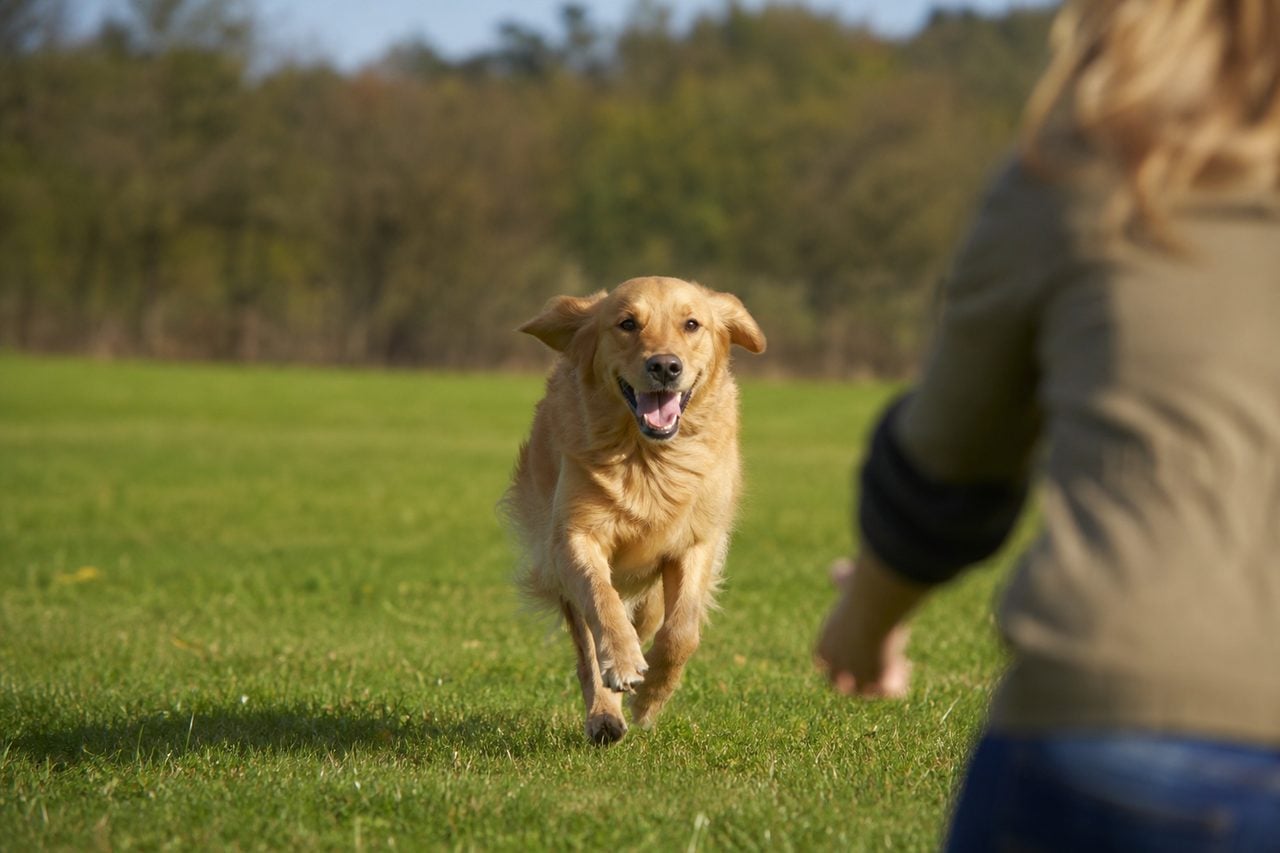
Picture walking a wooded trail at For-Mar Nature Preserve, your dog trotting nearby, checking in with you, coming back the moment you call — no leash, no tension, no worry. That reliable off-leash freedom is the goal a lot of Flint-area dog owners have in mind. It’s an achievable one, but it’s also the most demanding form of pet dog training there is, and it’s worth being honest about what it takes to get there safely.
Off-leash training isn’t a single trick you teach in a weekend. It’s the product of a deep, rock-solid foundation — a recall your dog obeys every single time, impulse control that holds up against real temptation, and a relationship where your dog genuinely wants to stay connected to you even when the world is full of distractions. Squirrels, other dogs, joggers, the geese along the Flint River, the open water of the Fenton lakes — all of it competes for your dog’s attention, and off-leash reliability means winning that competition consistently.
One note before we go further: dedicated off-leash specialists are somewhat thinner on the ground in the immediate Flint metro than general obedience trainers, and some families end up traveling toward the wider Detroit region for programs with a specific off-leash focus. That said, plenty of the groundwork can be built with local trainers and your own consistent effort. This guide explains how off-leash training really works, how to pursue it responsibly around Genesee County, and how to know when your dog is ready.
What Off-Leash Reliability Really Means
Off-leash training is often misunderstood as simply removing the leash and hoping for the best. In reality, it’s the visible result of an enormous amount of foundation work. A truly off-leash-reliable dog has three things: a recall that is essentially automatic, strong impulse control, and a habit of voluntarily staying connected to their handler. Strip away any one of those and off-leash becomes unsafe. It’s the difference between a dog who happens to stay near you when nothing interesting is going on and a dog you can genuinely trust when a deer crosses the trail.
The centerpiece is recall — coming when called, every time, regardless of what else is happening. This is not the same as a dog who comes when there’s nothing better to do. A reliable recall holds up when a rabbit bolts across the path, when another dog invites play, when your dog is fifty yards away and fully absorbed in a scent. Building that level of dependability takes months of layered, progressive work, gradually raising the difficulty as the dog succeeds. Crucially, a strong recall is built by making coming back to you consistently rewarding and never poisoned — dogs who learn that returning means the fun ends, or that being called leads to something unpleasant, get slower and less reliable over time. Protecting the value of the recall cue is one of the most important things an owner can do.
Impulse control is the second pillar. An off-leash dog constantly faces choices — chase or stay, bolt or wait — and must have the self-restraint to make the right one. This is trained through exercises that teach the dog to pause, to leave things alone, and to look to you before acting. A dog with genuine impulse control can watch a squirrel run and still choose to check in with their handler; a dog without it is simply waiting for the leash to come off. The third pillar is the relationship itself. A dog who is deeply bonded and engaged with their handler checks in naturally, wants to be near you, and finds staying connected rewarding. Without that engagement, no amount of drilling produces real off-leash reliability — you’d just have a dog waiting for a chance to leave. This is why off-leash work isn’t only about obedience; it’s about building a dog who genuinely wants to be with you.
The Foundation Comes First
There are no shortcuts to off-leash work, and any trainer who suggests otherwise should give you pause. Before a leash ever comes off in an open area, your dog needs a solid on-leash and long-line foundation. That means reliable basic obedience — sit, down, stay, heel — performed consistently in increasingly distracting environments, plus a recall proven over distance and against real temptation.
Most good off-leash programs progress through predictable stages. The dog first learns the behaviors in a quiet, controlled setting where success is easy. Then a long line — a lightweight leash of fifteen, thirty, even fifty feet — gives the dog the feeling of freedom while the handler retains a safety net and the ability to reinforce cues. The long line is the workhorse of off-leash training; a dog spends a great deal of time on it, succeeding at gradually harder challenges, long before running truly free. Only when behaviors are dependable on the long line across many environments and distractions does a trainer begin testing genuine off-leash reliability, and even then in safe, enclosed, or low-risk spaces first.
This staged, patient progression is exactly why off-leash training takes so long and demands so much consistency. It’s also why the handler’s commitment matters as much as the dog’s aptitude. Skipping stages — letting a dog off-leash before the foundation is genuinely proofed — is how dogs get lost, hit by cars, or into dangerous encounters. The foundation isn’t a formality; it’s the safety system.
Tools and Methods You'll Encounter
As you research off-leash training around Flint, you’ll come across a range of tools and philosophies, and it helps to understand them so you can make informed choices. The long line, already mentioned, is nearly universal and largely uncontroversial — it’s simply a longer leash that preserves safety while giving freedom. Beyond that, methods diverge.
Some trainers use remote (electronic) collars as part of off-leash conditioning, particularly for proofing recall at distance. This is a genuinely divisive topic in the training world. Used skillfully, at low levels, by an experienced trainer who has properly conditioned the dog to understand the tool, e-collars can be an effective communication device at a distance. Used carelessly or as punishment, they can create fear, confusion, and fallout. If you’re considering a program that uses e-collars, ask detailed questions about how the trainer introduces and conditions the tool, what levels they work at, and how they ensure the dog understands rather than simply fears it. A trainer who can’t explain this clearly, or who treats the collar as a shortcut, is a red flag.
Reward-based and positive-reinforcement methods build off-leash reliability by making connection with the handler genuinely more rewarding than the alternatives — through high-value reinforcement, engagement games, and careful management of the dog’s environment. The idea is straightforward but powerful: if returning to you and staying connected is the best deal available, the dog chooses it freely, even against competition. This takes time and consistency to build, and it depends on you protecting the value of your cues and never making returning to you a disappointment. Many effective trainers blend approaches, using long-line safety, reward-based engagement, and, where appropriate and skillfully applied, other tools. What matters most isn’t the label but whether the method produces a dog who is reliable and confident and happy, and whether you understand and are comfortable with what’s being done to your dog. Whatever the toolkit, be wary of anyone promising guaranteed off-leash reliability quickly — real reliability is earned over time, not installed.
Off-Leash Around Genesee County
The Flint area offers genuinely appealing places to enjoy a well-trained dog, and thinking about where you’ll actually use off-leash skills should shape how you train. For-Mar Nature Preserve and the trail networks around the county draw dog owners who want a hiking companion. The lake country around Fenton and Linden adds water into the mix — many owners specifically want a dog reliable near and in the water, which adds its own layer of training. The rural townships toward Clio, Mt Morris, and out past Davison and Otisville offer open space, but also livestock, wildlife, and roads that make a bomb-proof recall non-negotiable.
Be clear-eyed about where off-leash is actually legal and appropriate. Leash laws apply in most public parks and on many trails, and off-leash freedom is properly reserved for designated off-leash areas, private property with permission, or genuinely remote settings where it’s both legal and safe. A reliably trained dog is a joy on a quiet rural trail; the same dog off-leash on a busy Grand Blanc sidewalk or near traffic in Burton is a hazard regardless of training. Reliability includes your judgment about where to grant freedom, not just the dog’s obedience. It’s also a courtesy to others — not everyone on a shared trail wants to meet a loose dog, some people are fearful, some dogs are reactive on leash, and wildlife deserves not to be chased. Good off-leash owners read the environment and leash up when conditions call for it, even with a dog who would obey.
When you do work toward off-leash, proof the behaviors in the environments you’ll actually use. A dog reliable in a quiet backyard in Flushing or Swartz Creek may need substantial additional work before they’re dependable amid the ducks, other dogs, and foot traffic of a popular preserve. Tell your trainer where you intend to enjoy your dog off-leash so the program can build toward those specific distractions rather than an artificial setting.
Finding Off-Leash Help in the Flint Area
As noted, trainers who specialize specifically in off-leash reliability are a bit less common in the immediate Flint metro than general obedience providers, and some dedicated families travel toward the greater Detroit region for programs built around off-leash and advanced work. That’s a real option worth knowing about — but it’s not the only path, and you shouldn’t assume the local scene can’t serve you.
A great deal of off-leash preparation is simply excellent foundation training, and strong general obedience trainers throughout Genesee County can build that with you: reliable recall on a long line, solid impulse control, and deep handler engagement. Many will take you a long way toward off-leash readiness, and some offer explicit off-leash tracks or will develop one with you. When evaluating any trainer for this goal, ask directly about their experience producing off-leash-reliable dogs, their staged progression, the tools they use and why, and — crucially — how they’ll teach you to maintain the reliability, since off-leash work depends heavily on ongoing handler consistency.
Whether you work entirely locally or combine local foundation work with a trip toward the wider region for specialized help, the principles are the same. Prioritize trainers who set realistic timelines, who won’t rush your dog off the long line prematurely, and who treat safety as the first priority. The directory below lists trainers serving the Flint area; use it as a starting point, and lean on the questions in this guide to judge who’s genuinely equipped to help you reach reliable off-leash freedom.
Is Your Dog — and Are You — Ready?
Off-leash reliability isn’t right for every dog or every owner, at least not on every timeline. Some dogs, by temperament, breed drive, or history, are harder cases — strong prey drive, a history of running, deep-seated fearfulness, or reactivity all make off-leash work longer and riskier, though rarely impossible with the right professional. An honest trainer will tell you where your particular dog sits on that spectrum rather than promising a uniform outcome.
Your own readiness matters just as much. Off-leash reliability is maintained, not achieved once and forgotten. It requires ongoing practice, continued reinforcement, and the discipline to not get complacent — many dogs backslide because owners assume the training is ‘done’ and stop maintaining it. It also requires sound judgment about when and where to grant freedom. If you’re prepared to invest months in the foundation, to keep the skills sharp afterward, and to make conservative choices about where your dog runs free, off-leash training can genuinely transform how you and your dog experience the Flint area’s trails and open spaces.
Age and life stage play a role too. Puppies and young dogs are wonderful candidates to begin the engagement and recall foundation early, when habits form easily — though genuine off-leash freedom should wait until they’re mature enough to handle it and the recall is truly proven. Older dogs, or dogs with an established history of blowing off recall, can absolutely learn, but often need extra patience to rebuild trust in the cue. And breed tendencies matter: sighthounds and strong scent hounds, for instance, come with drives that make off-leash reliability a taller order, which doesn’t rule it out but does mean setting realistic expectations and possibly accepting long-line freedom as the responsible norm.
If you’re earlier in the journey, that’s fine — start with rock-solid basic obedience and a reliable on-leash recall, and build from there. Every step of that foundation is worthwhile on its own, and it’s the necessary groundwork for off-leash freedom down the road. There’s no rush; the safest off-leash dogs are the ones whose owners took the time to get the foundation genuinely right. Enjoy the process, celebrate the small wins as your dog’s recall gets sharper, and let genuine off-leash freedom be the reward at the end of solid work rather than a gamble taken too soon.
Off-Leash Dog Training in Flint: Local Options & Nearest Specialists
Right now there are no listed Flint trainers focused specifically on off-leash dog training. Many general Flint dog trainers handle milder cases, and for anything serious the nearest specialists are below.
Nearest off-leash dog training specialists — Detroit
For complex cases, some families travel to the larger pool of specialists in the Detroit area for an assessment or a board-and-train stay. Top-reviewed options:
- Tip Top K9 Sterling Heights Dog Training — 5.0★ (7 reviews)
- K9 Turbo Training — 4.9★ (211 reviews)
- Canine Academy — 4.7★ (48 reviews)
- Off Leash K9 Training — 4.5★ (25 reviews)
- Canine Academy — 4.5★ (8 reviews)
- Dan Morris Dog Training — 4.4★ (118 reviews)
See all Detroit off-leash dog training trainers →
Frequently Asked Questions
How long does it take to train a dog to be reliable off-leash?
There’s no fixed number, but plan on months rather than weeks. Off-leash reliability is built on a deep foundation — automatic recall, strong impulse control, and genuine handler engagement — each of which takes time to develop and then proof against real distractions. Trainers typically progress through controlled settings, then long-line work, then genuine off-leash testing. Be skeptical of anyone promising fast, guaranteed off-leash reliability; the dogs who are truly safe got there through patient, staged work.
Is off-leash training safe, and is it even legal around Flint?
It’s safe only when the foundation is genuinely solid and you exercise good judgment about location. Leash laws apply in most public parks and on many trails around Genesee County, so off-leash freedom belongs in designated off-leash areas, on private property with permission, or in genuinely remote, legal, and safe settings. A reliably trained dog on a quiet rural trail is very different from an off-leash dog near traffic in Grand Blanc or Burton, which is unsafe regardless of training.
Do I need an e-collar for off-leash training?
Not necessarily. Some trainers use remote collars to proof recall at distance, and in skilled hands, properly conditioned and used at low levels, they can be an effective distance-communication tool. Others build reliable off-leash behavior entirely through reward-based methods and long-line work. If a program uses e-collars, ask exactly how they introduce and condition the tool and what levels they work at. The right approach is the one that produces a dog who is reliable and also confident and happy, and that you’re comfortable with.
Are there off-leash trainers right in Flint, or do I have to travel?
Dedicated off-leash specialists are somewhat thinner in the immediate Flint metro than general obedience trainers, and some families do travel toward the wider Detroit region for programs focused specifically on off-leash and advanced work. That said, much of off-leash preparation is excellent foundation training that strong local trainers throughout Genesee County can build with you. Ask any trainer directly about their off-leash experience and staged progression before deciding whether to stay local or travel.
Can any dog learn to be off-leash reliable?
Most dogs can make real progress, but some are harder cases. Strong prey drive, a history of running off, deep fearfulness, or reactivity all make off-leash work longer and riskier — though rarely impossible with the right professional and enough time. An honest trainer will assess your specific dog and give you a realistic picture rather than a one-size-fits-all promise. For some dogs, a long-line-managed freedom may be the sensible ceiling, and that’s a perfectly responsible outcome.
My dog has a good recall at home but ignores me at the park. Why?
This is one of the most common off-leash challenges and it comes down to generalization and distraction. A recall that works in a quiet, familiar setting hasn’t necessarily been proofed against the far greater temptations of a park full of other dogs, wildlife, and smells. The fix is systematic: rebuild the recall on a long line and gradually raise the difficulty in more distracting environments until it holds up against real competition. Don’t grant true off-leash freedom until the recall is dependable amid those distractions.
Related: read our complete off-leash dog training guide or the full Flint dog training overview.
Ready to find the right off-leash dog training pro in Flint?