
Off-Leash Dog Training in Traverse City, MI
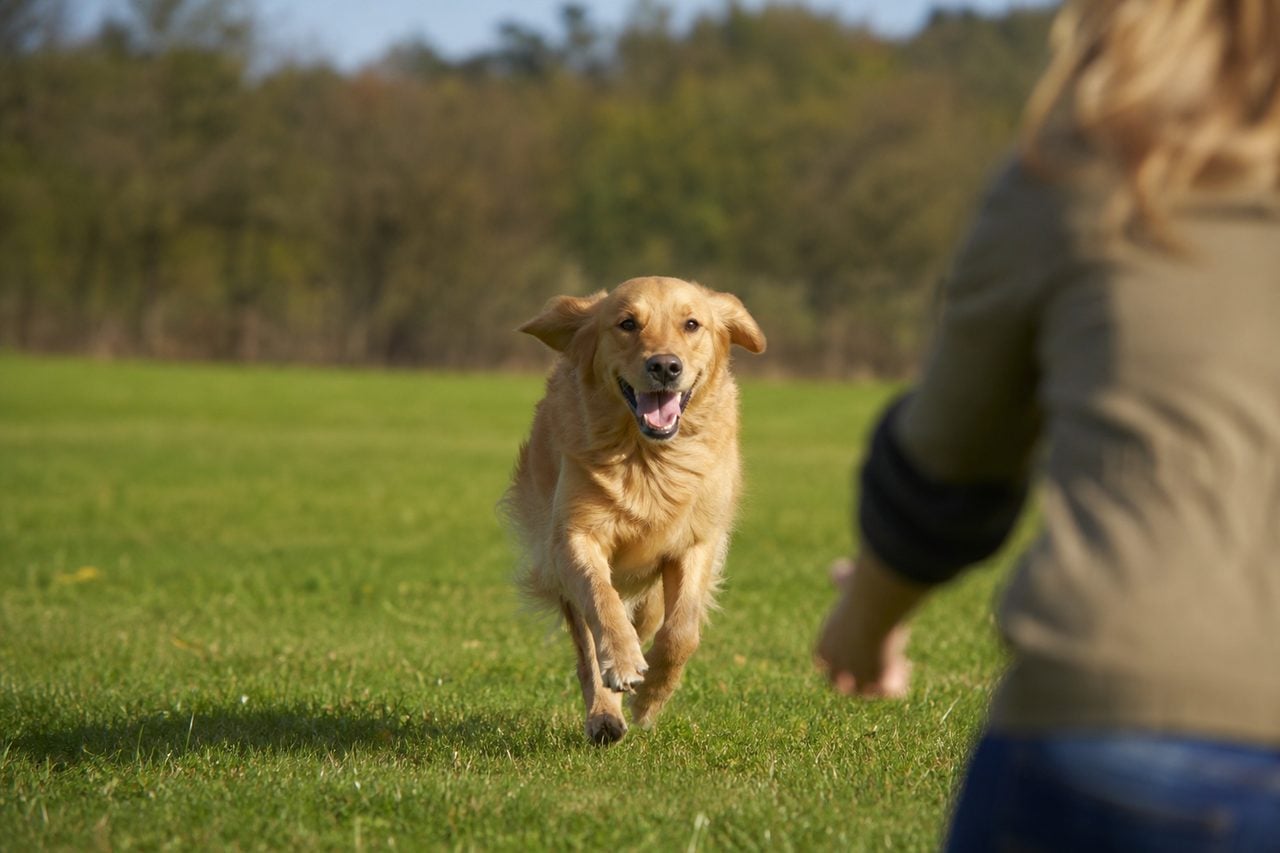
Reliable off-leash control is the difference between a dog that can genuinely share the northern-Michigan outdoors with you and one that has to stay tethered every time the door opens. In a region defined by open water, forest trails, dune country, and wide rural properties, a dog that returns instantly when called — even mid-chase, even at a distance — is not a luxury. It is a safety essential. And it is also one of the hardest, most misunderstood skills to build.
Around Traverse City, the temptation to let a dog run free is everywhere: the shoreline of Grand Traverse Bay, the trails near Sleeping Bear Dunes, the orchards and back roads of the Leelanau Peninsula, the quiet inland forests around Kalkaska and Interlochen. But real off-leash freedom is earned through months of structured training, not switched on overnight. It also comes with local responsibilities — leash rules vary by park and jurisdiction, and many public trails require a leash regardless of how well-trained your dog is.
This guide explains what off-leash training really involves, how to build a rock-solid recall, where the training tends to break down, and how to enjoy off-leash time responsibly in and around Traverse City. Because dedicated off-leash specialists can be harder to find in a smaller northern metro, we also cover how to think about your options, including the wider region.
What Off-Leash Training Really Means
Off-leash training is often misunderstood as simply removing the leash and hoping for the best. In reality, it is the process of building such reliable communication and responsiveness that a dog will listen to you and stay under control without a physical connection — even in the face of powerful distractions. The leash coming off is the last step of a long process, not the first.
The foundation of off-leash reliability is an exceptional recall: the dog comes to you immediately, every time, regardless of what it is doing. Layered on top of that are other controls — the ability to stop or lie down at a distance, to stay in place while you move away, to leave something enticing alone, and to walk calmly at your side without a leash. Together these give you the ability to manage your dog’s behavior and position even when it is fifty yards away and something interesting just moved in the brush.
What makes this hard is that the real world is full of competing motivations. A leash physically prevents a dog from bolting after a deer, a squirrel, another dog, or a scent trail. Take the leash away and the only thing keeping your dog with you is training strong enough to outweigh those pulls. That is a high bar, and it is why genuine off-leash reliability takes months of patient, progressive work rather than a weekend course.
It is worth being honest about the ceiling, too. No dog is a robot, and even a beautifully trained dog is still a dog. Certain breeds with intense prey or scent drives, or dogs early in their training, may never be fully trustworthy off-leash in high-stakes environments near roads or wildlife. Responsible off-leash training includes knowing your individual dog’s limits and choosing safe contexts accordingly.
Building a Reliable Recall From the Ground Up
The recall — coming when called — is the cornerstone of everything. A dog with a genuinely reliable recall can be trusted in far more situations than one without, and building it well is a stepwise process that most owners rush.
Start in a low-distraction environment. Recall is first taught somewhere quiet and enclosed — a hallway, a fenced yard, a calm room — where success is easy and there is nothing competing for the dog’s attention. The dog learns that coming to you is reliably rewarding, whether with food, play, praise, or whatever it values most. The name of the game early on is building a strong, happy association with the recall cue.
Add distance and distraction gradually. Once the dog responds eagerly up close in a quiet space, you slowly increase the difficulty — more distance, then mild distractions, then stronger ones — always keeping the dog on a long line so it cannot practice failure. A long training line (fifteen to thirty feet or more) is the essential tool of this stage. It gives the dog freedom to make choices while guaranteeing you can prevent a bolt and reinforce the right decision.
Proof in real environments. A recall that works in your yard means little if it collapses at a trailhead. Proofing means deliberately practicing in progressively more challenging real-world settings — a quiet park, then a busier one, then near wildlife or other dogs — still on the long line until the dog is genuinely reliable. Around Traverse City, this might mean starting in a fenced yard, moving to a calm stretch of open space, and building up toward the kinds of distractions found on a bay shoreline or forest trail.
Reward generously and never punish a return. One of the fastest ways to destroy a recall is to call a dog and then do something it dislikes — end the fun, clip on a leash to go home, or scold it. If coming to you sometimes ends in something bad, the dog learns hesitation. Keep the recall overwhelmingly positive, reward it well even after the dog has been slow, and the behavior stays strong.
This process cannot be honestly compressed into a weekend. Depending on the dog, building a recall you would actually trust off-leash near a road or wildlife typically takes many weeks to several months of consistent short sessions. A professional trainer accelerates it by getting the mechanics and progression right, but the timeline is dictated by the dog.
Where Off-Leash Training Breaks Down
Most off-leash failures are not the dog’s fault — they trace back to predictable human mistakes. Knowing them in advance helps you avoid the traps.
Skipping steps and taking the leash off too soon. The single most common error is testing off-leash before the recall is genuinely proofed against distraction. The dog does well on a long line, the owner gets confident, drops the line — and the first serious distraction proves the training was not ready. Every time a dog bolts and ‘wins’ by chasing something, the off-leash behavior gets weaker. Progress at the dog’s pace, not your enthusiasm’s.
Poisoning the recall. As noted, calling the dog for anything unpleasant teaches it that coming to you is a gamble. Owners do this without realizing — calling the dog only when it is time to leave the park, or calling in a frustrated tone after the dog has ignored them for a while. Protect the cue.
Inconsistency between people. If one family member enforces the rules and another lets things slide, the dog learns that the rules are negotiable. Everyone who handles the dog needs to use the same cues and the same standards.
Under-estimating drive. A dog bred to chase, hunt, or track may find deer, small animals, or scent trails almost impossible to resist without extensive training — and some individuals never become fully reliable around their specific trigger. In the deer-rich woods of the Leelanau Peninsula, around Kalkaska, and throughout the inland forests, this is a real and constant factor. Knowing your dog’s drive helps you set honest expectations and choose safe contexts.
Treating off-leash as ‘done.’ Off-leash reliability is a skill that needs maintenance. A dog that was solid a year ago can drift if the behavior is never practiced. Fold occasional recall practice and rewards into ordinary outings to keep it sharp.
Off-Leash Rules and Responsibility Around Traverse City
A well-trained off-leash dog is only an asset if you exercise that freedom where it is actually permitted and safe. Leash rules in the Traverse City region are not uniform, and it is your responsibility to know the rules for each specific place you visit.
The most important thing to understand is that leash requirements vary by park, trail, and jurisdiction — there is no single blanket rule that covers everywhere. Individual municipalities, townships, and county parks set their own leash ordinances, and they differ from one place to the next. Always check the posted signage and the managing agency’s rules for the specific location before letting your dog off-leash, and treat ‘I’m not sure’ as a reason to keep the leash on.
As a general matter, national-lakeshore and state-park trails typically require dogs to be leashed. That means popular destinations such as the trails around Sleeping Bear Dunes and Michigan state-park lands generally are not places to let your dog run free, no matter how reliable its recall — leashing is the rule, and it exists to protect wildlife, other visitors, and your dog. Assume a leash is required on these public trails unless clearly posted otherwise.
Purpose-built, fenced off-leash dog parks are the most straightforward place to let a dog run without a line, within their posted rules. Beyond those, some areas may allow off-leash use under voice control in designated spots, but this varies locally and can change — so verify the current rules for each park rather than relying on what was allowed last year or what a neighbor told you.
Responsibility extends beyond legality. Even where off-leash is permitted, keep your dog from approaching people, dogs, or wildlife that do not welcome it; clean up after your dog; and leash up proactively when you see other trail users, especially near the crowded bayfront and busy summer trailheads. In a region with abundant deer and other wildlife, an off-leash dog that gives chase is both a safety risk and a violation of the trust that keeps dog-friendly access open for everyone. Good off-leash handling is as much about judgment and courtesy as it is about the dog’s training.
Choosing an Off-Leash Trainer in a Northern Metro
Off-leash reliability is an advanced training goal, and not every trainer specializes in it. When you are evaluating who to work with in the Traverse City area, a few things matter more than usual.
Look for a clear, progressive methodology. A good off-leash trainer can explain the step-by-step progression — foundation recall, long-line proofing, adding distance and distraction, generalizing to real environments — in plain language. Be wary of anyone who promises fast off-leash results without that foundation, or who cannot articulate how they build reliability against distraction.
Ask how they handle your dog’s specific drive and breed. A trainer experienced with high-drive, high-prey, or scent-focused dogs will set realistic expectations rather than promising a guarantee. Honesty about your individual dog’s ceiling is a sign of a professional, not a lack of skill.
Understand their approach and tools. Off-leash work sometimes involves training tools, and reputable trainers vary in their methods. Ask directly what they use, what happens when the dog succeeds and when it fails, and whether you can observe. You want a trainer who welcomes your questions and lets you watch their work.
Expect to be involved. Off-leash reliability ultimately depends on you maintaining it, so a good program teaches you the handling, the timing, and the maintenance routine — not just the dog. If a trainer wants to hand back a ‘finished’ off-leash dog with no coaching for you, be skeptical.
Dedicated off-leash specialists can be genuinely harder to find in a smaller northern metro, and the pool of trainers focused specifically on advanced off-leash work is thinner here than in a larger market. Many capable local trainers do offer recall and off-leash foundations as part of broader obedience programs, and that is a reasonable place to start. For a difficult individual case — a dog with intense drive, a serious bolting problem, or a need for advanced reliability near real hazards — some families choose to travel to the wider region, including as far as Grand Rapids, to access a specialist. Weigh the value of that expertise against the distance, and start by exploring what is available locally.
Making Off-Leash Freedom Work Long-Term
Achieving reliable off-leash control is a milestone, but keeping it is an ongoing practice. The dogs that safely enjoy the northern-Michigan outdoors year after year belong to owners who treat the training as a living skill rather than a completed project.
Maintain the recall by continuing to reward it, at least intermittently, even long after your dog is reliable. A recall that is only ever ‘expected’ and never reinforced slowly loses value in the dog’s mind; a recall that occasionally still produces something good stays strong. Keep a long line handy for new or higher-risk environments — there is no shame in clipping back on when the stakes are high, such as near a road, unfamiliar wildlife, or an unpredictable crowd.
Read the environment and adjust. Off-leash freedom that is appropriate on a quiet inland-forest trail in the shoulder season may not be appropriate on a packed bayfront path in July. The seasonal swing around Traverse City means the same location can be calm one month and overwhelming the next. A responsible handler scales the dog’s freedom to the conditions, leashing up in crowds, near wildlife, or anywhere the dog’s reliability is not certain.
Keep building the relationship, because that is what off-leash control ultimately rests on. A dog that is engaged with you, checks in naturally, and finds you rewarding to be around is a dog that stays close and comes back — not because it is forced to, but because being with you is worth its while. That engagement is built through play, training, shared activity, and consistency over time.
Finally, stay honest about your individual dog. Some dogs earn wide off-leash trust; others are reliable in some contexts and never in others; and that is fine. The goal is not to prove a point but to keep your dog safe and welcome in the shared outdoors. Used with good judgment, off-leash freedom can transform how you and your dog experience the water, woods, and trails of the Traverse City region — as long as it is built patiently, exercised responsibly, and maintained for life.
To find trainers offering recall and off-leash work in Traverse City and the surrounding communities — from the Leelanau Peninsula to Kalkaska and the inland forests — see the directory listings below, and ask the questions covered here before you commit.
Off-Leash Dog Training in Traverse City: Local Options & Nearest Specialists
Right now there are no listed Traverse City trainers focused specifically on off-leash dog training. Many general Traverse City dog trainers can help you get started, and the nearest specialists for this focus are below.
Nearest off-leash dog training specialists — Grand Rapids
For complex cases, some families travel to the larger pool of specialists in the Grand Rapids area for an assessment or a board-and-train stay. Top-reviewed options:
- Full Spectrum Dog Training — 5.0★ (68 reviews)
- Follow The Leader Dog Training and Rehabilitation LLC — 4.9★ (12 reviews)
See all Grand Rapids off-leash dog training trainers →
Frequently Asked Questions
How long does it take to train a dog to be reliable off-leash?
There is no fixed timeline, but reliable off-leash control typically takes many weeks to several months of consistent, progressive work — not a weekend. The process moves from a solid recall in a quiet space, to long-line proofing against gradually stronger distractions, to generalizing in real environments. The pace depends heavily on the individual dog: its age, temperament, drive, and how consistently you practice. A professional can make the training more efficient by getting the progression right, but nobody can honestly compress genuine off-leash reliability into a quick fix. Progress at the dog’s pace rather than rushing to take the leash off.
Can any dog be trained to be off-leash reliable?
Most dogs can achieve good off-leash control in appropriate contexts, but the ceiling varies by individual. Dogs with intense prey drive, strong hunting or scent instincts, or certain temperaments may find some triggers — such as deer in the northern-Michigan woods — extremely hard to resist, and a minority never become fully trustworthy off-leash near roads or wildlife. Responsible off-leash training includes recognizing your individual dog’s limits and choosing safe contexts accordingly. A good trainer will be honest about what your specific dog can realistically achieve rather than promising a guarantee.
Where can I legally let my dog off-leash around Traverse City?
Leash rules vary by park, trail, and jurisdiction in the Traverse City region — there is no single blanket rule. Individual municipalities, townships, and county parks set their own leash ordinances, so always check the posted signage and the managing agency’s rules for each specific location before letting your dog off-leash. Purpose-built fenced dog parks are the most straightforward option, within their posted rules. As a general matter, national-lakeshore and state-park trails, including those around Sleeping Bear Dunes and state-park lands, typically require dogs to be leashed. When in doubt, keep the leash on.
What is a long line and why does it matter?
A long line is a training lead, often fifteen to thirty feet or more, that gives your dog freedom to move and make choices while guaranteeing you can prevent a bolt and reinforce the right decision. It is the essential tool of off-leash training because it lets the dog practice recall and distance control at increasing difficulty without ever getting the chance to fail by running off. Every time a dog successfully bolts and chases something, the off-leash behavior weakens, so the long line protects the training during the long proofing phase. Keep one handy even after your dog is reliable, for new or higher-risk environments.
Why does my dog come when called at home but not outside?
This is one of the most common off-leash frustrations, and it comes down to distraction and generalization. Dogs are context-sensitive: a recall learned in a quiet home has to be deliberately proofed against progressively stronger distractions before it holds up at a trailhead or shoreline. If your dog ignores you outside, the training simply has not yet been generalized to that level of difficulty — usually because steps were skipped or the leash came off too soon. The fix is to go back to a long line and rebuild the recall in gradually more distracting real-world settings, rewarding generously, until it is genuinely reliable.
Do I need an off-leash specialist, or will a general obedience trainer do?
Many capable local trainers offer recall and off-leash foundations as part of broader obedience programs, and that is a reasonable place to start for most dogs. Off-leash reliability is an advanced goal, though, so look for a trainer who can clearly explain their step-by-step progression and who sets honest expectations about your dog’s drive. Dedicated off-leash specialists are thinner on the ground in a smaller northern metro, so for a difficult case — intense drive, a serious bolting problem, or a need for advanced reliability near real hazards — some families travel to the wider region, including as far as Grand Rapids. Start locally, and weigh the value of specialist expertise against the distance.
Related: read our complete off-leash dog training guide or the full Traverse City dog training overview.
Ready to find the right off-leash dog training pro in Traverse City?