
Off-Leash Dog Training in Grand Rapids, MI
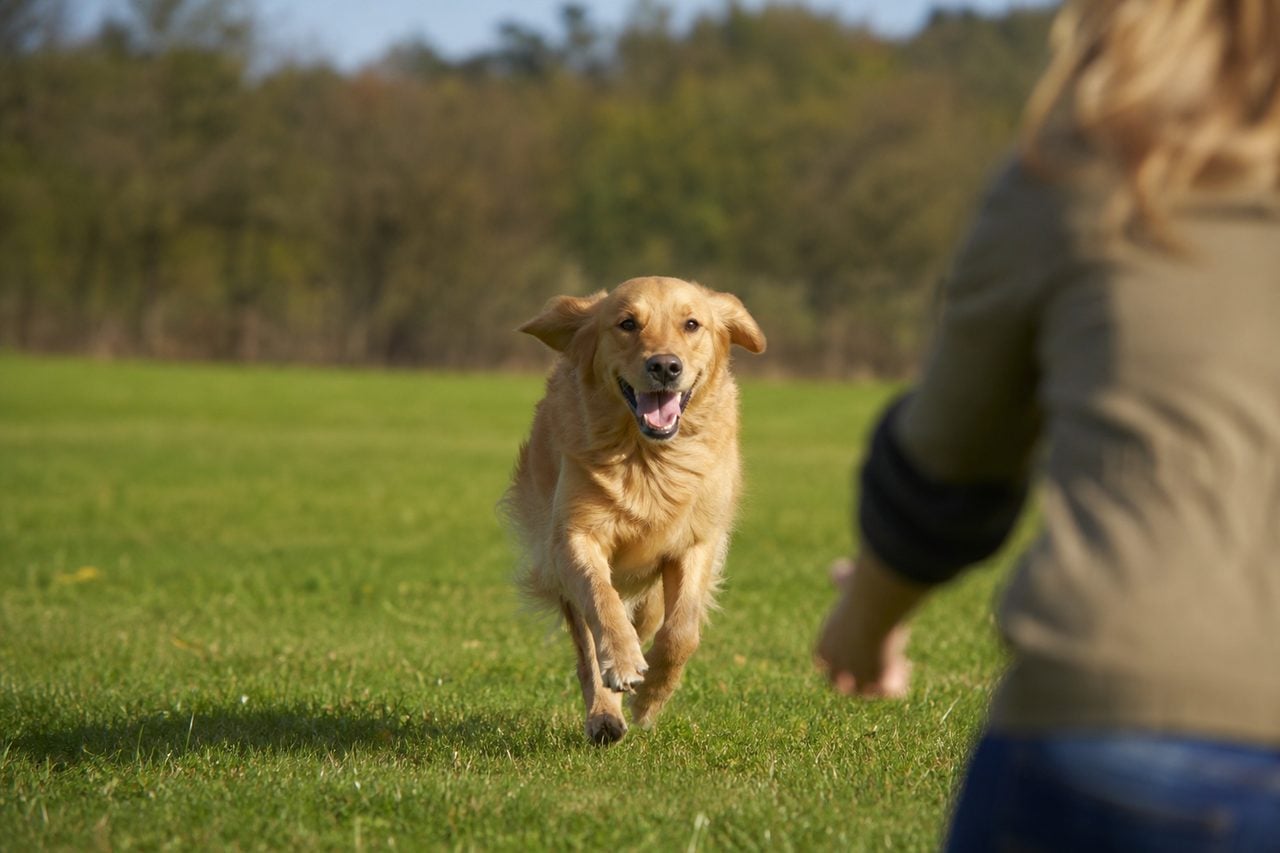
The dream of a dog that stays close, checks in, and comes running the instant you call, no leash required, is one many Grand Rapids owners share. Reliable off-leash behavior is genuinely achievable for most dogs, but it is built on a foundation of rock-solid recall and impulse control, not on hope. It is also worth being honest up front about what off leash means legally and practically in West Michigan, because getting that part right protects your dog, other people, and the local trails and parks everyone shares.
This guide covers how to build off-leash reliability step by step, the realities of Michigan leash laws, where to practice safely around Grand Rapids, and an honest note on finding specialized off-leash programs locally. Whether you want a dog that is trustworthy on a hiking trail or simply more reliable in your own yard, the path is the same, and it starts with the fundamentals.
What Off-Leash Reliability Really Requires
It helps to define the goal clearly. True off-leash reliability means your dog will respond to your cues, especially recall, even when there are strong distractions like other dogs, wildlife, joggers, or interesting smells. It is not simply a dog that ignores you in an open field until it happens to feel like coming back. That distinction matters, because an unreliable off-leash dog is a safety risk to itself, to wildlife, and to other people and dogs.
The foundation is a bombproof recall, meaning your dog comes when called reliably, and a set of impulse-control skills such as a solid stay, leave it, and the ability to disengage from something exciting on cue. These are not advanced tricks; they are the safety systems that make freedom possible. Layered on top is a strong relationship where checking in with you is a well-established habit your dog finds rewarding.
Be realistic about your individual dog, too. Breed, age, temperament, and drive all influence how much off-leash reliability you can expect and how long it takes. A high-prey-drive dog near wildlife, or an adolescent in a distracting environment, will need more proofing than a mellow adult in a familiar setting. None of this means off leash is out of reach; it means the training must match the dog, and the freedom you grant should always match the reliability you have actually verified.
Building A Rock-Solid Recall Step By Step
Recall is the single most important off-leash skill, so it is worth building deliberately. Start in a boring, low-distraction environment like a quiet room or a fenced backyard. Say your recall cue once in a happy voice, and when your dog comes, pay generously with high-value food or an exciting game. Make coming to you the best thing that happens all day, every single time, so the cue becomes a promise of good things rather than the end of fun.
Protect the cue word. Never call your dog to you for something unpleasant like nail trims or the end of playtime, or the word loses its shine. Never repeat it over and over, which teaches the dog that the first several calls are optional. And never punish a dog that comes back slowly or reluctantly, no matter how frustrated you feel, because punishing the return teaches the dog that coming back is risky.
Once recall is strong at home, begin proofing it by gradually adding distractions and distance while keeping the dog safely tethered. A long line, a fifteen to thirty foot lead attached to a harness, is the key bridge between on-leash and true off-leash work. It gives your dog the feeling of freedom while guaranteeing you can prevent a failed recall or a dangerous dash. Practice in progressively harder environments: a quiet park at dawn, then somewhere with a few distractions, always staying at a difficulty level where your dog can succeed most of the time.
The golden rule of proofing is to only make it harder when the current level is reliable, and to never remove the safety net until the recall works consistently against real distractions. Rushing this stage is how off-leash accidents happen. Patience here is what earns genuine freedom later.
Michigan Leash Laws And Off-Leash Realities
Before you unclip that leash anywhere public, understand the legal picture, because it shapes where off-leash is actually allowed. Michigan communities, including Grand Rapids and the surrounding Kent and Ottawa county municipalities, generally require dogs to be leashed and under control in public areas such as sidewalks, streets, and most parks. Leash rules are set and enforced at the local level, so the specifics vary from one city, township, or park system to the next, and they can change.
The practical takeaway is that off-leash freedom in public is usually restricted to designated off-leash dog parks or specifically posted off-leash areas, and even there rules apply. Letting a dog run loose on a general-use trail or a regular park where leashes are required is typically against local ordinance, regardless of how well trained your dog is. It can also result in fines and, more importantly, puts your dog and others at risk if a recall fails at the wrong moment.
Because rules differ by jurisdiction and are updated periodically, always check the current regulations for the specific city, township, or park you plan to visit before going off leash, rather than assuming. Your own securely fenced property is generally the one place you can reliably practice and enjoy off-leash freedom without a leash-law concern. Respecting these rules is not just about avoiding fines; it keeps wildlife, other trail users, leashed reactive dogs, and your own dog safe, and it protects continued access to the shared spaces West Michigan dog owners value.
Where To Practice Around Grand Rapids
Choosing the right practice environments makes off-leash training safer and faster. The gold standard for early and mid-stage work is a securely fenced space where your dog cannot get into trouble even if a recall fails. Your own fenced yard is ideal for foundation work, and a designated off-leash dog park can be useful for practicing around distractions once your dog is reliable enough to handle other dogs, though busy dog parks are not the place to test a shaky recall.
For long-line work in bigger, more natural settings, Grand Rapids and the surrounding area offer good options where you can keep your dog legally leashed on a long lead while practicing distance and distractions. Large open parks such as Millennium Park on the west side and the trails at Provin Trails Park on the north end give you room and varied distractions, and the open areas around Riverside Park along the Grand River work at quiet times. The Grand Haven lakeshore adds wide-open space, though summer crowds mean you should pick quiet hours and mind the local rules for beaches and parks.
Whatever spot you choose, match the difficulty to your dog’s current level, go at off-peak times early in training, and keep that long line on until you have verified reliability in that specific environment. Dogs do not automatically generalize; a perfect recall in your backyard does not guarantee the same at a busy trailhead full of squirrels. Treat each new location as a fresh proofing challenge, start a little easier than you think you need to, and build up. And always confirm the leash rules for the specific location before you go.
Finding Off-Leash Training Help Locally
Here is an honest assessment for West Michigan owners: dedicated, specialized off-leash reliability programs, the kind of intensive boot-camp-style off-leash schools some regions are known for, are limited locally around Grand Rapids. That does not leave you stuck, and there are two solid paths forward depending on what you want.
The first path is to build off-leash reliability with a strong local trainer. Off-leash success is really just excellent recall and impulse control taken to a high level, and a skilled Grand Rapids obedience trainer, ideally a CPDT-KA certified professional, can absolutely build that foundation with you through private lessons or advanced classes. This is the most practical route for most owners, keeps you close to home, and gives you the daily coaching that off-leash work depends on. Ask prospective trainers specifically about advanced recall and proofing around distractions, and confirm they use reward-based methods.
The second path, if you specifically want a dedicated, specialized off-leash program, is that you may need to travel toward the Detroit metro area, roughly two and a half hours east and Michigan’s largest metropolitan area, where a wider range of specialized training programs tends to be concentrated. That is a real commitment of time and money, so weigh it against what a great local trainer can achieve for you closer to home. For the majority of owners, the local obedience-foundation route delivers the reliable, happy off-leash dog they were picturing without the drive. Whichever path you choose, verify the professional’s credentials and methods, and remember that the daily practice you put in matters more than any single program.
Keeping Off-Leash Skills Safe And Sharp
Off-leash reliability is not a certificate you earn once; it is a skill that needs maintenance, and treating it that way keeps everyone safe. Even a well-trained dog can have an off day, encounter a novel and overwhelming distraction, or slowly slip if you stop practicing. Build recall practice into your regular routine, keep rewarding it well throughout your dog’s life, and occasionally return to easier settings to keep the behavior strong. A recall that pays off handsomely stays sharp; one that is taken for granted quietly erodes.
Read the environment and your dog honestly before granting freedom. If you spot wildlife, a busy trailhead, a road nearby, or another dog whose temperament you cannot read, that is a moment to leash up rather than gamble. Good off-leash handlers are not the ones who never use a leash; they are the ones who know exactly when to. Carrying a leash or keeping a long line handy gives you options, and a reliable emergency recall or an emergency stop cue is worth practicing as a safety backup for the situations that catch you off guard.
Finally, keep the welfare of the shared spaces in mind. Clean up after your dog, yield to leashed dogs who may be reactive, respect wildlife and other trail users, and follow the posted rules at every park and preserve. Responsible off-leash handling is what keeps West Michigan trails and parks welcoming to dogs, and it reflects well on every owner who values that freedom. Build the foundation properly, respect the law, maintain the skills, and off leash can be one of the great joys you and your dog share.
Off-Leash Dog Training in Grand Rapids: Local Options & Nearest Specialists
A few Grand Rapids-area trainers can help with milder off-leash dog training needs:
- Full Spectrum Dog Training — 5.0★ (68 reviews)
- Follow The Leader Dog Training and Rehabilitation LLC — 4.9★ (12 reviews)
Nearest off-leash dog training specialists — Detroit
For complex cases, some families travel to the larger pool of specialists in the Detroit area for an assessment or a board-and-train stay. Top-reviewed options:
- Tip Top K9 Sterling Heights Dog Training — 5.0★ (7 reviews)
- K9 Turbo Training — 4.9★ (211 reviews)
- Canine Academy — 4.7★ (48 reviews)
- Off Leash K9 Training — 4.5★ (25 reviews)
- Canine Academy — 4.5★ (8 reviews)
- Dan Morris Dog Training — 4.4★ (118 reviews)
See all Detroit off-leash dog training trainers →
Frequently Asked Questions
Can I let my dog off leash in Grand Rapids parks?
Generally no. Michigan communities including Grand Rapids and surrounding Kent and Ottawa county municipalities typically require dogs to be leashed and under control in public areas, including most parks and trails. Off-leash freedom is usually limited to designated off-leash dog parks or specifically posted areas. Leash rules are set locally and can change, so always check the current regulations for the specific location before you go, and your own securely fenced yard is the reliable place to practice.
What does my dog need before going off leash?
The foundation is a rock-solid recall, meaning your dog comes reliably even around strong distractions, plus impulse-control skills like a solid stay, leave it, and the ability to disengage from something exciting on cue. Off-leash reliability is really excellent recall and impulse control taken to a high level. Until your dog can succeed against real distractions, keep it on a long line rather than fully off leash.
How do I train a reliable recall?
Start in a boring, low-distraction space, say the cue once in a happy voice, and pay generously every time your dog comes. Protect the cue by never using it for something unpleasant, never repeating it, and never punishing a slow return. Then proof it gradually using a fifteen to thirty foot long line, adding distractions and distance only when the current level is reliable, and never remove the safety net until recall works consistently against real distractions.
Are there off-leash training programs in Grand Rapids?
Dedicated, specialized off-leash reliability programs are limited locally around Grand Rapids. Most owners are best served by building the foundation with a strong local obedience trainer, ideally a CPDT-KA certified professional, through advanced recall and proofing work. If you specifically want a dedicated specialized program, you may need to travel toward the Detroit metro area, about two and a half hours east and Michigan’s largest metro, where more specialized programs tend to be concentrated.
Where can I practice off-leash skills near Grand Rapids?
Start in a securely fenced space like your own yard for foundation work. For long-line practice in bigger settings while keeping your dog legally leashed on a long lead, large parks such as Millennium Park and Provin Trails Park offer room and varied distractions, the areas around Riverside Park work at quiet times, and the Grand Haven lakeshore adds open space at off-peak hours. Always confirm the leash rules for the specific location, and treat each new place as a fresh proofing challenge.
Is off-leash freedom safe for every dog?
It depends on the individual dog. Breed, age, temperament, and drive all affect how much reliability you can expect and how long it takes, and a high-prey-drive dog near wildlife or an adolescent in a distracting setting needs far more proofing. The freedom you grant should always match the reliability you have actually verified in that environment. Even well-trained dogs need ongoing practice, honest reading of the situation, and a willingness to leash up when conditions are risky.
Related: read our complete off-leash dog training guide or the full Grand Rapids dog training overview.
Ready to find the right off-leash dog training pro in Grand Rapids?