
Off-Leash Dog Training in Columbus, OH — Programs & Costs
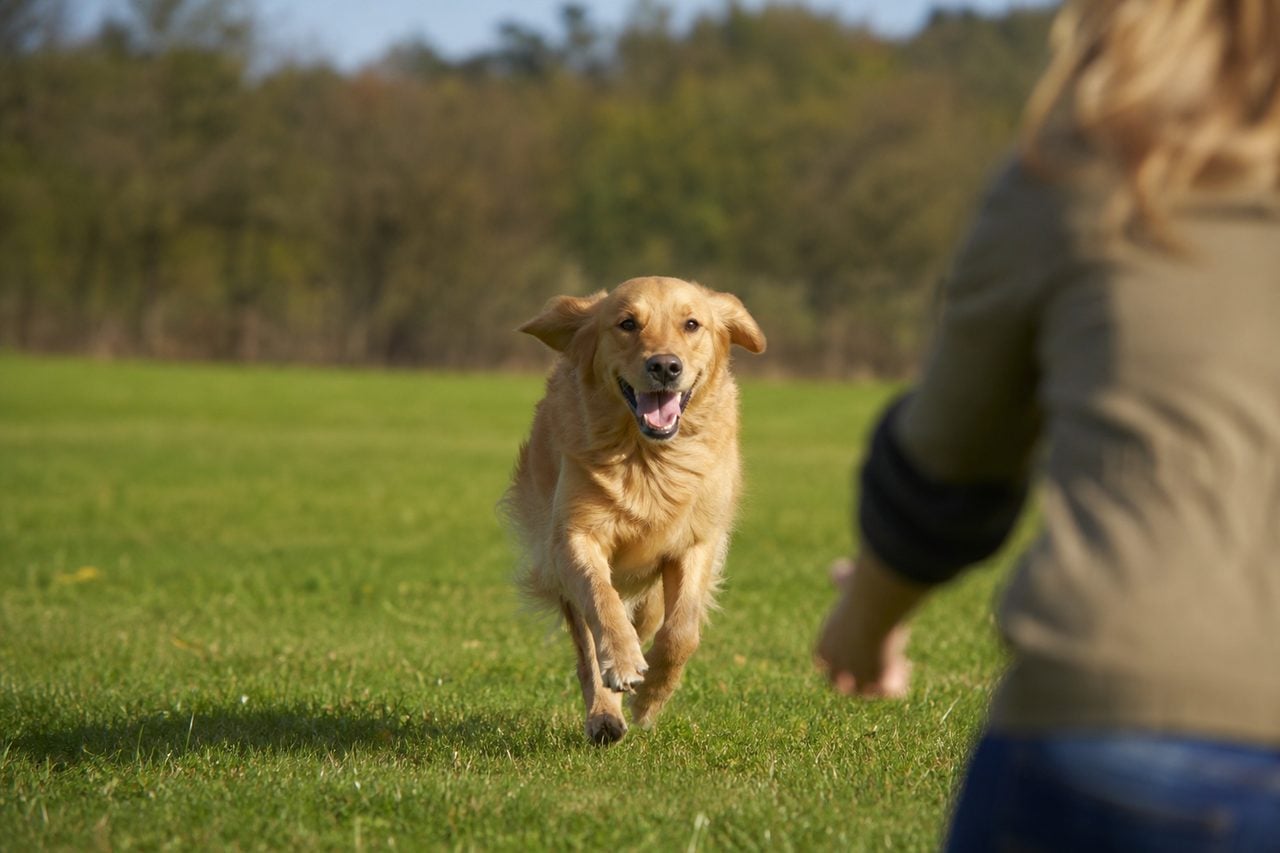
Off-leash dog training is the most advanced skill set in dog obedience — a dog who comes when called every time, holds a stay through distractions, and checks in with you instead of bolting. Getting there takes time, the right methodology, and usually professional help.
It looks effortless when you see someone else’s dog do it. It’s not. Here’s what off-leash training actually involves in Columbus, what it costs, how long it takes, and how to evaluate whether your dog is a realistic candidate. For the full range of training options, start with our Columbus dog training hub.
What Off-Leash Training Actually Means
Off-leash training isn’t a single trick — it’s a complete behavioral system. A truly off-leash reliable dog has mastered:
- Recall. Coming when called immediately, the first time, under any distraction. The foundation — without bulletproof recall, nothing else matters.
- Heel. Walking in position beside you without a leash in public environments. Not just the backyard — sidewalks, parking lots, past other dogs.
- Stay/Place. Holding position until released, even when you walk away. Duration, distance, and distraction — all three at once.
- Impulse control. Seeing a squirrel, another dog, a jogger, a kid on a bike — and choosing to stay with you. Trained, not natural.
- Environmental awareness. Checking in regularly, tracking where you are, and adjusting behavior without being told.
Why Most Dogs Aren’t Off-Leash Reliable
Let’s be honest: most dogs owners describe as “pretty good off-leash” would fail in a high-distraction environment. The dog comes when called at the dog park (usually), walks off-leash on quiet trails (mostly), and stays in the yard (when nothing interesting is happening). That’s not off-leash reliability. That’s off-leash luck.
True reliability means responding under pressure — when there’s a reason not to. A rabbit bolting across the trail, a dog fight nearby, a car pulling into the lot. The training has to override instinct, which requires systematic proofing most owners don’t do on their own. This is why professional training matters: the methodology for building distraction resistance and proofing in escalating environments requires real experience. It builds directly on solid obedience training.
What Off-Leash Training Costs in Columbus
| Service | Best for | Cost |
|---|---|---|
| Private off-leash program (8–12 sessions) | Owner-involved, custom pace | $1,200–$2,500 |
| Board and train — advanced/off-leash (3–4 wks) | Intensive, hands-off owner | $2,500–$4,500 |
| Board and train — off-leash w/ e-collar (2–3 wks) | Fast e-collar conditioning | $2,000–$3,500 |
| Group advanced obedience (6–8 weeks) | Budget path, social dogs | $250–$400 |
| Off-leash workshop/seminar (single day) | Skill top-up | $150–$300 |
| E-collar conditioning (add-on, per session) | Supplementing existing training | $100–$200 |
Off-leash training costs more than basic obedience because it takes longer, requires more advanced skills from the trainer, and involves multiple phases of proofing. Budget $2,000 to $4,000 for a comprehensive program that produces genuine reliability. See how this compares in our Columbus dog training prices guide.
How Off-Leash Training Works — The Phases
Phase 1: Foundation obedience (weeks 1–4)
Before off-leash work begins, your dog needs solid on-leash obedience — sit, down, stay, come, heel, all reliable with the leash on in low-distraction settings. Many Columbus trainers require proof of foundation skills before accepting a dog into an off-leash program.
Phase 2: Long line work (weeks 3–6)
Transition from a 6-foot leash to a 15–30-foot long line. This gives the dog the feeling of freedom while you keep emergency control. All commands are proofed at distance with increasing distractions — the long line is the bridge between on-leash and off-leash.
Phase 3: Low-distraction off-leash (weeks 5–8)
Training moves to a fenced area or controlled environment. The leash comes off. The dog learns the rules apply regardless of whether they’re physically attached to you.
Phase 4: Distraction proofing (weeks 7–12)
The critical phase. Off-leash work moves to real-world environments — parks, sidewalks, parking lots, areas with other dogs and wildlife. This is where most programs fail by not proofing in enough environments. Columbus offers great variety: the quiet Olentangy trails, the busy Polaris area, Clintonville sidewalks, open fields in the outer suburbs.
Phase 5: Maintenance
Off-leash skills degrade without practice. Even after a program, you need regular practice and periodic reinforcement. This is a permanent commitment, not a one-time achievement.
The E-Collar Question
E-collars (electronic/remote collars) are commonly used in off-leash training, and the topic generates strong opinions. Understand both sides before choosing a program.
Modern e-collars deliver a range of stimulation from barely perceptible (a tap on the shoulder) to attention-getting (a vibrating phone). They’re used primarily for recall reinforcement and impulse control — interrupting focus on a distraction and redirecting to the handler.
✅ Good e-collar training
- Dog is first taught all commands using positive reinforcement
- Collar introduced at the lowest perceivable level, paired with known commands
- Stimulation used as communication, not punishment
- Dog’s stress level does not increase when the collar goes on
🚩 Bad e-collar training
- High-level corrections used to punish mistakes
- No foundation training before introducing the collar
- Dog shows fear or anxiety around the collar
- Trainer can’t articulate exactly when and why they use the stimulation
Is Your Dog a Candidate for Off-Leash Training?
✅ Good candidates
- Strong handler focus — naturally checks in and wants to be near you
- Solid foundation obedience (reliable recall on a long line, solid stay)
- Moderate to low prey drive
- Not reactive toward other dogs or people
🚩 Needs work first
- Reactive dogs — address reactivity first; a reactive dog off-leash is a liability
- No foundation obedience — build basics before the advanced class
- Extremely high prey drive with no impulse control — expect a longer process
- Puppies under 6 months — not enough cognitive development yet
Some dogs, due to breed tendencies, individual temperament, or behavioral history, may never be safely off-leash in uncontrolled environments — certain hound breeds with extreme prey drive, dogs with a history of running and not returning, and dogs with unpredictable aggression. A good trainer will be honest about this and may recommend long-line freedom instead.
Where to Practice Off-Leash in Columbus
- Fenced areas for early practice: Godown Dog Park, Whetstone Dog Park — but only during off-peak hours when few dogs are present.
- Open fields for distance work: Scioto Audubon’s fields, Sharon Woods, and the outer trails at Highbanks offer good distraction-proofing.
- Urban environments for real-world proofing: Short North, German Village, and Easton sidewalks provide people, traffic, and urban distractions.
Frequently Asked Questions
How long does it take to train a dog off-leash?
Minimum 8 to 12 weeks for a dog with solid foundation obedience. 4 to 6 months for a dog starting from scratch. High prey drive or reactivity can push it to 6 to 12 months. Anyone promising off-leash reliability in 2 weeks is either cutting corners or defining “reliable” very loosely.
At what age can I start off-leash training?
Foundation work starts immediately (basic obedience, recall games, impulse control). Formal off-leash training with proofing and e-collar work typically begins at 5 to 6 months at the earliest. Most trainers recommend waiting until 8 to 12 months when the dog has the cognitive maturity to handle the complexity.
Can any breed learn off-leash?
Most breeds can, but some require more work. Breeds bred for independent work (hounds, terriers, huskies) have stronger competing motivations than breeds bred for handler cooperation (retrievers, shepherds, herders). It just means the timeline and methodology may differ.
What if my off-leash dog doesn’t come when called?
This is why proofing matters. If your dog blows off a recall in a real situation, the training wasn’t proofed at that distraction level. Go back to long-line work, proof at a lower level, and work back up. Never punish a dog for coming to you late — you’ll make the recall worse.
Is off-leash training safe for my dog?
When done properly with a systematic, phased approach, yes. Safety is built in — you don’t remove the leash until the dog has demonstrated reliability at each preceding level. The risk comes from rushing or skipping proofing phases.
Off-leash reliability changes the relationship between you and your dog.
Off-leash training trainers in Columbus
Reviewed local trainers from our directory who handle off-leash training:
See all dog trainers in Columbus or read the related training guides.