
Board & Train in Cleveland, OH
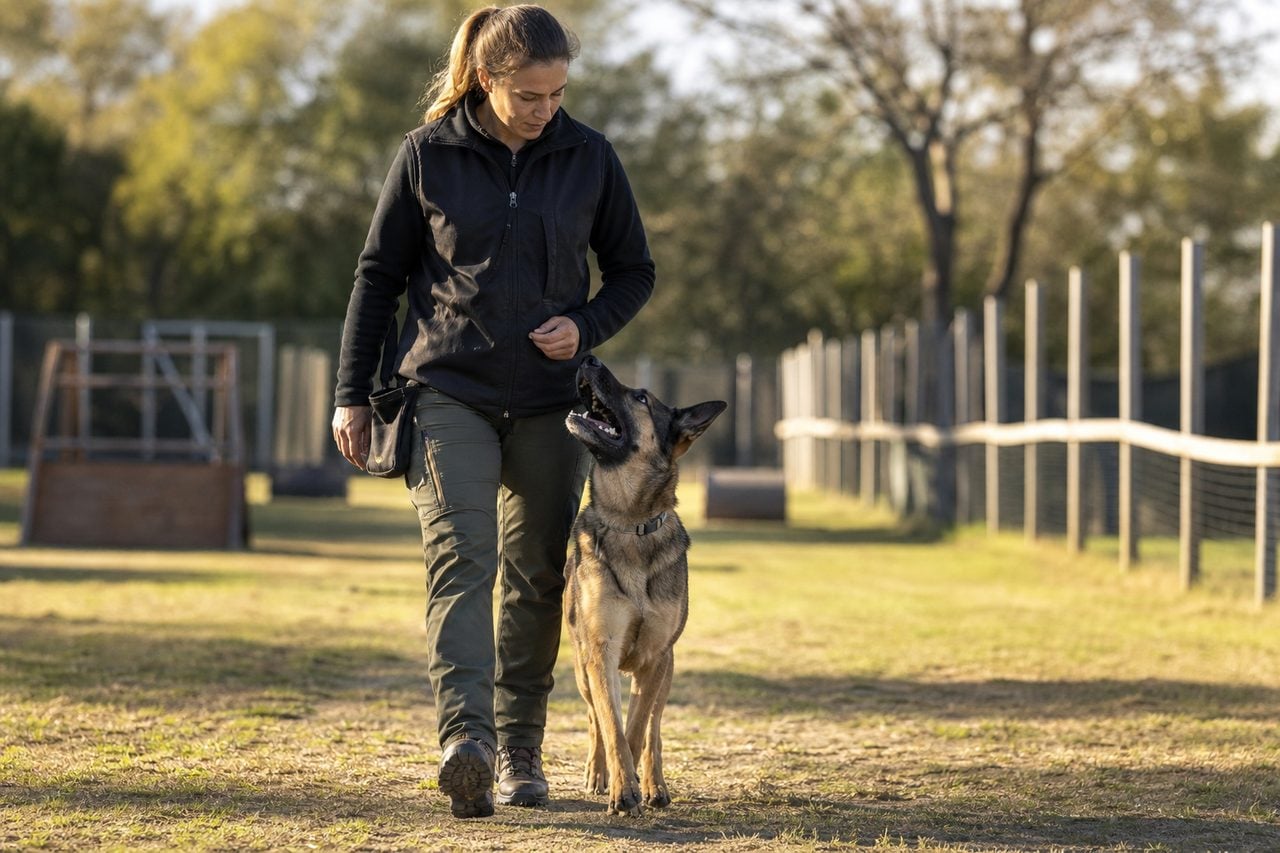
Board-and-train is the option Cleveland owners reach for when the weekly-class approach isn’t getting it done — the rescue that’s too reactive to walk down a Tremont street, the adolescent Lab that drags its owner across the ice on every Lakewood block, the busy two-job household in Strongsville that simply doesn’t have the bandwidth for nightly homework. You send the dog to a trainer’s facility for one to several weeks of immersive, daily, professional training, and it comes home with skills installed and a foundation you then maintain. In a metro spread from the lakefront to the Akron corridor, it’s also a practical answer for owners who can’t easily get to a class twice a week through a snowbelt winter.
But board-and-train is also the most misunderstood and highest-stakes service in the Cleveland training market. You’re handing your dog to someone for weeks, often sight-unseen day to day, and the quality range is genuinely wide — from outstanding facilities like Miracle K9 Training and Turning Point Dog Training in Cleveland, K-11 Canine Care in Warrensville Heights, and MBR Farm Dog Boarding and Training out in Grafton, to operations that warehouse dogs in kennels and lean on harsh tools to manufacture fast “results” that fall apart at home. The price tags — routinely $1,000 to $4,500 and up — make a bad choice expensive as well as harmful.
Cleveland’s geography and climate shape why people choose it here. The lake-effect winter wipes out the easy outdoor training months, so a January board-and-train can compress what would have been a snowed-out season of stalled progress into two productive weeks indoors. Several area programs are farm- or facility-based in the outer ring — Grafton, Medina, Streetsboro, Chardon — giving dogs room and structure that a downtown apartment can’t. This guide explains exactly what board-and-train is and isn’t, when it’s the right call, how to vet a Cleveland program without getting burned, what it really costs, and the mistakes that turn an expensive program into a disappointment.
What Board-and-Train Actually Is — And When It Makes Sense
Board-and-train (sometimes “board & train,” “immersion,” or “dog boot camp”) means your dog lives at a training facility for a set stretch — typically two to four weeks — while a professional works it multiple times a day. The pitch is speed and consistency: a skilled trainer doing daily, error-free repetitions makes faster progress than most owners can squeeze in around work and a Cleveland winter. The dog comes home with obedience or behavior change in place, and the program transitions the skills to you through go-home or “turnover” sessions.
When board-and-train is genuinely a good fit
- Serious behavior issues — reactivity, anxiety, or aggression that’s beyond what a group class can safely address.
- Time-strapped households — two-job families, new parents, or anyone who honestly won’t do the nightly homework a class requires.
- Fast results on a deadline — a move, a new baby, or a dog that’s become unmanageable and needs a reset.
- The winter compression play — turning a snowed-in, low-progress season into two intensive indoor weeks.
- Off-leash and advanced goals — immersion can accelerate reliability that’s slow to build in once-a-week classes.
When it’s the wrong tool
- Young puppies — socialization and early bonding need to happen with you, in your real environments, not in a kennel.
- Owners who won’t maintain it — if you don’t do the go-home work, the skills decay and you’ve spent thousands for a temporary effect.
- Bonding-sensitive or very fearful dogs — some dogs do worse away from their people; private in-home training may serve them better.
The non-negotiable truth
No board-and-train “fixes” a dog permanently on its own. The dog learns the behaviors; you have to keep them alive. The best Cleveland programs build owner-transfer into the structure precisely because they know the home handoff is where most board-and-trains succeed or fail.
How Board-and-Train Programs Work in Northeast Ohio
Programs vary widely in length, setting, and method — and those differences matter enormously for both results and your dog’s welfare.
Typical structure
- Intake and assessment: a good program evaluates your dog and sets specific, written goals before quoting you a length.
- The stay: usually 2–4 weeks of multiple daily training sessions, structured rest, and controlled socialization. Aggression and reactivity cases often run longer.
- Progress updates: reputable Cleveland facilities send regular photos and videos — this is also your window into how your dog is actually being treated.
- Go-home / turnover sessions: one or more handoff lessons teaching you to cue and maintain the behaviors. This is the most important part and the most commonly skimped.
- Follow-up support: the best programs include follow-up lessons or group classes for weeks or months afterward.
Facility settings around the metro
- Dedicated training facilities in and around the city — structured, climate-controlled, ideal for winter programs.
- Farm and rural settings in the outer ring — MBR Farm in Grafton, programs near Medina, Streetsboro, and Chardon — offering space and varied environments.
- Daycare-plus-training hybrids that fold board-and-train into a boarding operation.
The method question you must ask
This is where Cleveland programs diverge most sharply. Some use reward-based and balanced approaches with careful, fair structure. Others lean heavily on prong and e-collars to get fast suppression that photographs well but can mask — or worsen — underlying fear and aggression. You are entitled to ask exactly what tools and methods will be used on your dog, and to walk away if the answer is vague or defensive. A confident, ethical trainer will explain their methodology in plain language.
How to Vet a Cleveland Board-and-Train Without Getting Burned
Because your dog is out of your sight for weeks and the stakes are high, due diligence matters more here than for any other training service. The strong reputations of programs like Miracle K9, Turning Point, Right Way K9 Training in Berea, and Atlas Canine in Medina were earned through transparency — demand the same from anyone you consider.
Tour the facility — in person, unannounced if possible
- Are the kennels clean, climate-controlled, and humane? (Critical in a Cleveland winter.)
- How much time do dogs spend training and decompressing versus sitting in a crate?
- Does the staff interact warmly with the dogs in front of you?
- If a facility won’t let you see where your dog will live, that’s a hard no.
Interrogate the method and the transfer plan
- What specific tools and techniques will be used on my dog?
- How do you handle a dog that struggles or shuts down?
- How many go-home sessions are included, and what follow-up support comes after?
- What exactly will my dog be able to do when it comes home — and around what level of distraction?
Verify credentials and reviews
- Look for CPDT-KA, IAABC, or other real certifications — especially for aggression and reactivity cases.
- Read deep into reviews for specific stories, not just star counts. Cleveland’s top programs have detailed, named reviews you can actually assess.
- Ask for references from owners of dogs with problems similar to yours.
Get it in writing
A real program provides a written contract: goals, length, what’s included, vaccination and health requirements, refund/guarantee terms, and the maintenance plan. Vague verbal promises and “guaranteed obedience” marketing are warning signs — no ethical trainer guarantees a living animal’s behavior.
Board-and-Train Costs in Cleveland
Board-and-train is the most expensive training product on the market, and Cleveland is no exception — though it still runs below coastal-metro pricing. Understanding what drives the number helps you judge whether a quote is fair or a markup.
Typical price ranges in the metro
- 2-week program: roughly $1,000–$2,500.
- 3-to-4-week program: roughly $2,000–$4,500.
- Specialized behavior programs (aggression, severe reactivity, longer stays): $3,500–$6,000+.
- Per-week equivalent: most Cleveland programs work out to roughly $700–$1,400 per week.
What the price includes (and what to confirm)
- Boarding, food, and multiple daily training sessions for the full stay.
- Go-home / turnover lessons — confirm how many, since this drives whether the results stick.
- Often some follow-up support; clarify exactly what and for how long.
What drives the cost
- Length and intensity: the dominant factor — aggression cases cost more because they take longer.
- Facility quality: a clean, climate-controlled, well-staffed operation costs more than a kennel that warehouses dogs — and is worth it.
- Trainer credentials: certified, experienced behavior trainers command a premium, especially for serious cases.
- Location: east-side and west-suburb facilities (Beachwood, Westlake, Solon) tend to price above outer-ring farm programs.
Is it worth it?
For the right dog and a committed owner, board-and-train can be the most efficient path — especially for serious behavior problems or a winter when nothing else is moving. But it’s only worth the money if you do the maintenance afterward. Spending $3,000 and then letting the skills lapse is the most expensive way to learn that lesson. For many Cleveland owners with manageable goals, a $150–$250 group class plus consistent homework delivers comparable results for a fraction of the cost.
Common Board-and-Train Mistakes Cleveland Owners Make
The owners who regret board-and-train usually made one of these avoidable errors — long before the dog ever came home.
Treating it as a permanent fix
The number-one mistake. Owners assume they can drop the dog off, pick up a finished product, and never train again. Skills decay without maintenance; the program installs the behaviors, but the home reps keep them. If you won’t commit to the go-home work, the money is largely wasted.
Skipping the facility tour and method questions
Choosing on price or a slick website without seeing where the dog will live or asking what tools will be used. This is how dogs end up kenneled most of the day or trained with harsh aversives that create new problems. Always tour; always ask.
Picking the wrong tool for the dog
- Sending a young puppy that needs owner-led socialization instead.
- Sending a deeply bonded or very fearful dog that does worse away from home — private in-home training would have served it better.
- Using board-and-train to avoid building your own handling skills, then floundering when the dog returns.
Ignoring the go-home transfer
Some owners rush the turnover sessions or skip the follow-up. The handoff is where the program’s value either transfers to you or evaporates. Treat those go-home lessons as the most important part of what you paid for.
Falling for guarantees and “quick fix” marketing
Be skeptical of any Cleveland program promising “guaranteed obedience” or a permanently fixed dog in a flat two weeks regardless of the issue. Real behavior change in a living animal isn’t guaranteeable, and the programs that over-promise are often the ones relying on suppression rather than genuine training.
Reviewed Board & Train Trainers in Cleveland
These reviewed Cleveland-area trainers from our directory handle board & train. Each links to a full profile with specialties, verified credentials, reviews, and contact info:
- Miracle K9 Training — 5.0★ (372 reviews)
- Turning Point Dog Training — 5.0★ (122 reviews)
- K-11 Canine Care — 5.0★ (102 reviews)
- Koena K9 — 5.0★ (89 reviews)
- Up N Atom Dog Training and Daycare — 5.0★ (86 reviews)
- The Dog Wizard Westlake — 5.0★ (86 reviews)
- Right Way K9 Training — 5.0★ (82 reviews)
- MBR Farm Dog Boarding and Training — 5.0★ (76 reviews)
- Atlas Canine — 5.0★ (49 reviews)
- Evolution Canine — 5.0★ (32 reviews)
See all Cleveland board & train trainers →
Frequently Asked Questions
How much does board-and-train cost in Cleveland?
Expect roughly $1,000–$2,500 for a two-week program and $2,000–$4,500 for three to four weeks, which works out to about $700–$1,400 per week. Specialized behavior programs for aggression or severe reactivity run $3,500–$6,000+ because they take longer. Facilities in Beachwood, Westlake, and Solon tend to price above outer-ring farm programs in Grafton or Medina. Always confirm how many go-home sessions and how much follow-up support are included — that’s what makes the results stick.
Will board-and-train permanently fix my dog?
No program permanently fixes a dog on its own — this is the most important thing to understand before you spend the money. The trainer installs the behaviors during the stay, but you have to maintain them at home through the go-home sessions and ongoing practice. Skills decay without reinforcement. The Cleveland owners who get lasting results are the ones who treat the turnover lessons as essential and keep up the reps; the ones who expect a finished product are usually disappointed within a few months.
Is board-and-train a good idea for my puppy?
Usually not for a young puppy. Early socialization and bonding need to happen with you, in your real Cleveland environments — your neighborhood, your stairs, your winter sidewalks — not in a kennel during the critical window. A puppy class plus owner-led socialization is almost always the better choice under about five months. Board-and-train makes more sense for adolescent and adult dogs with established obedience or behavior goals.
How do I make sure a Cleveland board-and-train facility is treating my dog well?
Tour the facility in person before you book — ideally unannounced — and check that kennels are clean, climate-controlled (essential in a Cleveland winter), and that dogs spend real time training and decompressing rather than crated all day. Ask exactly what tools and methods will be used on your dog and walk away if the answer is vague. Insist on regular photo and video updates during the stay, verify certifications (CPDT-KA, IAABC) especially for behavior cases, and get everything in writing. If a facility won’t show you where your dog will live, that’s a dealbreaker.
Why do some Cleveland owners choose board-and-train in winter specifically?
The lake-effect winter wipes out the easy outdoor training season, so progress on the once-a-week class model often stalls from December through March. A winter board-and-train compresses what would have been a snowed-out, low-progress stretch into two or three intensive indoor weeks, and it’s far easier than dragging a dog to class twice a week through snowbelt roads. Just make sure the facility has a quality indoor training space and warm, climate-controlled kennels — the winter advantage disappears if the program relies on outdoor sessions.
Related: read our complete board & train guide or the full Cleveland dog training overview.
Ready to find the right board & train pro in Cleveland?