
Dog Boot Camp in Evansville, IN
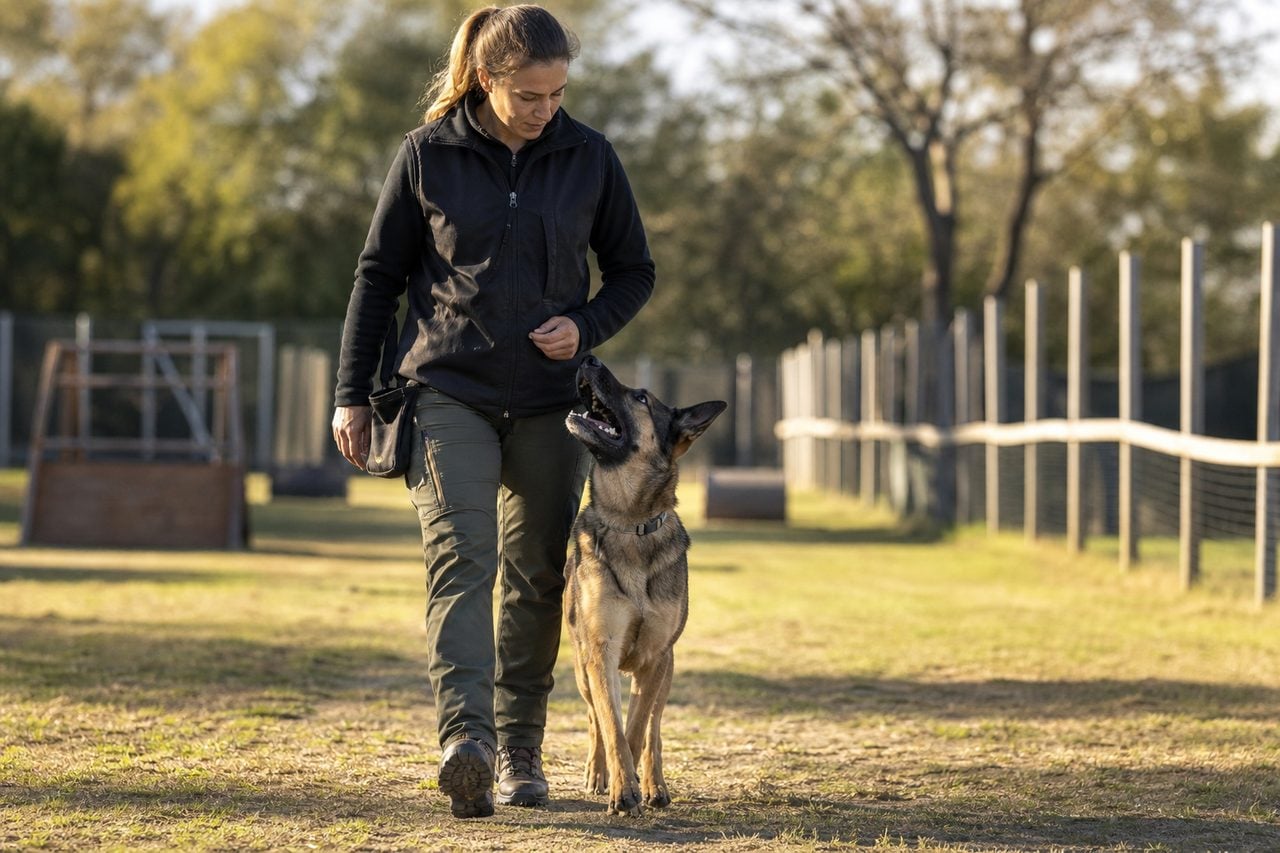
Dog boot camp is the phrase a lot of Evansville owners reach for when they are past the point of casual training and want intensive, results-focused obedience. The term conjures an image of a structured program that takes an unruly dog and returns a disciplined one in a short, concentrated stretch. For households near Downtown, on the east side, or out in Newburgh and Boonville dealing with a dog that has become genuinely hard to live with, that intensity is exactly the appeal.
In practice, dog boot camp is not a single defined product. It usually refers to an intensive obedience program, often a board-and-train, but sometimes a compressed schedule of private lessons or a day-school format run over a short window. What ties them together is pace and focus: more sessions, more repetition, and a tighter timeline than standard weekly classes. That intensity is a strength for the right dog and a poor fit for others.
This guide breaks down what a boot camp actually involves, which dogs and problems it suits, how to separate a serious intensive program from marketing hype, and how to make sure the fast progress does not evaporate the moment your dog is back home in Vanderburgh County.
What people mean by dog boot camp
Boot camp is a marketing term more than a technical one. When trainers in the Tri-State advertise it, they are usually describing one of a few formats. The most common is an intensive board-and-train, where the dog lives at the facility for a set stretch and is worked multiple times a day. Another is a compressed private-lesson package, where instead of one lesson a week over two months, you do several sessions a week over a shorter window. A third is a day-school model, where the dog attends daily for concentrated training and comes home in the evening.
The unifying idea is intensity and immersion. Rather than a light weekly touchpoint, the dog gets frequent, structured repetition that builds skills quickly and holds the dog to a consistent standard throughout the day. For dogs that respond well to clear structure, this concentrated approach can produce visible change faster than a drawn-out schedule.
Because the label is loose, the word boot camp tells you almost nothing about the actual methods, tools, or quality. Two programs marketed identically can be worlds apart, one using calm reward-based conditioning and another leaning on heavy correction. Do not let the name do your evaluating for you. Ask what the daily schedule looks like, what a single training session actually involves, and how the trainer measures progress. The specifics behind the label are what matter.
Which dogs and problems suit an intensive program
Boot-camp-style intensity is best suited to dogs that have the drive and energy to absorb a lot of learning quickly and mostly need structure, focus, and consistency. Adolescent dogs, roughly six months to two years, are prime candidates: they are old enough to concentrate but young enough that poor impulse control has made them exhausting. High-energy working breeds that are under-stimulated and acting out often thrive when finally given a job and clear expectations.
The problems that respond best are obedience and manners gaps: pulling on leash, ignoring recall, jumping, counter-surfing, door-dashing, general chaos, and an inability to settle. These are teachable behaviors, and concentrated repetition is exactly what builds them. If your dog is fundamentally sound in temperament but wildly untrained, an intensive program can be transformative.
Intensity is a poorer fit for dogs whose core issue is fear or anxiety. Flooding a frightened dog with a demanding schedule can backfire, deepening the stress rather than resolving it. Fearful, highly anxious, or trauma-affected dogs generally need a slower, confidence-building approach, not more pressure. The same caution applies to true aggression, which is not an obedience problem and should be assessed by a qualified behavior professional before any intensive obedience work.
Age is not a hard barrier for adults, and older dogs can absolutely learn, but match the program to the individual. The right question is not whether the dog is trainable, but whether concentrated obedience is the tool the specific problem calls for.
A realistic look at what boot camp involves
A well-run intensive program is not about breaking a dog down through pressure, despite what the military framing suggests. The good ones are highly structured but built around clear communication, frequent short training sessions, adequate rest, and steadily increasing distractions. A typical day might include several focused obedience sessions, controlled exercise, crate or place rest to prevent overload, and practice in progressively more distracting environments.
Progression is layered. The dog first learns a skill in a quiet setting, then repeats it as distractions are added, then generalizes it to new places. That is why quality intensive programs build in exposure to real-world environments rather than only drilling in a sterile room. Watch for trainers who explain this progression clearly; it signals they understand how dogs actually learn.
Rest matters as much as work. Dogs learning intensively need downtime to consolidate what they have absorbed, and a program that runs a dog into the ground all day is counterproductive. Ask how the daily schedule balances training, exercise, and rest.
Be wary of any program that frames results as coming from dominance, breaking the dog, or pure repetition of corrections. Speed should come from skilled, consistent handling and smart use of the dog’s natural drives, not from ramping up aversives. If a trainer’s pitch centers on how tough the program is rather than how the dog learns, keep looking. Intensity done well is calm and organized, not harsh.
Vetting an Evansville-area boot camp
Since dog training is unregulated in Indiana, the boot camp label carries no credential requirement. Vetting is on you, and the stakes are higher because intensive programs concentrate whatever the trainer does, good or bad, into your dog over a short period.
Start with a facility visit and direct questions:
- Walk me through a full day in the program, hour by hour.
- What methods and tools do you use, and at what point do you introduce each?
- How much of the day is training versus exercise versus rest?
- What is your experience with my dog’s breed, age, and specific issue?
- Can I see video of dogs mid-program and talk to recent clients?
- How do you handle a dog that shuts down or shows aggression?
The answers should be specific and calm. Vague responses, an over-reliance on toughness language, or guarantees of a perfect dog are all warning signs. Ask to observe part of a session if possible; watching how the trainer interacts with a dog in real time reveals more than any brochure.
Also confirm the practical safeguards: vaccination requirements, secure and climate-controlled housing (important through humid Southern Indiana summers), staffing levels relative to the number of dogs, and what happens if your dog is injured or falls ill. A serious professional running an intensive program will have clear answers to all of it and will not be offended that you asked.
Making the results last after boot camp
The fast progress of a boot camp is fragile if the transition home is neglected. A dog can finish an intensive program responding beautifully to the trainer and then unravel within weeks under inconsistent handling. The intensity that built the skills quickly does nothing to guarantee they transfer to you, your family, and your Vanderburgh County living room.
The fix is the same as with any board-and-train: owner education and follow-up. Insist that the program includes hands-on lessons where you and everyone in the household learn the exact cues, marker words, and timing the dog now knows. Ask about follow-up sessions in the weeks after the program ends, ideally in real settings like your home, a park, or a store parking lot, so the dog practices with you under real distractions.
After pickup, your job is to hold the standard. Keep sessions short and frequent at first, reinforce the new cues in daily life, and resist the urge to relax the rules because the dog seems fixed. The first few weeks home are where the investment either sticks or slides. Practicing on the Pigeon Creek Greenway, at Garvin Park, or around your own neighborhood turns a facility result into a real-world one.
Treat boot camp as a strong start rather than a finish line. The trainer builds the foundation fast; you maintain and generalize it. Owners who stay consistent keep nearly all the progress, while those who expect the program to do all the work permanently are usually disappointed.
Boot camp versus other training formats
Intensive programs are one tool among several, and the fastest option is not always the best one for your household. Weigh boot camp against the alternatives based on your dog, your budget, and how involved you want to be.
Group obedience classes are the most affordable route and add controlled socialization, which benefits dogs that struggle around other dogs and people. The trade-off is a slower pace and all the daily practice falling to you. Private in-home lessons address problems in the exact environment where they occur and train you directly, which is ideal when the issue is tied to your home or routine. Day-school or day-training keeps your dog home each night while still offloading heavy daily repetition, a good middle ground for owners who want involvement without a long separation.
Choose an intensive boot-camp format when you want compressed progress, when the dog needs a full-time structured reset, or when you genuinely cannot do consistent daily training yourself for a stretch. If you have the time and patience to be hands-on, a lesson-based approach often produces more durable results because you develop the handling skills alongside your dog.
Whatever you choose, the deciding factor should be fit, not marketing energy. A calm, well-structured weekly program with a great trainer will beat a flashy intensive with a poor one every time. Match the format to the problem and to your own capacity to follow through.
Reviewed Dog Boot Camp Trainers in Evansville
These reviewed Evansville-area trainers from our directory handle dog boot camp. Each links to a full profile with specialties, certified credentials, reviews, and contact info:
- Midwest Canine Training Academy — 5.0★ (3 reviews)
- The Training Retreat by Barks and Recreation — 4.8★ (30 reviews)
- K-9 Detection Services,LLC — 4.5★ (42 reviews)
See all Evansville dog boot camp trainers →
Frequently Asked Questions
Is dog boot camp the same as board-and-train?
Often, but not always. Boot camp is a marketing term for intensive obedience training, and it is most commonly delivered as a board-and-train where the dog stays at a facility. However, some trainers use boot camp to describe a compressed schedule of private lessons or a daily day-school format instead. Because the label is loose, ask exactly what the format is, what the daily schedule looks like, and what methods are used rather than relying on the name.
How fast will I see results?
Intensive programs are designed to produce visible change faster than weekly classes because of the frequency and consistency of the training. For teachable obedience and manners issues, many owners see meaningful improvement within a couple of weeks. That said, speed depends on the dog’s temperament and the specific problem, and complex or emotionally driven issues take longer regardless of intensity. Be skeptical of anyone guaranteeing a total transformation of a severely difficult dog in a very short window.
Is boot camp too harsh for my dog?
A well-run intensive program is structured but not harsh; it relies on clear communication, frequent short sessions, and adequate rest, not on breaking the dog down. Harshness comes from specific trainers and methods, not from intensity itself. That said, fearful, highly anxious, or trauma-affected dogs generally do better with a slower confidence-building approach than with a demanding schedule. Ask about methods and tools directly, and be cautious of any program that sells toughness over how the dog actually learns.
What kind of dog is a good fit for an intensive program?
Dogs with drive and energy that mainly need structure and consistency tend to thrive, especially adolescents from about six months to two years and under-stimulated working breeds. The best-fit problems are obedience and manners gaps such as pulling, poor recall, jumping, and general chaos. Intensity is a weaker fit for fear-based issues and is not appropriate as a first response to true aggression, which should be assessed by a qualified behavior professional before any obedience program.
Will the training hold once my dog is home?
Only if the handoff is done well. The intensity that builds skills quickly does not guarantee they transfer to you and your home. Choose a program that includes hands-on owner lessons and follow-up so you learn the exact cues and timing the dog knows. After pickup, keep practicing consistently and hold the standard, ideally in real settings around your neighborhood or local parks. Owners who stay consistent keep nearly all the progress; those who expect it to be permanent with no effort usually see regression.
How do I evaluate a boot camp before enrolling?
Visit the facility, ask for an hour-by-hour walkthrough of a typical day, and get specifics on methods, tools, and when each is introduced. Ask about the trainer’s experience with your dog’s breed and issue, request video of dogs mid-program and references from recent clients, and find out how they handle a dog that shuts down or shows aggression. Confirm vaccination requirements, secure climate-controlled housing, and staffing levels. Because training is unregulated in Indiana, this due diligence is entirely your responsibility.
Related: read our complete dog boot camp guide or the full Evansville dog training overview.
Ready to find the right dog boot camp pro in Evansville?