Dog Trainers in Dickson, TN
Dickson sits about forty miles west of Nashville where the Highland Rim starts to break up into ridges and hollows, and the dog-training market out here works nothing like the one in the city. There are no apartment blocks, no shared stairwells and very little pavement; what there is instead is land. Almost every trainer listed on this page operates from acreage — a fenced farm, a kennel and a run, a private estate — and the format that follows from that is residential. If you drive around this county looking for a weekly evening obedience class in a hall, you will not find one, and that is the single most useful thing to know before you start calling. What you will find is board-and-train, in-home private sessions, and gundog work, because those are the three things that suit a county where dogs live outdoors, own a yard, and get loose. The problems people here describe on the phone reflect that: recall that falls apart the moment there is a deer, a dog that will not settle when a truck comes up the drive, a young lab that needs to learn a job, and reactivity that only shows up on the lead because the dog is otherwise never on one. This page lists {COUNT} dog trainers across Dickson, Charlotte, Bon Aqua, Lyles and the surrounding towns, with what each one actually offers, so you can shortlist before you call. Two things worth saying plainly: Nashville trainers advertise Dickson, Kingston Springs, White Bluff and Waverly in their service areas constantly, and a service area is not a local business — everyone on this page publishes an address out here. And Ashland City, though it is next door in Cheatham County, is listed on our Nashville page rather than this one.
- Top-Rated Dog Trainers in Dickson
- What Kind of Training Does Your Dog Need?
- Training Formats and Typical US Dog-Training Prices
- Dog Training Schools & Classes in Dickson
- How to Pick the Right Trainer
- Dog Training by Dickson Neighborhood
- Dickson Dog Training Resources
- Common Questions About Dog Training in Dickson
- Start Here
This page is your starting point. Whether you need puppy socialization, basic obedience, off-leash training, or help with a serious behavior problem, we’ll help you understand your options, what to expect, and how to connect with the right professional in Dickson.
Top-Rated Dog Trainers in Dickson
Compare Dickson’s top-rated dog trainers below — each listing shows real Google reviews and, where we’ve checked them, certified credentials, so you can reach out with confidence.


What Kind of Training Does Your Dog Need?
Before you start comparing trainers, figure out which category your dog falls into. This determines the type of training, the format, and the realistic timeline.
Puppy (8 weeks to 5 months)
Priority: socialization and foundation habits. This is the most time-sensitive stage — the critical socialization window closes around 16 weeks, and what your puppy is exposed to during this period shapes their temperament permanently. Group puppy classes are ideal. Read our full guide: Puppy Training in Dickson.
Adolescent dog (5 to 18 months)
Priority: obedience and impulse control. This is the stage where most owners hit the wall — the cute puppy has turned into a teenager who jumps on guests, pulls on the leash, and has developed selective hearing. Group obedience classes or private lessons work well here. Consistency is everything.
Adult dog — new to training
Priority: basic obedience and household manners. It’s never too late. Adult dogs are often faster learners than puppies because they have longer attention spans.
Adult dog — specific behavior issue
Priority: targeted behavior modification. Reactivity, aggression, separation anxiety, resource guarding, excessive barking. These issues need a qualified trainer or behaviorist — not a group class. Start with a behavior consultation.
Any dog — intensive training needed fast
Priority: results on a compressed timeline. Board-and-train programs offer intensive daily training over 2 to 6 weeks — the fastest path to results when done right.
Training Formats and Typical US Dog-Training Prices
The formats below are the same everywhere; the figures are national ranges, not Dickson rates. Prices vary by city and by trainer — confirm directly with the trainer before you book.
Group classes
Best for socialization and foundation obedience. Meet once a week for 5 to 6 weeks with other dogs. Most affordable option. Typical US range: $150 to $300 for a full course.
Private lessons
One-on-one with a trainer at their facility or your home. Best for specific goals, reactive dogs, or customized plans. Typical US range: $100 to $175 per session (facility) or $125 to $200 (in-home).
Day training
Your dog goes to the trainer during the day and comes home at night. Great for working professionals. Typical US range: $75 to $125 per day.
Board and train
Your dog stays with the trainer for 2 to 6 weeks. Most intensive option. Typical US range: $1,500 to $6,000+ depending on length and complexity.
Behavior consultation
A diagnostic assessment for serious behavioral issues — a professional evaluation that produces a treatment plan. Typical US range: $200 to $400 for the initial assessment.
Dog Training Schools & Classes in Dickson
Looking for a dog training school or group obedience classes in Dickson? Plenty of local trainers and facilities run weekly group classes — a structured, affordable way to cover socialization and basic obedience alongside other dogs. Browse dog obedience classes in Dickson, or use the trainer directory above to compare every dog school and trainer in the Dickson area by specialty, reviews and price.
How to Pick the Right Trainer
Choosing a dog trainer is a lot like choosing a doctor — credentials matter, but so does communication style, philosophy, and whether you trust them with someone you care about.
Training methodology
This is the most important factor and the one most people skip. Dog training ranges from purely positive reinforcement (rewards only) to balanced training (rewards plus corrections). There is no single “right” approach — but there IS a right approach for your dog. A fearful rescue needs a different approach than a confident, drive-y working breed. Ask every trainer what tools and methods they use, and don’t commit until you understand and agree with their philosophy.
Credentials
Look for recognized certifications — CPDT-KA (Certified Professional Dog Trainer), KPA-CTP (Karen Pryor Academy), IACP, AKC CGC Evaluator, or for complex behavior, a CAAB or veterinary behaviorist. Credentials aren’t everything — some of the best trainers built their skills through decades of hands-on experience — but a trainer with no credentials AND no verifiable track record is a risk.
Transparency — red flags and green flags
Red flags: won’t let you observe a class or tour the facility, gets defensive about methodology, guarantees specific results, pressures you to sign up immediately, or trash-talks every other trainer. Green flags: welcomes questions, offers to let you observe a class first, gives references, is honest about what training can and cannot achieve, and tells you upfront if your dog’s issue is outside their expertise.
Dog Training by Dickson Neighborhood
The Dickson metro is large, and driving 45 minutes for a weekly class isn’t sustainable for most people. Here’s a quick overview of training availability by area:
Dickson town — Highway 46, Highway 70 and downtown
The one real town in the county and where most of the training supply sits. Dickson is a Highway 70 town that grew a second commercial spine along Highway 46 when the interstate arrived, and the training businesses follow that pattern: they cluster on the highways and the roads just off them rather than downtown. This is the only part of the catchment where a dog routinely encounters a pavement, a parking lot, a queue of people and a shop door in the same outing, which is why Dickson-based trainers are the ones most likely to run public-access work — taking a dog into a store or a restaurant patio and asking it to hold a settle. Population is around sixteen thousand, so the pressure is real but manageable, and it makes a sensible middle step between a farm and a trip into Nashville.
Charlotte and the north of the county
Charlotte is the county seat, small and old — its courthouse is one of the oldest in continuous use in Tennessee — and the country around it is farm and timber. Training here is done on land: retriever and gundog work in particular, because the fields, ponds and creek bottoms that a working dog needs are simply there. Cumberland Furnace, Vanleer and Slayden sit further north and west and have almost no commercial anything, so households there drive into Dickson or bring a trainer to them. Expect travel charges to be discussed on the first call; the drive from Dickson out to the county’s north-west corner is a real one.
Burns, White Bluff and the Montgomery Bell corridor
The stretch of Highway 70 between Dickson and the Cheatham County line, wrapped around Montgomery Bell State Park. This is the most-used practice ground in the whole catchment and the reason the corridor matters: several thousand acres of hardwood with a long trail network and three lakes, all of it public, all of it within twenty minutes of most of the county’s dog owners. Burns and White Bluff are commuter towns — a lot of households here work in Nashville and are out of the house long days — which produces a specific and very common local problem: an under-exercised dog with a large yard and no structure to its day. Note the zip codes here overlap confusingly with Dickson’s; at least one business on this page publishes a Burns-area zip against a Dickson address.
Kingston Springs and Pegram — the Harpeth end of Cheatham County
The eastern edge of this catchment, along the Harpeth River where it loops through the Narrows. These two towns sit closer to Dickson than to almost anything in Davidson County and share its shape — wooded lots, river bottom, dogs with room — but they are also the point where Nashville-based trainers genuinely do travel, because it is a short run out Highway 70 from Bellevue. Owners here have the widest real choice in the catchment and should compare a Nashville in-home trainer’s travel-inclusive price against a Dickson-based one. Note for clarity: Ashland City, the largest town in Cheatham County, is covered on our Nashville page, not here.
Bon Aqua and Lyles — northern Hickman County
South of Interstate 40 along Highway 100, this is the quietest and most rural ground in the catchment and, unexpectedly, one of the densest for training supply. Three of the businesses on this page work from farms here, on properties measured in tens of acres. The format that produces is residential and immersive — a dog stays for one to four weeks and lives in a pack — which is exactly what an owner with a serious problem and no local class option tends to need. Bon Aqua is also where Johnny Cash kept a farm, and the area now trades a little on that; for a dog owner the relevant fact is simply the space.
Centerville and the Duck River valley
The Hickman County seat, about twenty-five miles south of Dickson down Highway 100, sitting on the Duck River. It is the largest town in the catchment after Dickson itself and has almost no dedicated dog-training supply of its own — the nearest real options are the Bon Aqua and Lyles farms, twenty minutes north. Households here are usually choosing between a residential program up the road and a Nashville or Columbia trainer willing to travel, and the travel surcharge is what usually decides it.
Waverly, McEwen and New Johnsonville — Humphreys County
The far west of the catchment, out where the land flattens toward the Tennessee River and Kentucky Lake. Waverly is the county seat and still carries the mark of the 2021 flash flood; McEwen sits between it and Dickson on Highway 70; New Johnsonville is on the river. This is the thinnest part of the catchment for supply and the honest position is that residents here are looking at a thirty-to-forty-minute drive east for anything residential, or an in-home trainer prepared to make the trip. Two listings with McEwen and New Johnsonville addresses could not be verified at all — no website, no reviews, nothing published — so we have not published them.
Dickson Dog Training Resources
Beyond professional training, Dickson has some excellent resources for dog owners.
Parks and off-leash areas
- Montgomery Bell State Park, Burns — The single most important piece of ground for dog training in this county: roughly 3,800 acres of hardwood forest between Dickson and White Bluff, with three lakes — Acorn, Woodhaven and Creech Hollow — and a long backcountry trail loop through it. Dogs are welcome on the trails on a lead. What makes it valuable is the range within one park: wide, quiet, well-graded paths where you can put fifty meters between your dog and an oncoming walker, and busier lakeside and picnic areas at weekends where you cannot. That combination lets you build a behavior somewhere easy and then move it somewhere hard without getting in a car twice, and it is why almost every trainer in the county names it when asked where to practice.
- Harpeth River State Park — the Narrows of the Harpeth, Kingston Springs — A string of separate river access points rather than one park, the best known being the Narrows, where the Harpeth loops back on itself and an early nineteenth-century tunnel was cut through the ridge. Short trails, a bluff overlook and canoe put-ins. Leads required. It gets genuinely crowded on a warm weekend, with paddlers, shuttle traffic and dogs in the water, which makes it a poor place to start a nervous dog and a very good place to test one that is nearly there. Midweek mornings it is close to empty.
- Johnsonville State Historic Park, New Johnsonville — On the Tennessee River at the western edge of the catchment, with quiet interpretive trails through the old earthworks and long views over Kentucky Lake. Low traffic almost all the time. For a Humphreys County owner with a fearful or reactive dog this is the most useful ground in the area precisely because so little happens there — you can work at distance for an hour and choose when a distraction appears rather than having one arrive.
- Piney River Recreation Area and the Piney bottoms, west of Dickson — River-bottom ground on the Piney with fishing access and open banks. Flat, wet, and full of the things a young gundog needs to meet early — water, mud, birds, uneven footing. The retriever trainers in this catchment work ground exactly like this, and it is where an owner who has bought a started dog can keep the work going between sessions without needing a training pond of their own.
- Downtown Dickson and the Highway 70 shopfronts — Not a park, and included deliberately. The single hardest environment available locally is a Saturday morning on the Dickson shopfronts: cars, doors, trolleys, children and other dogs, all in a couple of hundred meters of pavement. If your dog’s problem is people or dogs at close quarters, no amount of trail walking will fix it, because the trail never asks the question. This is the local answer to that, and it is twenty minutes from anywhere in the county.
- Duck River access, Centerville — River access on the Duck at the south end of the catchment, quiet and unimproved. Useful for the same reason as the Johnsonville trails — you control the difficulty because almost nothing happens unasked — and it is the only realistic practice ground for a Hickman County owner who does not want to drive north.
- Your own drive, gate and front door — Worth naming as a training location because in this catchment it is the one that matters most. The recurring local problem is not a dog that cannot behave in public; it is a dog that comes apart when a truck comes up a gravel drive, or that goes through a gate the moment it opens. Those are rehearsed at home, dozens of times a week, and no park session touches them. Every trainer here who sells in-home work is really selling repetitions in this exact spot.
These parks are great for socialization practice AFTER your dog has a foundation of training. Taking an untrained dog to an off-leash park is asking for trouble.
Veterinary behaviorists
For complex behavior cases that may require medication alongside training, ask your primary vet for a referral to a veterinary behaviorist serving the Dickson area.
Dog Trainers by Community in the Dickson Area
Looking for a trainer in a specific Dickson-area community? Here are the local options town by town.
Dog Trainers in Bon Aqua, TN
- Global K9 Protection Services — 4.7★ (98)
- Chasing Tails Pet Farm — 4.5★ (53)
Dog Trainers in Charlotte, TN
- Razor Sharp Retrievers — 5.0★ (1)
Dog Trainers in White Bluff, TN
Dog Trainers in Cumberland Furnace, TN
- Corky’s Canines Training Academy LLC — 5.0★ (1)
Dog Trainers in Lyles, TN
- Thurman’s Place — 5.0★ (101)
Also in Dickson: Supreme Canine, Joyful Dog Training, Rampant Canine Dog Training and Rehabilitation, K9 Station, Harpeth River Kennels, C&R Dog Training
Dog Training by Specialty in Dickson
Dickson-specific guides for each type of training:
- Puppy Training
- Puppy Socialization
- Aggressive Dog Training
- Leash-Reactive Dog Training
- Off-Leash Dog Training
- Separation Anxiety Training
- In-Home Dog Training
- Protection & K9 Training
- Service Dog Training
- Therapy Dog Training
Also live across Tennessee: Chattanooga · Clarksville · Columbia · Cookeville · Franklin · Hendersonville · Johnson City · Knoxville · Memphis · Murfreesboro · Nashville.
Common Questions About Dog Training in Dickson
How many dog trainers are there in Dickson and the surrounding towns?
GetDogSchool lists 12 with a published address in this catchment, and the number is small enough that the shape of the list matters more than the count. Four are in Dickson itself, one is in Charlotte, and three work from farms in northern Hickman County at Bon Aqua and Lyles. That is the whole supply. What is missing is as important as what is there: no group-class provider publishes a schedule anywhere in this catchment, and no trainer in Waverly, McEwen, New Johnsonville, Burns, White Bluff or Kingston Springs could be verified as trading. Several Nashville businesses advertise these towns in their service areas, and one Dickson business publishes separate landing pages for five different towns — neither of those is the same as a local business, and this page only lists trainers who publish an address out here.
What does dog training cost around Dickson?
Only three businesses in this catchment publish prices at all, so this is a narrow picture rather than a market average, but it is a real and entirely local one. Single sessions: one Bon Aqua farm charges $125 for a session at its facility and $250 for an in-home session at your house, and offers a combined daycare-and-training day at $125 plus the daycare fee. Board-and-train, which is the dominant format here: a one-week program is published at $1,995, two weeks at $3,200 and $4,495, three weeks at $6,995, and four weeks at $4,770 and $4,800 by two different businesses. A dedicated puppy program runs $4,295. One trainer also sells remote video coaching at $775. Read those numbers as a range, not a rate card — the two four-week programs differ by thirty dollars and are not the same product, and the businesses that publish nothing may sit anywhere. Ask what is included, because at this end of the market the transfer sessions, the follow-up lessons and the lifetime support are most of what you are paying for.
Why is nearly everything here board-and-train?
Because of how people and dogs actually live in this county. A group class needs a hall, a fixed weekly evening, and enough households within a short drive to fill it six weeks running — and spread across Dickson, Hickman and Humphreys counties, that catchment does not exist at any single point. What does exist is land, so the businesses that took hold here are the ones that could use it: farms and kennels where a dog stays. That is a genuine advantage for some problems and a genuine disadvantage for others. If your dog needs to learn to work around other dogs at a controlled distance every week, a residential program cannot give you that repetition and a class could. If your dog needs structure, exercise and a complete reset of its daily routine, a residential program is exactly the right shape and you happen to live somewhere that does it well.
Should I use a local trainer or one who drives out from Nashville?
Both are real options here and the honest answer depends on where you are. From Kingston Springs or Pegram, Nashville is a short run out Highway 70 and a city in-home trainer may quote you a travel-inclusive price that competes directly with a local one. From Waverly or New Johnsonville, you are forty minutes or more from anything, and a trainer who agrees to that drive is either charging for it or will quietly stop agreeing to it after session three. Two questions settle it on the first call: what the travel charge is beyond a set radius, and how many sessions the program actually involves — a trainer who will come once is cheap and a trainer who will come eight times is the one who changes anything. Everyone listed on this page publishes an address in the catchment, which is a different guarantee from a service-area advertisement.
Several trainers here are gundog and retriever specialists. Is that any use to a pet owner?
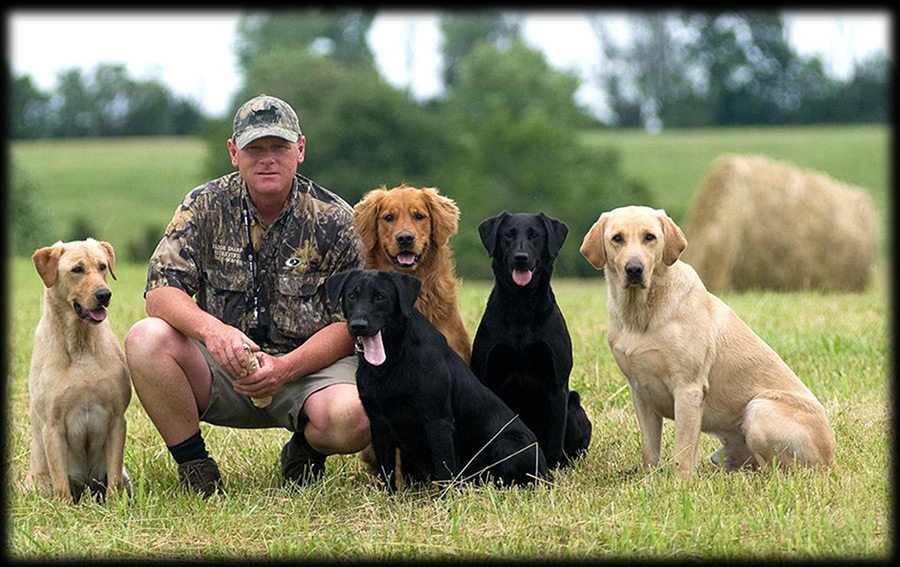
Partly, and it is worth understanding which part. The retriever kennels in this catchment publish a formal obedience program alongside the field work — heel, sit, stay, place, recall, kennel manners, steadiness — and that obedience program is a normal, transferable product that any dog can do. What they do not generally sell is behavior work: a dog with fear, real aggression or separation problems is a different discipline and you should ask directly rather than assume. The reverse is also true and more commonly missed: if you own a working-bred lab or spaniel and its problem is that it has nothing to do, the gundog trainers here are unusually well placed to fix it, because they will give the dog a job instead of trying to train the drive out of it.
Where should I practice between sessions?
Montgomery Bell State Park is the default and it earns it — quiet, wide trails where you can control distance, plus busier lakeside areas at weekends when you want difficulty. Build the behavior on the trail midweek, then deliberately move it somewhere harder: the Dickson shopfronts on a Saturday morning, or the Narrows of the Harpeth on a warm afternoon when the paddlers are out. Two local cautions. Dogs are on a lead in all of these places, so an off-lead recall cannot honestly be tested in any of them — that needs a fenced field or a long line. And the most valuable practice ground in this county is not a park at all: it is your own gate, drive and front door, because that is where the problem is being rehearsed the rest of the week.
Start Here
The best time to start training is today. Whether your puppy needs socialization, your adolescent dog needs impulse control, or your adult dog has a behavior issue that’s been building for years — the sooner you start, the faster things improve.
Browse dog trainers in Dickson on GetDogSchool.com. Compare programs, read reviews, and connect with professionals who fit your dog’s needs and your budget.
Find Dog Trainers in Dickson →
Ready to find the right trainer for your dog in Dickson?
Get matched with a trainer in Dickson →