
Dog Training Prices in Middletown, OH
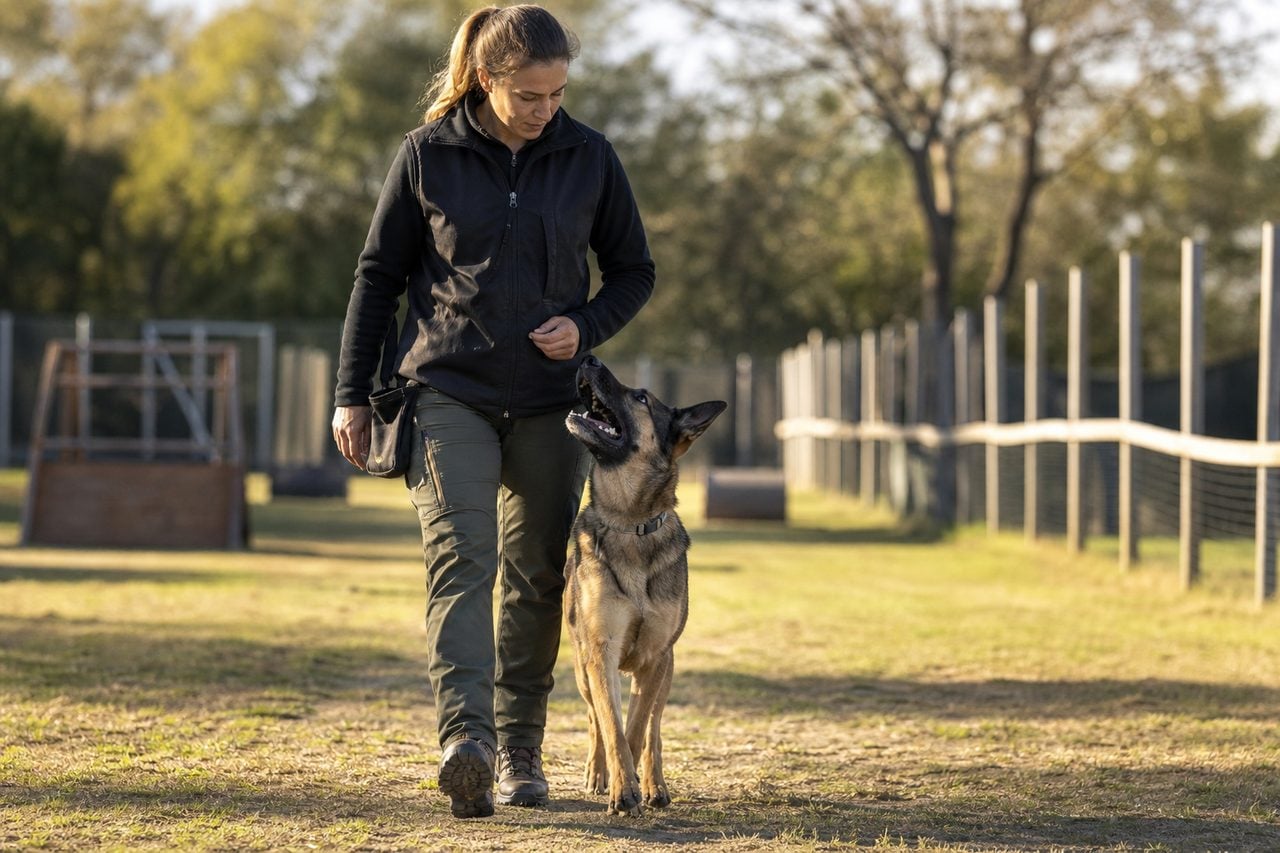
One of the most common questions Middletown dog owners ask, and one of the hardest to get a straight answer to online, is simply: what should dog training cost around here? National averages are close to useless, because prices swing widely by region, by format, and by the trainer’s specialization. What a board-and-train costs in San Francisco has nothing to do with what it costs in Butler County, Ohio.
This guide explains how pricing works in the Middletown market, the I-75 corridor in southwest Ohio between Cincinnati and Dayton: how each training format is priced relative to the others, what actually drives a quote up or down, and how to match your budget to your dog’s needs. The goal is not to find the cheapest option; it is to understand what you are paying for so you can spend wisely, whether you are in the Highlands, near Smith Park, or out toward Monroe, Trenton, Franklin, Springboro, or Lebanon.
As a rough map, the formats usually run in this order, from the most affordable to the most expensive.
- Group classes are the value entry point.
- Private lessons sit in the middle, with in-home sessions often carrying a small travel surcharge.
- Behavior consults generally land at the upper end of private-session pricing and are sometimes bundled into a longer program.
- Day training is usually sold as a package and tends to come in at or slightly above private-lesson rates per session.
- Board-and-train costs the most and has the widest spread, because programs vary enormously in length and quality.
Any specific trainer may sit above or below this pattern depending on the factors covered further down, so use it to sanity-check a quote, not as a fixed price list.
Group classes: the value entry point
Group classes are the most affordable structured training and, for the right dog, genuinely excellent value.
What you get: structured progression through basic manners (sit, down, stay, recall, loose-leash walking), and, crucially, practice around the distraction of other dogs and people. That distraction is the whole point. A class is the single best environment for teaching a friendly, confident dog to stay focused in a busy setting, which is exactly the skill you need for a walk along the Great Miami River Trail or a weekend at Sunset Park.
What you don’t get: individual attention to your specific problems. If your dog has serious reactivity, fear, or aggression, a group class is usually the wrong starting point: the dog is too over-threshold to learn, and the format does not allow the trainer to tailor the work.
Best value for: puppies (puppy classes), basic obedience, socialization, and owners who want the most training for their money and have a dog without significant behavior issues.
Private lessons: tailored, mid-range
Private lessons cost more per hour than a class because the trainer’s time is yours alone, and for many problems that undivided attention is exactly what you are paying for.
What you get: one-on-one attention and a plan built around your dog and your goals. The trainer can work on the exact problems you care about, at your dog’s pace, without the distraction (or the protection) of a group. In-home private lessons add the advantage of training in the actual environment where the behavior happens, which is invaluable for house-specific issues like door-dashing, counter-surfing, or barking at the window.
What drives the price within the private tier: session length (a 90-minute behavior session costs more than a 45-minute tune-up), the trainer’s specialization (aggression and fear work commands more than basic manners), and travel for in-home visits (a small surcharge to drive out to Trenton, Franklin, Springboro, or Lebanon is common and reasonable).
Best value for: specific behavior problems, reactivity and fear cases (which need a controlled environment), busy schedules that do not fit a fixed class time, and owners who want a customized plan.
Day training and board-and-train: pay for intensity
The two most intensive formats also carry the widest price spread, because you are essentially paying a professional to do the daily training reps for you.
Day training is where the trainer works your dog directly, usually while you are at work, on a recurring schedule, then transfers the skills to you in handoff sessions. It is typically sold as a package and tends to land at or somewhat above private-lesson rates per session, because the trainer is doing the labor of building the behaviors, not just coaching you. It suits Middletown commuters who want faster progress without giving up nights and weekends, with the important caveat that you still have to learn the cues in the handoffs or the gains fade.
Board-and-train goes a step further. Your dog lives at the trainer’s facility and trains daily, then comes home with (in a good program) thorough handoff and follow-up sessions for you. The enormous price range reflects enormous variation in quality: at the low end you may get basic obedience over a short stay; at the high end, an extended program addressing serious behavior issues with a structured transfer back to the owner.
The critical caveat on board-and-train: the value lives almost entirely in the handoff. A dog can learn beautifully at a facility and then revert at home if you are not taught how to maintain the behaviors. When evaluating any board-and-train, the most important question is not the price; it is what follow-up and owner-coaching is included. A cheaper program with strong handoff support is worth more than an expensive one that hands you back a dog and a wave goodbye.
Behavior consults and specialized work
For serious issues, such as aggression, severe fear and anxiety, or complex multi-dog conflict, the entry point is often a behavior consultation rather than a standard lesson. This is a longer first session (frequently two hours) focused on a thorough assessment and a written plan. It generally sits at the upper end of private-session pricing and is sometimes bundled into a longer program.
Specialized behavior work is the one area where chasing a low price is a mistake. These cases involve real safety stakes and require genuine expertise; a cheap, unqualified “fix” can make the problem worse and harder to resolve later. For aggression and serious fear, prioritize the trainer’s qualifications and track record over the hourly rate. It is also the category where you should expect a longer overall investment: these issues are managed and improved over time, not solved in a single visit.
What actually drives dog training prices
Once you understand the levers behind a quote, the differences between trainers stop feeling arbitrary. These factors do most of the work:
- Format (one-to-one vs. one-to-many). Group classes are cheaper per hour because the trainer’s time is shared. Private and board-and-train cost more because you are buying undivided attention or full-time labor.
- Specialization and difficulty. Basic manners is the lowest-cost work. Reactivity, fear, and aggression require more skill and carry more liability, so they cost more. This is a feature, not a markup: you want the harder cases handled by someone qualified.
- Trainer credentials and experience. Recognized certifications, years of experience, and a strong reputation command higher rates. For routine obedience the premium may not matter much; for serious behavior work it can be the difference between success and a wasted spend.
- Time investment. Longer sessions, longer programs, and more sessions all cost more. Board-and-train is expensive largely because it is the most time-intensive format there is.
- Package vs. single session. Many trainers price a multi-session package below the same number of sessions bought one at a time, and a package usually comes with a clearer plan.
- Follow-up support. Between-session texts or emails, handoff lessons, and refresher visits add value and sometimes cost; a quote that includes them is not directly comparable to one that does not.
- Travel. For in-home work, distance matters. A trainer based in Middletown reasonably adds a small surcharge to cover unpaid windshield time out to the surrounding towns: Monroe, Trenton, Franklin, Springboro, Lebanon.
Value guidance for the Middletown market
Spending wisely is about matching the format to the need, not finding the lowest number. A few honest recommendations for the Middletown and Butler-Warren area:
- If your dog is friendly and just needs manners and socialization, a group class is the best value, period. Do not overspend on private lessons for a problem a class solves better and cheaper.
- If you have a specific, house-related problem or a reactive dog, private (especially in-home) lessons are worth the premium, because the tailored, controlled approach is what actually fixes the issue.
- If you are time-poor and want faster progress, day training or board-and-train can be worth it, but only if the handoff and follow-up are genuinely included. Judge these programs on their transfer-to-owner support, not the headline price.
- If you are dealing with aggression or serious fear, do not shop on price. Prioritize qualifications and track record, start with a proper behavior consult, and budget for a longer process.
How to compare quotes
Two quotes that look identical can deliver very different value once you compare what is actually in the package. Before you book, ask each trainer:
- How many sessions are included, and how long is each one?
- Is the price per session or for the whole package?
- What support do I get between sessions, and do follow-ups cost extra?
- Is there a travel surcharge for my town?
- What happens if my dog needs more time than the plan allows?
If a trainer offers a free evaluation or a short phone consult, take it, especially for reactivity, fear, or aggression. Seeing your dog first lets the trainer recommend the right format instead of selling you a default package, and it lets you judge their methods before any money changes hands.
Reviewed Dog Training Prices Trainers in Middletown
These reviewed Middletown-area trainers from our directory handle dog training prices. Each links to a full profile with specialties, verified credentials, reviews, and contact info:
- Nick’s Dog Training — 5.0★ (167 reviews)
- James The Dog Trainer LLC — 5.0★ (44 reviews)
- Dogs by Nature Training — 5.0★ (31 reviews)
- Grand River K-9, LLC — 5.0★ (11 reviews)
- Elissa Cline Dog Training — 5.0★ (9 reviews)
- OnTrack Training — 5.0★ (6 reviews)
- Homestead Canine — 5.0★ (4 reviews)
- Dog Behavior Solutions — 5.0★ (2 reviews)
- Hawk Haven’s “Good Dog” Obedience Training — 5.0★ (1 reviews)
- Life With Pup – Dog Training and Enrichment — 5.0★ (1 reviews)
See all Middletown dog training prices trainers →
Frequently Asked Questions
What determines the cost of dog training in Middletown, Ohio?
Mostly the format. Group classes are the most affordable, private lessons sit in the middle, behavior consults for serious issues land at the upper end of private-session pricing, and day training and board-and-train cost the most because the trainer does the daily work. Specialization, credentials, session count, and travel move a quote within each format.
Why is board-and-train so much more expensive than other options?
Because it is the most time-intensive format there is: your dog lives at the trainer’s facility and trains daily, so you are paying a professional to do the labor of building the behaviors full-time, plus boarding. The most important thing to evaluate is not the price but the handoff: a board-and-train only holds up if you are properly coached to maintain the behaviors at home; otherwise the dog can revert.
Is a cheaper group class as good as private lessons?
For the right dog, yes, and sometimes better. Group classes are excellent value for friendly, confident dogs needing basic manners and socialization, and the presence of other dogs is actually an advantage for teaching focus around distractions. But for specific house-related problems, reactivity, or fear, a group class is usually the wrong tool at any price: the dog is too over-threshold to learn and the format cannot be tailored. Match the format to the need rather than just the price tag.
What makes one trainer more expensive than another?
The main factors are the format (one-to-one private and board-and-train cost more than shared group classes), specialization (reactivity, fear, and aggression work commands more than basic manners), the trainer’s credentials and experience, the time investment (longer sessions and programs cost more), follow-up support, and travel for in-home visits. A higher rate is not automatically a worse deal: for serious behavior work, paying for genuine qualifications often saves money versus a cheap fix that fails.
Are there extra costs for in-home training outside Middletown?
Often, yes, and it is reasonable. A trainer based in Middletown may add a modest travel surcharge to drive out to surrounding communities like Monroe, Trenton, Franklin, Springboro, or Lebanon, because that windshield time would otherwise be unpaid. The surcharge is usually small relative to the session fee. Always confirm travel costs up front when booking in-home lessons so the quote you compare is the full price.
How do I get the best value when paying for dog training?
Match the format to your dog’s actual need rather than chasing the lowest number. Use group classes for manners and socialization on a friendly dog, private or in-home lessons for specific problems and reactivity, and day training or board-and-train only when you need speed and the handoff support is genuinely included. For aggression or serious fear, prioritize qualifications over price and budget for a longer process. Always ask exactly what is in the package: session count, length, follow-up, and between-session support.
Related: read our complete dog training prices guide or the full Middletown dog training overview.
Ready to find the right dog training prices pro in Middletown?